
World Birds
Field Guide Plates
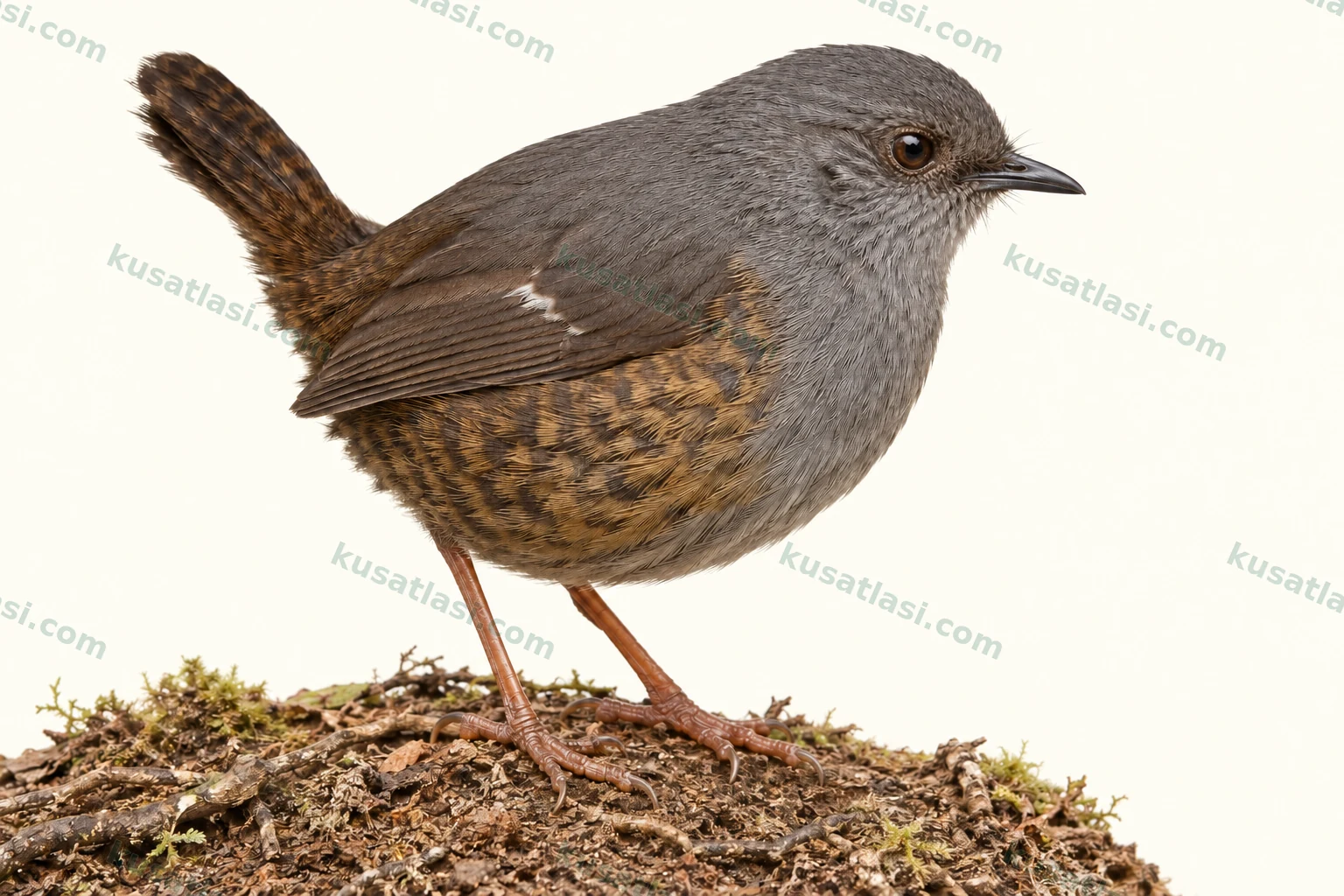
Swipe between the two adult plates.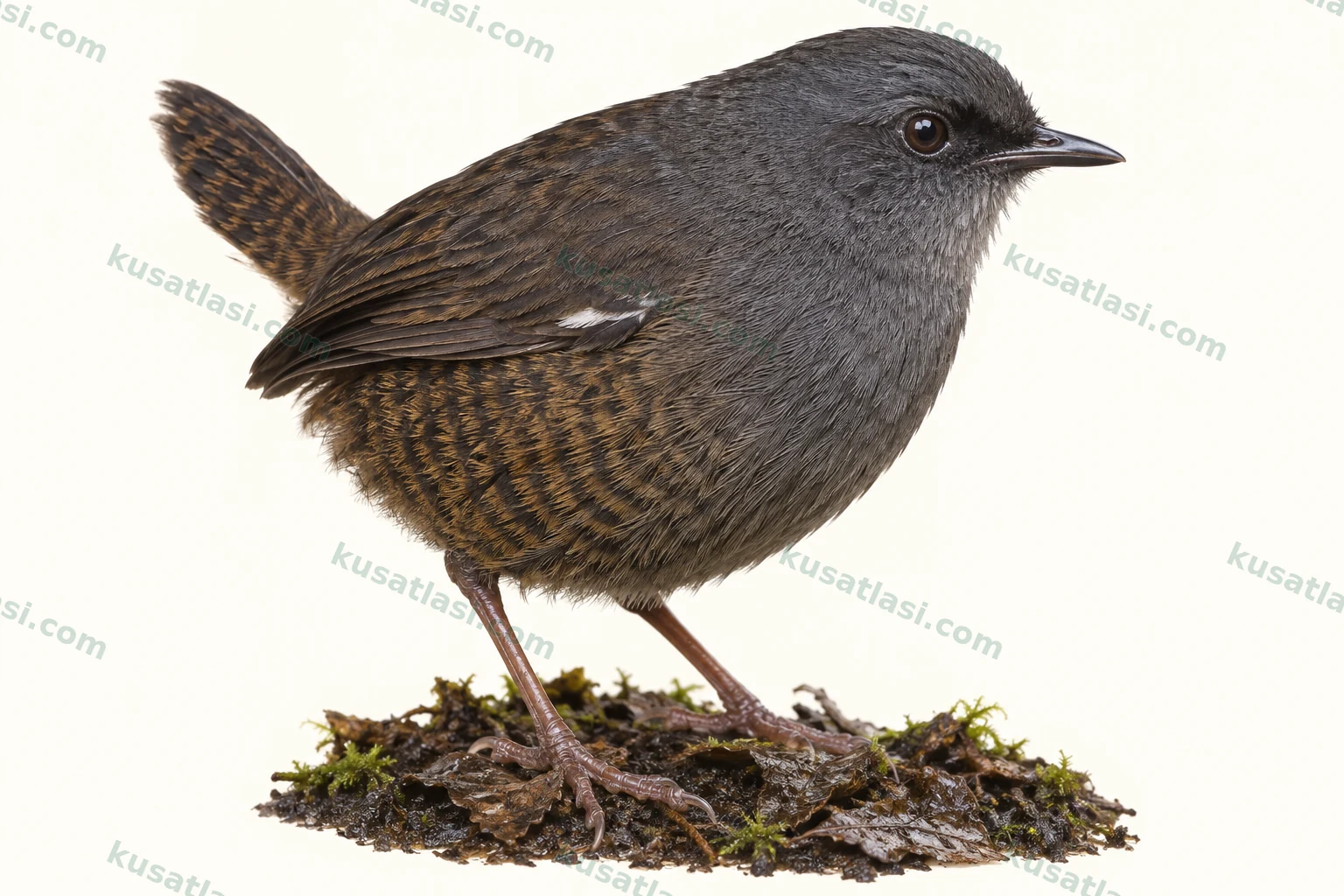
Rhinocryptidae · Passeriformes
White-winged Tapaculo
Scytalopus krabbei
Ak Kanatlı Tapakola
Check the grey body, barred brown flanks and small white wing patch together.
- Order
- Passeriformes
- IUCN Status
- Separate assessment unconfirmed
Biometrics
Length
- Male
- Data unavailable
- Female
- Data unavailable
Wing length
- Male
- 5.75 cm
- Female
- 5.75 cm
Weight
- Male
- 18–20.8 g
- Female
- 16.5–18 g
Detailed explanations of these measurements are available on our website, on the same species page.
At a Glance
- Wing
Small white patch, not an entirely white wing.
- Body
Grey, with barred brown flanks.
- Identification
Assess voice and location alongside appearance.
Examined females were paler on average; avoid definite sexing or ageing from one photograph.
Calendar
A verified monthly breeding or movement calendar was not found.
Species Information
Quick Identification
Check the grey body, barred rufous-brown flanks and small white wing patch together.
General Appearance and Posture
Males are mostly dark mouse-grey, with a potentially paler throat and breast. White occurs along the outer edges of a few wing-covering feathers; the whole wing is not white.
Males, Females and Young Birds
The four examined females from Peru were paler on average, with flank barring extending onto the lower belly. Detailed juvenile plumage development was not verified in this review.
Appearance in Flight
This review did not verify a reliable flight-specific identification criterion. Do not interpret the small white patch as a flight pattern involving an entirely white wing.
Voice and Behaviour
In Peruvian recordings, song comprises rapidly and regularly repeated rattling notes.
Similar Species
Compare with the deeper-based bill and pale eyebrow of Scytalopus altirostris; assess the white wing patch and voice together.
World Distribution
It is endemic to Peru. Cornell’s 2024 account reports six known localities in Amazonas, San Martín and Huánuco in the north-central Peruvian Andes. It is treated as monotypic.
Status Within Its Natural Range
The 2020-based specialist account highlights Cordillera Colán, Cerro Patricia and the Bosque Unchog area. A few known localities do not imply that all suitable habitat between them has been surveyed.
Movements
Cornell’s 2024 assessment notes that the species’ ecology remains largely unknown. This review did not verify a seasonal migration route or monthly movement schedule.
Breeding Habitat
It has been recorded in wet shrub forest and upper montane forest in Peru. Habitat records do not establish an active nest at every observation site.
Nest Site
The examined species-specific sources did not verify nest site or structure, clutch size, incubation or nestling duration. Nests and durations of other tapaculos are not transferred to this species.
Daily Habitat Use
It can remain hidden in dense vegetation; voice is often the clue to its presence.
What It Eats
The type specimen obtained at Cerro Patricia, Peru, in 2002 contained insect remains in its stomach. This single specimen does not establish the complete diet or proportions.
How It Forages
Foraging in wet montane shrubbery is reported. Species-specific prey-capture technique and daily food intake were not verified in this review.
The White Patch Was Initially Misinterpreted
The classification committee’s 2020 review explains that museum specimens with white wing patches had been filed under other species or as unidentified tapaculos. The white was sometimes regarded as a recurring colour mutation. Its significance for recognising a distinct species emerged alongside genetic placement and different vocalisations.
A Name Honouring a Researcher
The name krabbei honours Niels Krabbe for his work on Andean tapaculo taxonomy. The English name refers to the small white wing patch.