
World Birds
Field Guide Plates
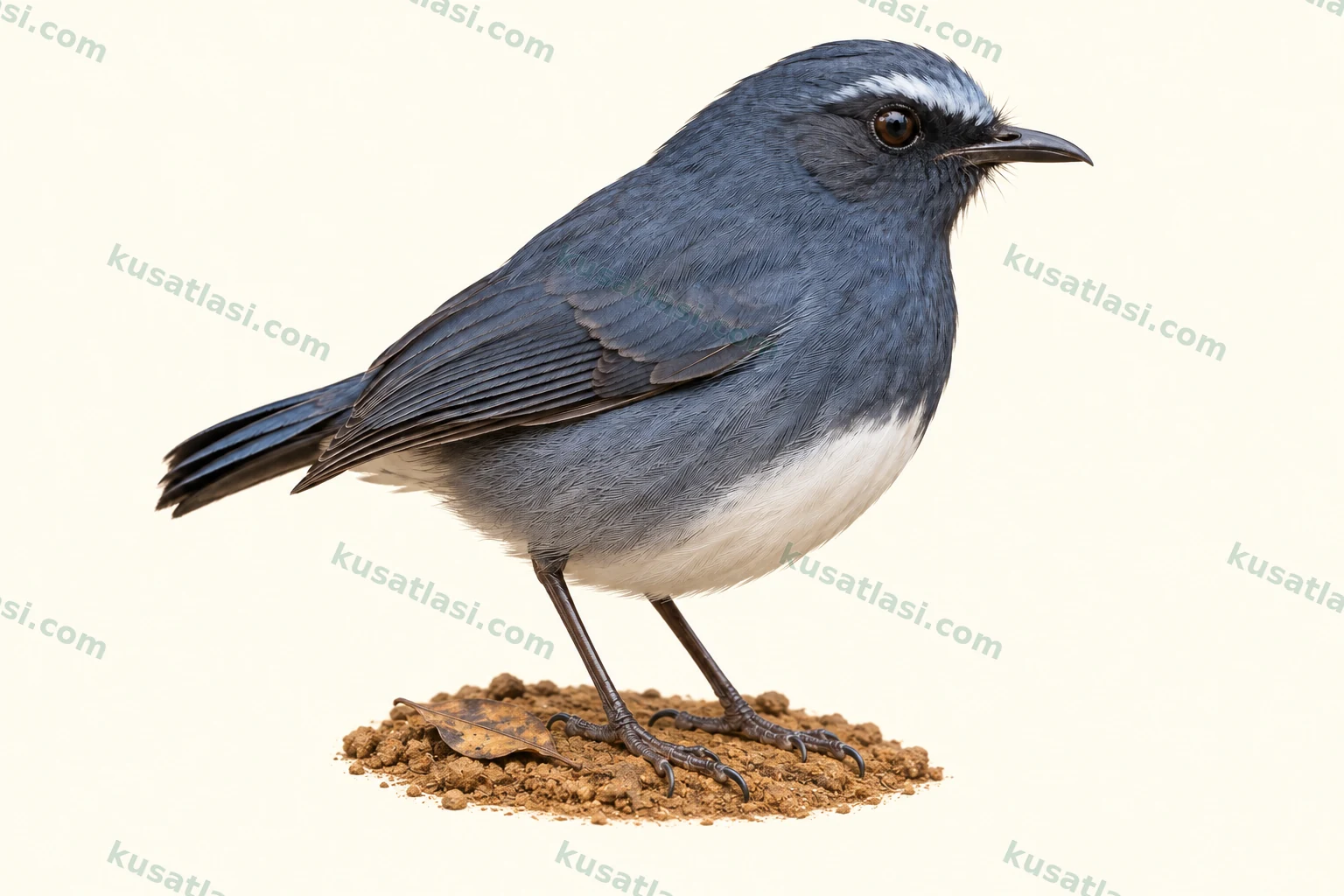
Swipe between the two adult plates.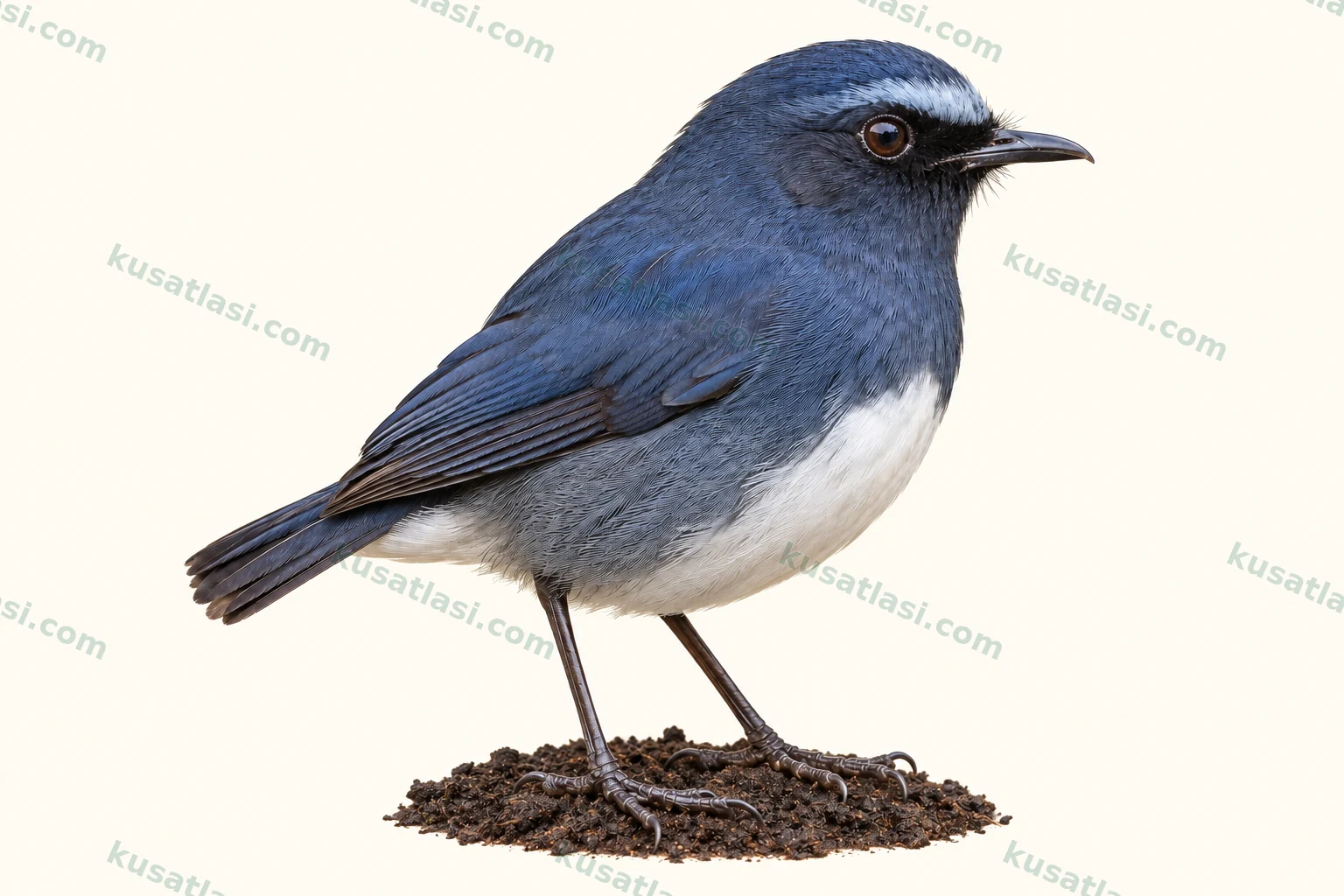
Muscicapidae · Passeriformes
White-bellied Blue Robin
Sholicola albiventris
Ak Karınlı Çivit Bülbülü
Blue-grey body, pale belly and frosty forehead.
- Order
- Passeriformes
- IUCN Status
- NTNear Threatened
Biometrics
Length
- Male
- 14 cm
- Female
- 14 cm
Wing length
- Male
- 7.52 cm
- Female
- 7.52 cm
Weight
- Male
- Data unavailable
- Female
- Data unavailable
Detailed explanations of these measurements are available on our website, on the same species page.
At a Glance
- Body
Blue-grey.
- Belly
Pale.
- Forehead
Frosty.
Adult plumage does not separate sexes.
Calendar
Laying calendar not verified.
Species Information
Quick Identification
Look for the combination of a blue-grey body, pale belly and frosty forehead.
General Appearance and Posture
This ground-dwelling bird has long legs and a short, nearly square tail. A bluish-white stripe lies above the black area between the eye and bill.
In the 2017 Western Ghats review, Anamalai–Palani birds had deep blue upperparts, slaty-blue throat and breast, and white extending rearward from the belly centre. Ashambu birds were paler slaty blue, with belly white extending farther forward. Current AviList treats these geographic forms as subspecies of the same species. These are not male–female differences.
Males, Females and Young Birds
No distinct adult male–female plumage difference is known; blueness alone should not be used to assign sex.
In captures in Anamalai, India, in 2004–2008, juveniles were slaty blue with varying amounts of brown mottling. Their irises were grey, unlike the dark or reddish brown irises of adults.
Appearance in Flight
The short tail is part of its general structure. A separate flight-specific plumage mark was not verified in this review.
Voice and Behaviour
It forages unobtrusively in dense undergrowth, often in wet places. Its melodic, thrush-like song includes ringing and buzzing notes.
Similar Species
A juvenile can resemble a young Eumyias albicaudatus. The Anamalai study highlights the flycatcher’s upright posture and white tail-feather bases.
World Distribution
It is endemic to the Western Ghats of southern India. AviList 2026 places its range in Kerala and Tamil Nadu south of the Palghat Gap, including the southernmost Ashambu Hills.
Status Within Its Natural Range
BirdLife’s 2024 assessment states that the global population has not been calculated. The declining trend is a precautionary assessment from available evidence, not a rate measured from a direct monitoring series.
Movements
It is resident. BirdLife mentions suspected altitudinal movements; no verified seasonal route or monthly migration calendar is established for these.
Breeding Habitat
It inhabits sholas—patches of stunted montane forest among open grassy areas—and adjacent second growth.
Nest Site
A species-specific nest site and clutch size were not verified in this review.
Daily Habitat Use
BirdLife highlights streamside vegetation, wet undergrowth within sholas and densely wooded ravines. Records also exist in some adjoining plantations and gardens; this does not establish that they are equivalent substitutes for natural forest.
What It Eats
The 2017 Western Ghats review describes Sholicola as insect-feeding birds. It does not provide a detailed, quantitatively measured prey list for this species.
How It Forages
It feeds on the ground and in the forest understory, singly or in pairs. Particular insect species or dietary percentages cannot be inferred from this general foraging pattern.
Juvenile Records Are Not a Laying Calendar
In the Anamalai, India study, 10 of 149 captured birds were juveniles. Juveniles occurred in April, July, September, October and November. Unequal monthly sampling means these counts do not establish breeding intensity or egg-laying months.
A Direct Behavioural Record
At Eravikulam National Park, India, the albiventris form was observed mating on the ground on 2 February and 27 March 2001. These two observations do not show that eggs were present on those dates or establish one breeding calendar for every region.
Older Names Can Cover Different Taxa
The 2017 genetic, plumage and song study established Sholicola for these Western Ghats birds. It proposed Ashambu birds as a separate species; AviList 2026 and current Cornell grouping retain them within this species as Sholicola albiventris ashambuensis. A record under the old name Brachypteryx major therefore cannot automatically be assigned to White-bellied Blue Robin.