
World Birds
Field Guide Plates
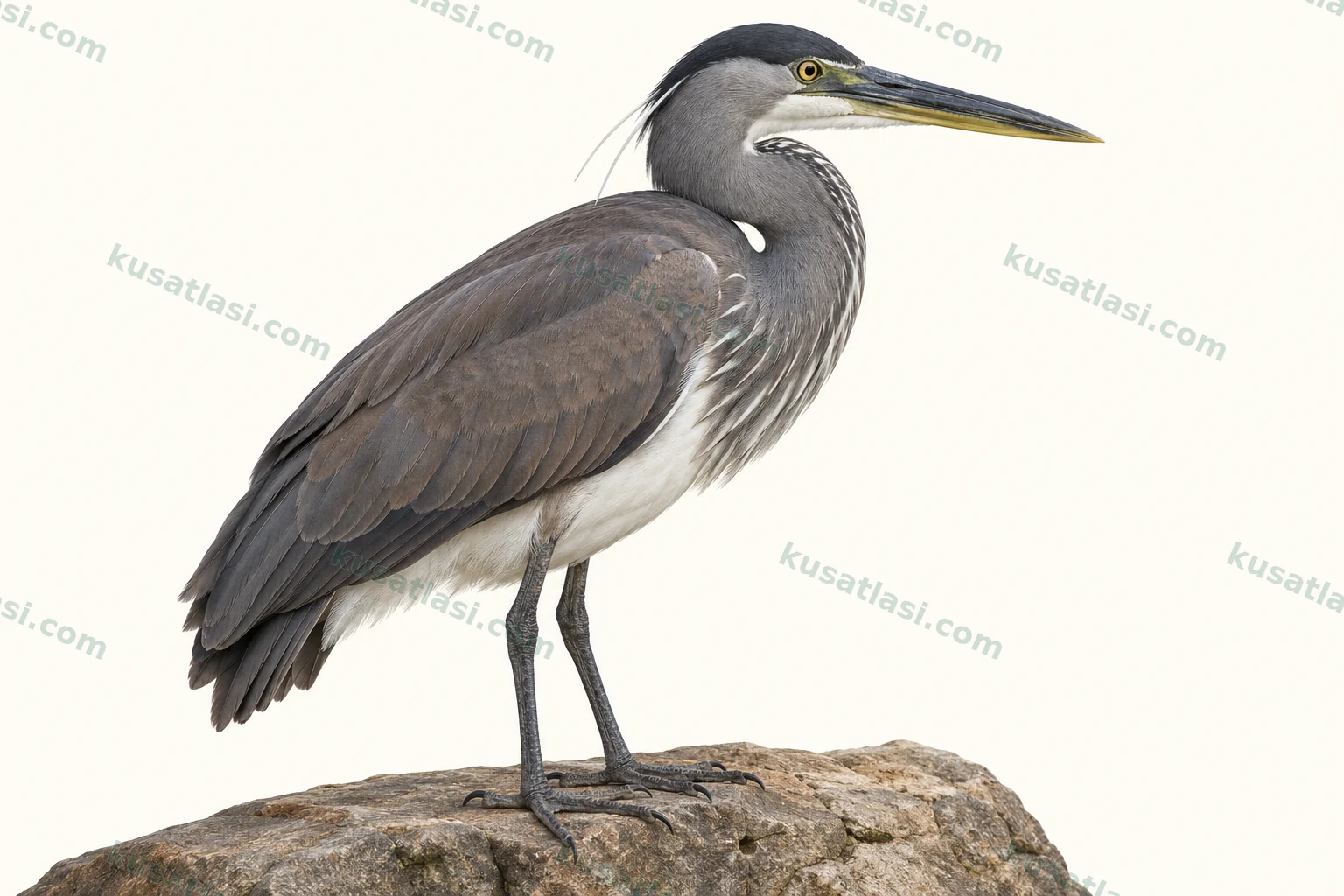
Swipe between the two adult plates.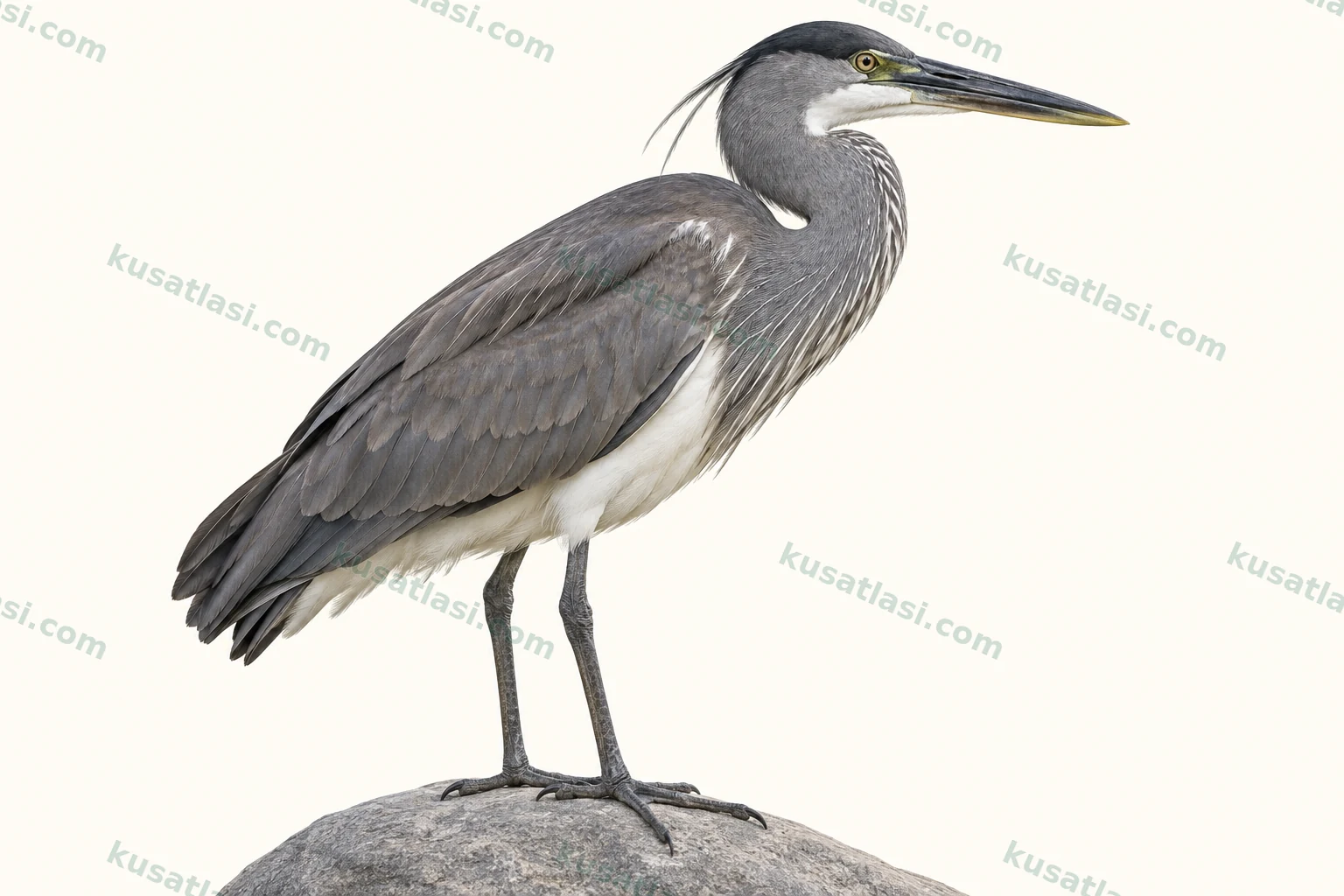
Ardeidae · Pelecaniformes
White-bellied Heron
Ardea insignis
Ak Karınlı Balıkçıl
Dark grey body, white belly and a powerful pointed bill.
- Order
- Pelecaniformes
- IUCN Status
- CRCritically Endangered
Biometrics
Length
- Male
- 127 cm
- Female
- 127 cm
Wing length
- Male
- 53.86 cm
- Female
- 53.86 cm
Weight
- Male
- Data unavailable
- Female
- Data unavailable
Detailed explanations of these measurements are available on our website, on the same species page.
At a Glance
- Body
Grey and white contrast.
- Underwing
White linings.
- Flight
Neck drawn back.
The sexes look similar.
Calendar
First-egg dates vary among years in Bhutan; a whole-range monthly calendar was not verified.
Species Information
Quick Identification
Look for the combination of a white belly contrasting with the dark grey body, a long neck and a powerful pointed bill.
General Appearance and Posture
It is a long-legged heron, with white streaking on the foreneck and upper breast and slender elongated pale nape plumes.
Males, Females and Young Birds
The sexes look similar. Young birds have a more streaked neck, shorter nape plumes and a browner-tinged vent.
Appearance in Flight
It flies with its neck drawn back. The upperwing is grey; white underwing linings contrast with the dark flight feathers.
Voice and Behaviour
Generally quiet, it gives deep, loud croaking calls during courtship and when alarmed.
Similar Species
Compared with Ardea cinerea, note the powerful bill and absence of a dark shoulder patch. Ardea sumatrana has a more uniformly grey underwing rather than the contrasting white linings.
World Distribution
A very scarce bird of the eastern Himalayas and adjoining regions. RSPN’s 2026 report gives the current range as Bhutan, northeastern India and Myanmar, distinguishing a few vagrant records from China.
Status Within Its Natural Range
The 1–5 March 2026 survey recorded 26 wild birds and five in a conservation centre in Bhutan. The total of 31 is specific to Bhutan and that survey; it is neither the global population nor a count of wild birds alone.
Movements
Bhutanese observations document movements between feeding sites within river systems. Seasonal and elevational movements remain insufficiently understood; a definite long-distance migration route cannot be assigned.
Breeding Habitat
Nests examined in Bhutan’s Punatsangchhu and Mangdechhu basins were in forest associated with rivers. The study documented use of Pinus roxburghii pines as well as broadleaved trees; it does not support dependence on a single tree species.
Nest Site
RSPN’s Bhutanese guide describes a platform nest made from dry twigs. It gives incubation as 30–33 days and fledging at 70–75 days after hatching. These are published guide values for Bhutan.
Daily Habitat Use
In the Bhutanese foraging study, riffles and deeper river pools were frequently used. These differ from the still-water ponds also examined in that study.
What It Eats
Of 97 prey items observed in Bhutan’s Punatsangchhu and Mangdechhu basins, 95% were fish. Recorded genera included Garra, Salmo and Schizothorax. This is a proportion of prey items, not of dietary biomass or the diet of the entire global population.
How It Hunts
It may watch for prey while standing still in flowing water.
Breeding Does Not Begin at a Fixed Date
Nests monitored in Bhutan during 2016–2025 held two to four eggs. First-egg dates, including renesting attempts, ranged from 9 February to 13 June. Dates for some late-discovered nests were back-calculated rather than observed directly.
A Reused Nest Site Does Not Prove Individual Identity
Nest sites were reused over several years in the same Bhutanese study. The birds were not individually marked, so the suggestion that the same partners returned was an inference from site occupancy.