
World Birds
Field Guide Plates
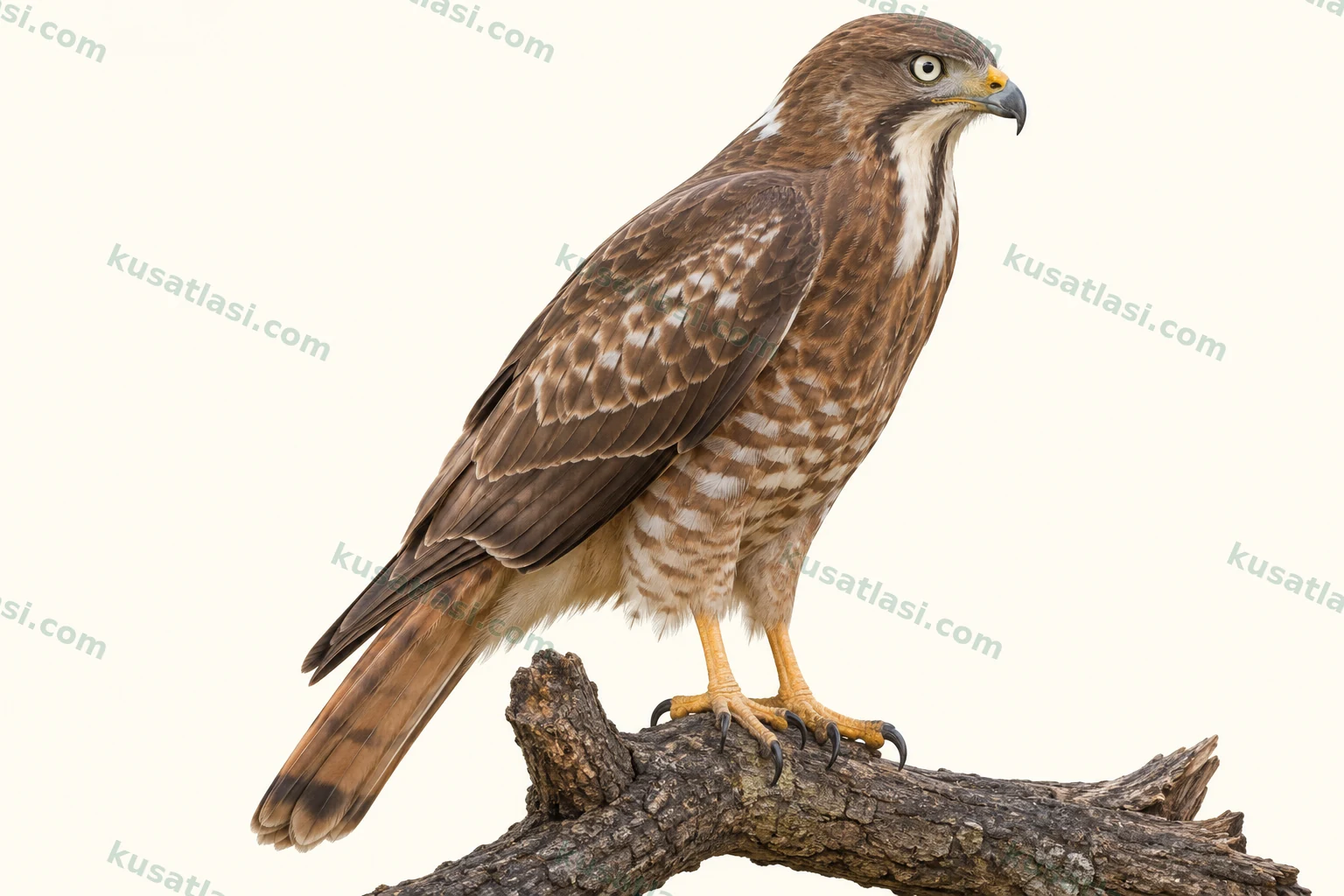
Swipe between the two adult plates.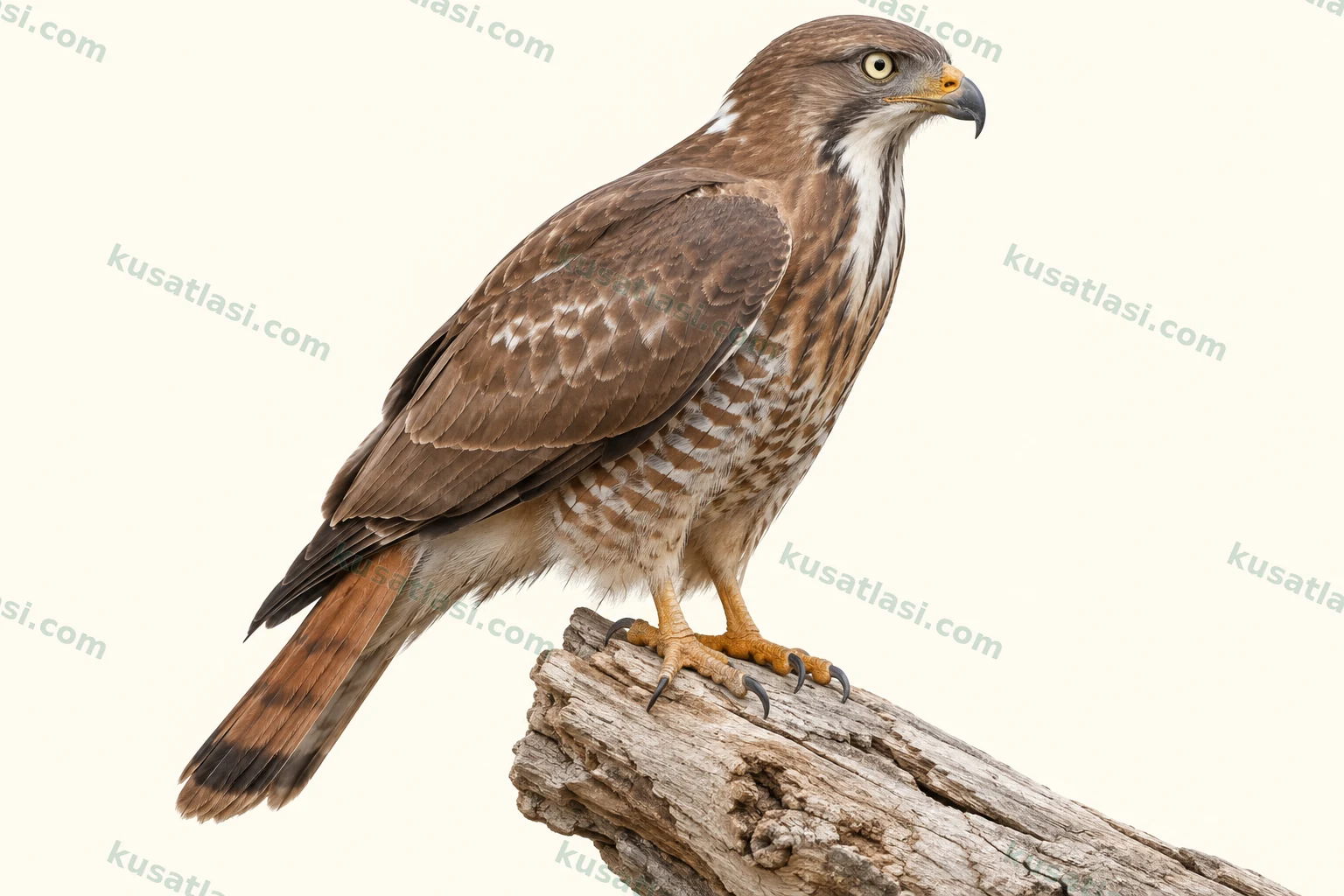
Accipitridae · Accipitriformes
White-eyed Buzzard
Butastur teesa
Ak Gözlü Tesa
In adults, combine the very pale iris, white throat with a dark central stripe, and rufous-brown tail.
- Order
- Accipitriformes
- IUCN Status
- LCLeast Concern
Biometrics
Length
- Male
- 36–43 cm
- Female
- 36–43 cm
Wingspan
- Male
- 86–100 cm
- Female
- 86–100 cm
Weight
- Male
- 325 g
- Female
- 325 g
Detailed explanations of these measurements are available on our website, on the same species page.
At a Glance
- Very pale adult iris
Brown in juveniles.
- White throat, dark central stripe
Assess with the other head markings.
- Rufous-brown tail
Check with the variable pale upperwing area.
Adult sexes look similar; juveniles are brown-eyed and paler-headed. The size of a lone bird is insufficient for sexing.
Calendar
General breeding records fall in February–June; geographic and altitudinal variation prevent a fixed monthly stage chart.
Species Information
Quick Identification
White-eyed Buzzard is a slender brown diurnal raptor of open country in South Asia. Adults combine a very pale yellowish or whitish iris, a white throat with a dark central stripe, and a rufous-brown tail. Juveniles have brown irides, so the pale eye that gives the species its name is not present at every age.
Appearance and Posture
Although the body recalls a typical buzzard, the overall silhouette is relatively slender and light. Upperparts are greyish-brown, contrasting with the rufous-brown upper tail. Forehead and the area between bill and eye are whitish. A variable white patch may be present on the nape. The dark central throat stripe stands out against the surrounding pale feathers.
The upperwing coverts contain a pale area whose extent and prominence vary between individuals; it may also be conspicuous in a perched bird. It should not be expected to look identical on every individual. The cere is yellow and the legs range from yellow to orange-yellow.
It may watch for prey from a stump, stone or small mound, offering a chance to examine head and throat markings. A pale wing patch alone is insufficient at a distance; head, tail and age-related iris colour should be assessed together.
Males, Females and Young Birds
Females average slightly larger, but the apparent size of a lone bird does not provide reliable sex identification. Similar adult plumages make pattern and age more useful than an assumed male–female colour difference.
Juveniles have a paler head and brown irides. They lack the adult throat pattern, while their underparts are paler and less heavily streaked. Juvenile legs are yellow. A dark-eyed, pale-headed individual should therefore not be assigned to another species simply because it differs from an adult illustration. Age assessment requires several features.
Appearance in Flight
Flight can recall an accipiter. Pale upperwing coverts may contrast with the darker flight feathers. It sometimes twists or turns its tail in flight, recalling the tail action of a kite. This behaviour is a supporting observation rather than a diagnostic feature on its own.
Voice and Behaviour
The call is a plaintive, mewing note, often rendered as “pit-weer”. It is given both perched and in flight and can be frequent early in the breeding season. A written rendering is only an aid and should not be treated as equivalent to a recording or a definitive identification from one syllable.
Similar Species
General brown coloration is misleading when comparing similar Butastur species. Against B. indicus, assess the adult’s very pale iris together with the rufous tail and pale wing coverts. Against B. liventer, dark throat markings and the absence of an extensive chestnut wing area are useful. Juvenile eye colour does not provide the adult distinction.
World Distribution
Its main range lies in South Asia, extending from extreme southeastern Iran and suitable parts of Afghanistan and Pakistan through India, southern Nepal and Bangladesh to Myanmar, reaching northern Tenasserim. Occurrence is not equally frequent throughout that broad boundary.
An association with open country does not imply a range across all Asian steppes. Individual birds recorded outside the usual range should be distinguished from regularly breeding or resident populations.
Status within Its Range
Records near the western range margin in Iran are scarce. OSME’s 2025 regional list distinguishes historical breeding information from southeastern Iran and more recent records in Hormozgan. At some Indian sites, concentrations have been associated with abundant food. Such local gatherings do not establish population growth throughout South Asia.
Seasonal Movements
Generally sedentary, with local movements reported near the northern Pakistan–Afghanistan border and possible altitudinal movements around the Himalayas. These do not establish one annual long-distance migration route for the species. Short movements to exploit food should also be distinguished from long-distance seasonal migration.
Breeding Habitat
Uses dry open woodland, cultivated land and sparsely wooded plains rather than being confined to continuous closed forest. Breeding sites combine trees suitable for nesting with open areas for hunting. Indian field records include the arid surroundings of Rajasthan and the Tadoba Andheri area in Maharashtra.
Nest Site
Both partners build a loose stick nest resembling that of a crow. It may be placed in a fork of a tall tree or on a densely foliaged branch; the expert synthesis describes it as unlined. Trees around villages may also be used.
Usually three eggs are reported, within an overall range of two to four. A nest monitored in Rajasthan, India, in 2020 contained four eggs, whereas three nests observed in Maharashtra in 2024 reportedly held two each. These small local samples do not establish one invariant clutch size.
The female incubates and both parents feed the young. Published incubation estimates reviewed here conflict, and egg-laying onset was not followed in some observations. A reliable single incubation or fledging duration therefore cannot be given. The general breeding period is reported as February–June, with variation by latitude and altitude. Watch nests from a distance without approaching closely or flushing the adults.
Daily Habitat Use
Uses low perches overlooking open ground to watch for prey and may also forage on foot, particularly after grass fires. Such observations do not show that fire is beneficial under all circumstances or justify burning habitat.
What Does It Eat?
Small mammals, especially rodents, are important prey. It also takes lizards, frogs, small snakes, crabs and large insects, including grasshoppers and winged termites. Occasional predation on birds is reported, so the diet should not be restricted to mammals.
Nest observations in Maharashtra, India, in 2024 recorded rodents being delivered to young. That is a direct observation at those breeding sites, not evidence for a fixed annual dietary percentage.
How Does It Hunt?
Scans from a stump, stone or mound and makes a short flight to prey on the ground. Ground searching on foot is also recorded. Winged termites may be caught in the air. Depending on prey and its position, it can therefore use perch hunting, walking searches and aerial insect capture rather than one exclusive technique.
Far beyond the Usual Range
Photographs from South Sulawesi, Indonesia, in 2012 and 2014 documented occurrence far beyond the usual South Asian range. The authors suggested the photographs might show the same individual, rather than establishing two separate birds. The record does not demonstrate regular migration to Sulawesi or breeding there.
Two Nests in One Tree
One nest monitored in Maharashtra, India, in 2024 occupied the same tree as a Red-naped Ibis Pseudibis papillosa nest. This establishes shared use of that tree. No experiment demonstrated mutual protection from predators or increased success, so the association should not be described as a proven benefit.