
World Birds
Field Guide Plates
Swipe between the two adult plates.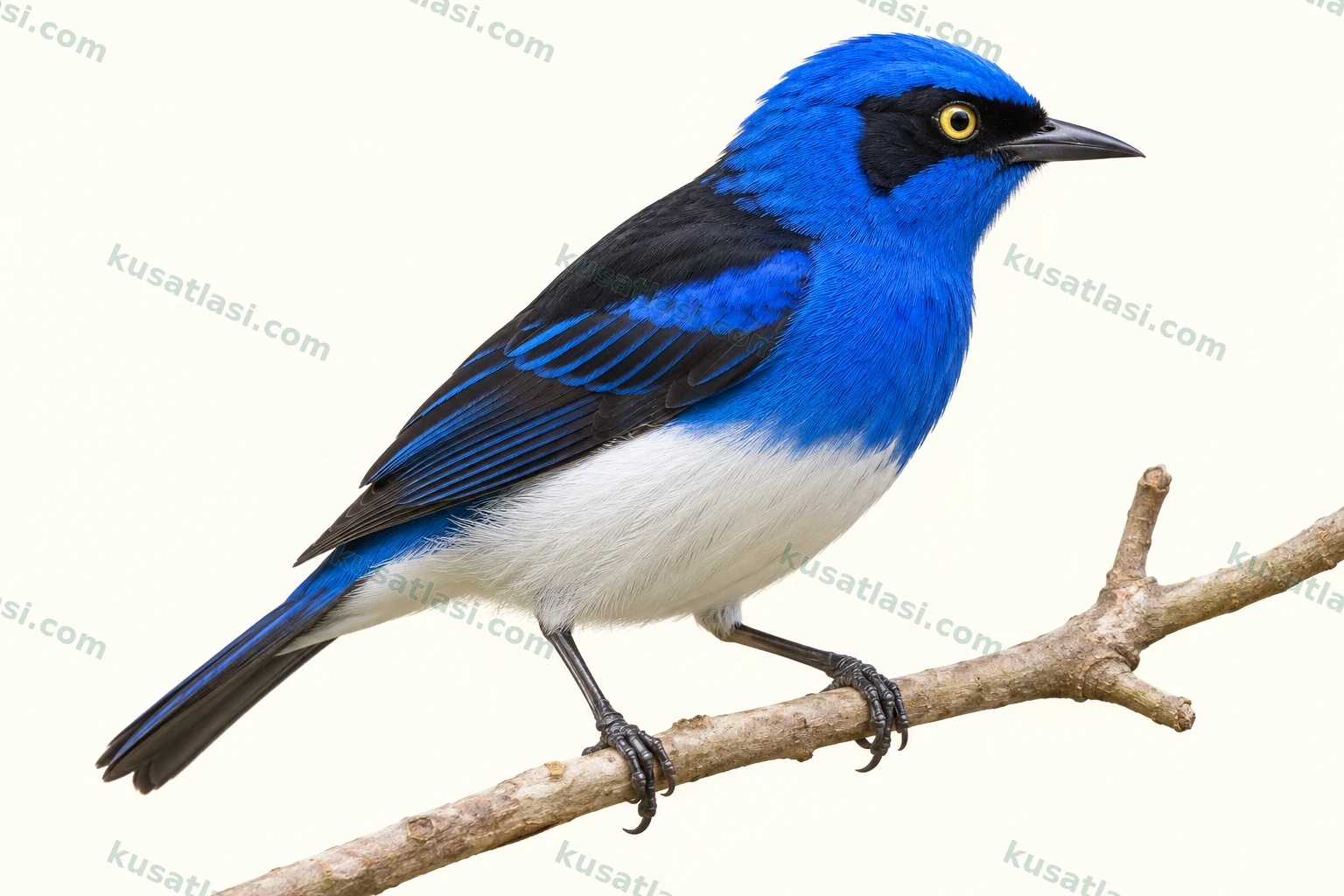
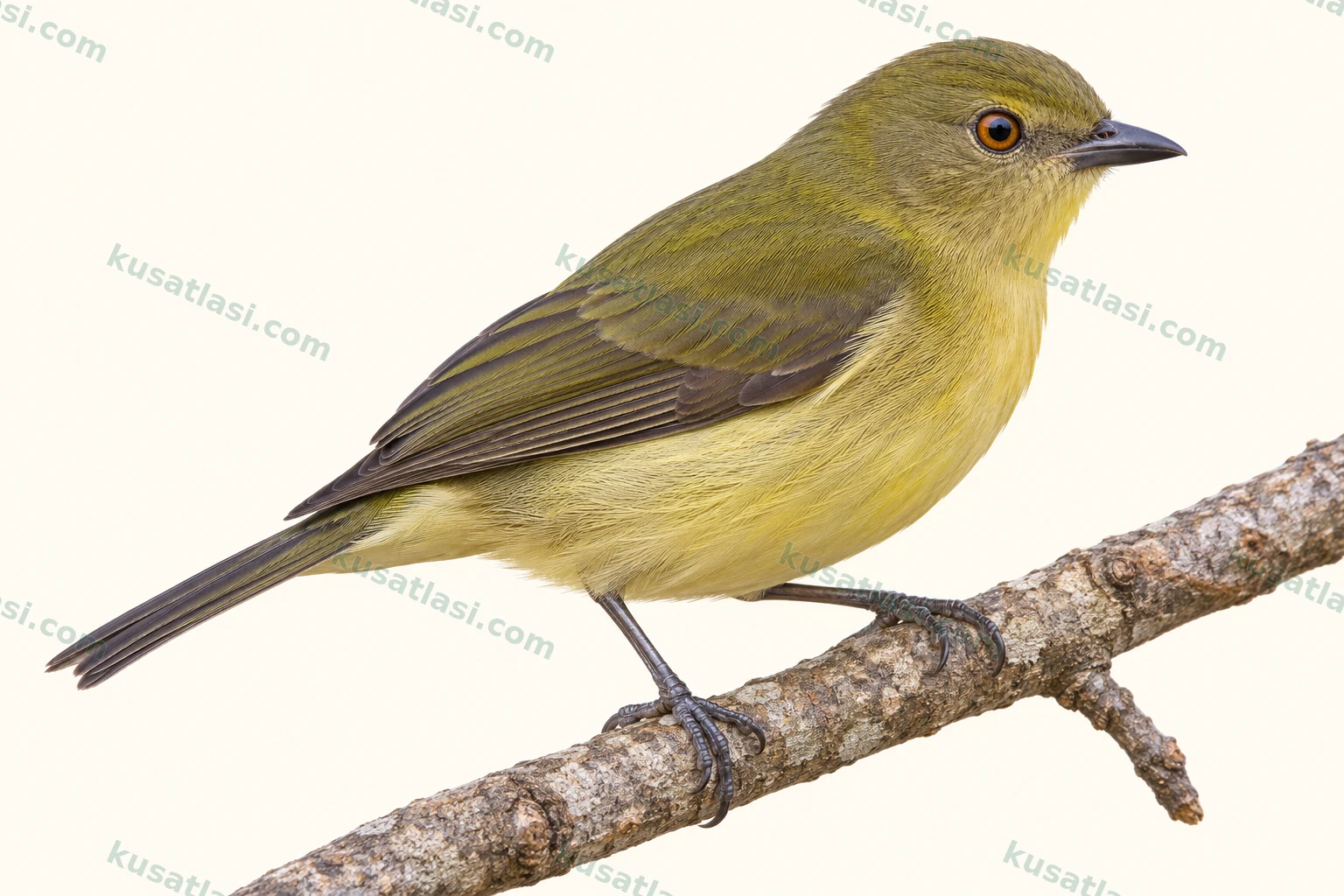
Thraupidae · Passeriformes
White-bellied Dacnis
Dacnis albiventris
Ak Karınlı Daknis
Males combine blue body, white belly and black mask.
- Order
- Passeriformes
- IUCN Status
- LCLeast Concern
Biometrics
Length
- Male
- 11 cm
- Female
- 11 cm
Wing length
- Male
- 5.89 cm
- Female
- 5.89 cm
Weight
- Male
- 11–11.5 g
- Female
- 11–11.5 g
Detailed explanations of these measurements are available on our website, on the same species page.
At a Glance
- Male body
Blue.
- Male belly
White.
- Face
Black mask.
Females are greenish olive.
Calendar
Laying calendar not verified.
Species Information
Quick Identification
Males are cobalt-blue with a white belly and black mask.
General Appearance and Posture
Note the black back feathers, blue-edged wings and striking yellow eyes.
Males, Females and Young Birds
Females are greenish olive. Detailed juvenile plumage was not verified in this review.
Appearance in Flight
A separate flight-specific identification mark was not verified in this review.
Sounds and Behaviour
In the 2016 survey around Río Yuracyacu, Peru, it occurred in mixed-species flocks along an old logging road with fruiting Miconia. A detailed voice description was not verified in this review.
Similar Species
Male Dacnis lineata is darker blue, with the black mask extending to the nape.
World Distribution
It occurs in Amazonia. AviList 2026 gives a range from southeastern Colombia to southern Venezuela, northeastern Peru and central Amazonian Brazil; BirdLife also confirms occurrence in Ecuador.
Status Within Its Natural Range
BirdLife’s 2025 assessment reports no quantified global population. The suspected stable trend rests on the absence of evidence for decline, rather than a result measured by systematic population monitoring.
Movements
BirdLife classifies it as non-migratory. Individual locality records do not establish a regular seasonal migration route.
Breeding Habitat
It occurs in the canopy and edges of humid forest; nesting habitat was not verified.
Nest Site
Nest structure, clutch size and incubation duration were not verified in this review.
Daily Habitat Use
The 2018 study in northeastern Peru recorded it in both mature and degraded forest on nutrient-poor soils. Regular observations were made at Quebrada Blanco in 2004–2014. These local findings do not establish dependence on degraded forest alone.
What It Eats
A female watched in Rio Branco, Brazil, on 23–28 July 2013 ate Ficus pertusa fruit. This does not establish an entirely fig-based diet.
How It Forages
The same Rio Branco bird removed small pieces rather than swallowing whole fruits. It reached and hung down from branches to feed, moving aside when a larger bird arrived.
A Feeding Tree and a State Record
The 2013 observation in Rio Branco, Brazil, was published in 2015 as Acre’s first documented record. The bird returned alone to the same fruiting tree over six days. This is neither nesting evidence nor a new migration route.
Fruiting Plants and Regrowing Forest
Around Río Yuracyacu, Peru, in 2016, regeneration beside a logging road included abundant fruiting Miconia. White-bellied Dacnis occurred among the fruit-eating bird flocks there. The survey was not an experiment testing benefits of logging; it documents habitat use at that place under those conditions.
Gaps Between Records
In northeastern Peru, widely spread records suggested possible connectivity between populations. The researchers were nevertheless uncertain about how patchy the distribution was. Gaps between mapped records therefore cannot automatically be interpreted as confirmed population isolation.