
World Birds
Field Guide Plates
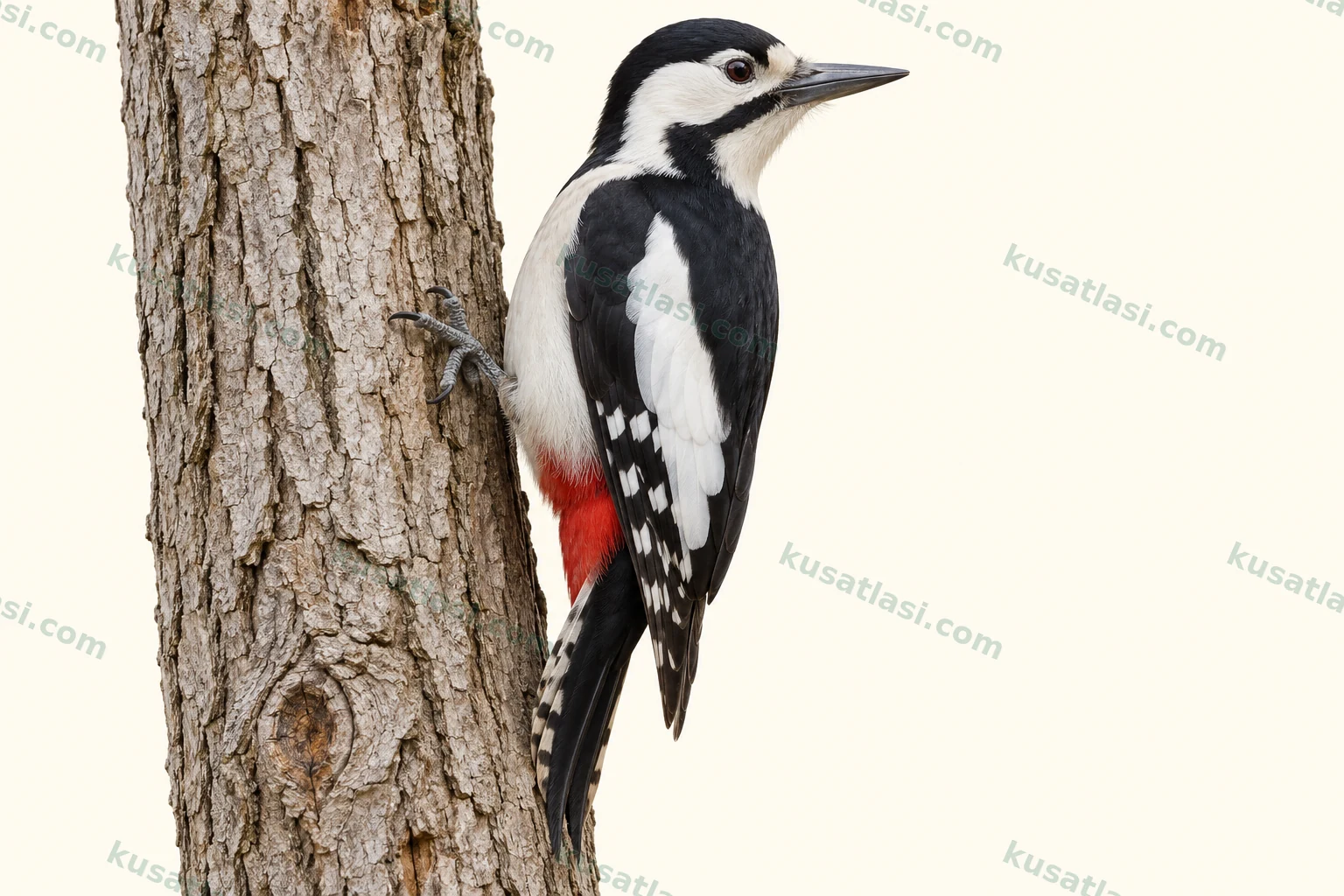
Swipe between the two adult plates.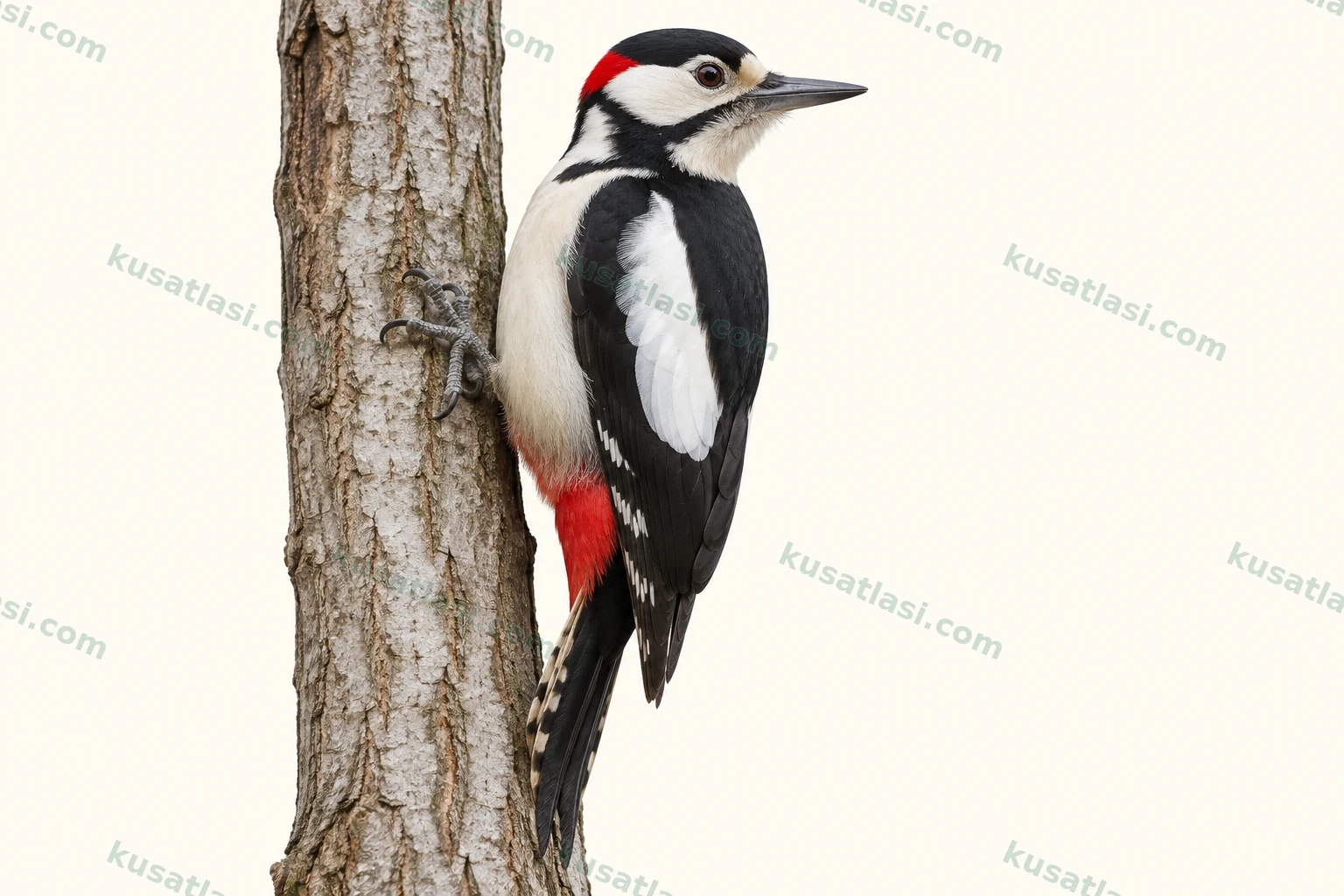
Picidae · Piciformes
White-winged Woodpecker
Dendrocopos leucopterus
Ak Kanatlı Ağaçkakan
Assess extensive white wings together with the black back, head and neck markings and red undertail.
- Order
- Piciformes
- IUCN Status
- LCLeast Concern
Biometrics
Length
- Male
- 22–23 cm
- Female
- 22–23 cm
Wing length
- Male
- 12.64 cm
- Female
- 12.64 cm
Weight
- Male
- 67 g
- Female
- 67 g
Detailed explanations of these measurements are available on our website, on the same species page.
At a Glance
- Extensive white wings
Large pale shoulder and inner-wing areas.
- Black back
Check head, neck and tail pattern together.
- Riverine woods and gardens
Search poplar, willow and walnut stands.
Adult males have a red nape and females a black one. Young females can also show red on the forecrown, so red anywhere on the head does not identify an adult male.
Calendar
Essentially resident, with some wandering outside breeding. Kazakhstan and lower Amu Darya records are not combined into one fixed monthly calendar.
Species Information
Quick Identification
White-winged Woodpecker inhabits riverine woodland, gardens and some mountain forests of Central Asia. Extensive white on the shoulders and wings combines with a black back and pink-red undertail. The adult male has a red nape patch, which the adult female lacks.
General Appearance and Posture
The forehead is white and the crown black, with a thin white line above the eye. Black markings frame the white cheek and ear-coverts. A dark stripe from the bill curves upwards behind the ear-coverts, broadens on the neck side and extends towards the breast, leaving an enclosed white patch at the side of the neck.
The back and upper tail are black. Broad white shoulder feathers and inner-wing areas give a very pale-winged appearance at a distance. The flight feathers also have broad white bars, while outer tail feathers show contrasting white and black cross-markings. Examine the positions of these areas together.
The underparts are mostly white, sometimes with grayish, buff or stained tones. The vent and undertail coverts range from red to pinkish red. In fresh plumage, pink feather tips can extend up the middle of the belly towards the lower breast. Red intensity is not identical in every bird.
The bill is straight and chisel-tipped, dark gray with a potentially paler base to the lower mandible. The eye can be deep red, red-brown or brown; the legs dark gray or blackish. Birds may be seen climbing trunks and substantial branches. Check head, neck and undertail pattern as well as the extent of white.
Males, Females and Young Birds
In adults, the main sex difference is the nape: red in males and black in females. Wing whiteness or general paleness alone does not distinguish the sexes.
Young are browner-black above, buffier below and pinker around the vent. Wings and tail may show extra white; some have fine black barring on the shoulder feathers or dark streaks at the breast sides. A young male can have a mixed red, black and white crown, with a nape unlike the adult male’s red patch. Young females may also show variable red on the forecrown. Red anywhere on the head therefore does not automatically identify an adult male.
Appearance in Flight
Spread wings reveal extensive white areas and broad white bars on the flight feathers. The black-and-white outer tail pattern may also help. After a distant flight view, reassess the black back, head and neck markings and red undertail rather than relying solely on apparent whiteness.
Voice and Behaviour
Gives short calls resembling “kig” or “kewk”, rattling sounds and drumming. Drumming is a series of bill strikes against a surface rather than a vocal sound. One brief call should not be treated as definitive among similar woodpeckers.
Usually encountered singly or as breeding pairs. The Kazakhstan species account reports young remaining with their parents into September. Such family groups should not be interpreted as fixed-size flocks maintained throughout the year.
Similar Species
The main comparison is Dendrocopos major. White-winged Woodpecker has much more extensive white on the wings and shoulders. However, D. major populations vary, with conspicuous wing whiteness in some Central Asian forms. Assess the complete head, wing, back and tail pattern rather than one distant white patch.
Expert sources also report occasional hybridisation between the two species. This does not establish that every intermediate-looking bird is a hybrid. Consider age, plumage condition, lighting and geographic variation, and avoid a definite species or hybrid label when details are insufficient.
World Distribution
A Central Asian woodpecker, ranging from east of the Aral Sea through southern Kazakhstan and suitable parts of Kyrgyzstan into Xinjiang in northwestern China. Southern areas include southwestern Turkmenistan and northern Afghanistan. Records also occur in wooded river valleys and other suitable sites in Uzbekistan and Tajikistan.
Within this broad region it does not occupy one continuous forest belt. Riverine woodland, isolated desert tree stands, gardens and broadleaved mountain forest provide different local habitats. Possible occurrence in northeastern Iran should not be given the same certainty as established parts of the range.
Status within Its Range
Abundance varies regionally. The Kazakhstan account describes it as a rare resident, while some suitable riverine stands can support more frequent encounters. Kyrgyzstan’s walnut-fruit forests are also important habitat. Frequent encounters within one study area do not establish the condition of the entire Central Asian population.
Loss of riverine trees and woody desert vegetation can reduce local habitat. Conservation assessment involves the continuity of these wooded sites and availability of cavity-bearing trees as well as the number of places where birds are seen.
Movements and Migration
Essentially resident, with some short-range wandering outside the breeding season. Such movements are not described as regular long-distance migration. Gardens and scrub around breeding woodland may also be visited during seasonal wandering. A single route or fixed monthly movement schedule for all populations has not been established.
Breeding Habitat
Uses riverine poplar and willow stands, open broadleaved woodland, orchards and walnut forest, as well as saxaul woodland in Central Asian deserts. It is therefore not confined to dense humid forest.
Kazakhstan records include lowland riverine woods and gardens or mixed walnut forest in the Pskem and Ugam valleys. It has been studied in the walnut-fruit forests of southern Kyrgyzstan’s foothills. Tree cover and stand structure provide useful context when searching across different elevations.
Nest Site
Nests in cavities excavated in poplars, willows, walnuts and other trees. Tree use differs regionally, with poplars and willows prominent in riverine woods and walnuts in some mountain forests. It can excavate a hole and is also reported to modify an existing or previously used cavity.
The 2005 Kazakhstan account gives four to five eggs and laying from mid-April to mid-May, with both parents participating in incubation and feeding. The broader expert account records four to six, occasionally seven eggs. These figures should retain their local context and source scope rather than being averaged.
Older regional studies relayed in the 2005 Russian scientific monograph report twelve to thirteen days of incubation around Samarkand, Uzbekistan, and thirteen to fourteen days in the lower Amu Darya region. These regional records are not one fixed period for the whole range. The same compilation reports differences between sources in division of incubation duties, so identical day and night roles are not assumed everywhere.
The Kazakhstan account reports nest departure in late June–early July. Those are calendar dates and do not by themselves establish days spent in the nest after hatching. Observe without approaching the entrance, opening cavities or obstructing parental visits.
Daily Habitat Use
Can be seen searching trunks and substantial branches and occasionally descending to the ground. Surrounding trees and shrubs offer additional opportunities during seasonal wandering. A garden record does not establish dependence on gardens, nor does occurrence in a desert tree stand make treeless desert equivalent habitat.
What Does It Eat?
Dietary information does not come from one detailed study covering the whole range. The 2005 monograph compiling Central Asian records reports insects and their larvae, ants, and seasonally seeds and some fruits. Walnut kernels and wild fruits in mountain forest are also mentioned. These compilation records do not establish precise year-round dietary percentages.
Its summary of older observations from the lower Amu Darya reports nestlings being fed bark-beetle larvae extracted from beneath poplar and willow bark and around moss. This is a regional nestling-feeding record, rather than evidence that adults eat only those larvae in every season.
How Does It Forage?
Searches bark crevices on trunks and substantial branches and may peck wood to reach food. Ground feeding is also reported in some seasons.
A Dead Limb on a Living Tree
Research in southern Kyrgyzstan in spring 2009 found cavity trees tended to have larger trunks and broken or dead limbs. Most trees classified as damaged were living trees with damaged branches, rather than wholly dead trees. The result therefore does not mean only standing dead trees matter.
The study’s definition included woodpecker cavities and holes left by broken limbs. These were not all observed active nests. The distinction helps explain the relation between forest structure and cavity opportunities; counting every cavity as a separate breeding pair would be incorrect.
A Bird Not Detected Is Not Always Absent
In the same Kyrgyzstan study, birds were repeatedly searched for across sixty-three sampling plots. Researchers allowed for the chance of missing a bird that was present, rather than simply counting detection sites. Sixty-three refers to plots, not individual birds.
Birds could be easier to detect on plots with larger walnut trees. Raw encounter counts therefore should not automatically be interpreted as greater abundance: habitat use and the observer’s probability of finding a bird are different quantities. The results belong to those forests and the 2009 sampling period.
Historical Geographic Names
Older Central Asian publications may use subspecies names such as albipennis and leptorhynchus. The current expert account treats the geographic differences as minor and inconsistent and recognises no subspecies. An older local name does not itself mean the study concerned a different modern species; its taxonomic identity must be checked.