
World Birds
Field Guide Plates
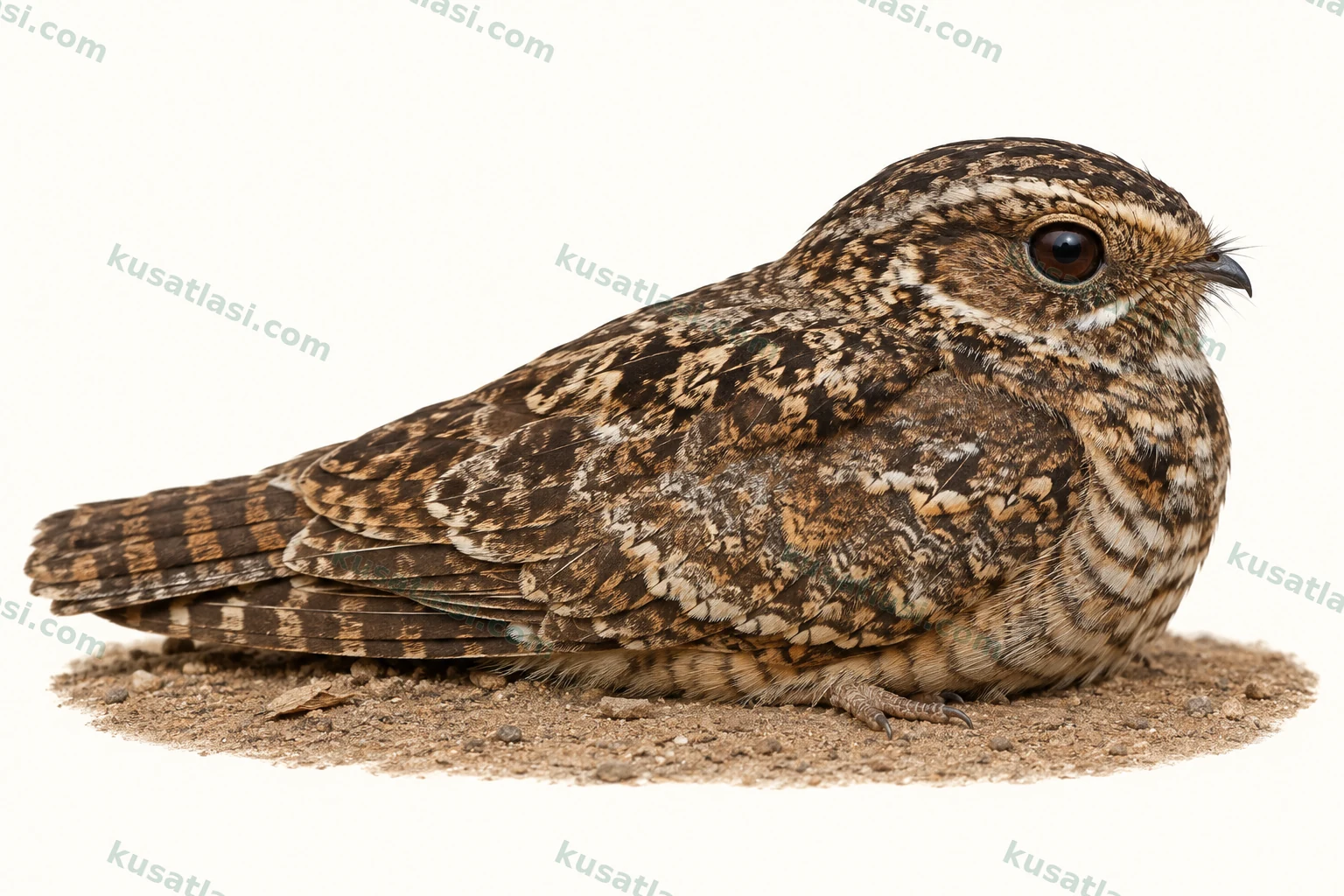
Swipe between the two adult plates.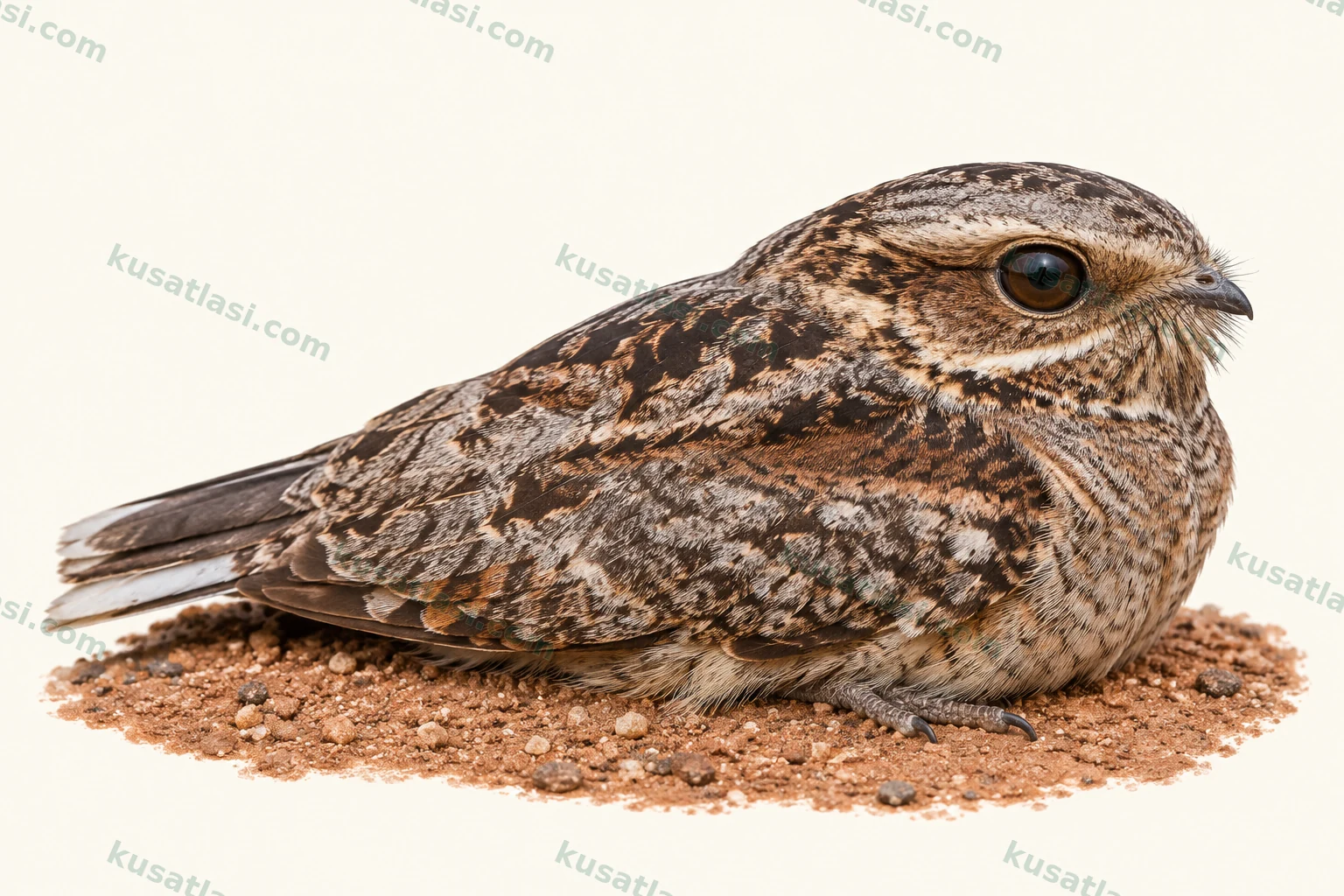
Caprimulgidae · Caprimulgiformes
White-winged Nightjar
Eleothreptus candicans
Ak Kanatlı Çobanaldatan
Look for extensive white in both wings and tail of an adult male.
- Order
- Caprimulgiformes
- IUCN Status
- VUVulnerable
Biometrics
Length
- Male
- 19–23 cm
- Female
- 19–23 cm
Wing length
- Male
- 15.1 cm
- Female
- 15.1 cm
Weight
- Male
- 46–51 g
- Female
- Data unavailable
Detailed explanations of these measurements are available on our website, on the same species page.
At a Glance
- White wings and tail
Conspicuous adult-male pattern.
- Open savanna
Grassland with scattered trees.
- Nocturnal display
Around low mounds.
Females lack the white areas; young males may not yet show complete adult pattern.
Calendar
Breeding is reported September–January in Paraguay; that schedule is not assumed throughout the range.
Species Information
Quick Identification
An open-savanna nightjar of central South America. Extensive white in the adult male’s wings and tail is distinctive. Females lack these white markings and their patterned brown plumage can resemble other nightjars.
General Appearance and Posture
Birds shelter in low vegetation by day. Male display arenas are commonly low ant or termite mounds; perching should not be imagined solely as sitting on a tree branch. A mound in suitable habitat does not by itself establish the bird’s presence.
Males, Females and Young Birds
Adult males and females differ markedly. Young males may not yet have acquired the adult’s white feathers. Research in Paraguay explicitly noted difficulty separating unmarked females from juveniles and females of similar species; a brief night-time view should not be treated as certain age or sex identification.
Appearance in Flight
The male exposes its white wing and tail areas in display. Observations in Paraguay documented steep ascents from a mound and repeated short flights between nearby perches. Courtship flight is not the bird’s only flight style.
Voice and Behaviour
At Aguará Ñu, Paraguay, inactive males gave an insect-like “tik tik” call. This is distinct from mechanical display noise. Pople’s observations support wing production of the rattling ascent sound; the initial short tap may instead involve contact with the mound. That latter mechanism was not experimentally established.
Similar Species
Females can resemble Sickle-winged Nightjar (Eleothreptus anomalus) and Little Nightjar (Setopagis parvula). Extensive white is a strong adult-male clue. Habitat or eyeshine alone is insufficient for females or young birds lacking that conspicuous pattern.
World Distribution
Its native range includes Bolivia, Brazil and Paraguay. Records come from widely separated savanna and open-grassland sites; this does not imply continuous occupancy of all intervening land.
Status Within Its Natural Range
Known areas include Mbaracayú and Laguna Blanca in eastern Paraguay and Emas in Brazil. Its limited set of known sites must be considered alongside the difficulty of detecting this nocturnal bird. Suitable-looking, unsurveyed habitat is not a confirmed locality.
Movements and Migration
It is not classified as a regular migrant. Local movements following fire are possible, but they do not establish a migration route or a monthly schedule applicable throughout its range.
Breeding Habitat
It uses open grasslands, dry savannas and open cerrado with scattered trees and shrubs. At Aguará Ñu in Paraguay, male display arenas clustered on upper slopes of low ridges. This does not imply equal occupancy of all apparently suitable grasslands.
Nest Site
In Paraguay in 1999–2000, eggs were laid directly on the ground beside a small opening among grass tussocks. All seven clutches found at the egg stage contained two eggs. The modal incubation period was 19 days, with one 17-day entry in the table. Observed incubation, brooding and provisioning were performed by females, with no male visits recorded.
Exact fledging age was not confirmed. The paper’s approximate 19–20-day estimate rests on growth and last-presence observations, not a directly established first-flight date. Avoid ground nests and do not provoke flushing or distraction displays for photographs.
Daily Habitat Use
Nocturnal activity areas and daytime shelter serve different functions. Display mounds and female nest sites were also separate in Paraguay; the nearest displaying male should not automatically be assumed to have fathered a brood.
What It Eats
It feeds on flying insects. The reviewed accessible sources do not provide a reliable range-wide prey-species list or year-round diet proportions, so no insect group is presented as dominant.
How It Forages
It hunts in flight over open cover. Younger vegetation is reported as preferred for foraging; greater insect availability is a proposed explanation. That association does not mean burning habitat invariably benefits the bird.
Clutch Initiation Near Full Moon
At Aguará Ñu in Paraguay, all seven clutches with confirmed initiation dates began within two days of full moon. This striking pattern comes from a small local sample; it does not establish that every bird everywhere lays only at full moon.
A Display Arena Is Not a Family Nest
Male aggregation and female care in the Paraguay study support a system in which a male can breed with more than one female. Whether arenas clustered through sexual attraction or the distribution of suitable display sites remained unresolved. A single, certain mating model is therefore not imposed on all populations.
The First Documented Nest
The first detailed description of eggs and a chick concerns November–December 1997 at Mbaracayú, Paraguay; the paper was published in 2014. An egg observed to hatch after at least 16 days does not establish a complete 16-day incubation period. An observation interval and a measured total duration are different quantities.