
World Birds
Field Guide Plates
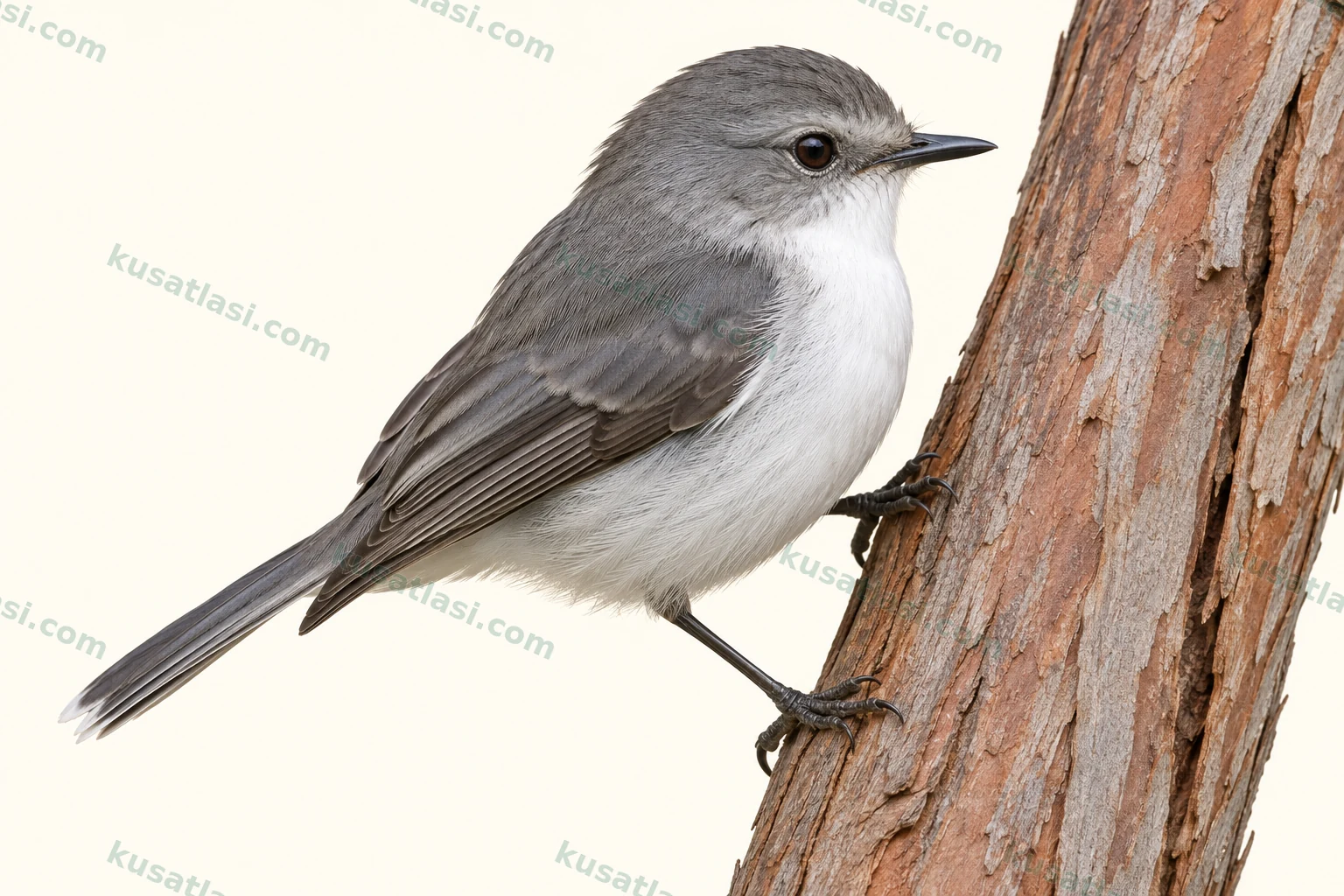
Swipe between the two adult plates.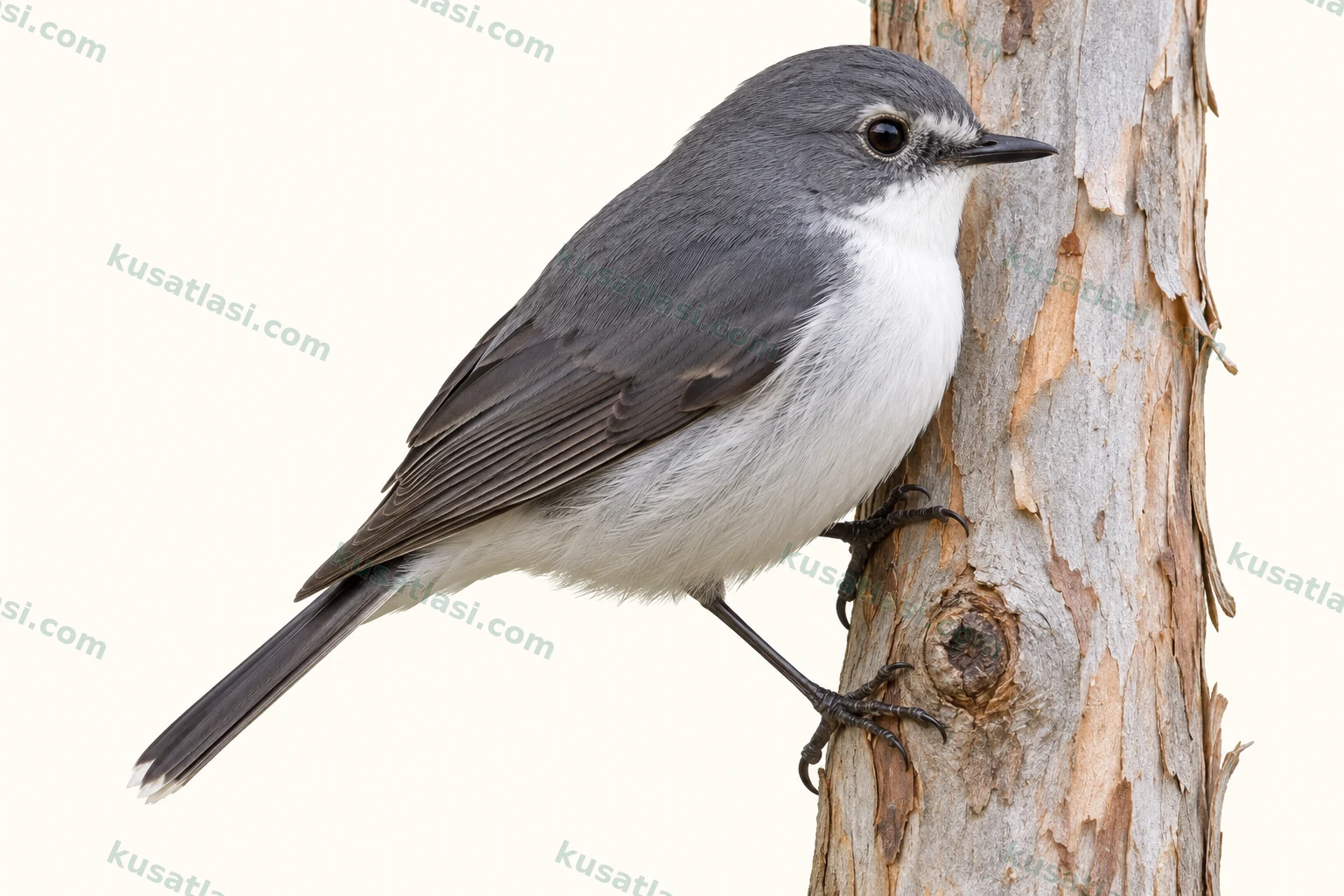
Petroicidae · Passeriformes
White-breasted Robin
Eopsaltria georgiana
Ak Karınlı Bülbül
Grey upperparts and white breast and underparts.
- Order
- Passeriformes
- IUCN Status
- LCLeast Concern
Biometrics
Length
- Male
- 15–17 cm
- Female
- 15–17 cm
Wing length
- Male
- 7.76 cm
- Female
- 7.76 cm
Weight
- Male
- 19–22.5 g
- Female
- 15–19 g
Detailed explanations of these measurements are available on our website, on the same species page.
At a Glance
- Upperparts
Grey.
- Underparts
White.
- Compare
E. griseogularis: yellow rump.
Males and females do not differ in plumage colour.
Calendar
Manjimup (Western Australia) laying records: July–December.
Species Information
Quick Identification
Look for the contrast between grey upperparts and white underparts.
General Appearance and Posture
The head and back are grey; wings and tail are darker.
Males, Females and Young Birds
Males and females do not differ in plumage colour. Birds replacing their juvenile plumage may resemble adults while retaining dark brown juvenile flight feathers and pale-tipped wing coverts. Age assessment should not rely on a single distant photograph.
Appearance in Flight
A white pattern in the tail can be visible in flight.
Voice and Behaviour
Calls include “twick-twick”.
Similar Species
Compare with Eopsaltria griseogularis; its yellow rump is an important distinguishing feature.
World Distribution
It is endemic to southwestern Western Australia. AviList 2026 gives its range from Kalbarri to Esperance; it is not distributed throughout Australia.
Status Within Its Natural Range
AviList 2026 and the Cornell account recognise no subspecies. The current scientific name used here is Eopsaltria georgiana.
Movements
At Manjimup, Western Australia, groups were resident; males ranged more widely outside breeding.
Breeding Habitat
Uses karri forest, streamside thickets and coastal heath.
Nest Site
Campbell’s 1889 observations in Western Australia placed nests in small tree forks, grass-trees or dense bushes. The historical account describes a cup of bark strips and fine twigs, lined with fine rootlets and grass. This is a historical observation, not a modern experiment.
Daily Habitat Use
It may cling sideways to a tree trunk while watching for prey.
What It Eats
It eats insects such as beetles, ants and wasps.
How It Hunts
It may take prey from the ground or air.
Breeding Monitored at Manjimup
In the 1978–1987 study near Manjimup, Western Australia, some groups were followed until 1992. Clutches usually contained two eggs; incubation lasted 16–17 days and the nestling period 13–14 days. These values describe that study population.
Interpreting the Effect of Helpers
In the same Australian study, helpers were predominantly male. The most productive groups combined several helpers with high-quality territories, so the two effects could not be separated.