
World Birds
Field Guide Plates
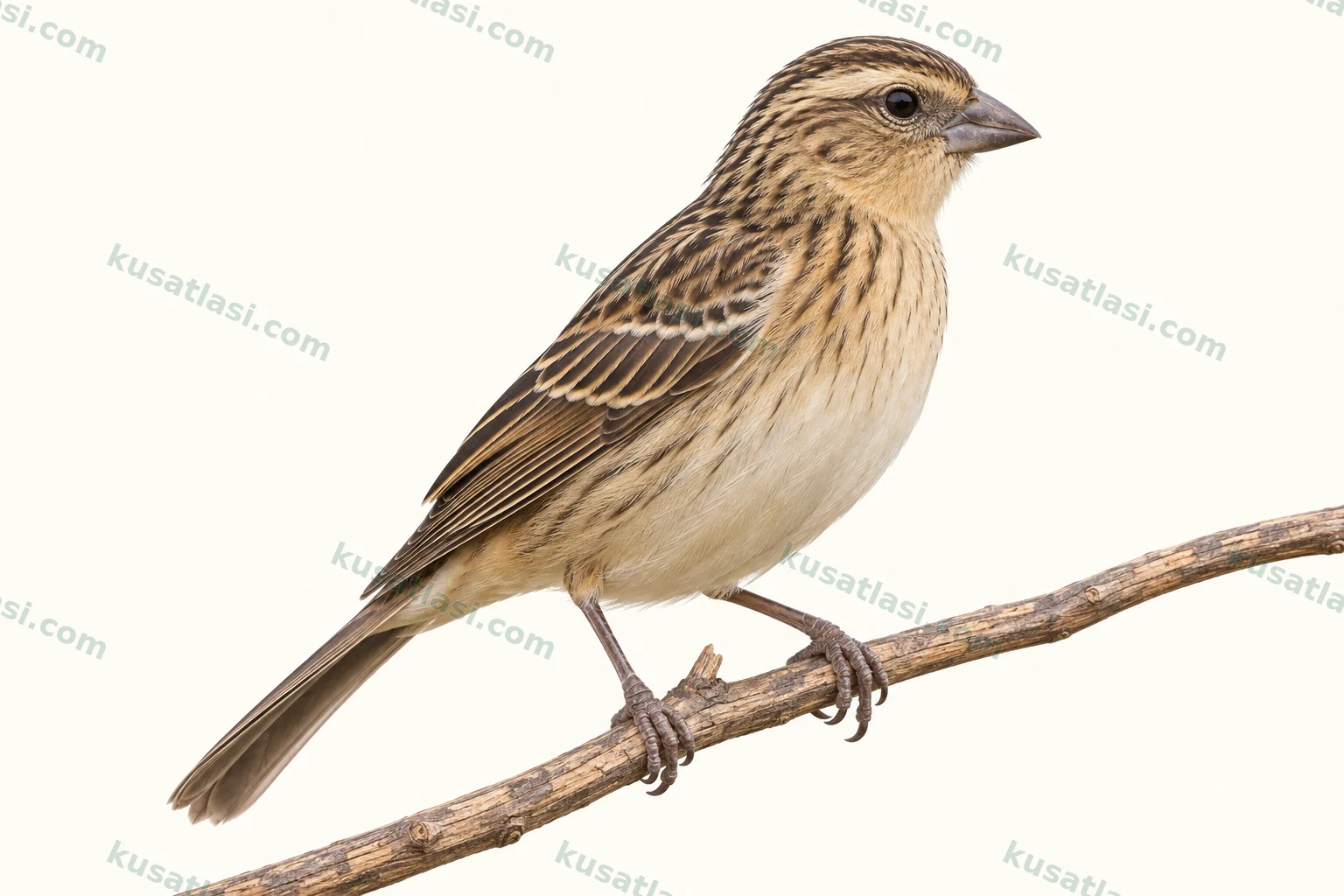
Swipe between the two adult plates.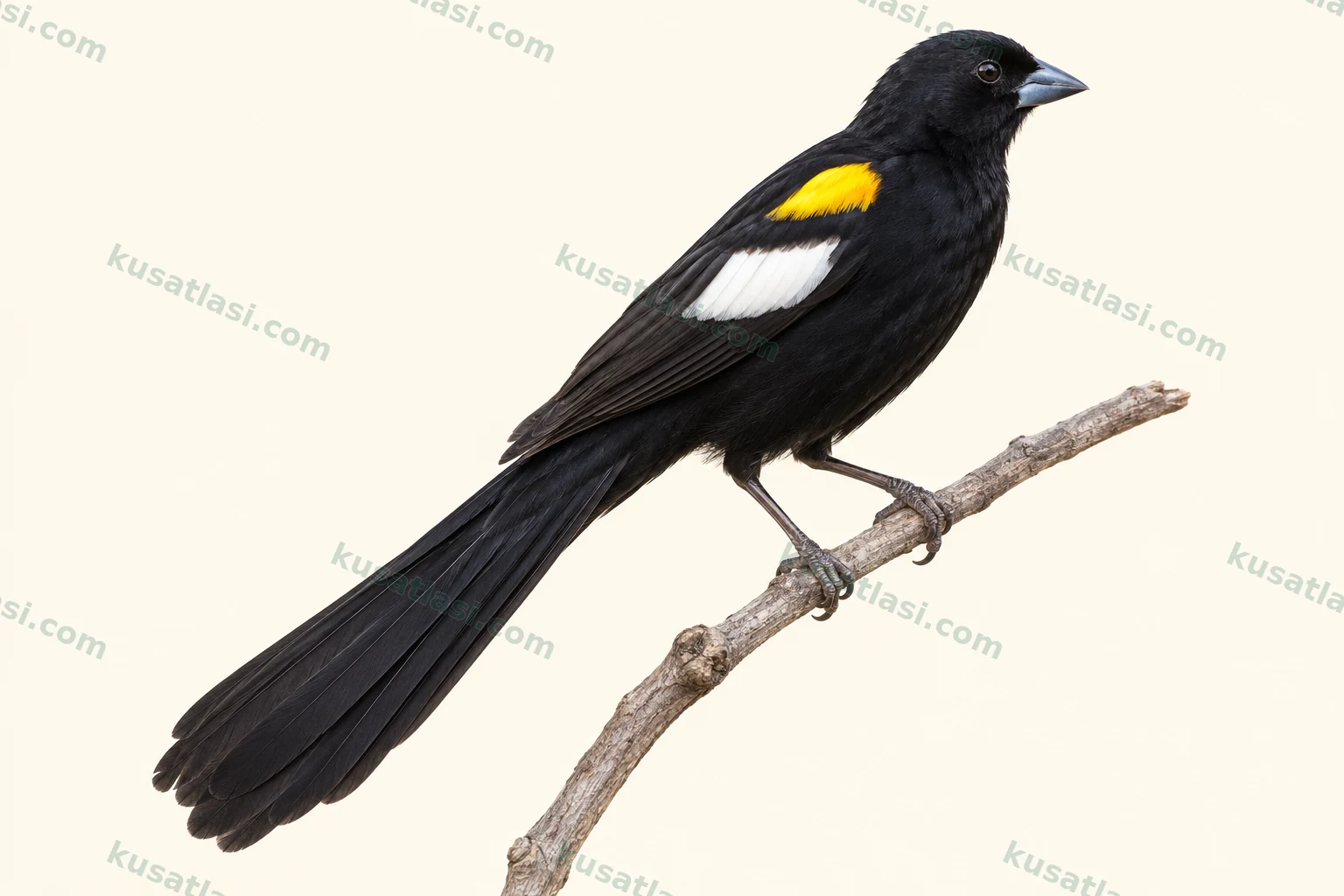
Ploceidae · Passeriformes
White-winged Widowbird
Euplectes albonotatus
Ak Kanatlı Dulkuşu
In breeding males, assess white wing patch, pale underwing and region-appropriate shoulder colour together.
- Order
- Passeriformes
- IUCN Status
- LCLeast Concern
Biometrics
Length
- Male
- 14 cm
- Female
- 14 cm
Wing length
- Male
- 7.27 cm
- Female
- 7.27 cm
Weight
- Male
- 20–27 g
- Female
- 16–24 g
Detailed explanations of these measurements are available on our website, on the same species page.
At a Glance
- White wing patch
Contrasts with breeding black.
- Yellow or cinnamon shoulder
Depends on region and subspecies.
- Tall grass
Protect nest-supporting stems.
Females and nonbreeding males differ from black breeding males; shoulder colour varies geographically.
Calendar
Breeding is mainly October/November–March in South African summer-rainfall grassland; other regions differ.
Species Information
Quick Identification
In breeding males, assess the black body, white wing patch, pale underwing and fan-shaped tail together. The shoulder patch is yellow in southern African birds but cinnamon-rufous in the East African eques group. Not every bird should be expected to have a yellow shoulder.
General Appearance and Posture
A male above rank grass stands out through its pale wing markings. White does not cover the entire wing. Breeding males of the western subspecies asymmetrurus have a much more developed tail than other groups, so regional birds should not be reduced to one invariant silhouette.
Males, Females and Young Birds
Females and nonbreeding birds do not resemble a black breeding male. A nonbreeding male may look female-like while retaining the coloured shoulder patch. Pale underwings, wing markings and a relatively long tail are useful in flight, but females can be difficult to identify from a single view. A detailed visual juvenile ageing key was not verified in this review.
Appearance in Flight
Open wings reveal white areas and pale underwings that may be partly concealed at rest. Compare tail shape and the shoulder colour appropriate to the region as well. A black bird flying over rank grass is not sufficient by itself.
Voice and Behaviour
A male defends a breeding territory and can breed with several females; this does not imply the same number of mates for every male. Song, calls and alarm recordings are documented from Kenya, South Africa and Zambia. Nonbreeding flock behaviour and a territorial breeding male belong to different contexts.
Similar Species
Yellow-mantled Widowbird (Euplectes macroura) is a comparison species. Separation of females and nonbreeding males is particularly difficult; neither a vernacular name nor one shoulder patch should settle identification. Seek White-winged Widowbird’s wing markings, underwing and tail together.
World Distribution
It has a patchy distribution in eastern, southeastern and parts of western sub-Saharan Africa. The western group occurs on São Tomé and from Gabon towards Angola; eques occupies eastern and east-central Africa; albonotatus extends from southern Tanzania into southeastern Africa.
Status Within Its Natural Range
The southern group includes Zambia, Malawi, Zimbabwe, Mozambique, Eswatini and eastern South Africa, with occurrence also in northeastern Namibia and northern and eastern Botswana. An older blanket statement that it is absent from Namibia is not equivalent to this current subspecies range.
Movements and Migration
Generally treated as resident, it can nevertheless move outside breeding and disperse beyond its usual range. No regular long-distance route linking the whole African range was verified in this review. Breeding months from different countries are not combined into one continental schedule.
Breeding Habitat
It uses tall grassland with scattered bushes. Upright grass stems supporting the nest are important; not every open short lawn provides equivalent nesting habitat. Nests are supported within dense grass.
Nest Site
The nest is an oval grass structure with a broad side entrance. The male weaves a framework from dry and partly green grass, and the female completes the interior with finer dry grass. The specialist account reports two to four eggs, female incubation of 12–15 days and an 11–14-day nestling period. These are not identical completion dates for every nest.
Females feed nestlings mainly by regurgitation. Leaving the nest and becoming independently fed are different events. During mowing or observation, avoid blocking entrances, opening nests or trampling cover.
Daily Habitat Use
Feeding areas, breeding territory and nest serve different functions. After catching flying termites it can return to a perch to eat them, showing why it should not be imagined solely as a bird picking seeds from the ground.
What It Eats
Grass seeds are the main food, supplemented by insects and nectar. Recorded foods include Aloe marlothii nectar and winged termites. Millet is also eaten in some areas, not an exclusive dependence on cultivated grain throughout the range.
How It Forages
It searches grassy habitats for seeds and is reported to catch termites both on the ground and in the air. Foraging method varies with food type. A predominantly plant-based diet does not exclude insect or nectar feeding.
Flight-Feather Replacement After Breeding
A 2006 analysis from summer-rainfall grasslands in South Africa documents replacement of White-winged Widowbird’s long flight feathers after breeding. This calendar is not copied from a different Euplectes species in a winter-rainfall region, nor are another species’ longer moult durations assigned to it.
A New Occupant of an Old Nest
Vacated White-winged Widowbird nests can be used by Orange-breasted Waxbill (Amandava subflava). This is reuse of an abandoned structure, not a female widowbird raising that species’ young in an active nest.
Brood Parasitism Is Different
Brood parasitism by Diederik Cuckoo (Chrysococcyx caprius) is also recorded. Here another species lays an egg in an occupied host nest, unlike later occupation of an empty old nest. Its occurrence does not imply that every nest is parasitised.
Shoulder Colour Invites a Geographic Check
A breeding male with cinnamon rather than yellow shoulders is not automatically a wrong species or an abnormal colour form. The East African eques group is characterised by that appearance. Regional subspecies variation should not be interpreted as an adult sex difference.