
World Birds
Field Guide Plates
Swipe between the two adult plates.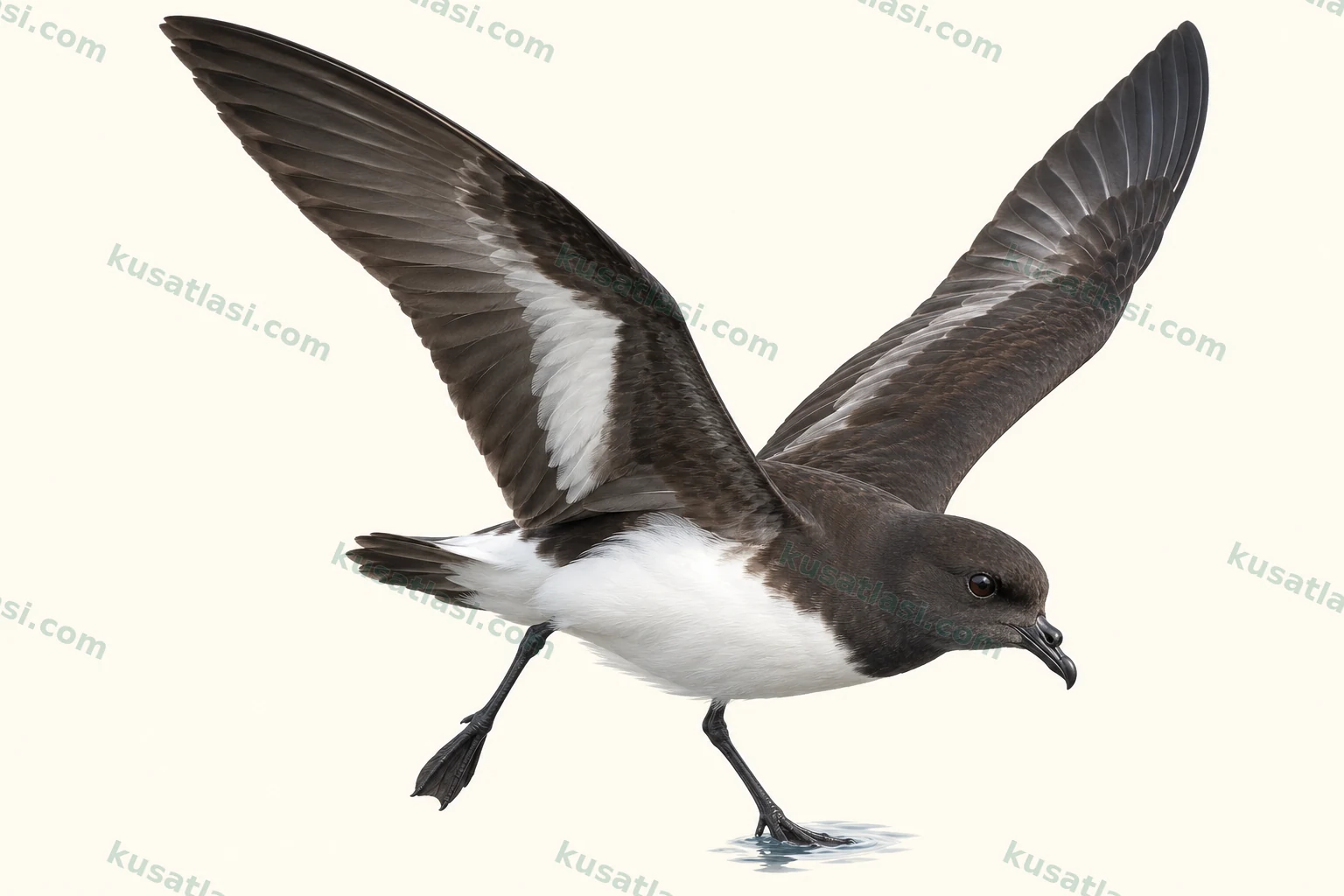
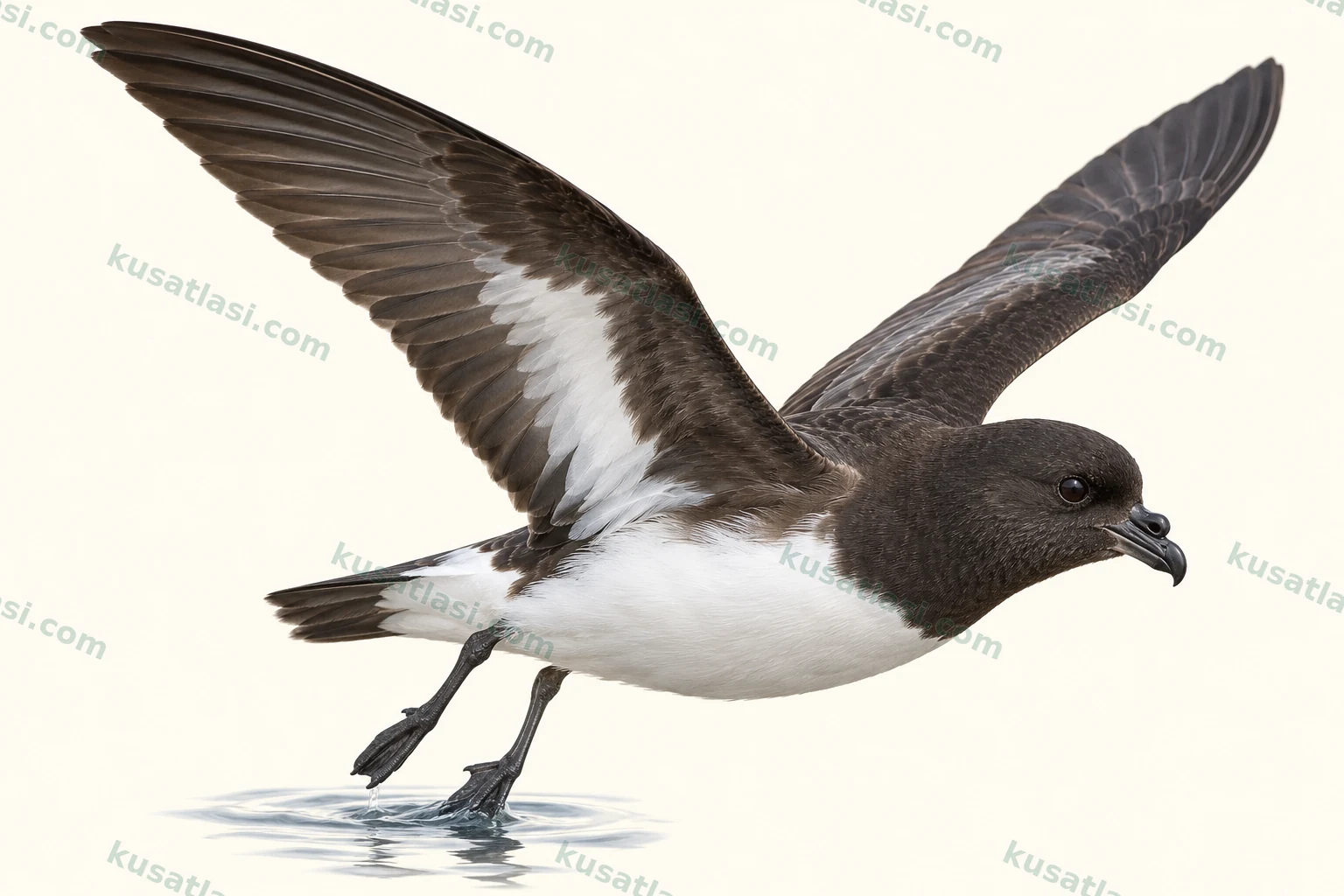
Oceanitidae · Procellariiformes
White-bellied Storm Petrel
Fregetta grallaria
Ak Karınlı Fırtınakırlangıcı
Typical: dark above, white belly and rump.
- Order
- Procellariiformes
- IUCN Status
- LCLeast Concern
Biometrics
Length
- Male
- 19–20 cm
- Female
- 19–20 cm
Wingspan
- Male
- 46 cm
- Female
- 46 cm
Weight
- Male
- 38.8–69 g
- Female
- 38.8–69 g
Detailed explanations of these measurements are available on our website, on the same species page.
At a Glance
- Upperparts
Dark.
- Belly
White in typical birds.
- Flight
Feet near the tail tip.
Pale–dark plumage is not a sex difference.
Calendar
Lord Howe: November–May breeding season.
Species Information
Quick Identification
Typical birds show sooty-black upperparts, a white rump and a white belly.
General Appearance and Posture
Fresh back feathers have white tips. Colour varies: almost wholly dark birds also occur in Australia’s Lord Howe group.
Males, Females and Young Birds
Males, females and young have similar plumage.
Appearance in Flight
In low flight, the feet may reach the tail tip or project just beyond it.
Sounds and Behaviour
At nest sites it gives soft, high twittering calls.
Similar Species
Fregetta tropica usually has a dark central belly stripe. F. maoriana has irregular dark streaking below.
World Distribution
It breeds on remote islands of the South Pacific, South Atlantic and Indian Oceans. AviList 2026 recognises four subspecies: grallaria in the Lord Howe and Kermadec groups, leucogaster around Tristan da Cunha–Gough and southern Indian Ocean islands, segethi on San Félix, San Ambrosio and Juan Fernández off Chile, and titan around Rapa. New Caledonian F. lineata is separate.
Status Within Its Natural Range
In the accessed BirdLife assessment, dated 2018, decline is suspected from ongoing threats; no systematic global monitoring scheme is reported. The approximately 300,000 individuals cited on that page derive from a 2004 synthesis and should not be read as a current census.
Movements
After breeding it may disperse north into tropical waters. Some birds of the nominate subspecies around New Zealand remain near colonies through much of the year.
Breeding Habitat
The 2007 official synthesis for Australia’s Lord Howe group describes a November–May breeding season. One egg is laid in late January–March; shared incubation lasts about 37 days and the chick leaves the nest at about 80 days. These figures concern Lord Howe.
Nest Site
On Roach Island, Australia, it uses narrow cavities in rock piles and eroding basalt dykes. Researchers report that these spaces are too small for larger shearwaters to enter.
Daily Habitat Use
It spends most of its life at sea, approaching land chiefly around breeding colonies. Loose colonies occupy offshore islets with rock crevices or burrows.
What It Eats
It eats small squid and crustaceans.
How It Forages
It patters its feet across the water and dips to take prey at the surface.
Two Different Estimates Do Not Alone Give a Decline Rate
On Roach Island, Australia, seven incubating nests were found in a defined rocky area in February 2010. Extrapolating their density across suitable rock habitat and adding six incubation records elsewhere produced an island estimate of 49 pairs. An earlier assessment had suggested over a thousand pairs in 1971. However, the 2013 paper’s authors stress that the older estimate may have been overly optimistic given the limited habitat.
One Chick Can Provide Important Breeding Evidence
A nearly fledged chick found dead on Macauley Island in New Zealand’s Kermadec group on 3 August 1966 provided the country’s first breeding record. A small downy chick in a Curtis Island rock crevice on 21 May 1982 supplied further evidence. Veitch and colleagues’ 2004 review reports that 23 adults caught on Curtis in October–November 1989 did not appear to be nesting then. These were separate visits: an estimated chick age or adult capture interval is not an incubation period.
Documented Nests in a Small Colony
The February 2010 survey of Soldiers Cap, Australia, found adults incubating eggs in two separate rock crevices. By the May visit those two eggs were abandoned, with another egg nearby. This was the first documented nesting on the islet. The eggs were observations from separate nest sites, not evidence of a three-egg clutch.