
World Birds
Field Guide Plates
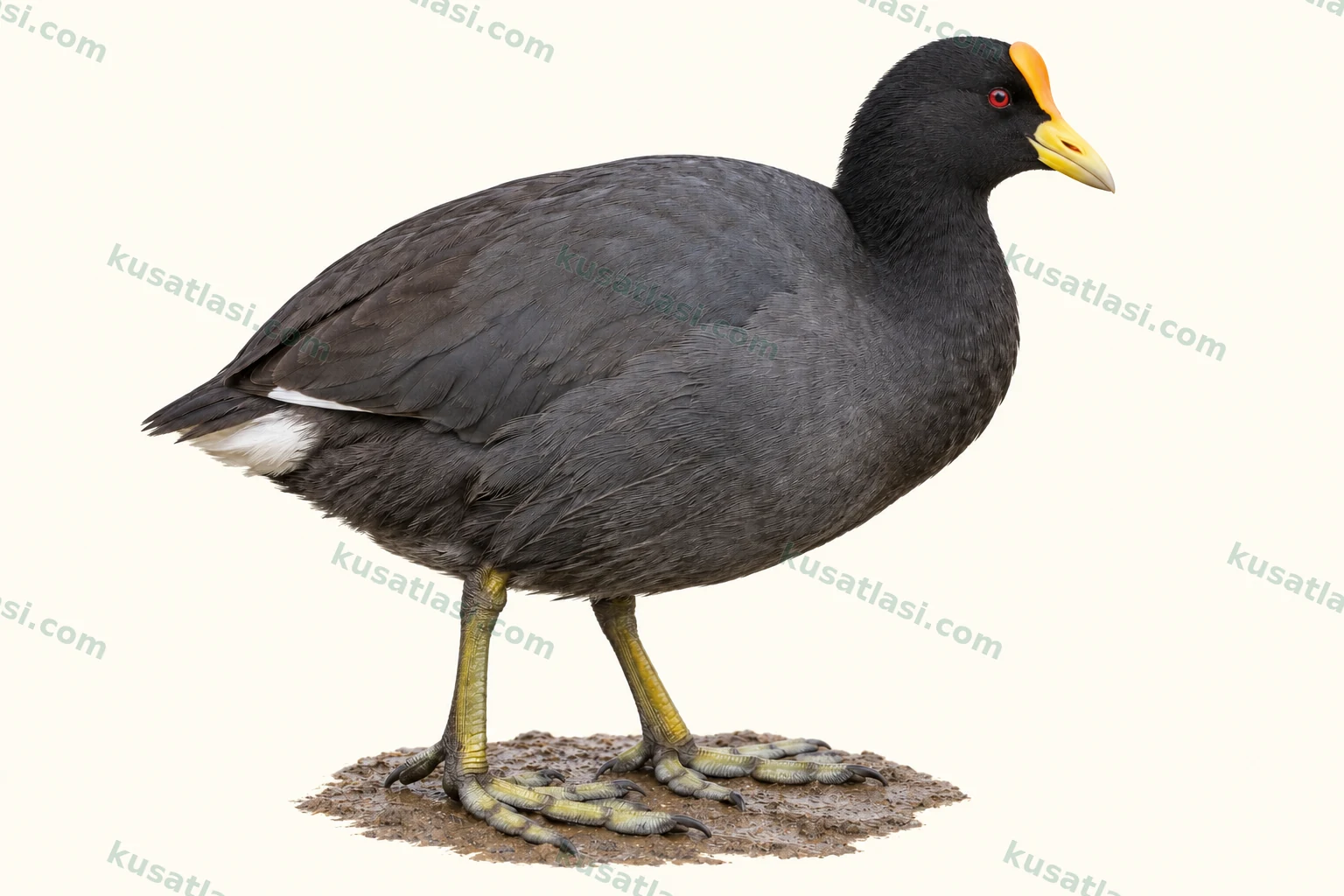
Swipe between the two adult plates.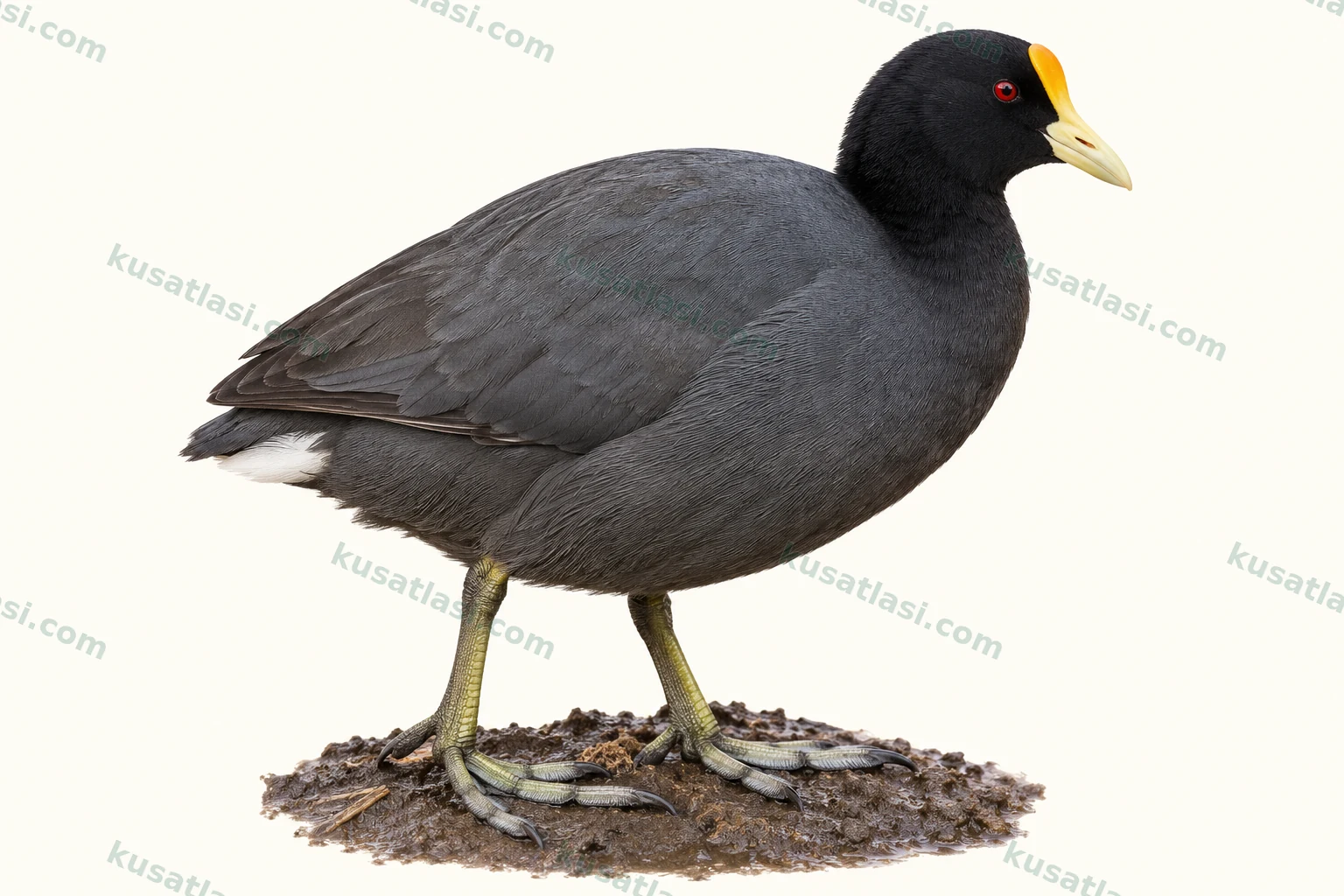
Rallidae · Gruiformes
White-winged Coot
Fulica leucoptera
Ak Kanatlı Meke
Assess the rounded frontal shield, dark body and white trailing wing edge together.
- Order
- Gruiformes
- IUCN Status
- LCLeast Concern
Biometrics
Length
- Male
- 35–43 cm
- Female
- 35–43 cm
Wing length
- Male
- 18.22 cm
- Female
- 18.22 cm
Weight
- Male
- Data unavailable
- Female
- 400–607 g
Detailed explanations of these measurements are available on our website, on the same species page.
At a Glance
- Rounded frontal shield
Its colour alone is insufficient for identification.
- White trailing wing edge
Do not expect an entirely white wing.
- White undertail
Check together with the dark head and body.
Adult sexes look alike; juvenile colours do not establish an exact age.
Calendar
Nesting seasons differ between Córdoba and La Angostura; no whole-range monthly calendar is supplied.
Species Information
Quick Identification
A dark coot with a black head and neck, dark slate body and white undertail coverts. The rounded upper edge of its frontal shield and white trailing wing edge are useful in combination.
General Appearance and Posture
The bill is yellow or greenish-yellow, sometimes with a dark tip. Frontal-shield colour can range from yellow to orange shades. Colour alone should not be assumed to determine the species.
Males, Females and Young Birds
Adult sexes look alike. Observations at Guapilo, Bolivia, described small chicks as blackish with orange bare areas on the face and neck. Older young had whitish throats and cheeks and dark bills. These observations do not provide an exact daily ageing key.
Appearance in Flight
The white trailing edge becomes conspicuous in flight or during wing-flapping runs over the water. Its name does not imply an entirely white wing.
Voice and Behaviour
It can form large groups, swimming in shallow water and sometimes diving. Species-diagnostic call features were not adequately verified for this account, so no definitive voice-based identification key is supplied.
Similar Species
It is readily confused with Red-gartered Coot (Fulica armillata). Check the rounded frontal shield, absence of a red bordering line and trailing wing edge, rather than relying on dark body colour alone.
World Distribution
Widespread in southern South America, it ranges from Chile and Argentina north to Bolivia, Paraguay and southernmost Brazil, and also occurs in Uruguay. It is treated as monotypic.
Status Within Its Natural Range
It breeds in artificial as well as natural wetlands. Observations in 2004–2005 at La Angostura reservoir, Tucumán, Argentina, and in 2018–2019 at Guapilo lake, Santa Cruz, Bolivia, document nesting. These local records do not establish that every reservoir or urban lake is equally suitable.
Movements and Migration
The General San Martín, Córdoba study describes the species as resident. Authors of the Guapilo study likewise regard the local population as resident. These findings do not mean that birds never move anywhere in the range; no single verified migration route is supplied for the whole species.
Breeding Habitat
It inhabits various inland wetlands with open or grassy shores. Nesting was recorded in September–February at La Angostura, versus August–May in the 1980–2005 Córdoba study. These different local seasons should not be converted into a single calendar for all South America.
Nest Site
The nest floats on or is supported by aquatic vegetation. Most monitored nests at La Angostura lacked a separate access ramp. The Córdoba study reports clutches of 3–7 eggs for this species. Both parents were observed building and feeding young at Guapilo. Incubation duration and time to flight were not adequately verified.
Daily Habitat Use
At Costanera Sur reserve, Buenos Aires, observations in November 1988 distinguished feeding in open water from resting on muddy, vegetated shores. The study used morning counts at one pond, not a fixed allocation for the entire day or every wetland.
What It Eats
It has a mixed diet dominated by plant foods. An examination of digestive-tract contents from 15 adults at Carabajal Island, Santa Fe, Argentina, recorded Paspalum repens and Polygonum seeds along with aquatic insects, snails and arachnids. This does not establish an exclusively plant diet or identical animal-food proportions across regions.
How It Forages
A comparison of three Buenos Aires Province lakes in spring 1997 distinguished surface pecking, head submergence, upending and diving. Different techniques predominated at Cotis, Monte and Perón. The findings support flexibility among habitats, without demonstrating water depth as its sole cause.
Not Every Egg in a Coot Nest Belongs to a Coot
Some nests in the Córdoba study contained eggs of Black-headed Duck (Heteronetta atricapilla). These must not be added to the coot’s own clutch. The observation documents another species using the nest, not abandonment of the coot’s own reproductive behaviour.
Waste in a Nest Is Not Necessarily a Useful New Material
Foam plastic and packaging were recorded among vegetation in two nests at Guapilo, Bolivia. This does not demonstrate improved nesting success or selection of a safe material. Nor does it establish the same material use in every coot species.
The Number of Food Types Is Not the Amount Eaten
Although several animal-food groups were detected in the Carabajal study, the overall conclusion was predominantly plant feeding. Counting insect or snail categories alone does not measure their contribution to total intake. The study’s importance index is not a simple dietary percentage and should not be converted into a fixed species-wide proportion.