
World Birds
Field Guide Plates
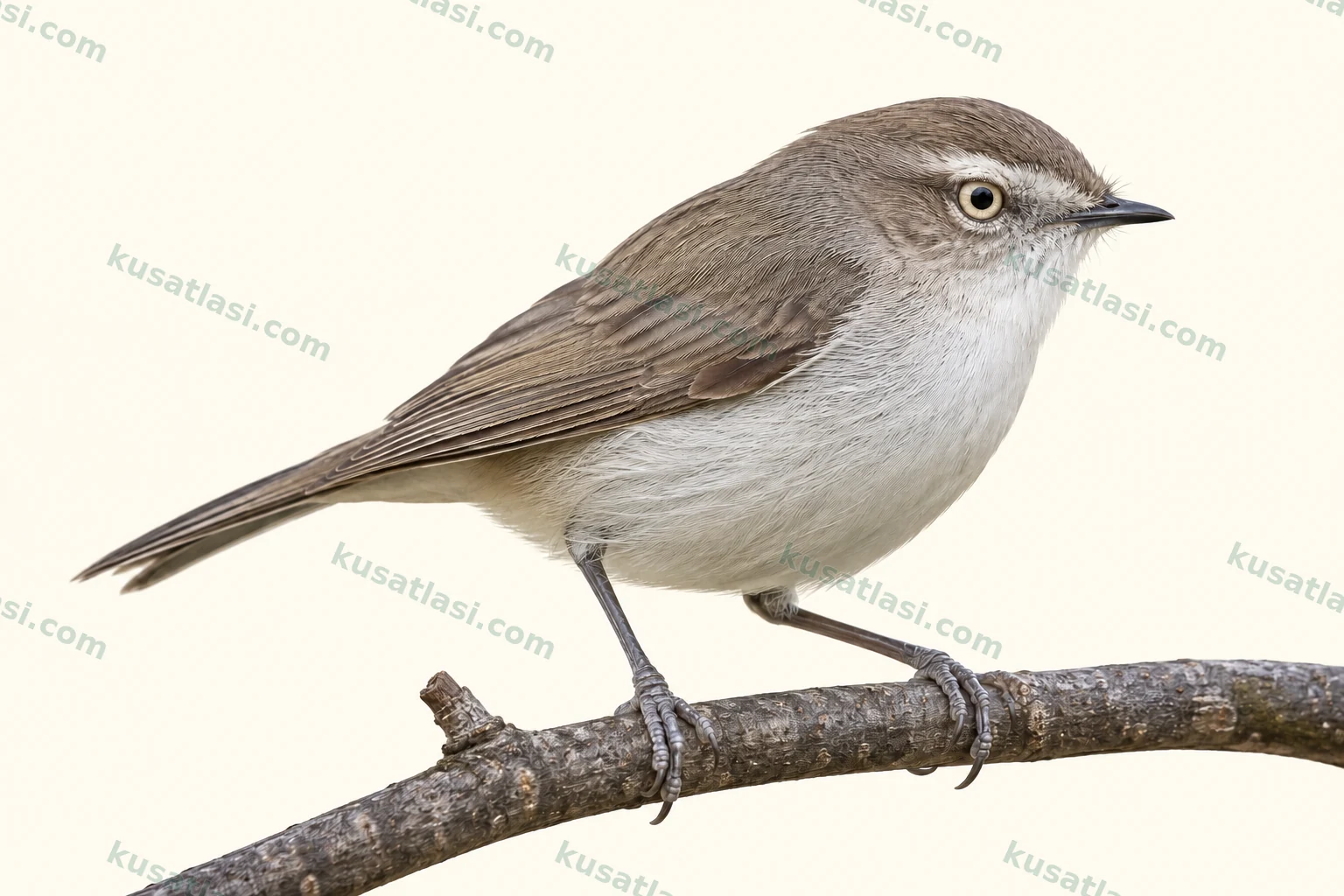
Swipe between the two adult plates.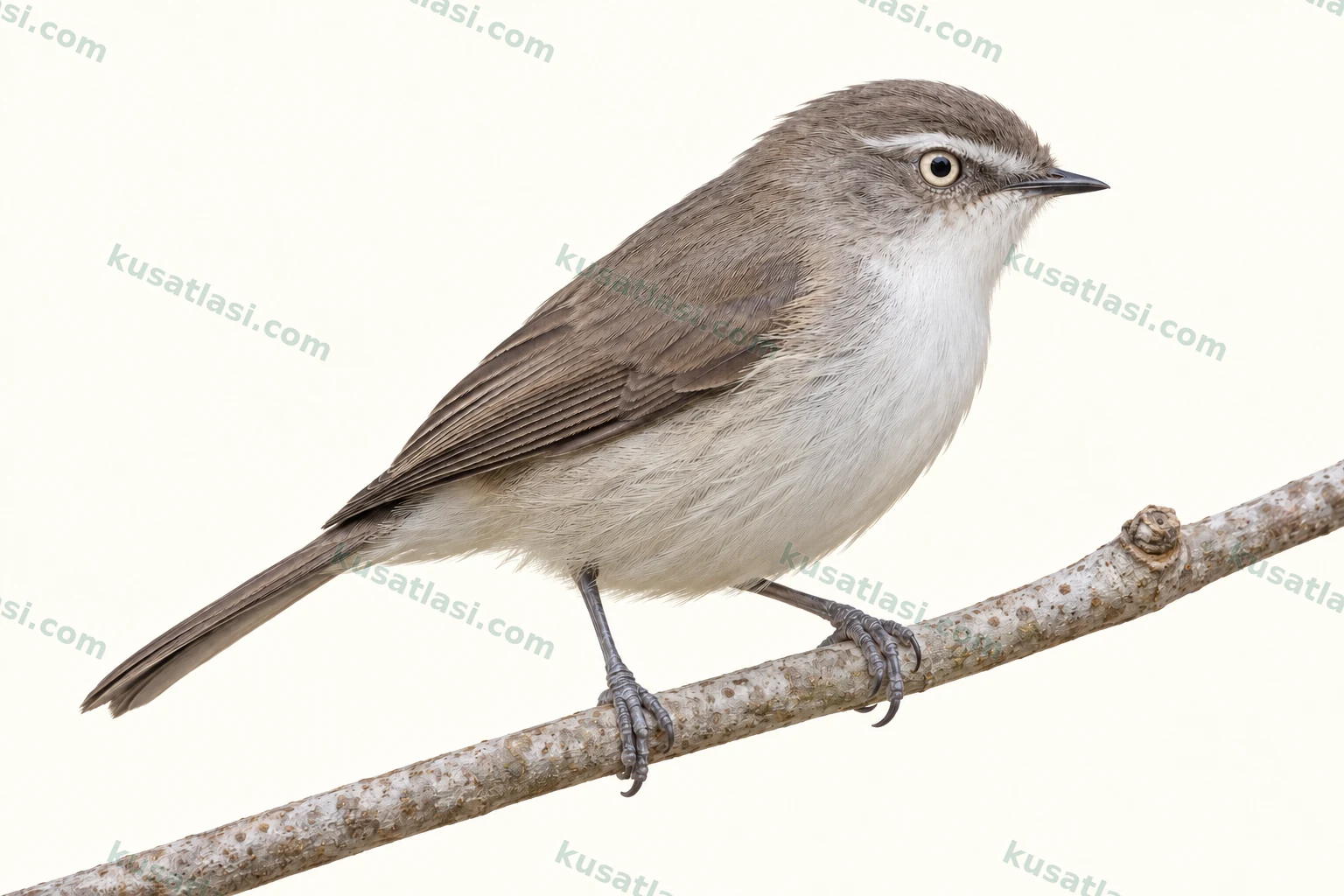
Acanthizidae · Passeriformes
Dusky Gerygone
Gerygone tenebrosa
Ak Gözlü Mangrov Gerigonu
Assess the light iris, pale grey body and dark facial line together with mangrove habitat.
- Order
- Passeriformes
- IUCN Status
- LCLeast Concern
Biometrics
Length
- Male
- 10–13 cm
- Female
- 10–13 cm
Wing length
- Male
- 5.57 cm
- Female
- 5.57 cm
Weight
- Male
- 5.8–10 g
- Female
- 5.8–10 g
Detailed explanations of these measurements are available on our website, on the same species page.
At a Glance
- White or cream iris
The surrounding ring may be obscure and broken.
- Grey or olive-grey body
Off-white below, greyer on the breast sides.
- Whitish eyebrow and dark facial line
Check voice and coastal locality as well.
Adult sexes look alike; pale eyes and yellowish tones in young birds are not an exact ageing key on their own.
Calendar
The Western Australian museum publication reports June breeding in Kimberley, September–October in the Pilbara and October–January around Carnarvon. These regions are not combined into one common monthly window.
Species Information
Quick Identification
Dusky Gerygone is a small mangrove bird native only to the coast of Western Australia. Assess the pale grey or olive-grey body, light iris, whitish eyebrow and dark bill together. A dark line between eye and bill contributes to the facial pattern. Voice and mangrove habitat provide additional context when separating it from other small coastal birds.
Appearance and Posture
Crown, back and upperwing are pale grey or olive-grey, sometimes warmer brown towards the rump. Flight feathers have paler edges. The grey-brown tail has an indistinct dark band near the tip and small whitish marks near the ends of the outer feathers.
The whitish eyebrow extends a little behind the eye and can join its counterpart narrowly above the bill. A broken pale eye ring may be obscure. Throat and underparts are pale grey or off-white, with greyer breast sides and flanks. Adults usually have white or cream irides, with black bill and legs.
It is active among mangrove branches, moving by short hops, brief flights and momentary hovering. Single birds and pairs are usual, with small family groups also occurring. Dense foliage may reveal the head markings only intermittently, making one fleeting view insufficient.
Males, Females and Young Birds
Males and females share similar plumage. Although some size differences occur, measurement ranges overlap; apparent size at a distance or a single measurement does not permit certain sexing.
Young birds can show pale yellowish tones on the eyebrow, face and underparts, a paler base to the lower bill and a yellowish gape. Their irides can be grey, cream or yellowish, so a light eye alone is not an exact ageing key. Moult remains incompletely known; adult-like colour does not establish a precise year of birth.
Appearance in Flight
Foraging includes brief flights between branches and short hovers in front of foliage. Grey-brown wing and tail tones continue the general body appearance. Iris and eyebrow may disappear in a fleeting flight view, so not every small grey bird leaving a perch should be assigned to this species. The reviewed sources do not establish a diagnostic wingbeat rhythm on its own.
Voice and Behaviour
Song consists of repeated short whistled notes. Compared with Mangrove Gerygone’s more vigorous, varied song, it sounds more hesitant and repetitive. Partners feeding near each other may give short chattering contact calls. These contact sounds should be distinguished from the more organised song sequence.
Similar Species
1. Large-billed Gerygone (Gerygone magnirostris): Adults typically have red or reddish-brown irides and can show buffier underparts. Assess adult Dusky’s cream-white iris together with its greyer underparts. Young birds vary in eye and plumage tone, making one colour character insufficient. The Western Australian ranges meet particularly around the Yampi Peninsula; their replacement along much of the coast makes careful comparison especially important near that boundary.
World Distribution
Endemic to Australia, with its native range confined to coastal mangroves of Western Australia. It extends from southwestern Kimberley along the Pilbara coast, through the Exmouth area to the Carnarvon–Shark Bay region. Some coastal islands, including the Dampier Archipelago, are occupied. It is not widespread across all inland forests or the entire northern Australian coast.
Status within Its Range
Can be common in suitable mangroves, while coastal stretches lacking mangroves interrupt its range. The Western Australian museum study shows the importance of separate mangrove patches between treeless shores and long beaches. Its historical descriptions of local abundance are not a current statewide census. Current expert sources recognise northern tenebrosa and more southerly christophori, with only weak differences in appearance.
Seasonal Movements
Resident, although movements remain poorly known. Records on coastal islands and in isolated mangrove patches suggest some local movement. They do not establish regular long-distance migration or a route followed by all individuals on fixed dates.
Breeding Habitat
Mangrove woodland and thickets are its characteristic habitat. Western Australian research records varied mangrove structures in Kimberley, Rhizophora and Avicennia woodland and Avicennia–Ceriops thickets in the Pilbara, and particularly Avicennia communities around Carnarvon. These regional associations do not imply dependence on a single tree species. Claims of regular occurrence in inland rocky gorges or non-mangrove creek forest are not treated as verified in the expert account.
Nest Site
The nest is a tightly woven enclosed structure hanging from a mangrove branch. A narrow hooded entrance lies near the upper side, and a slender extension may hang below. Bark strips, dried seaweed, leaves and feathers are bound with spider web and plant fibres; soft plant material and feathers line the interior. Both adults participate in construction and feeding young.
Clutches contain two eggs, white to pale pinkish-white with reddish-brown spots and blotches concentrated towards the broader end. Incubation and nestling durations could not be verified in the reliable sources reviewed.
Johnstone’s 1990 Western Australian museum publication gives June breeding records for Kimberley, September–October for the Pilbara and October–January around Carnarvon. September–January should therefore not be imposed as an exclusive season throughout the range. These are regional records, not evidence of identical activity in every month of every year. Observe without handling nest branches or disturbing cover.
Daily Habitat Use
Most often forages in the outer leafy canopy, but can descend to trunks, larger branches and mangrove prop roots. Partners often remain near each other and maintain vocal contact, so nearby branches merit attention when one bird appears in dense growth.
What Does It Eat?
Insects predominate. The museum study of Western Australian stomach contents recorded moths and butterflies, beetles, sap-feeding bugs, wasps and flies. Spiders are also eaten, with snails and small crabs among less frequent foods. These regional samples support the food list without establishing identical percentages in every coastal population.
Attraction to flowering mangroves does not necessarily indicate nectar feeding. The direct observations reviewed describe insects taken around leaves and flowers. Occurrence at blossoms alone therefore does not justify assigning a nectar-dominated diet.
How Does It Forage?
Gleans prey from leaves and flowers on outer branches, using short jumps, brief hovering and sideways or inverted hanging from fine branches and leaves. Feeding is not restricted to aerial pursuit; trunk, branch and root surfaces are also examined. Partners feeding nearby may exchange short contact calls.
More Than One Evolutionary Route into Mangroves
A genetic study published in 2012, including Australian mangrove gerygones, found that the three mangrove specialists did not form one exclusive close-relative group. Using thirteen gene regions, analyses differed in the precise placement of Dusky Gerygone. The results support more than one evolutionary transition into mangroves without resolving every relationship.
Each sampled species was represented by one specimen; the Dusky sample came from Point Torment, Western Australia. That design does not measure genetic diversity across all coastal populations within the species. Sharing a habitat and being one another’s closest relatives are therefore separate questions.
The Extension below the Nest
In the Western Australian museum study, the lower extension varied with nest attachment. Nests suspended only from above generally had longer extensions than those supported from above and the sides. This is an observed structural association, not proof that the extension always deceives a particular predator or has one demonstrated mechanical function. Observed shape and proposed function should be distinguished.