
World Birds
Field Guide Plates
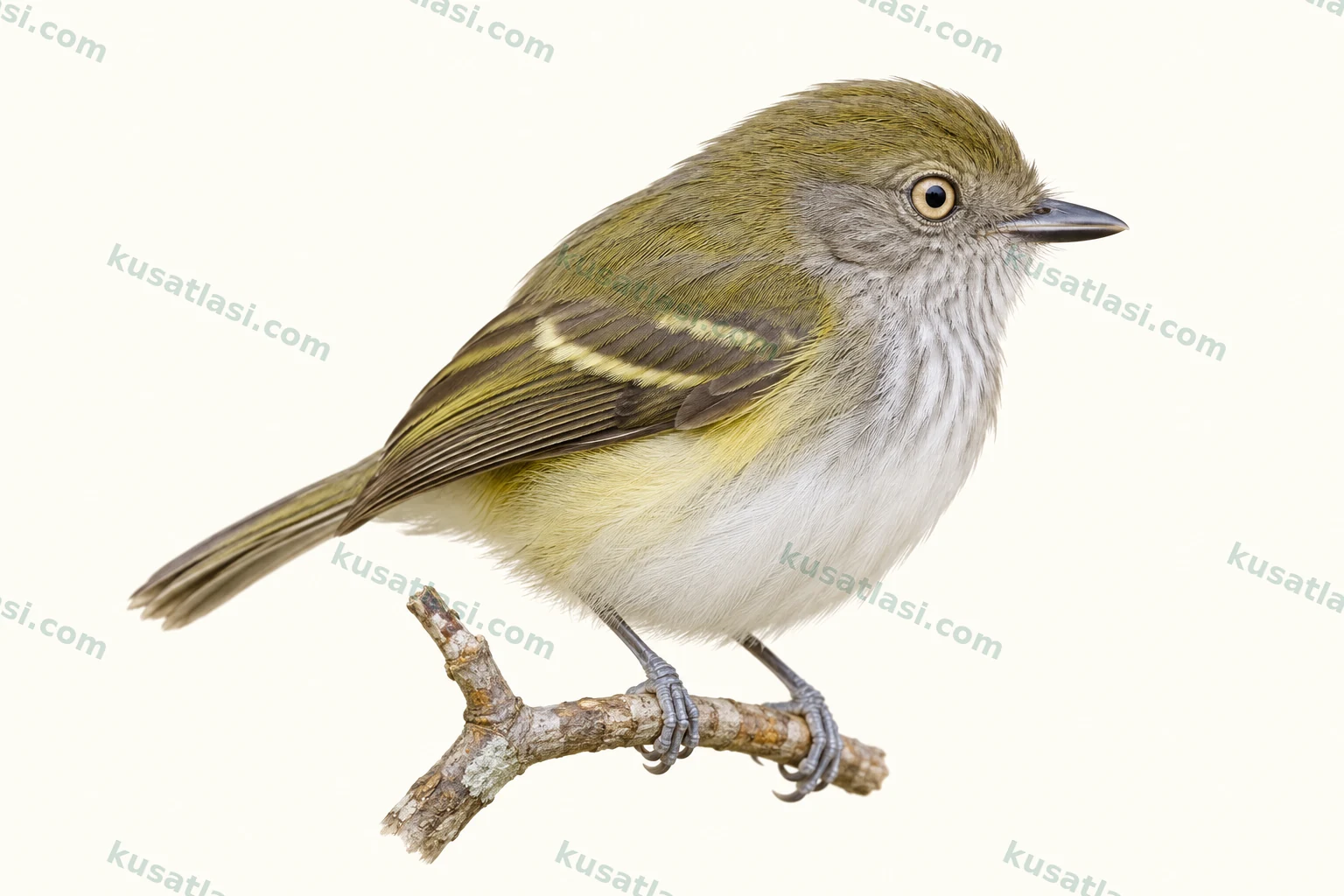
Swipe between the two adult plates.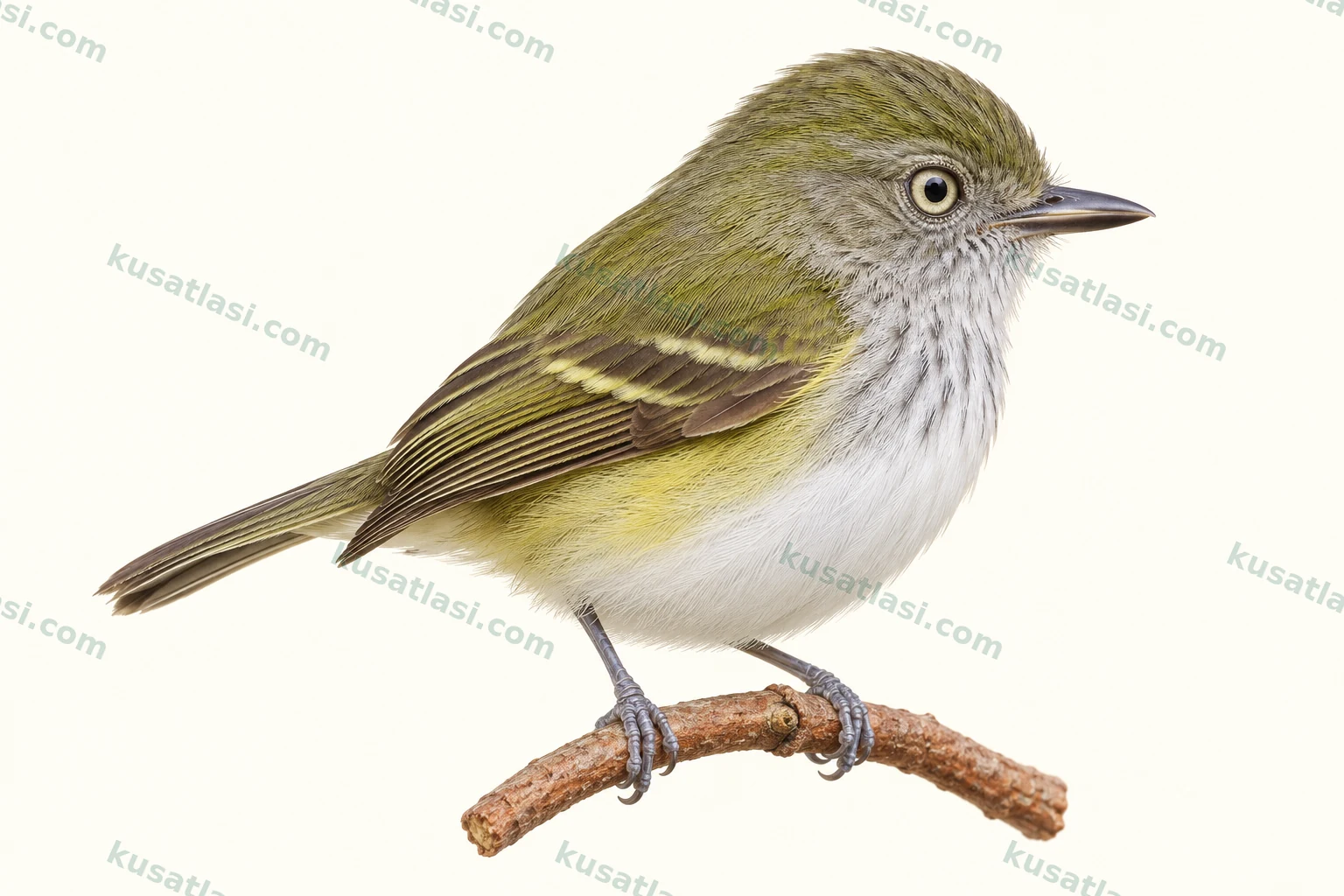
Tyrannidae · Passeriformes
White-bellied Tody-Tyrant
Hemitriccus griseipectus
Ak Karınlı Todi Tiranı
A tiny, short-tailed forest bird with pale underparts.
- Order
- Passeriformes
- IUCN Status
- LCLeast Concern
Biometrics
Length
- Male
- 11 cm
- Female
- 11 cm
Wing length
- Male
- 4.75 cm
- Female
- 4.75 cm
Weight
- Male
- 8.7–9.7 g
- Female
- 8.3 g
Detailed explanations of these measurements are available on our website, on the same species page.
At a Glance
- Tail
Short.
- Underparts
White.
- Call
A short “ta-teek”.
Reliable sexing was not verified.
Calendar
A complete breeding calendar was not verified.
Species Information
Quick Identification
A tiny, short-tailed forest bird with conspicuously white underparts.
General Appearance and Posture
The upperparts are light olive-green, the underparts greyish white, and the iris pale.
Males, Females and Young Birds
Reliable sexing and ageing were not verified in this review.
Appearance in Flight
Detailed species-specific identification in flight was not verified in this review.
Sounds and Behaviour
A short, hiccup-like “ta-teek” call is distinctive. Despite calling through the day, it can be difficult to see, sitting motionless on a branch before buzzing to another perch.
Similar Species
Compare small forest birds such as Tyranneutes stolzmanni. Cornell describes White-bellied Tody-Tyrant as greyer above and paler below.
World Distribution
Its Amazonian range extends from eastern Peru into northern and central Bolivia and across Brazil south of the Amazon towards the Tocantins region. A separate population occurs in northeastern Brazil’s Atlantic Forest. AviList 2026 recognises two subspecies: griseipectus in Amazonia and naumburgae in northeastern Brazil from Rio Grande do Norte to Alagoas.
Status Within Its Natural Range
BirdLife’s 2024 assessment gives no quantified global population. Decline is suspected from forest-cover loss; this is not a direct census across the species’ entire range.
Movements
It is not a migrant.
Breeding Habitat
Humid lowland forest is its main habitat, and forest dependence is high. The Bolivian expert guide also lists Amazonian terra-firme forest, transitional forest and humid foothills.
Nest Site
The public introduction to Cornell’s 2023 expert account describes a hanging, enclosed nest and notes that most details of breeding biology remain unknown. Reliable clutch size, incubation duration and time to fledging were not verified in this review.
Daily Habitat Use
The Bolivian guide places it singly in the understory and lower midstory, reporting no association with mixed-species flocks in that regional account.
Food
The Bolivian expert guide lists arthropods and fruit among its foods.
Foraging Methods
It makes short upward sallies towards food on foliage and branches.
Modelled Habitat for One Subspecies
Dias, Silveira and Francisco’s 2024 study examines threatened forest birds in the Pernambuco Endemism Center of northeastern Brazil. White-bellied Tody-Tyrant is represented by subspecies naumburgae; its results do not describe the entire Amazonian range of griseipectus.
The researchers cleaned location records from museum, observation and other datasets and combined several distribution models. Forest variables included 2020 land-cover data. The table estimates 2,807 km² of suitable forest for naumburgae, including 219 km² of protected suitable forest. These are modelled areas based on particular data and methods, not numbers of birds or nests.
Proposed forest connections in the study are not completed corridors demonstrated to be used by birds. The models explore conservation priorities rather than documenting this species’ tracked movements or breeding success.