
World Birds
Field Guide Plates
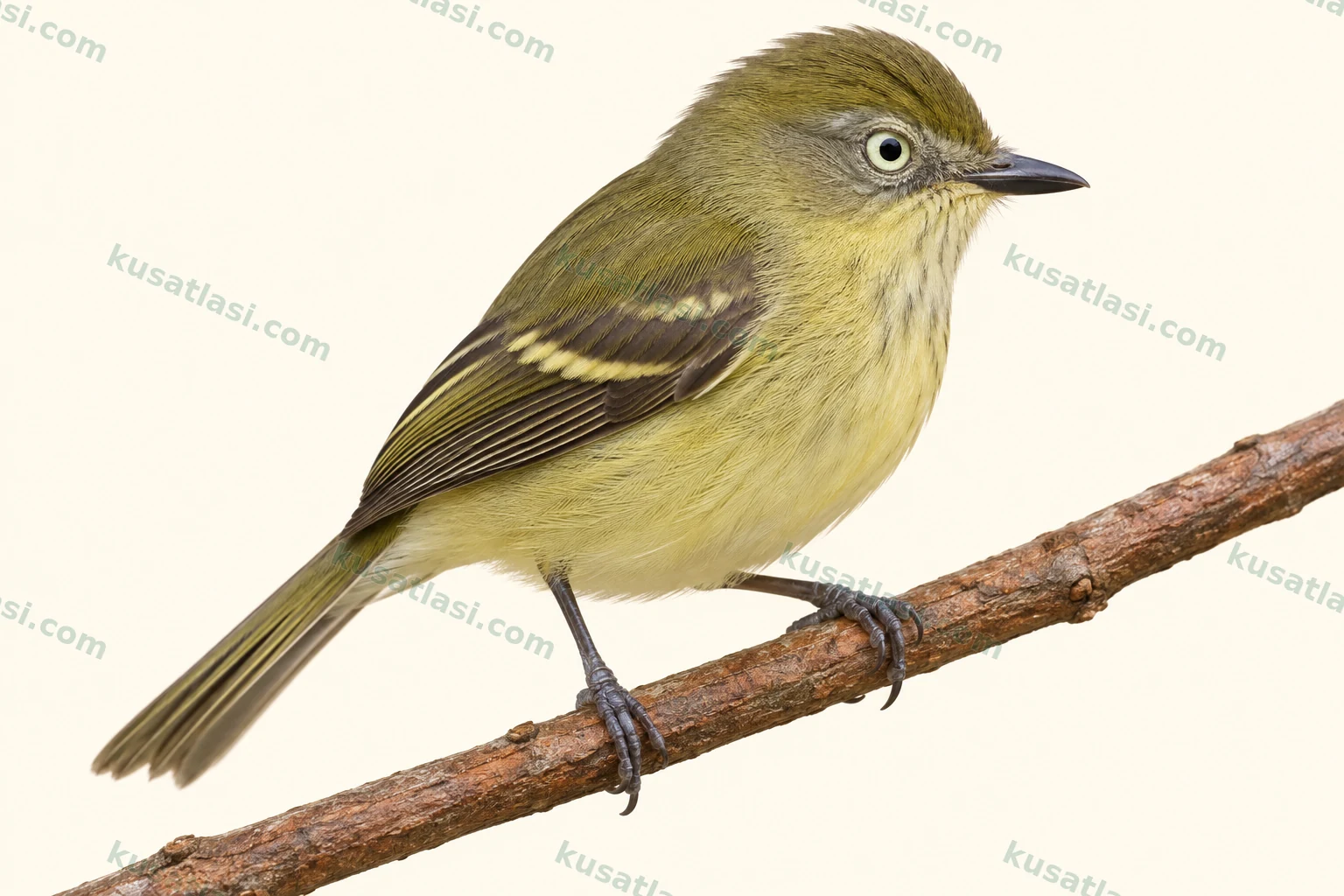
Swipe between the two adult plates.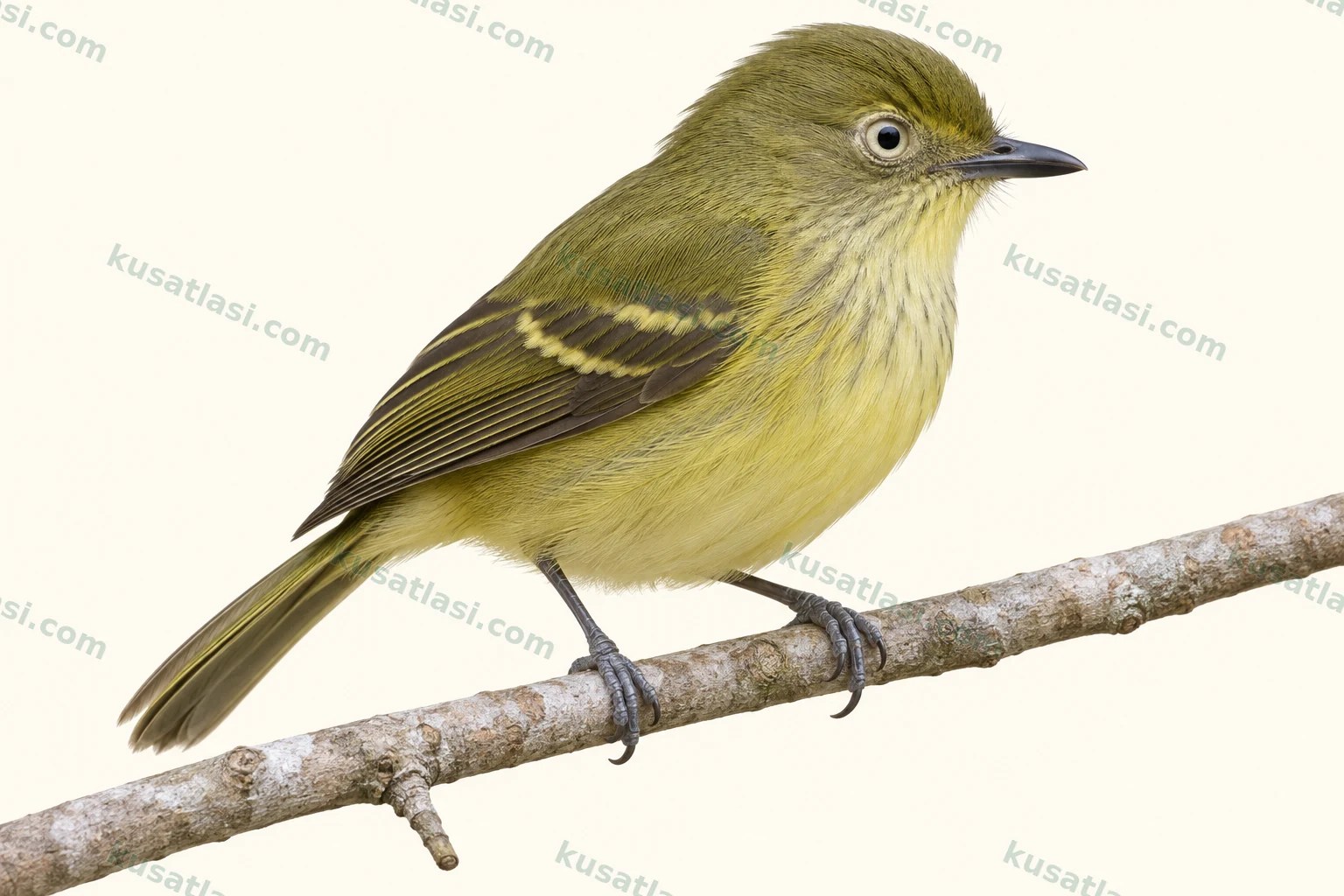
Tyrannidae · Passeriformes
White-eyed Tody-Tyrant
Hemitriccus zosterops
Ak Gözlü Todi Tiranı
Combine olive upperparts, a pale yellow belly, two yellowish wingbars and a usually pale iris.
- Order
- Passeriformes
- IUCN Status
- LCLeast Concern
Biometrics
Length
- Male
- 11 cm
- Female
- 11 cm
Wing length
- Male
- 5.01 cm
- Female
- Data unavailable
Weight
- Male
- 8 g
- Female
- 9 g
Detailed explanations of these measurements are available on our website, on the same species page.
At a Glance
- Two yellowish wingbars
Assess with underpart colour.
- Grey, dusky-streaked throat
Belly is cleaner and pale yellow.
- Usually pale iris
Similar species share this; insufficient alone.
Sexes look alike; a reliable detailed juvenile distinction remains unverified. Irides can occasionally be darker.
Calendar
Resident; verified monthly breeding stages are unavailable across its range, so no stage chart is supplied.
Species Information
Quick Identification
White-eyed Tody-Tyrant is a small olive-green flycatcher of northern Amazonian forest. Assess its pale iris, faint eye-ring, two yellowish wingbars and pale yellow belly together. A pale eye alone is insufficient because similar Hemitriccus species may also have pale irides.
Appearance and Posture
Crown and upperparts are olive-green. The area above the lores is whitish and the eye-ring indistinct. Yellowish bars cross the dark wing, while flight-feather edges are brighter olive-yellow. The tail is dusky olive.
The throat is grey with dusky streaking; breast and flanks are olive with yellow flammulation, contrasting with a cleaner pale yellow belly. The bill is black with a pinkish base to the lower mandible, and the legs dark grey. Irides are usually pale grey or straw-yellow, but reddish-brown is also reported. The common name should therefore not be treated as an absolute requirement for a white eye.
Males, Females and Young Birds
The sexes look alike. The reviewed expert account provides no reliable detailed juvenile plumage distinction; iris colour alone should not establish age or sex. The flaviviridis form of northern Peru is generally brighter and more yellowish-green, with stronger yellow flammulation below. Subspecies boundaries and vocal groups do not coincide neatly, so colour alone should not determine subspecies.
Appearance in Flight
Short flights and upward strikes towards leaves are useful observations within forest. A separate, reliable long-distance flight-silhouette key could not be verified for this species. Rather than naming a briefly seen greenish bird from flight alone, seek a perched view of wingbars and head markings.
Voice and Behaviour
Its insect-like vocalizations are important for detection. Recordings east of the Rio Negro include a dry rapid rattle, whereas those to the west generally contain fewer, more widely spaced notes. A short introductory “pik” may be present. Some Ecuadorian recordings are faster than the usual western series, however, so the east–west contrast is not an absolute threshold applicable mechanically to every recording.
Similar Species
Hemitriccus griseipectus is an important comparison: it too may have pale eyes, but White-eyed Tody-Tyrant has more yellow on the underparts. Use plumage, voice and locality together. Older accounts may include the northeastern Brazilian form naumburgae within this species; its details should not be transferred into the current two-subspecies account.
World Distribution
Ranges from southeastern Colombia, eastern Ecuador, northern parts of Peru and southern Venezuela through northern Amazonian Brazil to southern Guyana, eastern Suriname and French Guiana. Brazilian records include Amazonas, Roraima, northwestern Pará and Amapá. The Peruvian range involves regional boundaries around the Amazon, Marañón and Ucayali; this is not a species distributed throughout South America.
Two subspecies are recognized: zosterops across the wider northern Amazon–Guianan region, and flaviviridis in northern Peru. The expert account notes uncertainty over their precise boundary. Vocal differences alone do not establish a new species boundary or a revised range map.
Status within Its Range
Uncommon to locally fairly common. Recorded areas include Serranías Cofán in Ecuador and Jaú National Park in Brazil. Inconspicuous perching and insect-like sounds can hinder detection; failure to see it on one visit does not establish absence. Local abundance descriptions in older accounts are not a current population census.
Seasonal Movements
Considered resident. A regular long-distance migration route or range-wide monthly movement schedule could not be verified. Daily movements within forest should not be presented as seasonal intercontinental migration.
Breeding Habitat
Occurs in humid forest that is not regularly flooded, especially in hilly terrain and foothills. It uses the understory and middle levels. This general habitat association is not equivalent to a detailed description of every breeding site.
Nest Site
A pendent nest is reported. A published field note mentions a nest found at São Gabriel do Cachoeira in Amazonas, Brazil, as a hanging moss structure with a side entrance. Because its subspecies attribution does not match the present Peru-centred flaviviridis range, the nest information is used here at species level only.
Typical clutch size, incubation duration, nestling period and the division of parental care could not be verified in the reviewed sources. Clutch sizes of other Hemitriccus species should not be transferred to this one. Observe from a distance without exposing the nest or obstructing access.
Daily Habitat Use
Usually encountered alone, sometimes in pairs. It joins mixed-species flocks only occasionally and should not be described as an obligatory flock follower. It can wait inconspicuously in the lower and middle forest levels; use of an exposed branch does not establish dependence on open habitat.
What Does It Eat?
It takes prey from leaf surfaces, but the reviewed expert account provides no detailed prey list or dietary proportions. Specific insect groups, spider percentages, fruit consumption and seasonal dietary shifts therefore remain unverified here.
How Does It Forage?
From a perch, it makes a short upward strike to take prey from the underside of a leaf. This differs from sustained pursuit of airborne insects in open space. Knowing the capture surface does not mean that the identity of prey taken in every strike has been observed.
An Identification Corrected during Long-term Research
The 1997 assessment of long-term work north of Manaus, Brazil, showed that birds previously listed as Hemitriccus minor were H. zosterops when specimens were examined. The same study provided evidence for treating northern zosterops and southern Amazonian griseipectus as separate species. It is a concrete example of an established identification being reassessed among similar small forest birds.