
World Birds
Field Guide Plates
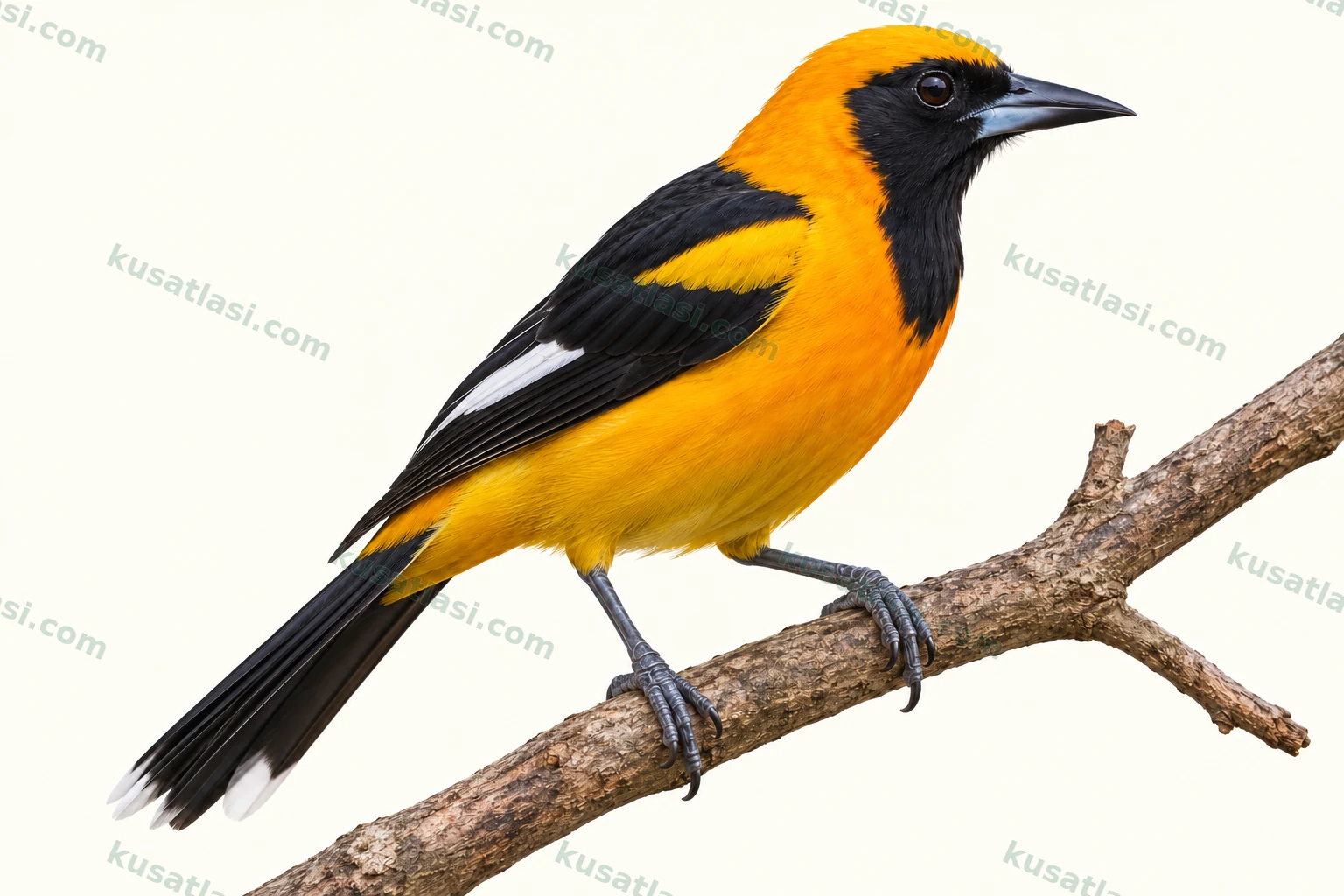
Swipe between the two adult plates.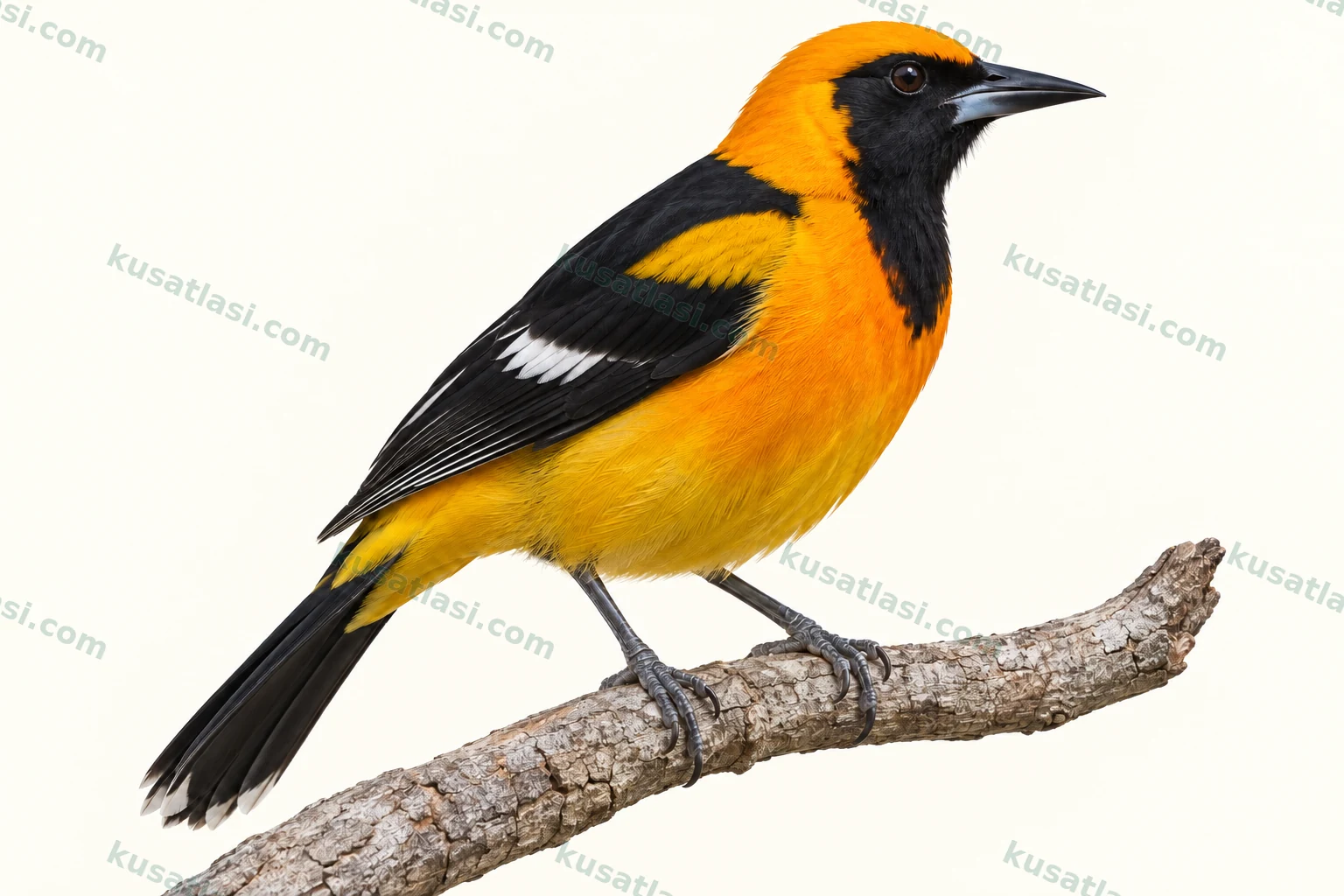
Icteridae · Passeriformes
White-edged Oriole
Icterus graceannae
Ak Kanatlı Turpiyal
Orange-yellow head and a prominent white patch on the black wing.
- Order
- Passeriformes
- IUCN Status
- LCLeast Concern
Biometrics
Length
- Male
- 19–20 cm
- Female
- 19–20 cm
Wing length
- Male
- 9.04 cm
- Female
- 9.04 cm
Weight
- Male
- 38.5–45.9 g
- Female
- 37.1 g
Detailed explanations of these measurements are available on our website, on the same species page.
At a Glance
- Head
Orange-yellow.
- Wing
White patch also visible in flight.
- Compare
Compare with I. mesomelas.
The sexes are very similar; avoid definite separation from photographs.
Calendar
Peruvian juvenile records include June and July; a whole-range monthly breeding calendar was not verified.
Species Information
Quick Identification
Check the orange-yellow head and prominent white patch on the black wing together.
General Appearance and Posture
The eye mask and bib extending from the throat to the upper breast are black. The black back contrasts with the yellow rump; the bill is robust.
Males, Females and Young Birds
The sexes are similar. Young birds are duller and more greenish-yellow, with less white in the wing.
Appearance in Flight
The white wing patch is conspicuous in flight as well as at rest.
Voice and Behaviour
Song comprises clear whistled phrases with short pauses.
Similar Species
Icterus mesomelas has more yellow in the wing coverts and along the tail sides.
World Distribution
It is endemic to the Tumbesian region of western Ecuador and northwestern Peru. AviList 2026 extends its Peruvian range south to La Libertad.
Status Within Its Natural Range
No subspecies are recognised. Its range spans two countries; it is not endemic to Ecuador or Peru alone.
Movements
Generally treated as resident; details of local and seasonal movements were not verified.
Breeding Habitat
In Ecuador and Peru it uses xeric woodland and second growth. The Cornell account suggests that it may be commonest where drier and wetter forests meet.
Nest Site
Two nests were found during the 2008–2009 study in Machalilla National Park, Ecuador. The thinly woven cups were made of dry grasses and vines. Eggs were cream-coloured with dark blotches; one nest contained three eggs.
Daily Habitat Use
Birds may be seen singly or in pairs.
What It Eats
A study reporting 2007–2019 observations at César Vallejo Mendoza Park in Trujillo, Peru, describes the species as feeding on insects. This qualitative note does not establish dietary proportions across its range.
How It Forages
The same Peruvian study reports searching for insects in treetops and among flowers. It provides neither a detailed prey list nor quantified frequencies of prey consumption.
Six Days of Observation Is Not the Whole Development Period
At the other Machalilla nest in Ecuador, two half-grown young were present at discovery. Their departure six days later does not establish a total nestling period of six days. The study’s table provides neither incubation nor complete nestling duration.
What a Juvenile Record Establishes
In Peru, juveniles were recorded at Quebrada Tumberos, Piura, on 16 June 2009 and at Quebrada Angostura, Tumbes, on 5 July 2010. The authors classified these separately from occupied nest and recently fledged young records. They do not establish egg-laying dates or a definitive breeding calendar for the entire region.