
World Birds
Field Guide Plates
Swipe between the two adult plates.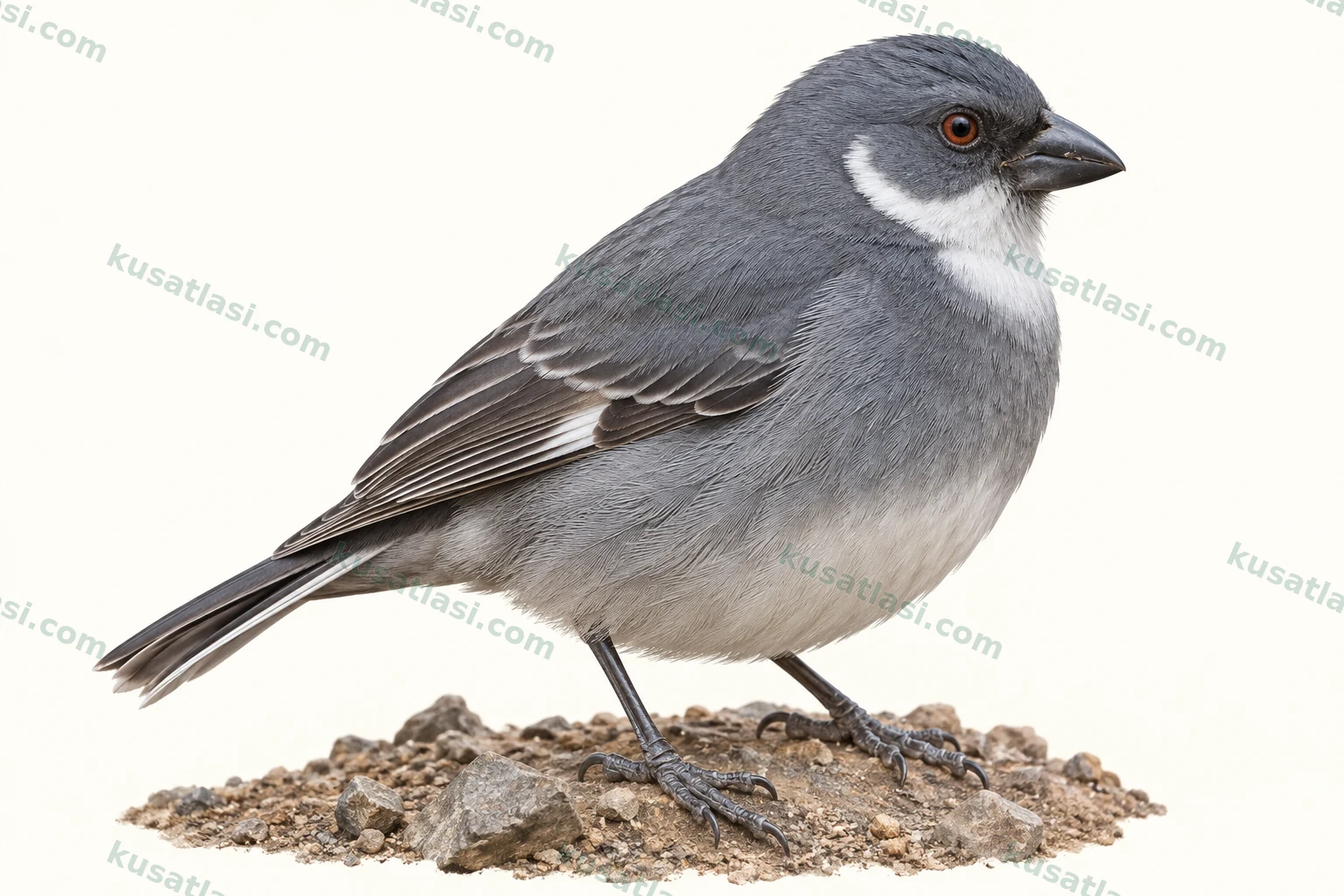
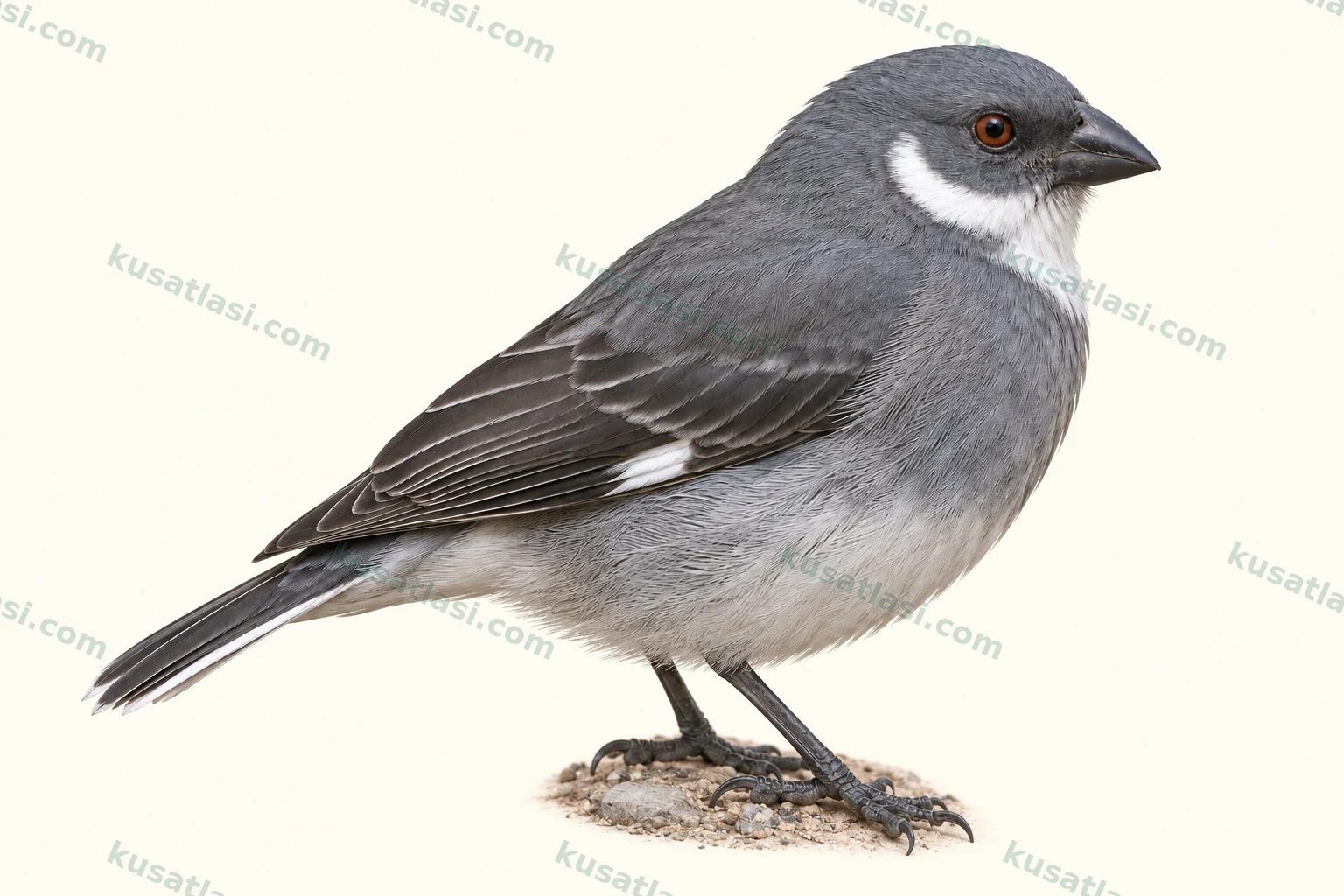
Thraupidae · Passeriformes
Glacier Finch
Idiopsar speculifer
Ak Kanatlı Duika İspinozu
Look for white throat, white under-eye arc and white wing patch together.
- Order
- Passeriformes
- IUCN Status
- LCLeast Concern
Biometrics
Length
- Male
- 17–19 cm
- Female
- 17–19 cm
Wing length
- Male
- 11.58 cm
- Female
- 11.58 cm
Weight
- Male
- 40.7–50.3 g
- Female
- 40.7–50.3 g
Detailed explanations of these measurements are available on our website, on the same species page.
At a Glance
- White under-eye arc
A clear mark on the gray head.
- White wing patch
Contrasts with dark gray feathers.
- Damp alpine grassland
Scan ground-feeding areas.
Adult sexes look alike; extent of white is not a certain sexing key.
Calendar
Active nesting is recorded February–May at Quelccaya; this is not a fixed range-wide calendar.
Species Information
Quick Identification
On this gray bird of the high Andes, assess the white throat, white arc beneath the eye and conspicuous white wing patch together. Gray plumage alone is insufficient; seek a clear view of the eye arc and wing pattern.
General Appearance and Posture
Dark gray wings blend with the gray body, and white does not cover the entire wing. The central belly is paler. Birds forage on the ground in open short grass and wet alpine grasslands. Searching only the ice overlooks surrounding vegetated feeding areas.
Males, Females and Young Birds
Adult sexes look alike; the extent of white alone is not a male–female key. A reliable detailed visual ageing key for young birds was not verified in this review. Two adults feeding young near a nest does not mean that each can be sexed with certainty from plumage.
Appearance in Flight
The pale wing area contrasts with dark feathers. Birds may be seen commuting between feeding areas and glacier-associated roosts; these daily movements are not by themselves evidence of seasonal migration.
Voice and Behaviour
Birds occur singly, in pairs or small groups, foraging especially on moist ground. Niels Krabbe’s La Cumbre recording in Bolivia documents calls from the ground and in flight.
Similar Species
White-throated Sierra Finch (Idiopsar erythronotus) is a similar mountain bird. The white wing patch and white arc beneath the eye are important together in Glacier Finch. A white throat or suitable elevation alone does not establish identification.
World Distribution
It occurs along the Andes in Peru, western Bolivia and northern Chile, with records also from northwestern Argentina. Country records do not imply continuous occupancy or breeding at every intervening mountain locality.
Status Within Its Natural Range
Peru’s Quelccaya Ice Cap is a major site of detailed nesting and roosting research. High mountain areas of La Paz, Cochabamba and western Oruro are also reported in Bolivia. One Quelccaya study does not establish breeding conditions throughout these different regions.
Movements and Migration
Daily commuting between feeding and roosting areas is known. Beyond this, the review did not verify a regular long-distance migration route or a monthly movement schedule applicable throughout the range.
Breeding Habitat
It is closely associated with high-Andean puna grassland and wetlands formed by cushion plants. Nests in Peru are documented in glacier crevasses and ice-cave cavities. Vegetated feeding habitat and the glacial nesting substrate serve different functions.
Nest Site
At Quelccaya, the nest is a bulky open cup made mainly from local alpine grasses. The 2024–2025 field study recorded three eggs in one active nest and two in a separate abandoned nest. One active nest was on a rock surface inside an ice cave rather than directly on ice.
Camera observations in Peru show both parents bringing food and removing faecal sacs. A reliable total incubation period was not verified in this review. An earlier estimated nestling period of roughly 20–30 days is not an exact first-flight age for every chick. Do not enter glacier crevasses to seek nests or obstruct birds’ entrances.
Daily Habitat Use
Glacier cavities are used for roosting as well as nesting. By day, birds may forage on the ground in surrounding damp, open grassland. These behaviours show that its life should not be imagined as confined to one bare ice surface.
What It Eats
Insects are among its verified foods. At Quelccaya in Peru, a pair was directly observed feeding on crane flies. That observation does not establish year-round dietary proportions, and seed–insect ratios from other mountain finches are not transferred to this species.
How It Forages
It searches the ground in wet grassland and can also take insects on glacier surfaces. Crane flies at Quelccaya should not be assumed to be only dead prey blown uphill: researchers also observed them active at their high-elevation camp.
An Ice Cavity Is Not Necessarily Warm
In the 2024–2025 Quelccaya study in Peru, temperature and humidity inside glacier cavities were more stable than outside. The key distinction is buffering of fluctuations, not necessarily warmth. Measurements at a small number of nests do not establish identical microclimates in every Andean ice cavity.
What the Rock-Supported Nest Shows
The rock-supported nest found at Quelccaya in February 2025 makes “all nests are directly on ice” too absolute. It was still inside an ice cave. One record does not prove a new glacier-independent nesting strategy or establish climate change as the cause.
A New Name for the Same Bird
Older publications use Diuca speculifera or White-winged Diuca Finch. The current expert account uses Glacier Finch and Idiopsar speculifer. Quelccaya studies under the former genus are not automatically about a different bird; the taxon must be matched across names.
One Predation Event Is Not an Overall Success Rate
The recent Quelccaya study documented nest predation by an Andean fox on camera. It confirms a natural predator, not that foxes are the principal cause of nest loss throughout the range or a measure of overall breeding success.
Different Layers of Plant Material
In the three Quelccaya nests suitable for structural analysis, longer stems formed the outside and base, soft leaves the middle layer, and finer plant material the cup. Grasses predominated; the small feather component was not shown to have been deliberately selected. A possible insulating role does not establish mandatory material proportions for every nest.