
World Birds
Field Guide Plates
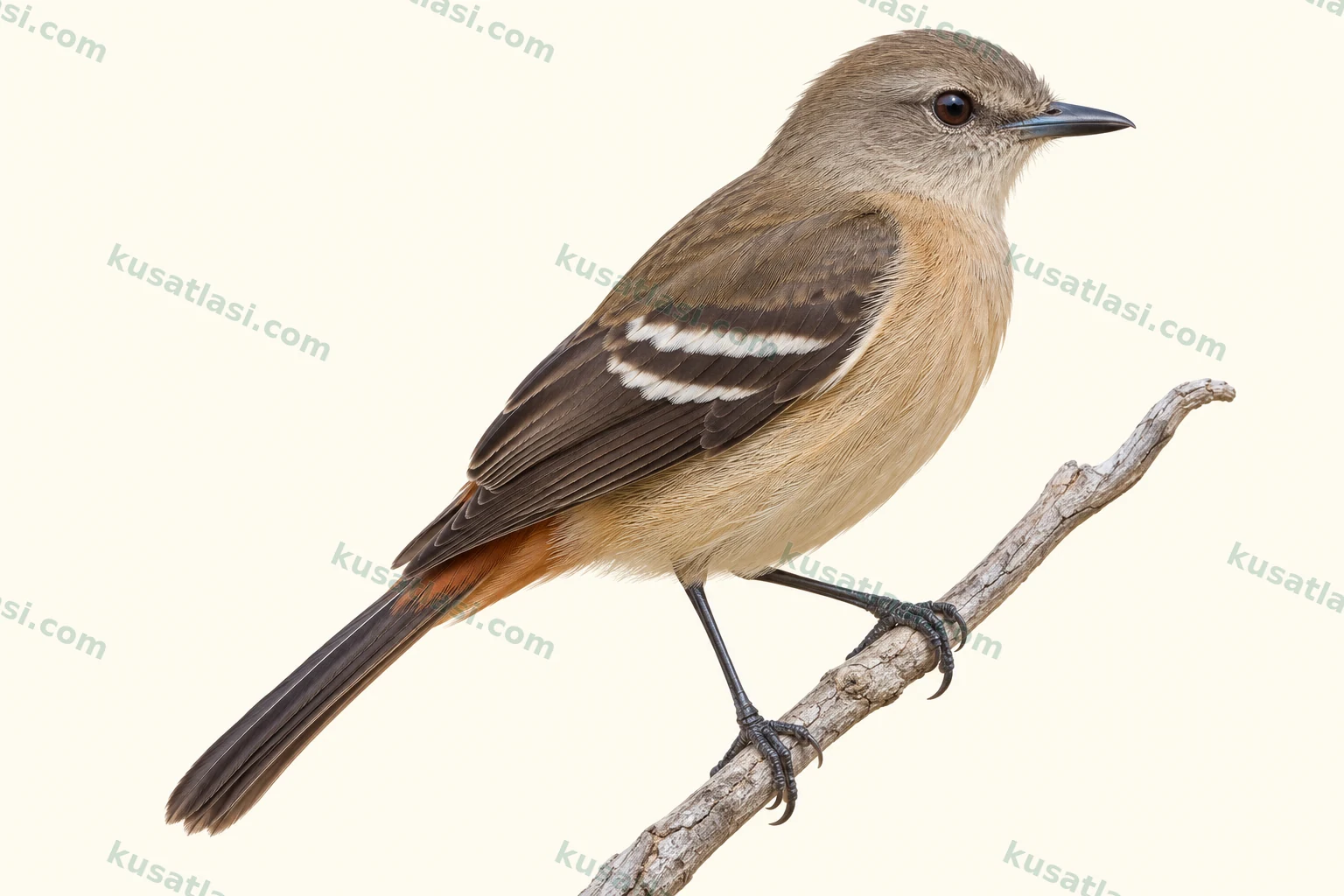
Swipe between the two adult plates.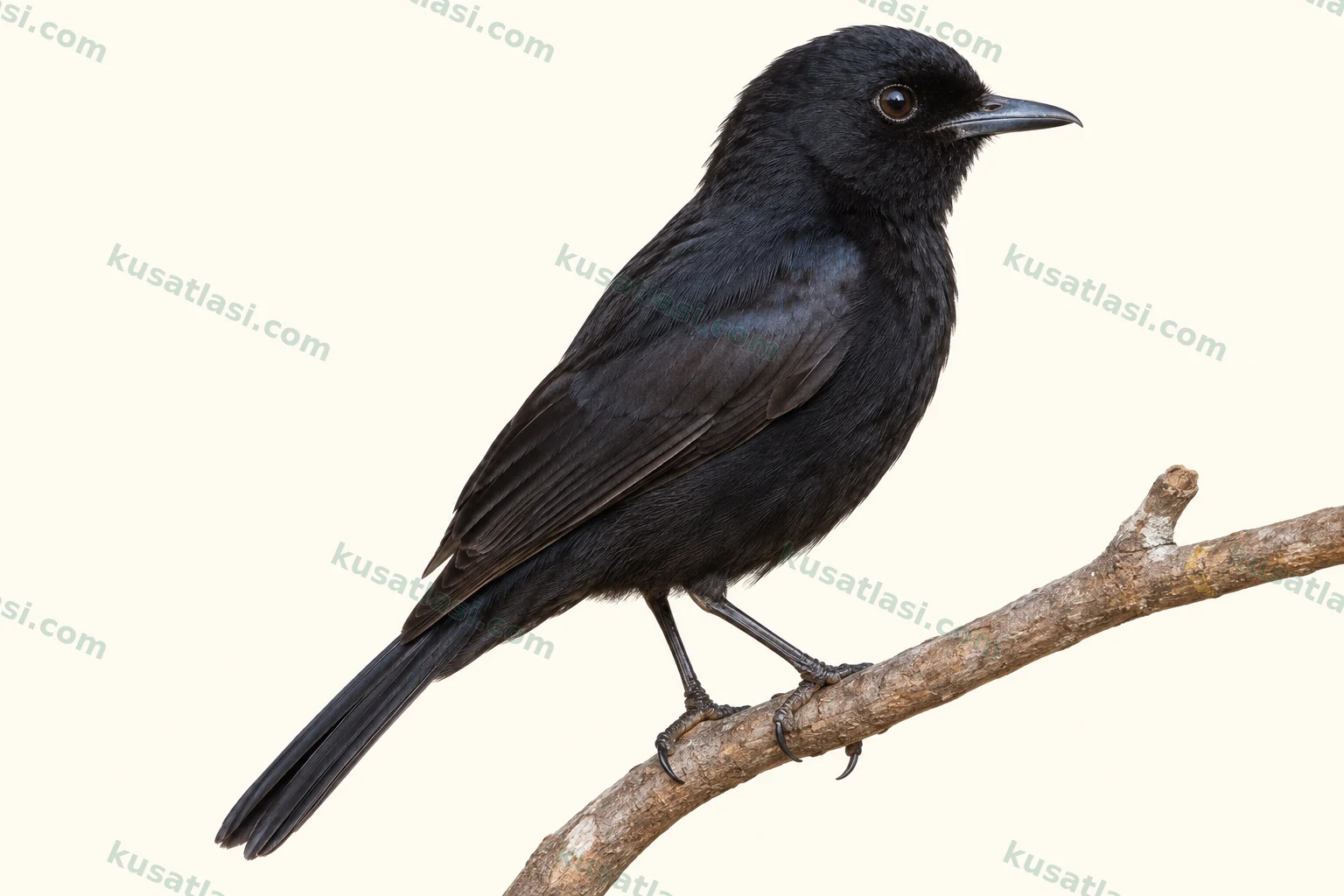
Tyrannidae · Passeriformes
White-winged Black Tyrant
Knipolegus aterrimus
Ak Kanatlı Esmer Tiran
Look for the male’s white wing patch revealed in flight; female appearance varies regionally.
- Order
- Passeriformes
- IUCN Status
- Source-taxon assessment
Biometrics
Length
- Male
- 16–18 cm
- Female
- 16–18 cm
Wingspan
- Male
- Data unavailable
- Female
- Data unavailable
Weight
- Male
- Data unavailable
- Female
- 20.5–22.4 g
Detailed explanations of these measurements are available on our website, on the same species page.
At a Glance
- Black male
The pale patch may be hidden at rest.
- Blue-gray bill
With a dark tip.
- Exposed lookout perch
Males can use prominent branches and posts.
Males are black; females are brownish or creamy and differ among regional groups.
Calendar
Movements vary by population; sparse Paraguayan winter records do not define a range-wide calendar.
Species Information
Quick Identification
Males have slightly glossy black plumage and a white wing patch revealed in flight. The bill is blue-gray with a dark tip. White may be concealed on the closed wing, so a perched male can look entirely black.
General Appearance and Posture
Males may use conspicuous lookout points such as an isolated branch or post. Females are more retiring and may be less readily seen. The Peruvian specialist account also describes use of high branches in Andean scrub.
Males, Females and Young Birds
Females differ markedly from black males. Southern aterrimus females have cinnamon underparts and wingbars, whereas the southern Peru–Bolivia anthracinus group can be duller. Northern Peruvian heterogyna females are described with much paler rump and tail base, creamy underparts and pale wingbars. A reliable detailed juvenile ageing key was not verified in this review.
Appearance in Flight
The white area exposed in a male’s dark wing is a strong clue. A male observed at Limatambo in Peru showed it during short acrobatic display flights. A female’s pale flight band can be more rufous; the male’s white pattern should not be expected on every bird.
Voice and Behaviour
An observation at Limatambo, Peru, in July 1976 documents a male vocalising during display flight, with another male singing nearby. It is not relabelled as a pair duet or a mechanically produced wing sound.
Similar Species
Hudson’s Black-Tyrant (Knipolegus hudsoni) is a similar species. A white wing band alone is insufficient; consider sex, bill, overall colour and locality together. The Peruvian specialist account also recommends comparison with Jelski’s and Plumbeous Black-Tyrants.
World Distribution
Its main distribution follows the Andes of Peru and Bolivia and western Argentina. Northern Peruvian Marañón birds are included as the heterogyna group in the Cornell and IOC treatment followed here. Other classifications treat that group as a separate species, so older range lists require a taxonomic scope check.
Status Within Its Natural Range
Confirmed Paraguayan records are few. Smith and Easley’s 2019 review assesses Chaco museum and photographic records; country occurrence does not establish widespread resident breeding. Andean areas and sparse Paraguayan records are therefore not described as equally occupied.
Movements and Migration
Seasonal movements are reported in southern populations and Andean foothills. Sparse winter records in Paraguay have been interpreted as possible altitudinal migration, not an individual-tracking demonstration of a fixed route. That 2019 interpretation does not establish identical timing or travel distances for all populations.
Breeding Habitat
It uses dry to locally humid montane scrub, open woodland and forest edges. The Bolivian specialist account also includes parks and gardens on eastern Andean slopes. Habitat use does not establish nesting in every garden.
Nest Site
A nest found at Las Higueras in the Mendoza foothills of Argentina on 2 December 1918 was directly on the ground. In his 1919 account, Carlos Samuel Reed described a root-built nest lined with wool and containing two eggs. This single historical record does not establish that every nest is terrestrial or every clutch contains exactly two eggs.
Total incubation duration, exact fledging age and detailed division of parental duties were not verified in this review. Durations from related tyrants are not substituted. Do not open cover or flush concealed birds to seek nests.
Daily Habitat Use
It scans from a perch and makes short prey-catching sorties. In Peru’s Mantaro Valley, a bird was observed sallying from a small tree towards prey in the air and on the ground. Such behaviour makes exposed feeding perches useful observation points.
What It Eats
It feeds on insects and other small invertebrates. This review did not verify a range-wide dietary analysis establishing prey proportions, so no percentages or detailed annual menu are supplied.
How It Forages
It watches from exposed points such as branches before making a short capture flight. The 1968 Mantaro Valley field record shows that prey can be taken from the ground as well as the air. One observation does not establish the relative frequency of all foraging methods across the range.
Closed Wings Can Hide a Key Mark
A perched male’s dark appearance can conceal the pale patch revealed in flight. Failure to see white in one view is not proof that no white feathers exist. Posture and how far the wing is opened affect what a brief observation reveals.
Old Names Do Not Guarantee the Same Range
Brazil’s Caatinga bird Knipolegus franciscanus has historically been included within White-winged Black-Tyrant. A Brazilian range statement based on that broader treatment should not simply be transferred to current aterrimus. Source date and species limits must be read together.
A Museum Record Is Not Abundance
The 2019 Paraguayan review distinguishes sparse reports using evidence such as museum specimens and photographs. Establishing country occurrence and determining breeding range or abundance require different evidence.