
World Birds
Field Guide Plates
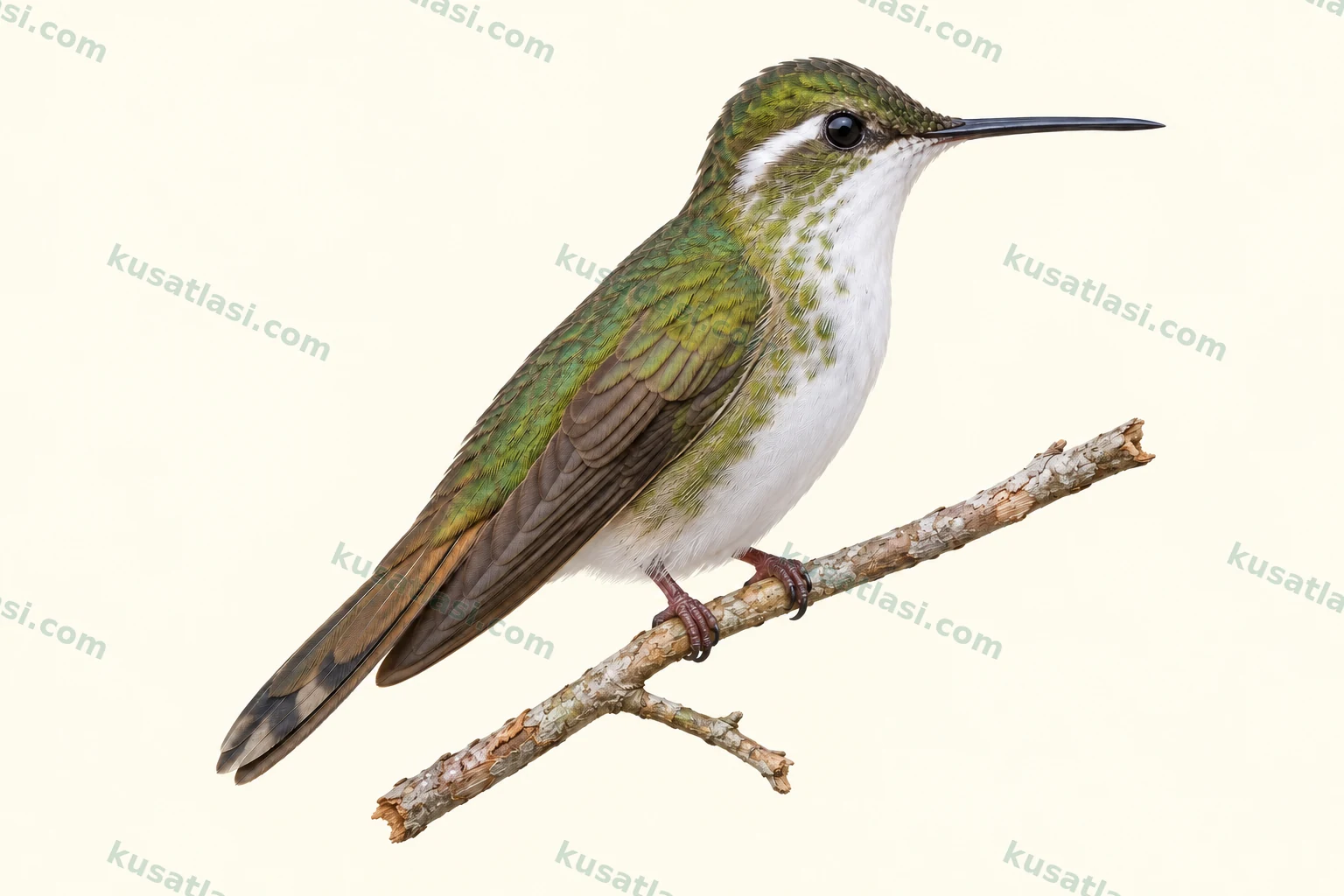
Swipe between the two adult plates.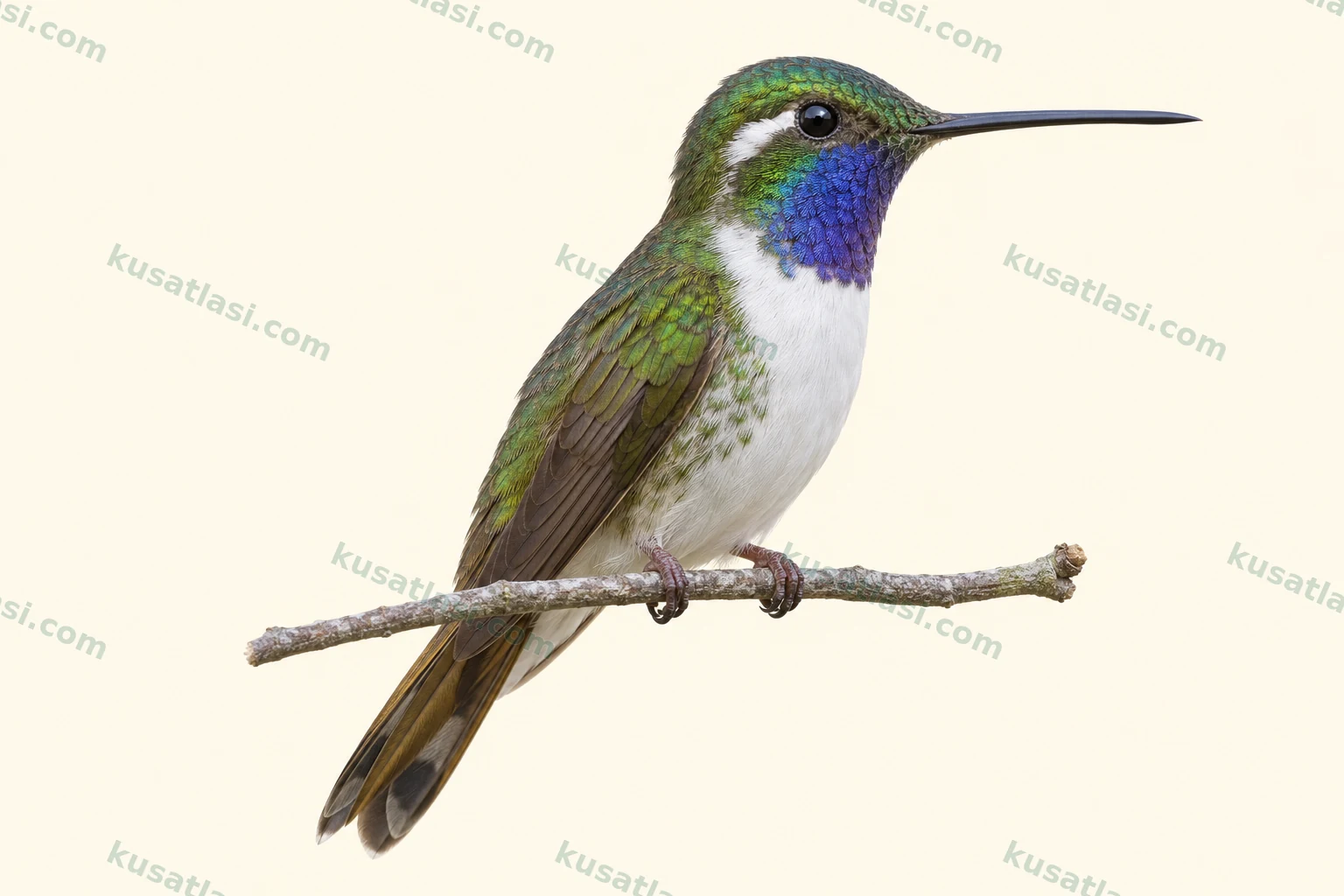
Trochilidae · Apodiformes
White-bellied Mountaingem
Lampornis hemileucus
Ak Karınlı Dağmücevheri
White belly and white eye-stripe.
- Order
- Apodiformes
- IUCN Status
- LCLeast Concern
Biometrics
Length
- Male
- 10–11 cm
- Female
- 10–11 cm
Wing length
- Male
- 6.24 cm
- Female
- 6.24 cm
Weight
- Male
- 6.2 g
- Female
- 5.1 g
Detailed explanations of these measurements are available on our website, on the same species page.
At a Glance
- Belly
White.
- Behind eye
Thin white line.
- Male throat
Purple.
Males have a purple throat; females a spotted throat.
Calendar
Monthly laying calendar not verified.
Species Information
Quick Identification
Look for the white belly, thin white line behind the eye and, in males, purple throat.
General Appearance and Posture
The upperparts are mainly green. In males, green spotting on the white underparts is confined to the sides.
Males, Females and Young Birds
Females are less colourful, retaining the white belly and line behind the eye but showing a spotted throat. Detailed juvenile plumage was not verified in this review.
Appearance in Flight
Its tail is less forked than in other Lampornis; this alone is not conclusive identification.
Sounds and Behaviour
In the La Montura forest study in Costa Rica, males could defend rich flower patches or forage along a sequence of flowers. A detailed species-specific voice description was not verified in this review.
Similar Species
Stiles’s mountaingem comparison highlights the male’s combination of purple throat and white underparts with green spotting restricted to the sides. Assess these features together rather than relying on the purple throat alone.
World Distribution
It occurs on the Caribbean slope from north-central Costa Rica to western Panama. AviList 2026 recognises no subspecies within this restricted-range species.
Status Within Its Natural Range
BirdLife’s 2022 assessment tentatively considers the population stable. This is not based on a direct systematic population-monitoring series; the assessment recommends more accurate population estimates and monitoring.
Movements
It is resident in Costa Rica and Panama but makes altitudinal movements. These should not be interpreted as a regular intercontinental migration route.
Breeding Habitat
BirdLife classifies moist tropical montane forest as its main habitat. Moist lowland forest and shrubland are also used.
Nest Site
Species-specific nest placement and structure, clutch size and incubation duration were not verified in this review.
Daily Habitat Use
It also comes to forest edges and gardens.
What It Eats
In the La Montura study in Costa Rica, it took nectar from flowers, including flowering plants growing on trees.
How It Forages
In the same study, males occurred more often in the canopy and females in the understory, but both sexes could mix at flower patches. Neither sex was confined to a single forest layer.
An Organism Living Among the Feathers
A louse study including Costa Rican samples, published online in 2023 and in the 2024 journal volume, examined eight birds of this species. One bird carried a single immature louse of the genus Trochiliphagus. This refers to the parasite’s developmental stage, not a young hummingbird. The authors reported it as the first identified louse record from this host. Eight examined birds do not establish parasite frequency or health throughout the species’ range.
A Classification Proposal and the Accepted Name
A 2023 American Ornithological Society committee proposal advocated moving this species to Prodosia. AviList 2026 retains Lampornis hemileucus; a proposal is not an adopted change.