
World Birds
Field Guide Plates
Swipe between the two adult plates.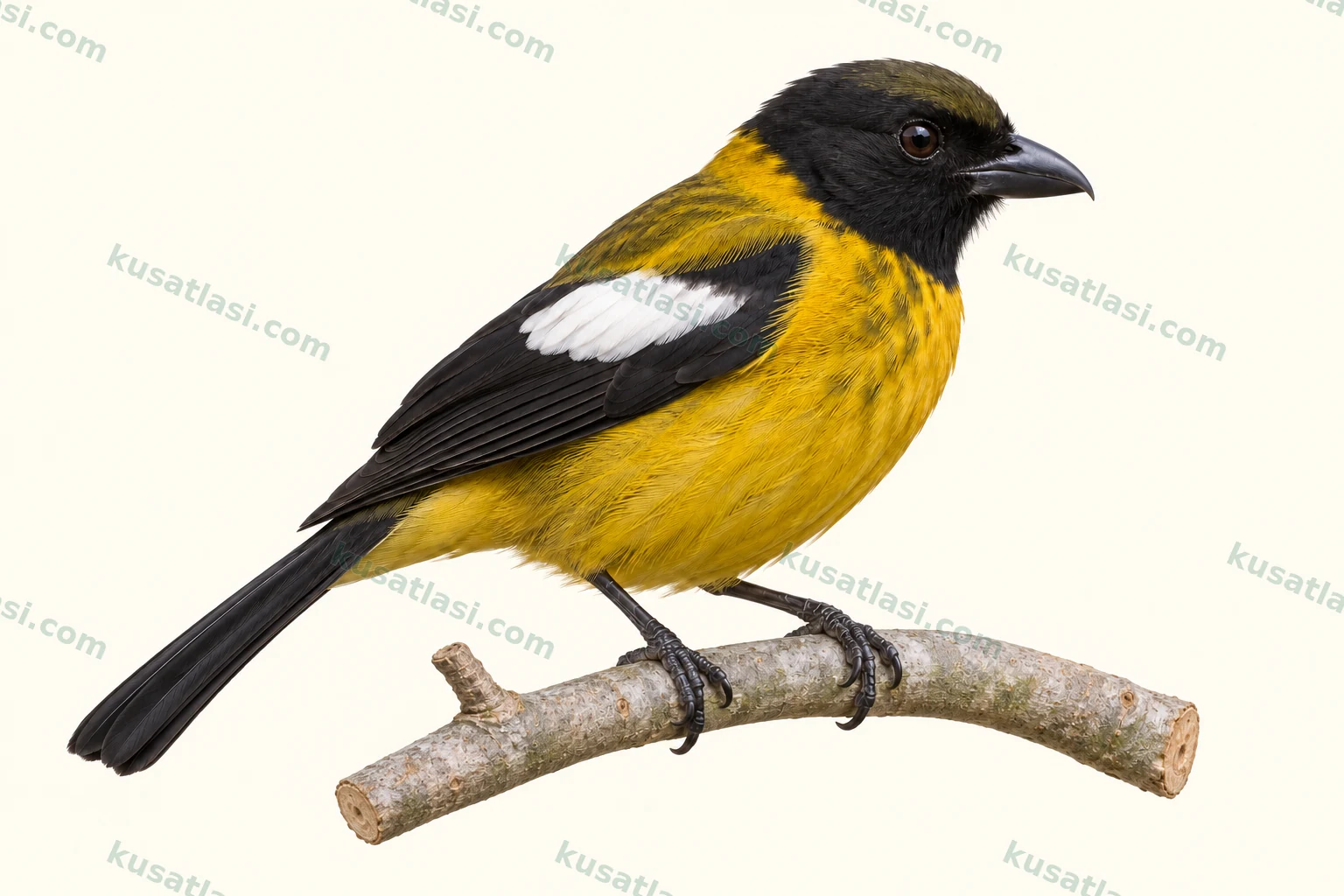
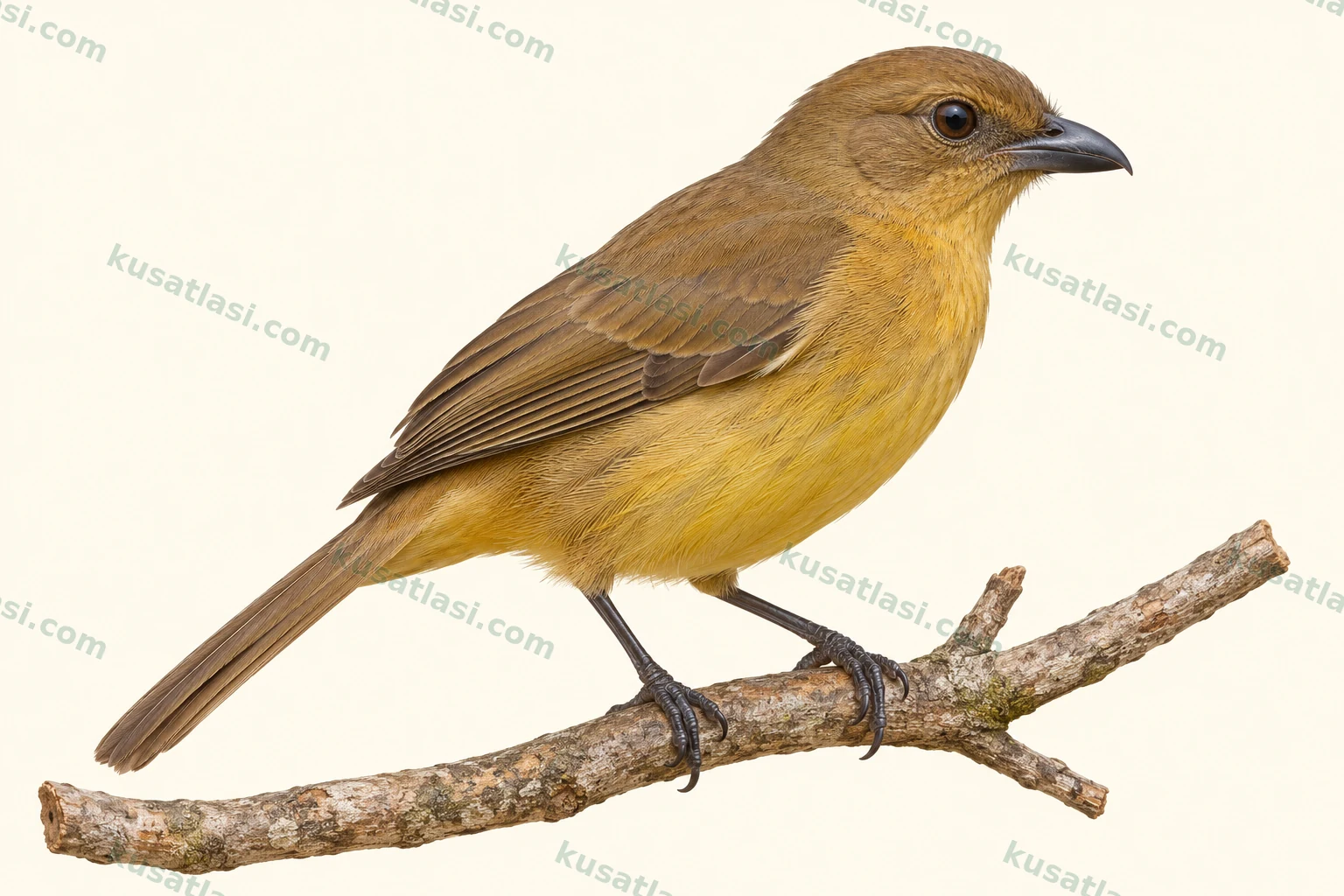
Thraupidae · Passeriformes
White-winged Shrike-Tanager
Lanio versicolor
Ak Kanatlı Yırtıcı Tangara
Male with black head, yellow body and white wing patch.
- Order
- Passeriformes
- IUCN Status
- LCLeast Concern
Biometrics
Length
- Male
- 13–15 cm
- Female
- 13–15 cm
Wing length
- Male
- 7.67 cm
- Female
- 7.67 cm
Weight
- Male
- 13–19 g
- Female
- Data unavailable
Detailed explanations of these measurements are available on our website, on the same species page.
At a Glance
- Head
Black in the male.
- Wing
White patch in the male.
- Bill
Hooked tip.
Female olive-brown, with a yellowish belly centre.
Calendar
A monthly breeding calendar applicable across the entire range was not verified.
Species Information
Quick Identification
Adult males have a conspicuous white wing patch.
General Appearance and Posture
The bill has a strongly hooked tip and a tooth-like projection on the upper mandible. Despite its resemblance to a true shrike’s bill, the bird belongs to the tanager family.
Males, Females and Young Birds
Males have a black head, yellow body, black wings and black tail. Females are olive-brown, with a yellowish belly centre. A detailed juvenile key was not verified.
Appearance in Flight
A reliable flight-specific identification key was not verified.
Voice and Behaviour
In mixed-species flocks studied in Amazonia, it acts as a sentinel and gives alarm calls when bird-eating raptors approach. The function of this call is distinct from a detailed description of its song.
Similar Species
Lanio fulvus is similar; the Peruvian guide places the species on opposite sides of the Amazon and Marañón rivers.
World Distribution
It inhabits tropical rainforest in the southern Amazon basin. Its range extends from Loreto in northeastern Peru south along the eastern base of the Andes to central Bolivia, and east across Brazil south of the Amazon River to eastern Pará, west of the Tocantins River.
Status Within Its Natural Range
AviList 2026 recognises two subspecies, versicolor and parvus. The former ranges from eastern Peru into northern Bolivia and western Brazil; the latter occurs from the Tapajós east to the lower Tocantins and northern Mato Grosso in Brazil. General plumage colour alone does not establish subspecies identity.
Movements
Pairs are described as permanent members of mixed-species flocks; this does not establish a specific migration route.
Breeding Habitat
The first detailed Peruvian nest record came from mature rainforest near Cocha Cashu in Manu National Park. The supporting plant was in the forest understorey.
Nest Site
Found on 7 November 1992, this cup nest rested on the leaf bases of a trunk-growing Lomariopsis japurensis fern. Plant fibres, twigs and dead leaves formed the nest, concealed beneath hanging leaves. It contained two small nestlings; this is not a direct count of clutch size.
Daily Habitat Use
Foraging birds use the canopy and subcanopy of mature forest.
What It Eats
It eats arthropods and fruit. Dietary proportions across its range were not verified.
How It Forages
In Munn’s Amazonian observations, it exploited insects flushed by other flock members. He also reported observations suggesting that some alarm calls distracted other birds and improved its opportunity to capture prey; this does not establish conscious intent.
From Eggs to Nest Departure
Of 11 nests monitored in Peru during 2007–2012, nine held two eggs and two held one. Incubation lasted 15 days at one nest. Young departed from the two successful nests after 10 and 12 days respectively. These are regional observations.
A Young Helper at One Nest
At one nest in the same Peruvian study, a juvenile male brooded and fed the nestling. The authors presented this as evidence of cooperative breeding; it was not shown to be routine in every pair.