
World Birds
Field Guide Plates
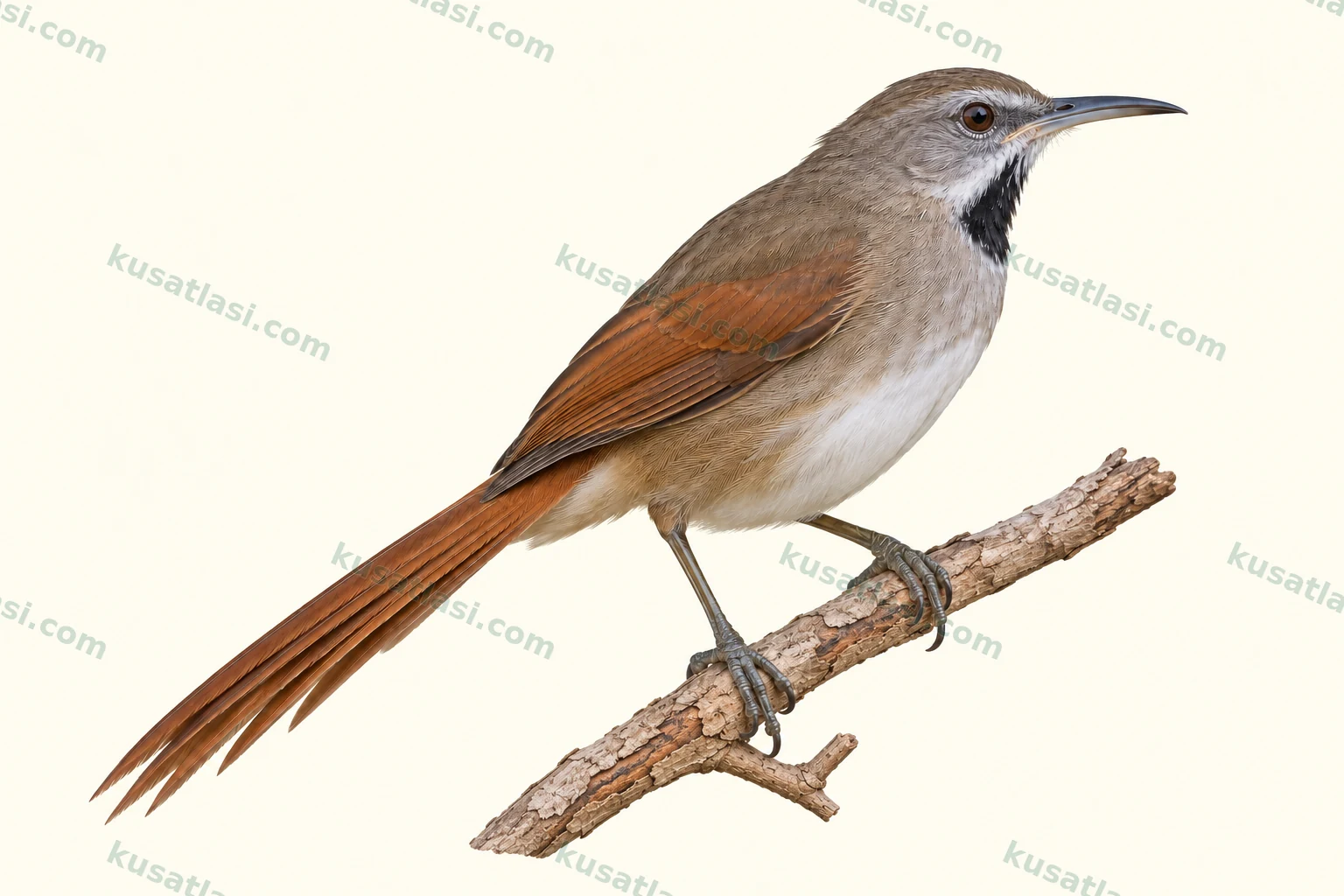
Swipe between the two adult plates.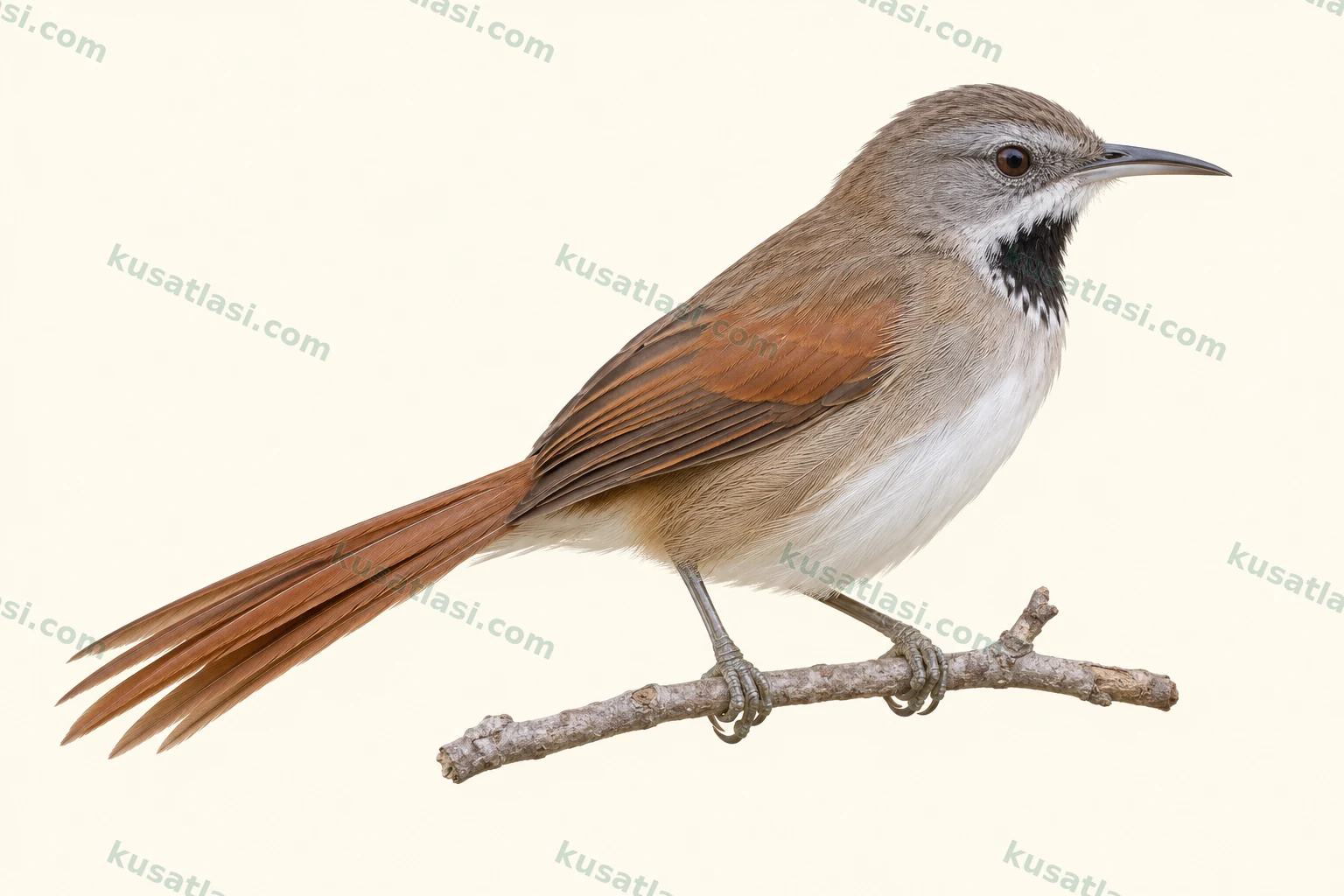
Furnariidae · Passeriformes
White-bellied Spinetail
Mazaria propinqua
Ak Karınlı Dikenkuyruk
Black throat, rusty wings and long tail.
- Order
- Passeriformes
- IUCN Status
- LCLeast Concern
Biometrics
Length
- Male
- 15–16 cm
- Female
- 15–16 cm
Wing length
- Male
- 5.88 cm
- Female
- 5.88 cm
Weight
- Male
- 17.5–22 g
- Female
- 16–22 g
Detailed explanations of these measurements are available on our website, on the same species page.
At a Glance
- Throat
Black.
- Wings
Rusty.
- Tail
Long and graduated.
Males and females have similar coloration.
Calendar
Nesting observations exist; monthly laying calendar unverified.
Species Information
Quick Identification
Look for a black throat, brown back and rusty wings and tail.
General Appearance and Posture
The long tail is graduated: its feathers end at different lengths.
Males, Females and Young Birds
Males and females have similar coloration. Detailed juvenile plumage was not verified in this review.
Appearance in Flight
A separate flight identification mark was not verified in this review.
Sounds and Behaviour
The song has a mechanical, nasal quality.
Similar Species
Synallaxis gujanensis lacks the black throat. Check throat colour together with the other features.
World Distribution
It is associated with river islands in the Amazon Basin. Current BirdLife lists Bolivia, Brazil, Colombia, Ecuador, French Guiana and Peru; AviList 2026 recognises no subspecies.
Status Within Its Natural Range
BirdLife’s 2024 assessment reports no quantified global population. Stability is suspected from the absence of evidence for decline, rather than a trend measured by systematic monitoring.
Movements
It is classified as non-migratory. However, an earlier Napo River study in Peru reported its absence from a partially flooded island where it was normally abundant. This indirect evidence does not track where particular birds went.
Breeding Habitat
Breeding behaviour has been documented on the upper Napo River in Ecuador and Madeira River islands in Brazil. The Ecuadorian site contained young Gynerium cane and regenerating shrubs; Tessaria integrifolia dominated the Brazilian nestbuilding site. These records do not establish one breeding month for the whole basin.
Nest Site
The 2011 Ecuadorian nest was an enclosed, roughly globular mass of dry plant material supported from below by nearly horizontal cane stems. A lateral tube led into it, with an upward-facing opening at the outer end. A loose layer of soft leaf fragments, seed down and pieces of snake skin covered the chamber floor.
Daily Habitat Use
In the 1983 field study on Napo River islands, Peru, it made heavy use of sandbar scrub, particularly Tessaria. This does not make all Amazonian forest equivalent habitat for the species.
What It Eats
It is an invertebrate feeder. The original AVONET record supports this broad dietary category; detailed prey species or measured seasonal dietary proportions were not verified in this review.
How It Forages
AVONET places it among birds spending much of their time on vegetation or other supports above ground. That broad lifestyle category is not a measurement of a particular prey-capture technique or prey size.
Three Days Is Not the Nestling Period
On the upper Napo, Ecuador, an adult was seen carrying food to a nest on 17 February 2011. During examination three days later, one fledgling flew from the entrance into nearby dense vegetation. The three-day interval between visits is not the total time from hatching to nest departure. One observed young also does not establish clutch size.
Two Birds Taking Part in Nestbuilding
On Ilha dos Bufalos in Brazil’s Madeira River, two birds were observed building with fine Tessaria twigs and vocalising frequently on 6 July 2018. A nearby complete, apparently old nest was also enclosed and globular, with a horizontal entrance tube. Its origin in an earlier breeding attempt was the researchers’ interpretation; there was no tracking evidence establishing how many times the same pair bred.
A New Genus Is Not a Newly Discovered Species
A 2014 study of mitochondrial and three nuclear DNA regions recovered this species as sister to Schoeniophylax phryganophilus and described a separate genus. Older publications consequently use Synallaxis propinqua. This changed the classification of an already known species; it does not mean the species was first discovered in 2014.