
World Birds
Field Guide Plates
Swipe between the two adult plates.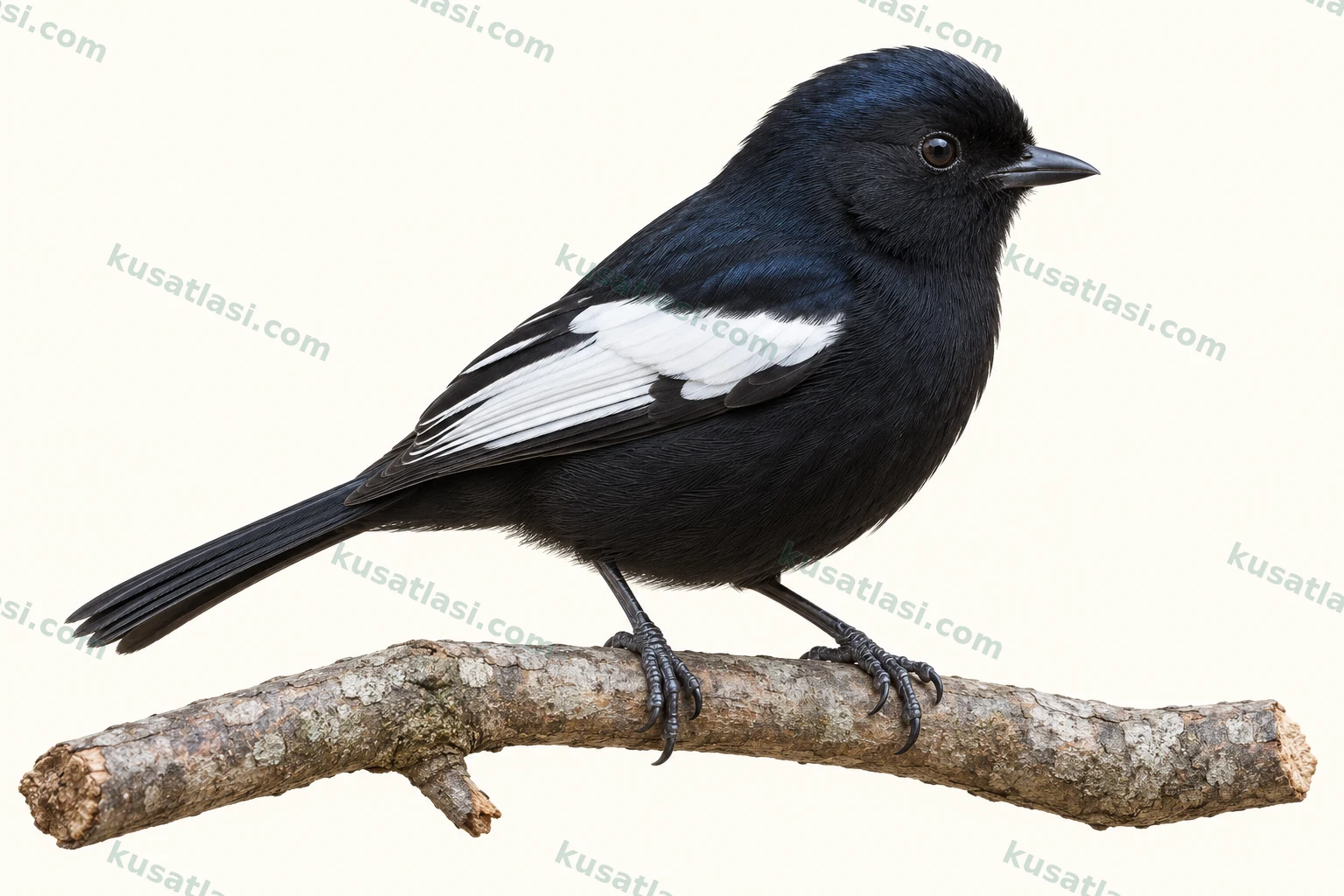
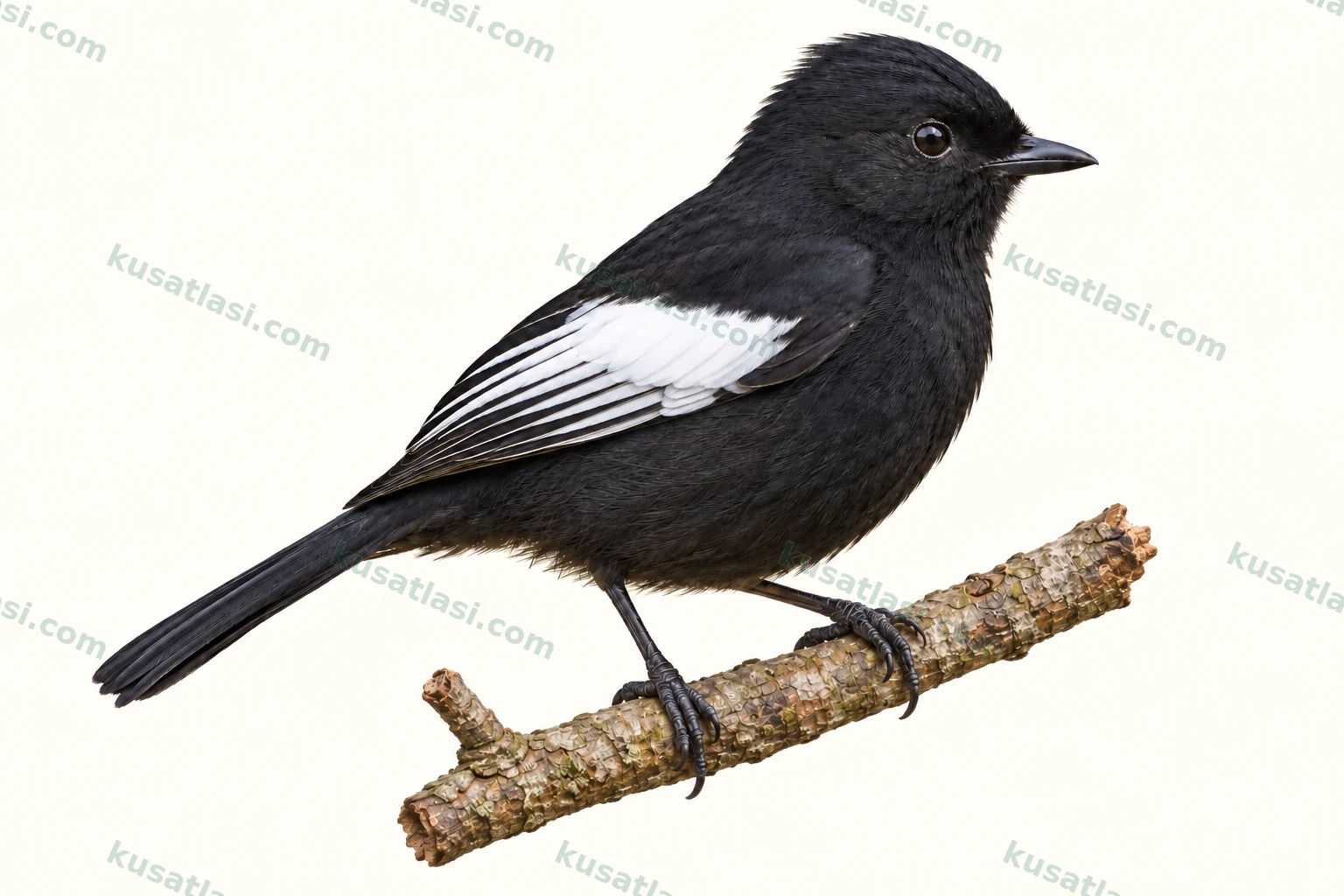
Paridae · Passeriformes
White-winged Black Tit
Melaniparus leucomelas
Ak Kanatlı Kömürcü Baştankara
Check the black body, wing white and dark eye together.
- Order
- Passeriformes
- IUCN Status
- LCLeast Concern
Biometrics
Length
- Male
- 15–16 cm
- Female
- 15–16 cm
Wing length
- Male
- 8.66 cm
- Female
- 8.66 cm
Weight
- Male
- 13.1–24 g
- Female
- 13.1–24 g
Detailed explanations of these measurements are available on our website, on the same species page.
At a Glance
- Dark eye
The similar guineensis has a pale adult eye.
- White wing patch
Insufficient on its own for identification.
- Savanna woodland
Includes broadleaf or thorny trees.
A reliable appearance-based sex/age key was not verified.
Calendar
One dated Angolan nest record does not establish a whole-range monthly calendar.
Species Information
Quick Identification
Check the black body, extensive wing white and dark eye together.
General Appearance and Posture
In subspecies insignis, body gloss ranges from bluish to bottle-green. Tail feathers other than the central pair can have very narrow whitish edges or tips. A rule requiring absolutely no tail white would therefore be misleading.
Males, Females and Young Birds
A verified appearance-based key for reliably separating males, females and young is unavailable here. Differences in gloss in a single photograph should not be treated as definitive evidence of sex or age.
Appearance in Flight
Subspecies insignis has more extensive white underwing coverts than the nominate form. This geographical variation matters when interpreting wing white from different angles; one plate does not imply identical plumage in every individual.
Voice and Behaviour
Usually encountered in pairs or small groups, it gives repeated raspy calls and thin, musical whistles that rise and fall.
Similar Species
White-shouldered Black-Tit (Melaniparus guineensis) is very similar, with a pale yellowish rather than dark adult eye. Wing white alone does not separate them.
World Distribution
It occurs in Africa and has two recognized subspecies. The nominate leucomelas inhabits southeastern Sudan, northern Eritrea and central to south-central Ethiopia. This range should not be combined with that of similarly named tits from the Indian subcontinent.
Status Within Its Natural Range
Insignis ranges from southern Gabon and southern Congo to eastern DR Congo, southwestern Uganda, western Rwanda, northern Burundi and northwestern and central Tanzania, south to Angola, Zambia and Malawi. A 2009 expert account records it locally on Zambia’s Southern Province plateau.
Movements and Migration
Its AVONET record classifies it as sedentary. That broad category does not exclude daily foraging movements or local wandering; no verified long-distance route is supplied for the whole species.
Breeding Habitat
Found in relatively moist savannas with broadleaf or thorny trees.
Nest Site
The sources examined did not adequately verify detailed nest structure, incubation duration or nestling duration for this species. Values from other tits are not substituted.
Daily Habitat Use
AVONET associates it with woodland and a lifestyle involving much time perched above ground. That category does not establish the daily sequence of trees visited or the size of its home range.
What It Eats
It is an invertebrate feeder. Its original AVONET record supports that dietary category, without establishing a particular insect group as its staple everywhere or a precise seasonal dietary percentage.
How It Forages
Perching above ground on vegetation is important in its foraging lifestyle. The records examined do not establish detailed prey-capture techniques or the proportion of time spent in different parts of trees, so no specialized technique is asserted.
Eggs in One Nest Need Not Belong to One Species
W. R. J. Dean recorded two fresh tit eggs near Maubi camp, Angola, on 2 September 1973. The nest also held an egg of a bird identified as Yellow-throated Sparrow. That other egg must not be added to the tit’s clutch. This single observation establishes neither a universal two-egg clutch nor regular brood parasitism by the other bird.
An Older Genus Name Does Not Mean a Different Bird
Older African publications use Parus leucomelas, whereas the current expert account uses Melaniparus leucomelas. A 2013 comparison of gene sequences from 67 parid taxa proposed a revised family classification. Matching an older record therefore requires its scientific name and geography, not just a common name.