
World Birds
Field Guide Plates
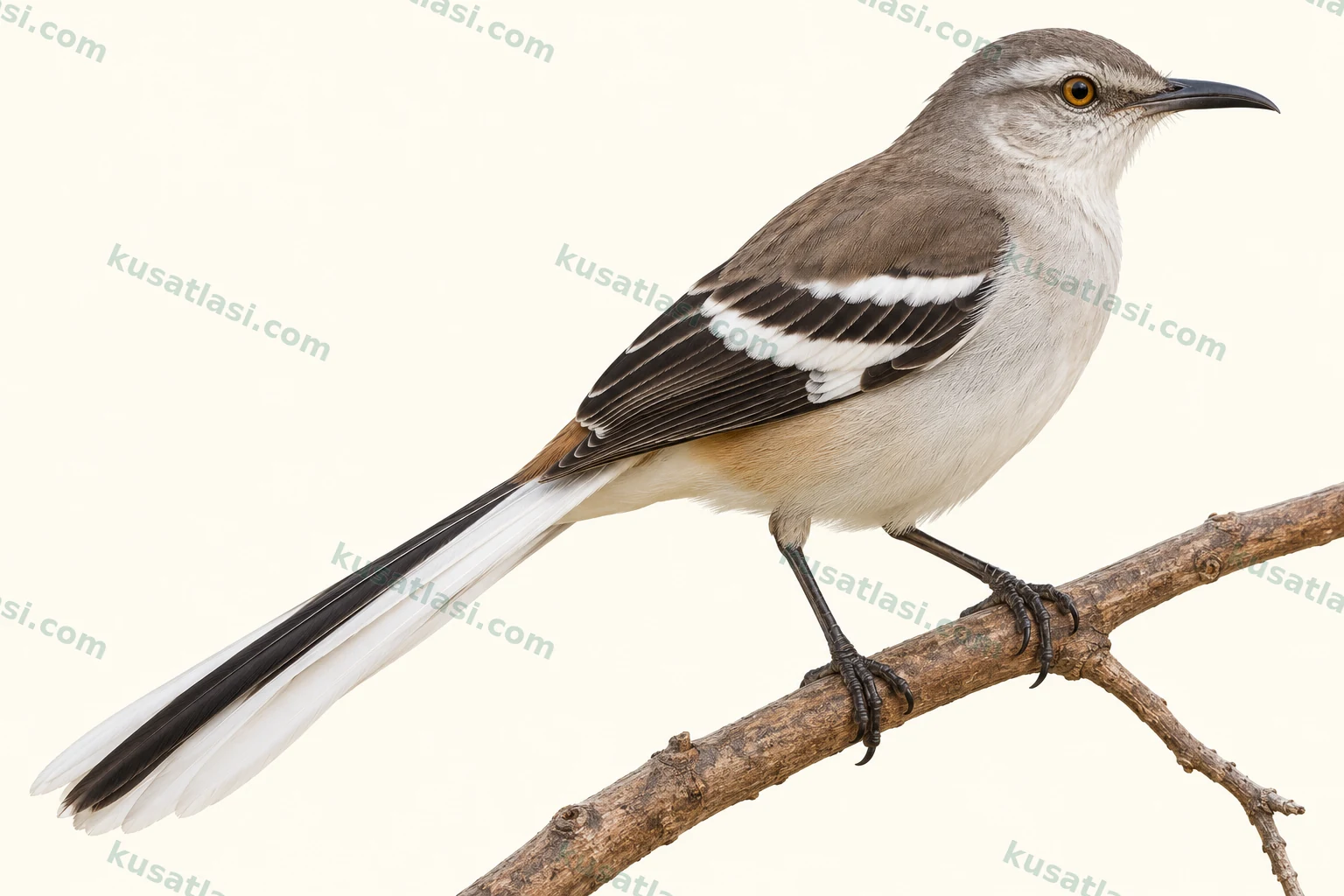
Swipe between the two adult plates.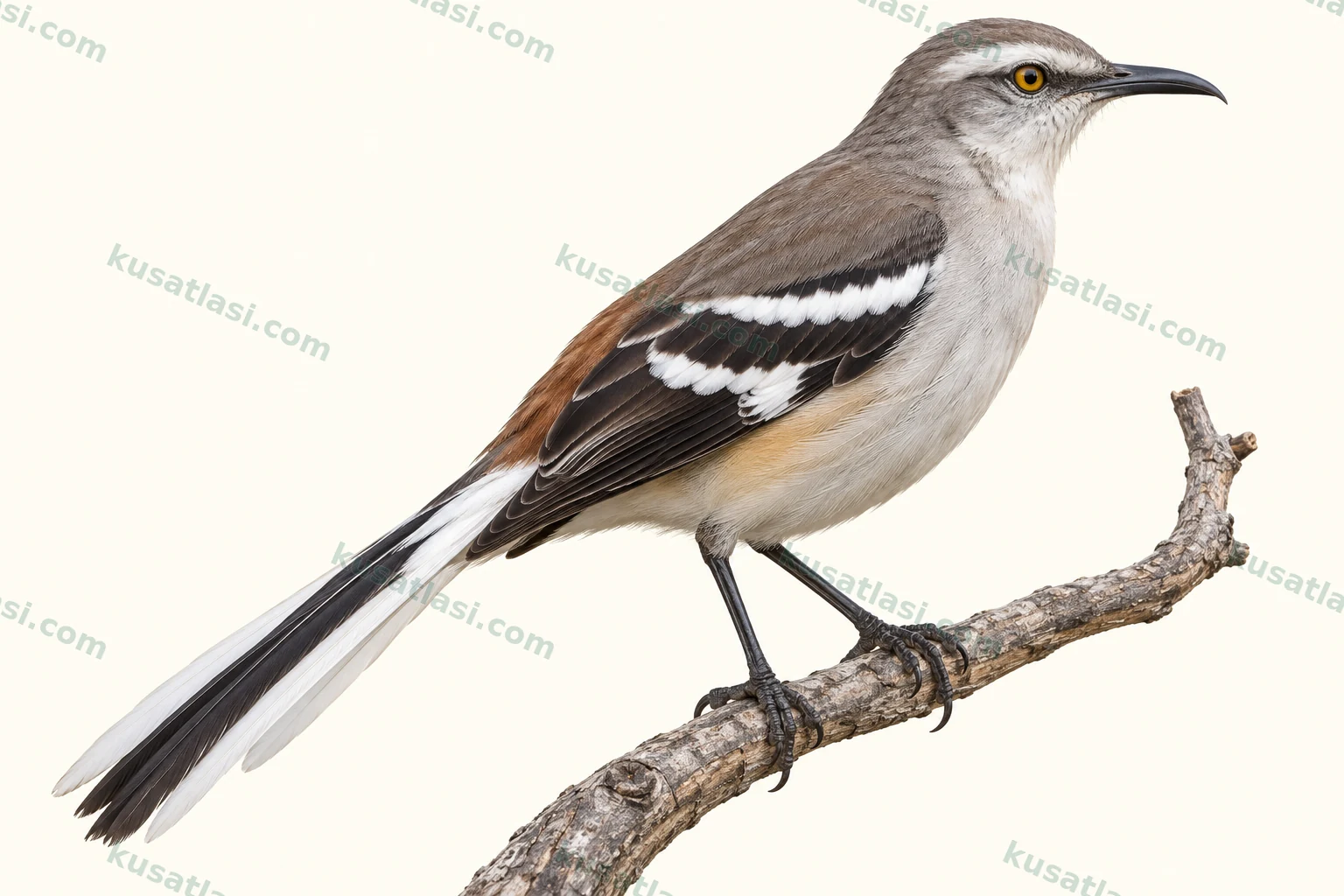
Mimidae · Passeriformes
White-banded Mockingbird
Mimus triurus
Ak Kanatlı Taklitçi
Check the broad white wing band and white-sided, dark-centred tail together.
- Order
- Passeriformes
- IUCN Status
- LCLeast Concern
Biometrics
Length
- Male
- 20–24 cm
- Female
- 20–24 cm
Wing length
- Male
- 10.2 cm
- Female
- 10.2 cm
Weight
- Male
- 45.5 g
- Female
- 40.2–49 g
Detailed explanations of these measurements are available on our website, on the same species page.
At a Glance
- Wing
Broad white band.
- Rump
Warm cinnamon tone.
- Tail
White sides, dark centre.
Young can show breast spotting and less white in the wing; a definitive single-photo sexing key was not verified.
Calendar
Bolivian records are mainly March–November; this is not a breeding calendar.
Species Information
Quick Identification
Check the broad white wing band together with the dark-centred, white-sided tail.
General Appearance and Posture
The upperparts are grey-brown and the rump cinnamon. The eyebrow and throat are white, with pale earthy underparts. An upright stance and exposed singing perch can draw attention.
Males, Females and Young Birds
Two young examined in the Santiago region of Chile in February 2024 showed breast spotting, less white in the wing than adults and yellowish gape edges. This regional observation does not establish an exact daily age. This review did not verify a reliable key for sexing a bird from a single photograph.
Appearance in Flight
The white wing area is conspicuous in flight, combining with the white outer tail and dark centre to form a striking pattern.
Voice and Behaviour
Its varied, complex song can include imitations of other birds. The Bolivian guide reports singing from an elevated perch. A copied sound alone does not establish that the imitated bird is present at that moment.
Similar Species
Against Chalk-browed Mockingbird (Mimus saturninus), check the broad white wing band, cinnamon rump and more extensively white outer tail feathers. Against Brown-backed Mockingbird (Mimus dorsalis), the generally greyer appearance and conspicuous white wing band help.
World Distribution
It occurs in South America. Its main breeding areas are in Argentina; outside the breeding season it moves towards northern Argentina, Bolivia, Paraguay, Brazil and Uruguay. Chile also has scarce but regular records and evidence relating to breeding. It is treated as monotypic.
Status Within Its Natural Range
The former treatment as only a vagrant in Chile has changed in the current Cornell account. However, sources do not assign the same certainty to nest visits and records of young. One local record does not establish regular breeding throughout the country.
Movements
The Bolivian expert guide treats it as an austral migrant, recorded mainly in March–November, with fewer summer records. The Paraguayan specialist account reports wintering birds particularly in the Chaco, with some remaining until early November. These regional patterns are not exact movement dates for every individual.
Breeding Habitat
In Argentina it uses open and semi-open habitats including scrub, Chaco and Monte woodland, savanna and steppe. Breeding habitat should not be restricted to parks and gardens.
Nest Site
The nest is an open twig cup in low vegetation, often a thorny shrub, lined with plant fibres, rootlets and flowers. The expert atlas account reports 3–4 eggs. A publication covering four breeding seasons in 1995–1999 at Ñacuñán reserve, Argentina, gives a local mean nestling period of 9.6 days; this does not mean that every young bird leaves on the same day. A directly measured species-specific incubation duration was not verified in this review. Avoid obstructing adults at nests.
Daily Habitat Use
In Bolivia it uses scrub, grassland, open woodland and farmland in dry or humid lowlands, including settlement edges. The feeding site and singing perch need not be at the same height.
What It Eats
It eats insects, fruit and seeds. Fixed dietary percentages throughout the range were not verified.
How It Forages
It can walk and run after insects on the ground and also pick food from branches and foliage. Birds may occur singly, in pairs or in family groups.
The Appearance of Three Tails
Local names in Brazil, Uruguay and parts of Argentina refer to the appearance of three tails. A dark centre and two white outer sections can make a single tail look like three separate parts.
What Does a Record of Young Establish?
Two young were observed together at Cerro La Ballena near Santiago, Chile, on 24 February 2024. The authors considered local birth plausible but did not directly observe incubation or fledging. Breeding there is therefore an interpretation supported by the birds’ appearance and location.
The Origin of a Number Matters
The incubation duration used for this species in the Ñacuñán study in Argentina was taken from Mimus saturninus. That calculation assumption cannot be presented as a directly measured duration in White-banded Mockingbird.