
World Birds
Field Guide Plates
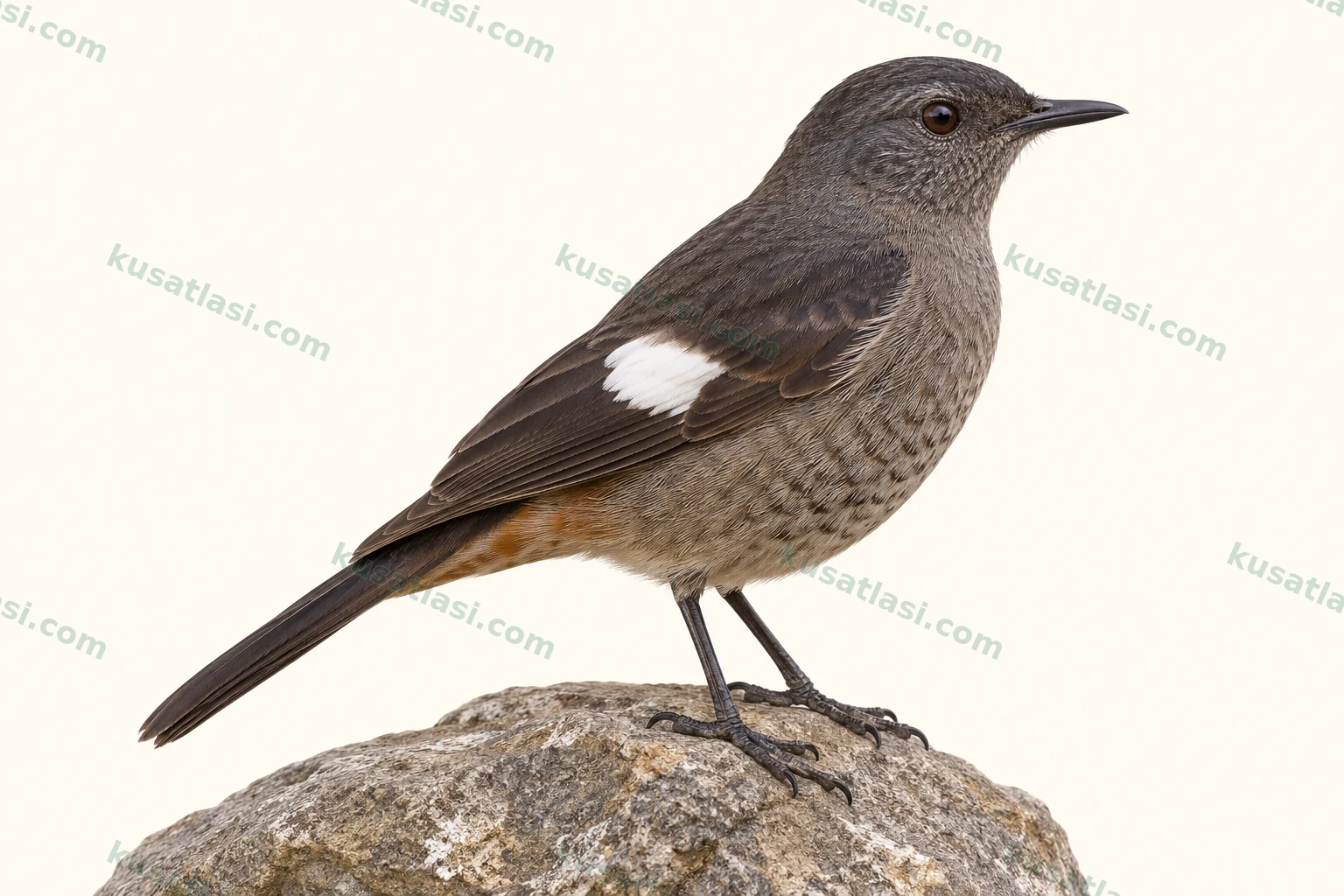
Swipe between the two adult plates.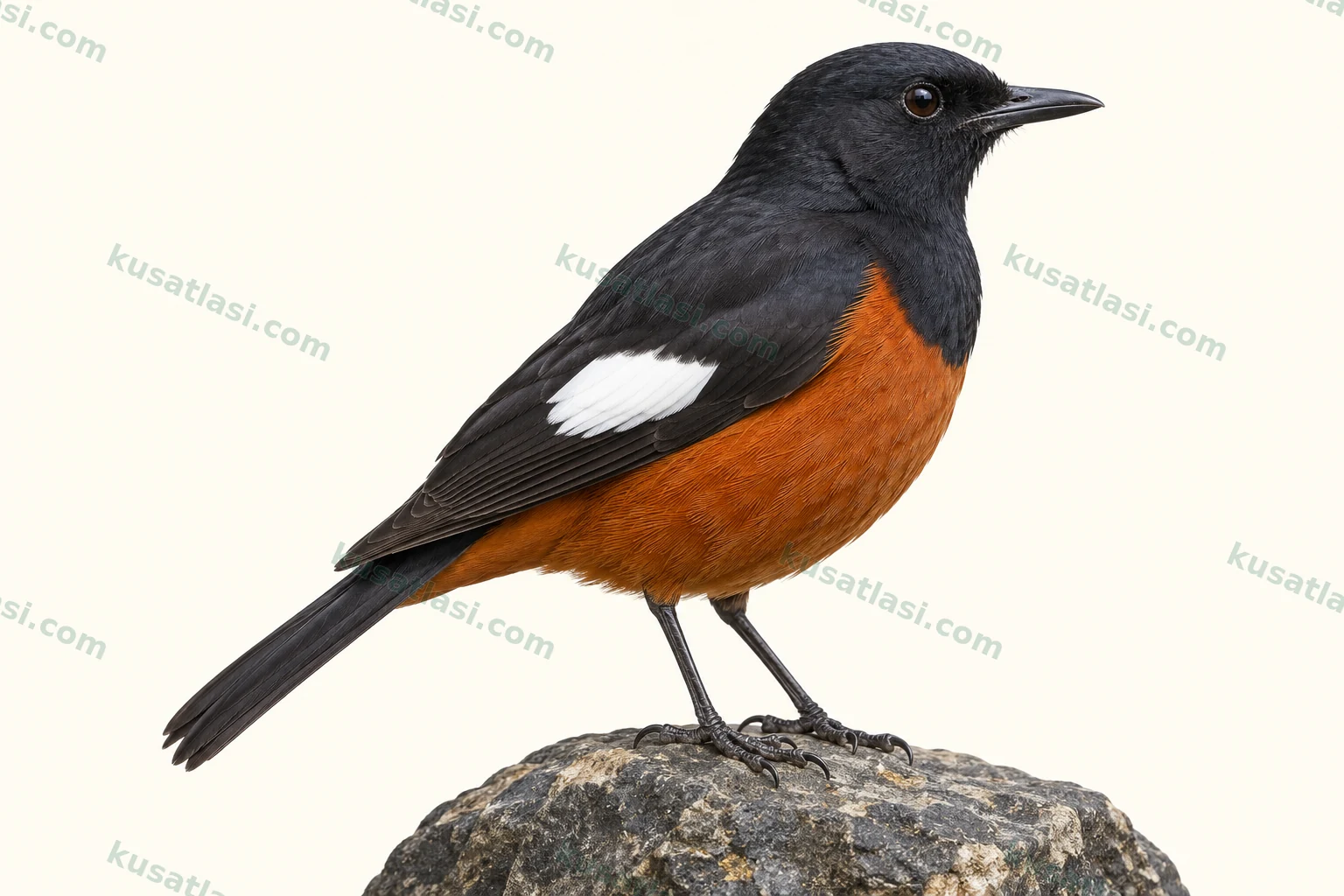
Muscicapidae · Passeriformes
White-winged Cliff Chat
Monticola semirufus
Ak Kanatlı İncirkızılı
Check the male’s rufous belly together with white flight-feather bases present in both sexes.
- Order
- Passeriformes
- IUCN Status
- LCLeast Concern
Biometrics
Length
- Male
- 19–21 cm
- Female
- 19–21 cm
Wing length
- Male
- 10.9 cm
- Female
- 10.9 cm
Weight
- Male
- Data unavailable
- Female
- Data unavailable
Detailed explanations of these measurements are available on our website, on the same species page.
At a Glance
- White wing patch
At the bases of the outer flight feathers.
- Male’s rufous belly
Contrasts with black head and breast.
- White also in females
The patch is not exclusive to males.
Males are glossy black and orange-chestnut; females are browner with duller patterning.
Calendar
Ethiopian guide nesting records include the June–August rains and September.
Species Information
Quick Identification
The male’s glossy black head and breast contrast with its orange-chestnut belly and undertail. White lies at the bases of the outer flight feathers. Females also have a white wing patch and should not be overlooked while searching only for colourful males.
General Appearance and Posture
The male has dark upperparts, wings and tail. On rocky, scrub-covered slopes, an exposed bird can initially look uniformly dark; wait for a view that reveals belly colour and the white wing patch.
Males, Females and Young Birds
Females are duller brownish-black, with fine orange-buff patterning below and dull orange undertail-coverts. Juveniles resemble females but show more conspicuous orange-buff spotting on the head, back and underparts. A white wing patch alone does not identify a male.
Appearance in Flight
Opening the wing reveals a broad pale area formed by white bases of the outer flight feathers. A shorter panel may also show at rest. This is anatomically different from a white shoulder patch, so patch position matters in comparisons.
Voice and Behaviour
It is seen in pairs or small parties and is generally shy, staying close to cover. Scan the boundary between rocky openings and scrub. A detailed, source-verified vocal identification key was not completed in this review.
Similar Species
Mocking Cliff Chat (Thamnolaea cinnamomeiventris) can occur in similar rocky habitat. Its male has a white shoulder patch, whereas White-winged Cliff Chat has white bases to the outer flight feathers. Female Mocking Cliff Chat lacks the corresponding white wing patch. Black upperparts combined with a rufous belly alone are insufficient in males.
World Distribution
It is endemic to the Ethiopian and Eritrean highlands, including western and southeastern Ethiopian uplands. Older references using Ethiopia alone in an endemism statement should not be read as excluding its native occurrence in Eritrea.
Status Within Its Natural Range
Abundance is local: it is frequent in some Ethiopian areas but less common in Eritrea and parts of Ethiopia. The global population has not been quantified. The stable trend in the 2025 expert assessment is inferred rather than supported by a published population time series.
Movements and Migration
It is treated as resident and non-migratory. No verified regular long-distance migration route is supplied. Sightings at different sites do not demonstrate that the same individuals move seasonally among all of them.
Breeding Habitat
It uses rocky ravines, scrub-covered mountain slopes, small valleys and forest edges. The specialist guide also includes rocky outcrops and stony ground along farm margins. Search adjacent cover rather than bare rock alone.
Nest Site
The specialist guide describes a compact nest of grass stems and moss, lined with hair and feathers, placed in a rock crevice or stone-wall cavity. It reports three white or greenish-white eggs with fine rufous speckling. Ethiopian nesting records include the June–August rains and also September. Incubation duration and exact fledging age were not verified in this review. Do not approach to inspect nest cavities.
Daily Habitat Use
The African Bird Club’s regional guide includes the Jemma Valley, Sululta and Debre Libanos among observation areas. These sites differ in cover and rock structure; presence at one does not establish uniform abundance across its surroundings.
What It Eats
It feeds on invertebrates. The specialist guide reports observations of feeding on newly emerged termites. That verifies termites as prey, not an exclusive year-round termite diet or a particular dietary percentage.
How It Forages
Details of its prey-capture methods and their seasonal frequency were not verified in this review.
The Same Species Behind Older Names
Older publications use Thamnolaea semirufa or Myrmecocichla semirufa. The current specialist account uses Monticola semirufus. These names can be matched during research without transferring information from a different, similarly named rufous-bellied species.
Appearance Alone Does Not Resolve Relationships
Zuccon and Ericson’s 2010 molecular study placed White-winged Cliff Chat within Monticola while linking Mocking Cliff Chat, formerly assigned to the same genus, with other open-habitat chats. Similar appearance therefore need not imply that the two are each other’s closest relatives.
Stone Walls Can Provide Nest Sites
Nesting has been reported in stone walls offering cavities comparable to rock crevices. This limited association with settlements does not establish use of all buildings or tolerance of disturbance while nesting.