
World Birds
Field Guide Plates
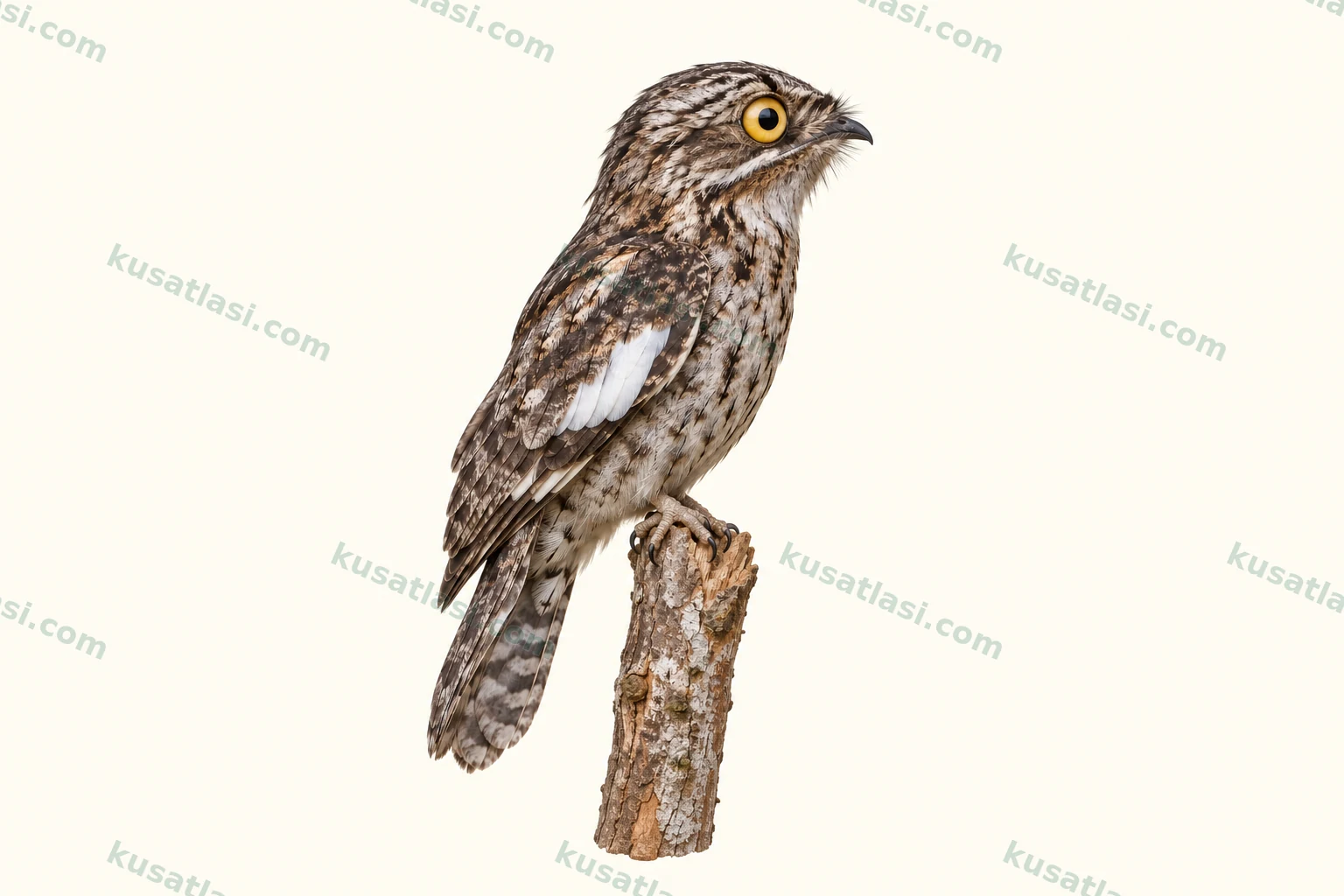
Swipe between the two adult plates.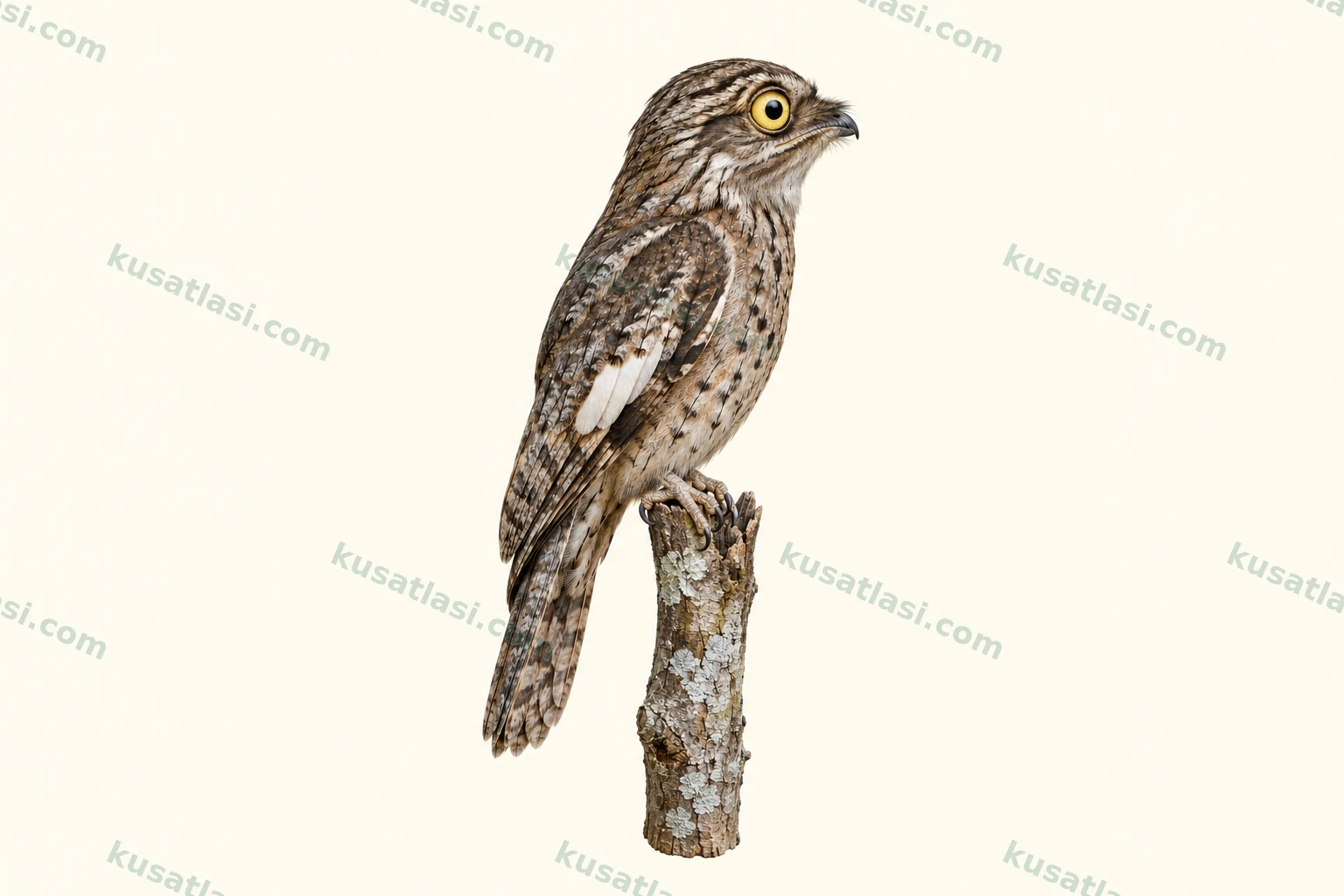
Nyctibiidae · Nyctibiiformes
White-winged Potoo
Nyctibius leucopterus
Ak Kanatlı Putu
Look for a broad white wing patch on a dark-patterned bird.
- Order
- Nyctibiiformes
- IUCN Status
- LCLeast Concern
Biometrics
Length
- Male
- 24–29 cm
- Female
- 24–29 cm
Wing length
- Male
- 18.42 cm
- Female
- 18.42 cm
Weight
- Male
- 77–98 g
- Female
- 77–98 g
Detailed explanations of these measurements are available on our website, on the same species page.
At a Glance
- White wing patch
Can be hidden by shoulder feathers.
- Yellow eye
Assess together with body pattern.
- Long descending whistle
The short call can resemble another nightbird.
A reliable appearance-only sex or juvenile age key was not verified.
Calendar
A monthly breeding calendar covering the whole range was not verified.
Species Information
Quick Identification
A long, broad white wing patch is an important feature; the entire wing is not white.
General Appearance and Posture
Gray-brown plumage carries dark streaks and spots. Shoulder feathers can conceal the white wing patch. The eyes are yellow.
Males, Females and Young Birds
Adults are broadly similar. Apparent patch size should not establish sex with certainty. A reliable detailed juvenile description and ageing key were not verified in this review.
Appearance in Flight
The white patch does not imply white flight feathers throughout. A diagnostic species-specific flight rhythm was not verified in this review.
Voice and Behaviour
At Sooretama, Brazil, in July 2009, short “bweep” calls were sound-recorded. The long descending whistle was only heard.
Similar Species
Calls can resemble those of Short-tailed Nighthawk (Lurocalis semitorquatus). A short note alone is insufficient; assess the white wing patch, posture and longer song together.
World Distribution
It is patchily distributed in Amazonia, with separate recorded areas in eastern Brazil’s Atlantic Forest. It should not be considered restricted to the Amazon basin. It is treated as monotypic.
Status Within Its Natural Range
A bird documented at Una Biological Reserve, southern Bahia, in November 1999 was reported in the 2003 study. This dated record does not establish present population size or resolve all gaps in the range.
Movements
A tracked monthly migration route covering the whole range was not found in this review. Separate records in distant forests do not demonstrate seasonal migration between those locations.
Breeding Habitat
It is associated with humid forest. In 2007–2008 research north of Manaus, Brazil, it was detected in old-growth forest but not in the sampled secondary forest. This does not mean that nests were located there.
Nest Site
Species-specific nest structure, clutch size and developmental durations were not verified in this review. Breeding data from other potoos cannot be transferred here.
Daily Habitat Use
Observations at Roura, French Guiana, in May 2009 documented daytime roosting in a tree. Some birds responding to playback by day in that account does not establish routine diurnal hunting.
What It Eats
It is insectivorous; the expert account reports prey such as beetles and moths. Dietary percentages across the whole range were not verified.
How It Hunts
It sallies from a perch to capture airborne prey. Species-specific hunting-flight durations and distances were not verified in this review.
Community Totals Can Conceal a Species’ Response
Research north of Manaus, Brazil, compared 30 old-growth and 24 secondary-forest points. Overall nocturnal bird richness appeared similar, yet White-winged Potoo was clearly associated with old growth. This regional result illustrates how community totals can conceal species-specific habitat requirements; it does not establish universal absence from secondary forest.
A Long Route to Photographs
The March 2010 institutional newsletter from French Guiana describes canopy observations leading to photographs of a daytime-roosting bird at Roura. Difficulty seeing it from the ground illustrates why sparse records alone do not provide a population count. The newsletter’s older taxonomic-split interpretation has not replaced the current single-species treatment.
Playback Can Complicate Vocal Comparisons
Atlantic Forest research in Brazil emphasised small samples and possible playback effects when comparing song durations between regions. A difference in a small vocal sample is not, on its own, evidence of separate species.