
World Birds
Field Guide Plates
Swipe between the two adult plates.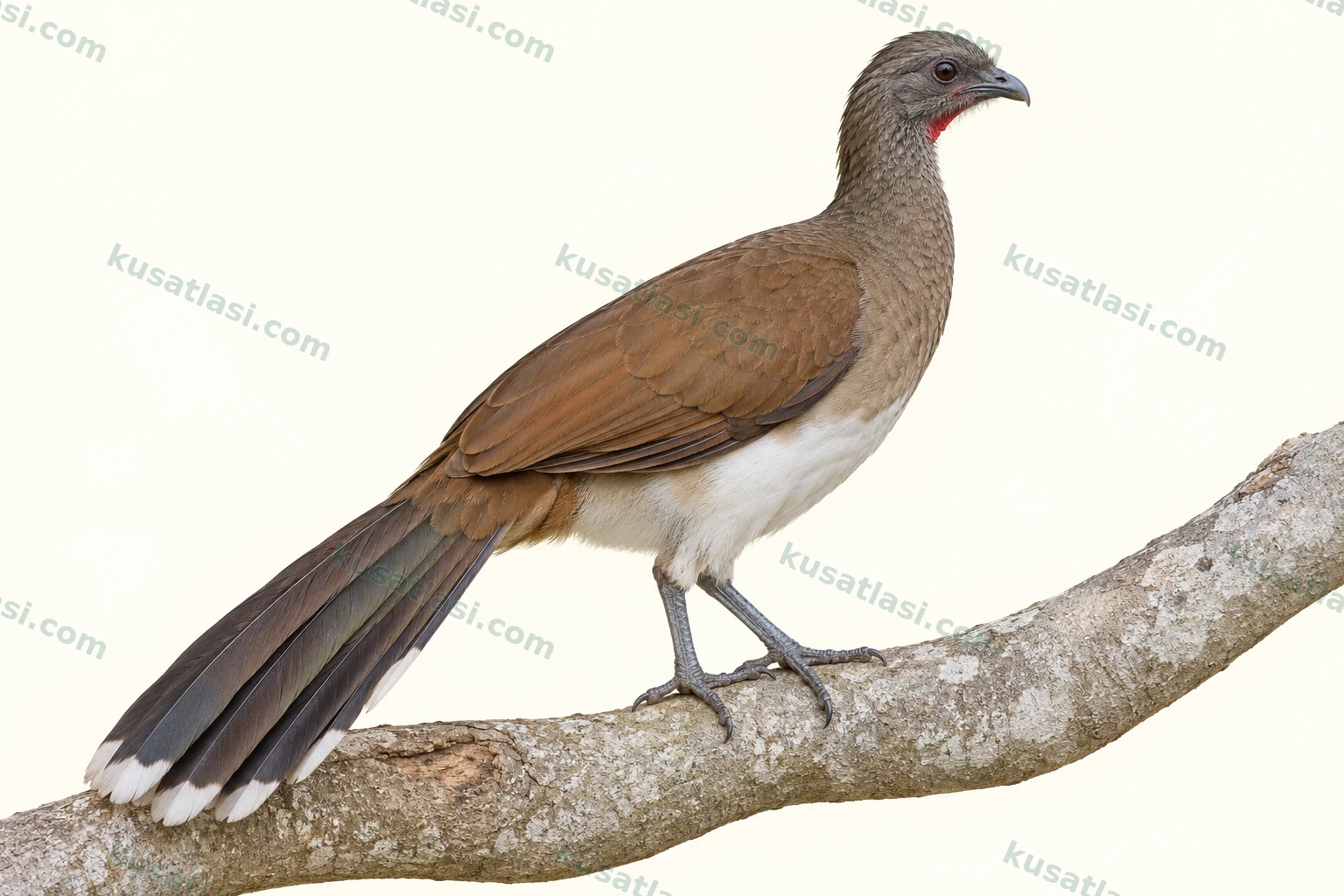
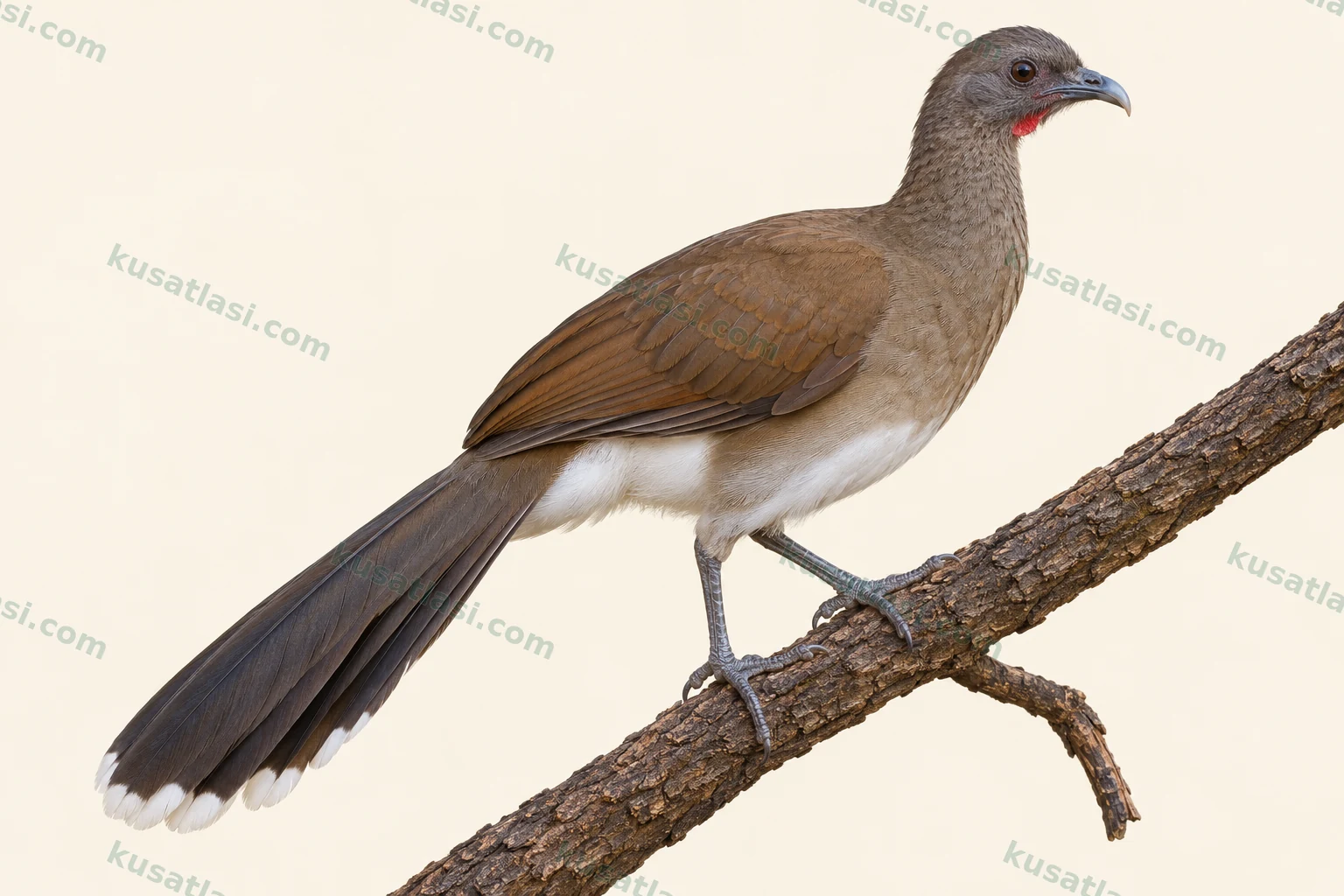
Cracidae · Galliformes
White-bellied Chachalaca
Ortalis leucogastra
Ak Karınlı Çaçalaka
Brown breast and whitish belly.
- Order
- Galliformes
- IUCN Status
- LCLeast Concern
Biometrics
Length
- Male
- 43–50 cm
- Female
- 43–50 cm
Wing length
- Male
- 20.86 cm
- Female
- 20.86 cm
Weight
- Male
- 439 g
- Female
- 560 g
Detailed explanations of these measurements are available on our website, on the same species page.
At a Glance
- Head
Grey.
- Wings
Rufous-brown.
- Tail
Long, white-tipped.
The internal anatomical sex difference is not visible at a distance.
Calendar
Egg records: Guatemala March–July; El Salvador April–May.
Species Information
Quick Identification
The brown breast contrasts distinctly with the whitish belly.
General Appearance and Posture
The head and upper neck are grey; the back and wings are rufous-brown.
Males, Females and Young Birds
The anatomical study in Guatemala examined adults. Males have an elongated windpipe looping beneath the skin; this is not a sexing character visible in a distant photograph. The study did not determine when the loop develops in young birds.
Appearance in Flight
The white tip of the long tail is one of the patterns to check when assessing its appearance.
Voice and Behaviour
The guide to Guatemala’s Pacific coast describes noisy birds foraging in small groups.
Similar Species
Confusion with Ortalis vetula has also affected historical records from Costa Rica. The Karen Mogensen Reserve study treats the local birds, formerly assigned to O. leucogastra, as O. vetula. An old locality record alone is not a substitute for identification.
World Distribution
The Cornell account places its range along Central America’s Pacific slope, from southern Mexico to western Nicaragua.
Status Within Its Natural Range
AviList 2026 lists the species in Galliformes and Cracidae, without subspecies. Its range extension into Costa Rica conflicts with other sources. Costa Rica’s June 2026 official list includes O. vetula and O. cinereiceps, but not O. leucogastra. A verified present-day Costa Rican population is therefore not asserted here.
Movements
It is classified as resident on Guatemala’s Pacific coast.
Breeding Habitat
It uses swamp forest, second-growth scrub and mangroves, as well as dry forest.
Nest Site
The nest is a loosely built platform lined with leaves.
Daily Habitat Use
It also occurs along plantation edges on Guatemala’s coastal plain.
What It Eats
Besides fruit, it eats leaves, buds, flowers and some invertebrates.
How It Forages
The review of Mexican cracids reports fruits from 11 plant genera representing at least 12 species for this bird in El Salvador. This is a regional synthesis citing Simas’s 1979 report, not a new measurement of dietary proportions.
Regional Differences in Breeding Records
The 2005 cracid guide gives egg records from March–July in Guatemala and April–May in El Salvador, and describes clutches of two or three eggs. These country records do not establish one fixed breeding calendar throughout the range.
Limits of the Anatomical Study
Only three of the 12 dead adults examined over ten years at three Guatemalan zoological institutions were O. leucogastra; nine were O. vetula. The male tracheal loop was checked against the reproductive organs. This small captive sample does not validate sexing wild birds at a distance.