
World Birds
Field Guide Plates
Swipe between the two adult plates.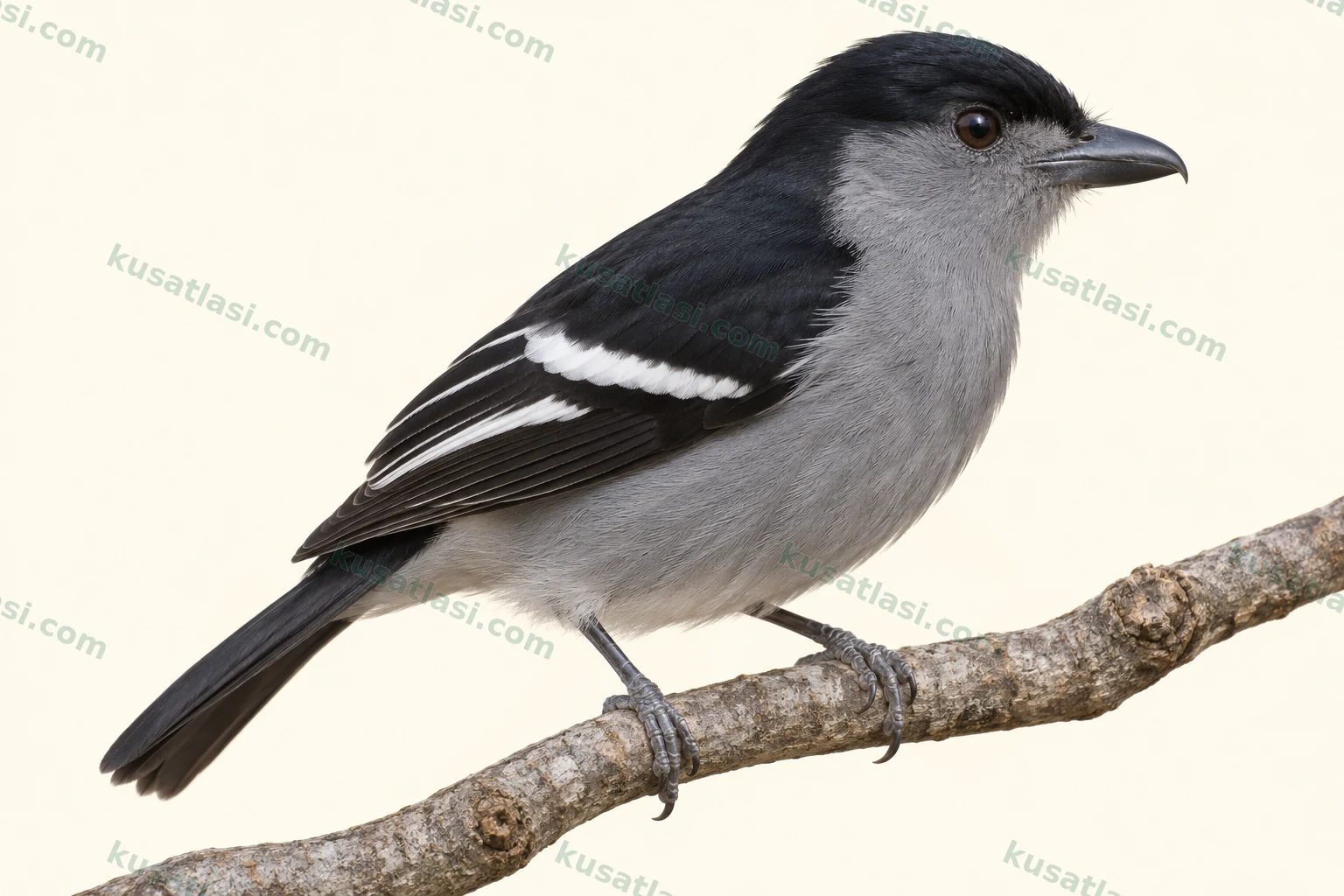
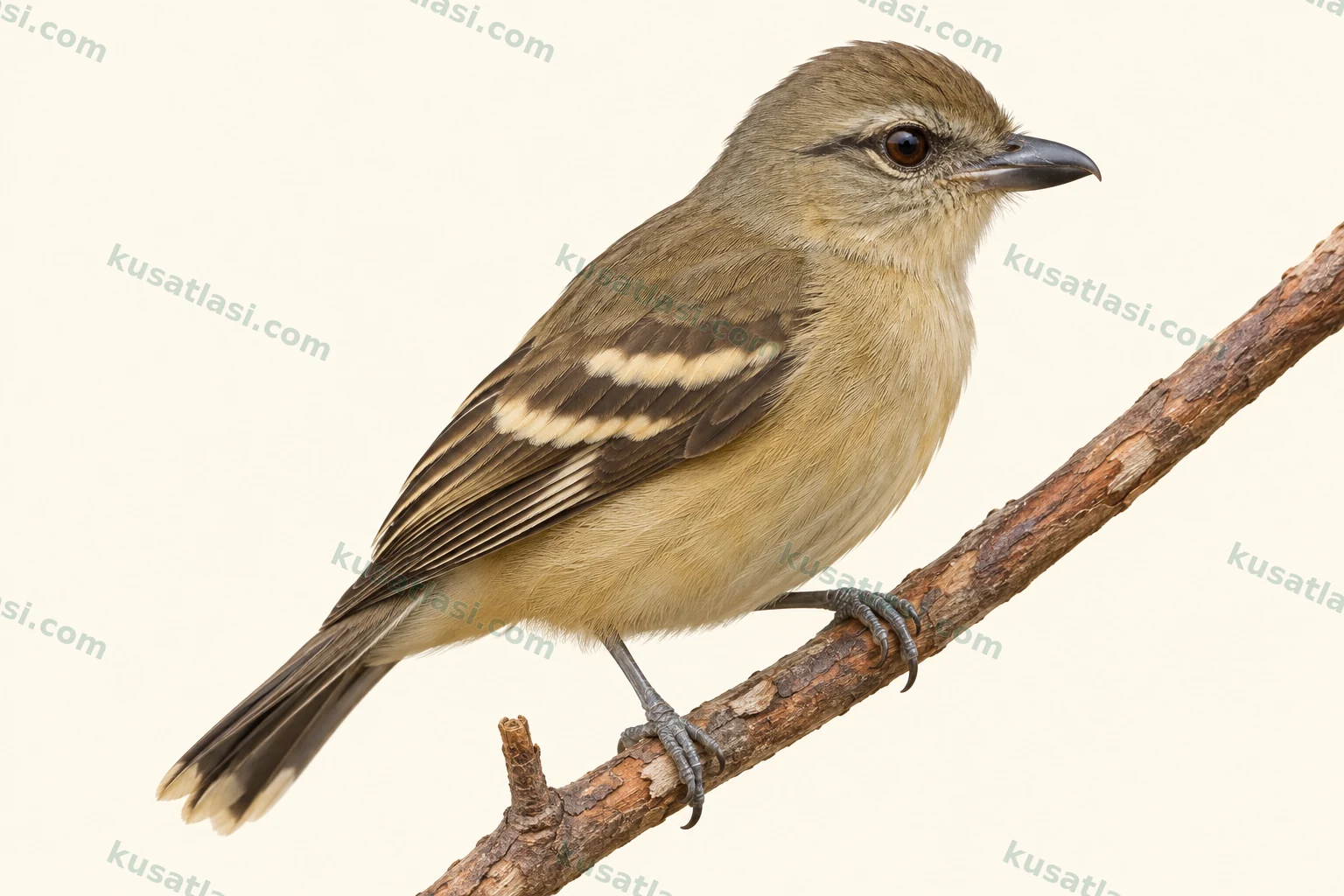
Tityridae · Passeriformes
White-winged Becard
Pachyramphus polychopterus
Ak Kanatlı Bekard
Assess male pale wingbars and tail tips, or female warm wing edging and yellowish underparts, as a combined pattern.
- Order
- Passeriformes
- IUCN Status
- LCLeast Concern
Biometrics
Length
- Male
- 14–16 cm
- Female
- 14–16 cm
Wing length
- Male
- 7.2 cm
- Female
- 7.2 cm
Weight
- Male
- 18–25.5 g
- Female
- 18–25.5 g
Detailed explanations of these measurements are available on our website, on the same species page.
At a Glance
- Conspicuous wing markings
White in males, warmer buff-cinnamon in females.
- Pale tail tips
Especially on the outer feathers.
- Regional body variation
Some males gray below; some Amazonian forms very dark.
Females are olive-brown and yellowish. Immature males can resemble females; adult male body colour differs geographically.
Calendar
Resident through much of the tropics, with seasonal migrants in the south. Regional breeding dates are not merged into one monthly schedule.
Species Information
Quick Identification
Adult male White-winged Becards show a dark head, conspicuous pale wingbars and pale tips to the outer tail feathers. Females look very different, with olive-brown upperparts, cinnamon-toned wing markings and pale yellowish underparts. Male body colour varies geographically, so neither “gray-bellied” nor “all-black” describes every population.
General Appearance and Posture
Males of the nominate eastern Brazilian form have a glossy blackish crown, nape and upperparts, with slaty head sides, collar, rump and underparts and a potentially paler belly. Broad white feather edges and covert tips create conspicuous bars on the black wing. The tail is graduated; broad pale tips on feathers other than the central pair can be partly concealed when it is closed.
Western Amazonian tenebrosus and nigriventris are much darker. Some have sooty-black underparts while retaining conspicuous white in the wings and tail. By contrast, dorsalis males of western Colombia and northwestern Ecuador have much paler gray underparts. These are regional differences within the species, not grounds for assigning every dark bird to another species.
The eye is dark and the legs dark gray. The bill may appear dark or silvery gray with a dark tip, often paler on the lower mandible. A bird can perch rather upright and watch its surroundings intently before a short foraging sally. Its quiet appearance between sallies does not mean that it is inactive or feeds only on fruit.
Males, Females and Young Birds
Adult females are brownish or greenish olive above, often browner on the crown. A pale line near the upper bill base and lores and a broken pale eye-ring may show. Wing coverts and inner flight feathers have broad buff-cinnamon edges, with similar warm tips on the tail, especially its outer feathers.
Underparts are pale yellowish, with an olive tinge on the breast and sides and a grayer throat. Regional female variation includes more rufescent or more grayish-olive upperparts. Expecting the male’s black-and-white colours in females is misleading.
Juveniles of both sexes resemble females. Immature males may subsequently develop black specks on the head and back and a grayer throat. This transitional plumage can resemble an adult female, so not every bird lacking definitive male plumage can be sexed as female.
Appearance in Flight
Short flights can reveal male wing white and outer tail tips, or the female’s warmer cinnamon markings. The amount visible differs between folded and spread wings. Flight style alone is not a definitive identification rule; reassess head, body colour and the wing-and-tail pattern when the bird lands.
Voice and Behaviour
Song includes clear, whistled, sometimes downslurred notes. Some sequences begin slowly and accelerate, while others are softer and more rhythmic. Both sexes vocalize, with females potentially giving weaker versions. Regional vocal differences are reported, including contrasting delivery rates in eastern and northwestern Ecuador.
Forages alone or in pairs and can associate loosely with mixed-species groups in the middle and upper levels of wooded habitats. Solitary foraging also occurs in open areas or second growth. Joining a feeding flock does not imply shared nests or permanent dependence on the flock.
Similar Species
When comparing Pachyramphus marginatus, assess the male’s more extensive pale wing areas, tail tips and body colour together. White-winged Becards generally have dark lores, but some males from El Tirol, Paraguay, had pale gray there. An absolute rule of completely dark lores is therefore unsafe.
One wingbar is insufficient for females and transitional young. Consider upperpart tone, yellowish underparts, warm wing edging and local distribution together. Dark western Amazonian males and paler regional forms should not be forced into one colour template.
World Distribution
In Central America the range extends south from Guatemala, southern Belize and Honduras. In South America it spans suitable parts of Colombia and Ecuador, Venezuela, Trinidad and Tobago, the Guianas and Amazonia, reaching Bolivia, Brazil, Paraguay, northern Argentina and Uruguay. This broad range does not imply occurrence throughout every country.
Eight subspecies are recognised. Similis, cinereiventris and dorsalis occupy northern Central America, northern Colombia, and western Colombia–northwestern Ecuador respectively. Tristis extends through northern South America and Trinidad–Tobago; tenebrosus and nigriventris occupy different Amazonian areas; the nominate form occurs in eastern Brazil and spixii farther south. These regional forms help explain why one plumage template does not fit the entire range.
Movements and Migration
Resident through much of the range, with seasonal movements in southern populations. The 1995–2004 El Bagual study in Formosa, Argentina, treated it as a regular austral migrant, with local occurrence extending from late September to late April.
These local limits are not a migration calendar for every subspecies. Nor do isolated collisions with illuminated windows establish a precise nocturnal migration route for the entire species. Resident tropical populations and seasonal southern occurrence need separate treatment.
Breeding Habitat
Uses habitats from humid forest edges to drier, lighter woodland, second growth, shaded plantations and clearings with scattered trees. Riparian and evergreen gallery forests, river islands, occasional mangrove margins and second growth in seasonally flooded forest also provide habitat.
Commonly a lowland bird, it also reaches foothills and higher woodland in parts of its range. Use of openings and modified vegetation does not imply benefit from wholesale forest removal; suitable tree structure and food resources remain necessary.
Nest Site
The bulky, enclosed, roughly globular nest has a side entrance. Materials include grass, fine plant fibres, dead leaves, moss and other soft matter. It is placed in a fork among slender outer branches, often within foliage. Monitored El Bagual nests were likewise on thin lateral branches away from the trunk, particularly in trees in open sites.
The expert synthesis gives clutches of two to four, female incubation of approximately 18–21 days and a nestling period of about 21 days. At El Bagual, two accessible nests contained three and four eggs, and one nest had a recorded female incubation period of 16 days. That single local record is neither forced into the synthesis range nor treated as an invariant period for every population.
Both parents feed the young. Breeding months differ geographically: the expert account lists April–August in Costa Rica and March–September in Trinidad, while active El Bagual nests occurred from early November to late January. Dates from distant regions should not be joined into one continuous species-wide season. Avoid approaching nests in ways that interrupt parental visits.
Daily Habitat Use
Usually forages in middle and upper woodland levels, between leafy outer branches and the subcanopy, sometimes descending lower. Waiting at a perch alternates with short sallies to nearby foliage. Solitary, paired or loosely flock-associated foraging can vary with the openness of the habitat.
What Does It Eat?
Reported animal foods include caterpillars, beetles, leafhoppers and spiders. Small fruits are also eaten; it is neither strictly insectivorous nor exclusively frugivorous.
Five food-containing stomach samples published from El Tirol, Paraguay, included three with only insects, one with only fruit and one with both. Insect remains included grubs and caterpillars. This small sample directly supports consumption of both food categories, but does not establish annual proportions by mass or identical diets in every population.
How Does It Forage?
Watches nearby foliage intently from a perch before a short sally to collect food, occasionally hovering briefly beside leaves. It can use heights from outer branches to the subcanopy. Its rather sluggish appearance between sallies belongs to this watch-and-sally pattern and does not imply ground-only feeding or prolonged aerial insect pursuit.
Nest Neighbours Do Not Automatically Prove Protection
An Argentine study compiling observations from 1997–2016 recorded White-winged Becards building beside active Ictinia plumbea nests. Benefit from the raptor’s defence is a plausible explanation, but the study was not a systematic nest-survival experiment. Discovering some nests through nearby raptor activity could overestimate association frequency. Material theft observed in other becards is not automatically attributed to this species.
Nest Sites Can Be Used in Later Years
El Bagual observations report use of the same nest site or its vicinity in more than one breeding season. This does not imply that an old nest remains unchanged every year or that the same individuals return in every season. Fidelity to a place and individual identity are separate questions.
A Record of Brood Parasitism
The expert account reports brood parasitism by Molothrus bonariensis: another bird laying an egg in the becard’s nest. The record does not imply parasitism at every nest or the same frequency throughout all populations.