
World Birds
Field Guide Plates
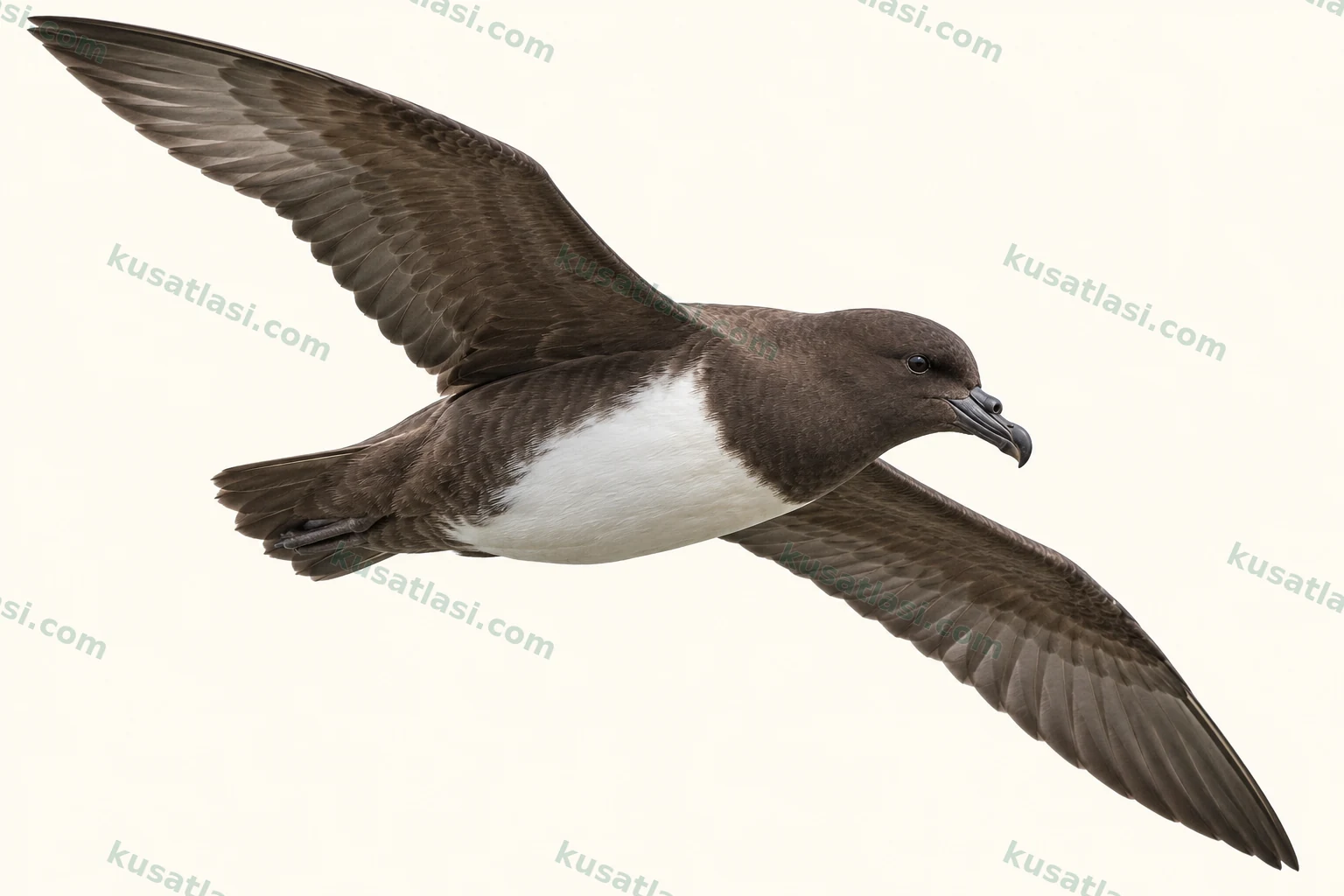
Swipe between the two adult plates.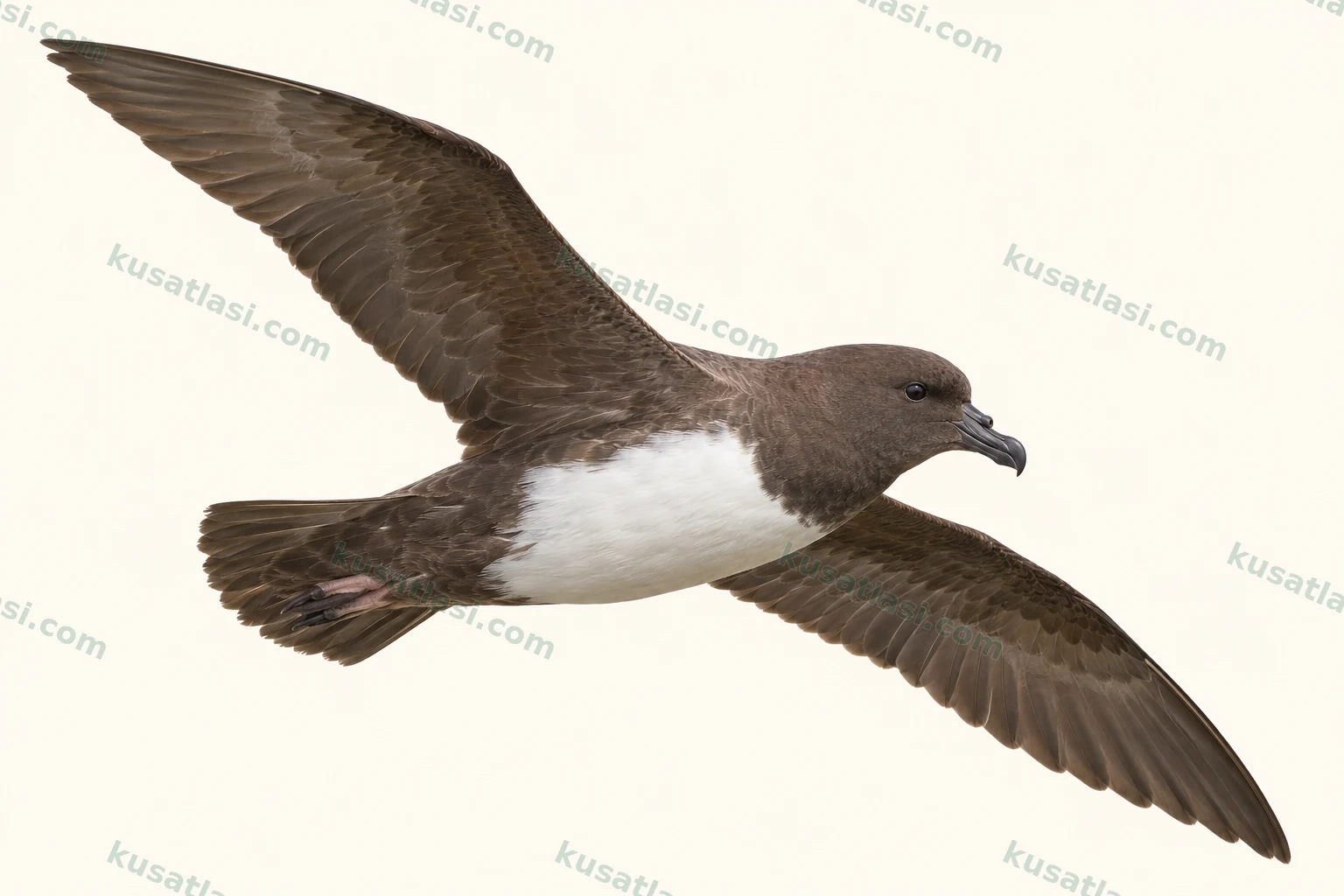
Procellariidae · Procellariiformes
Atlantic Petrel
Pterodroma incerta
Ak Karınlı Fırtınakuşu
A dark-headed oceanic petrel with a white belly.
- Order
- Procellariiformes
- IUCN Status
- ENEndangered
Biometrics
Length
- Male
- 40–43 cm
- Female
- 40–43 cm
Wingspan
- Male
- 104 cm
- Female
- 104 cm
Weight
- Male
- 310–720 g
- Female
- 310–720 g
Detailed explanations of these measurements are available on our website, on the same species page.
At a Glance
- Head
Dark.
- Belly
White.
- Underwing
Mostly dark.
Males and females look alike.
Calendar
Gough: eggs in June–July, fledging in December.
Species Information
Quick Identification
A powerful, stocky oceanic petrel. Its dark head and upperparts contrast strongly with the white breast and belly.
General Appearance and Posture
The head and back are dark brown. Fresh plumage shows a sharp dark upper-breast boundary against white below.
Males, Females and Young Birds
The sexes look alike; colour alone does not identify sex.
Appearance in Flight
The wings are mostly dark, with a slightly paler outer section below. It often flaps at the upper end of a glide.
Sounds and Behaviour
During March–June 2021 observations on Gough Island, the first night arrival was recorded on 12 March. From late March, large numbers came ashore at dusk, with few arriving after full darkness. Colony attendance should therefore not be restricted to complete darkness.
Similar Species
Typical pale Pterodroma mollis is grey above with a dark breast band. P. lessonii differs in its pale head and dark eye patch.
World Distribution
It breeds on Gough Island in the South Atlantic. Tristan da Cunha is a former breeding locality whose present breeding status remains uncertain. Away from breeding sites it ranges into deep offshore waters from southern Brazil to Argentina and off south-western Africa.
Status Within Its Natural Range
The accessed BirdLife assessment is dated 2019 and describes an inferred decline. It is not a new global census conducted in 2026.
Movements
Away from its breeding islands it lives far offshore.
Breeding Habitat
On Gough Island it breeds in the austral winter: a single egg is laid in June–July and chicks fledge in December. Cuthbert’s 2004 study reports a nestling period of almost 140 days.
In research covering four breeding seasons on Gough during 2003–2008, a 55.5-day incubation period was used to estimate hatching success. This does not mean that every nest hatched at exactly that interval.
Nest Site
It nests in burrows in Gough’s fern-bush peatland.
Daily Habitat Use
On the 2021 return voyage from Gough to Cape Town, it was fairly common east of the island on 9 June. Only one was recorded the following day and none thereafter. This describes that voyage’s observations, not a route followed by every individual.
What It Eats
In 59 regurgitated food samples collected during chick provisioning on Gough in October 1989 and 1990, cephalopods contributed 86.7% of drained food mass; fish and crustaceans also occurred. This is not a year-round dietary proportion.
How It Forages
Bill form and prey remains suggest surface-seizing and scavenging; they do not establish a measured diving depth.
Cameras Revealed a Threat to Chicks
Of eight camera-monitored nests on Gough in 2014, seven hatched. All seven chicks were killed by mice within hours. In the broader nest-monitoring sample, 87% of 83 hatchlings failed to fledge. These are results from that study, not evidence that the species raises no young anywhere in every year.
How Should Prey Remains Be Interpreted?
Digestive tracts of 61 birds from southern Brazil, collected during 2004–2014, were examined; 54 had been found after Hurricane Catarina in 2004. Cephalopods represented 93.9% by number of at least 766 reconstructed prey. This is not a mass percentage. Most specimens were emaciated stranded birds, and squid beaks can persist longer than fish remains, limiting interpretation as the daily diet of all healthy birds.
Outcome of a Conservation Attempt
The United Kingdom’s conservation report to UNESCO for Gough and Inaccessible Islands confirms that the 2021 mouse-eradication attempt on Gough failed. Preparations for another attempt do not mean that mice have already been removed.