
World Birds
Field Guide Plates
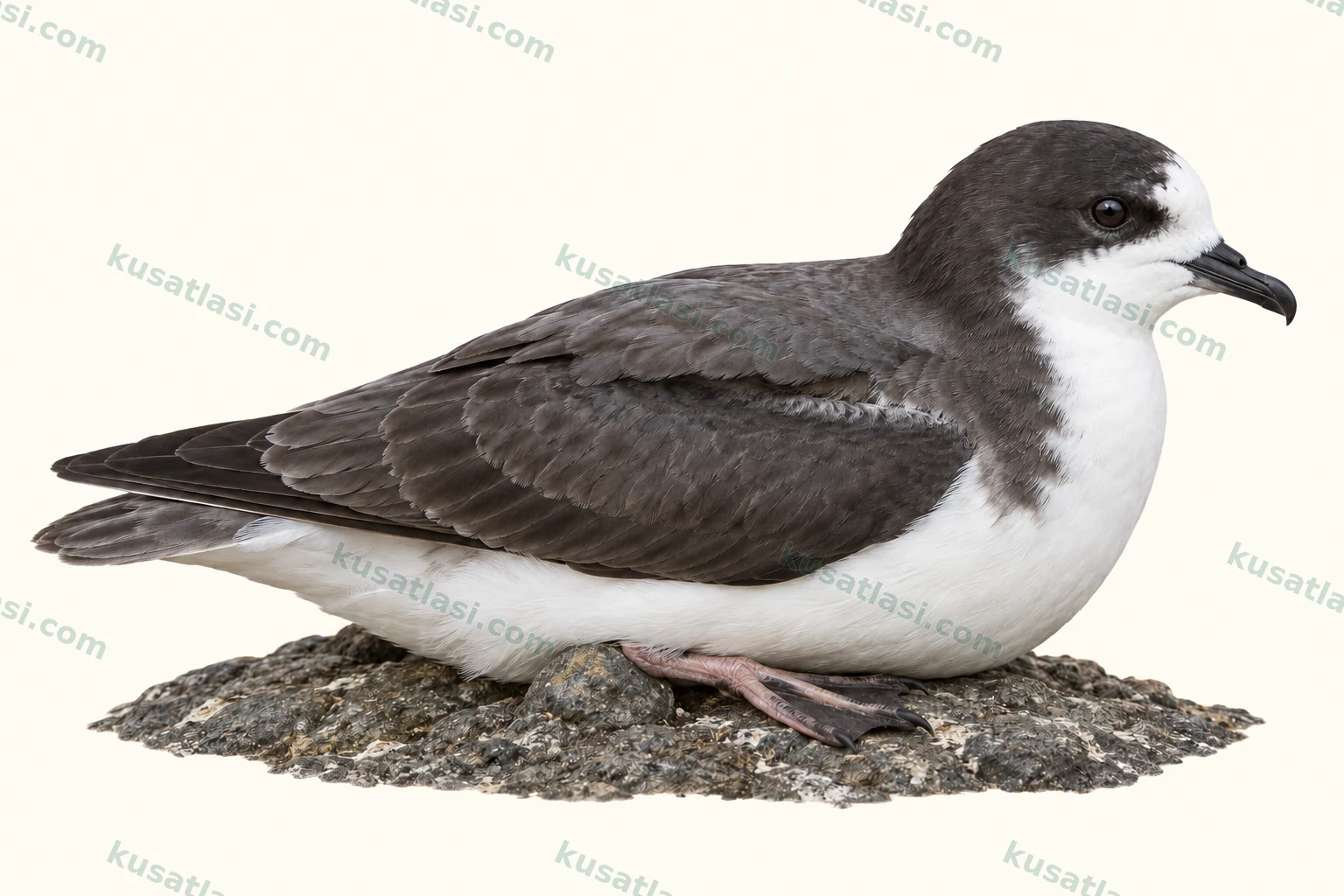
Swipe between the two adult plates.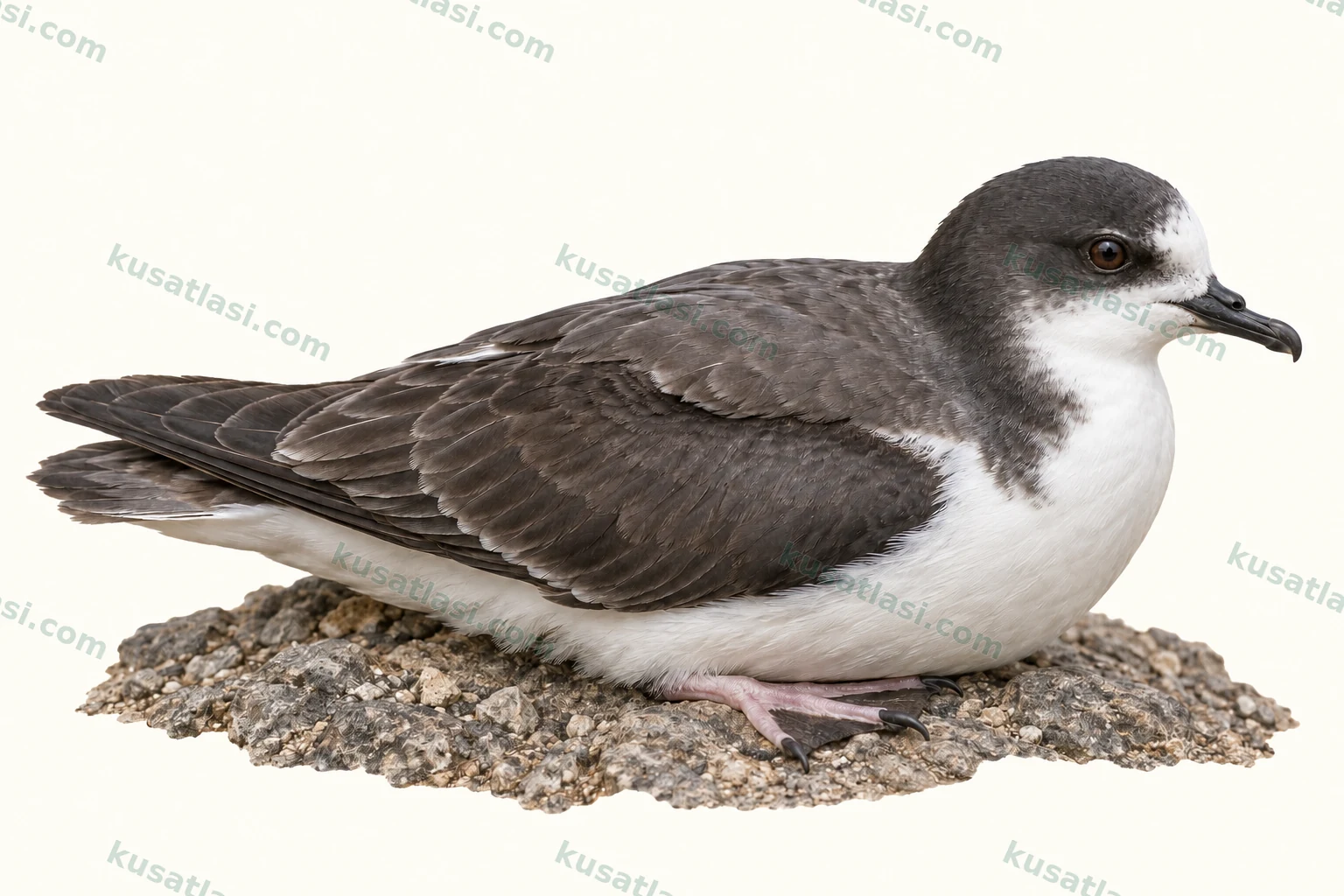
Procellariidae · Procellariiformes
Gould's Petrel
Pterodroma leucoptera
Ak Kanatlı Fırtınakuşu
Assess the dark hood, white underparts and diagonal dark underwing bar together.
- Order
- Procellariiformes
- IUCN Status
- VUVulnerable
Biometrics
Length
- Male
- 30 cm
- Female
- 30 cm
Wingspan
- Male
- 70–71 cm
- Female
- 70–71 cm
Weight
- Male
- 129–260 g
- Female
- 129–260 g
Detailed explanations of these measurements are available on our website, on the same species page.
At a Glance
- Dark hood
Extends onto cheeks and breast sides.
- White underwing
Has a dark border and diagonal bar stopping short of the body.
- Similar species
A breast band alone is not decisive.
Sexes look alike; juveniles resemble adults.
Calendar
New Caledonian breeding stages can occur 2–4 weeks later than Australian ones.
Species Information
Quick Identification
Look for a dark hood contrasting with the white face and underparts. It extends beyond the crown onto the cheeks, nape and breast sides. The dark underwing border and diagonal bar are also important.
General Appearance and Posture
The back is grey and the upperwings darker, with a dark M pattern across the spread wings and back. The black bill is slender and hooked. Lighting during a brief view at sea can alter the apparent hood boundary and shades of grey.
Males, Females and Young Birds
Male and female plumage does not provide a reliable sex distinction, and juveniles resemble adults. Australian and New Caledonian birds also cannot safely be separated by colour alone: a 2016 comparison found extensive overlap in previously proposed plumage distinctions.
Appearance in Flight
It changes direction readily while gliding on narrow wings. On the white underwing, a diagonal dark bar extends inward from the outer dark border without reaching the body. Assess the pattern over several views rather than one instant of a wingbeat.
Voice and Behaviour
It arrives at and leaves its breeding colony in darkness. Rapid, repeated high calls may be heard in flight over the colony, with high squeaks and low trembling growls on the ground or around nests.
Similar Species
Pale Collared Petrels (Pterodroma brevipes) present a particularly difficult comparison. Portelli’s 2017 study emphasises their proportionately longer, more tapered tail and stronger contrast between grey flight feathers and white underwing coverts. A breast band can occur in both species and is not decisive alone. Head and underwing pattern should also be checked together against paler-headed species such as Cook’s and Pycroft’s Petrels.
World Distribution
It breeds on islands off New South Wales, Australia, and in New Caledonia. Cabbage Tree, Boondelbah, Broughton and Little Broughton around Port Stephens fall within the 2022 conservation plan; Montague Island is also a breeding locality. Occurrence on Raivavae does not establish confirmed breeding there.
Status Within Its Natural Range
The 2021 review of New Caledonian surveys from 1994–2014 documents nesting losses involving rats, pigs and cats. Those regional findings do not establish an identical loss rate at every colony. Australian island management combines nesting cover, biosecurity and monitoring of breeding success.
Movements and Migration
In the 2014 tracking study, Australian breeders mainly used the central Pacific south of Hawaii after breeding, whereas New Caledonian birds used the eastern Pacific west and southwest of the Galápagos. The Tasman Sea was important during breeding. Devices were attached to established breeders; young birds and adults skipping breeding need not follow the same schedule.
Breeding Habitat
On Cabbage Tree Island it uses steep, rocky gullies beneath palms and figs. New Caledonian surveys found nests near streams or on slopes close to ridges. The nesting environments of the two regions differ.
Nest Site
Australian nests use rock crevices, fallen palm fronds and hollow trunks; New Caledonian birds also use burrows. For the Australian colony, the single egg takes about 49 days to hatch and the chick remains for about 13 weeks; both parents incubate and feed it. Do not uncover nests or approach to force birds into view.
Daily Habitat Use
Sheltered terrestrial nests and marine feeding grounds are widely separated. Tracked birds used the Tasman Sea and waters south of Australia during the breeding period, with some making pre-laying forays into the Indian Ocean.
What It Eats
Breeding-season food includes small fish, squid and krill. Comparable prey proportions across populations and seasons were not verified in this review.
How It Forages
It takes prey from at or near the sea surface. It is sometimes seen feeding alongside other seabirds, tuna and dolphins; these associations do not define every feeding event.
Breeding Calendars Differ Regionally
The 2021 New Caledonian study reports breeding stages occurring 2–4 weeks later than in Australia, depending on year and stage. Applying one calendar to all colonies would hide this population difference.
Sticky Fruits Can Be a Threat
The 2022 Port Stephens conservation plan includes entanglement in sticky Pisonia fruits among local risks. Protecting nesting habitat therefore involves more than monitoring introduced mammalian predators.
Colour Does Not Always Reveal Origin
Portelli’s comparison of Australian and New Caledonian birds found broad individual plumage variation. It explains why a bird looking paler or darker at sea should not alone be used to assign its breeding origin.