
World Birds
Field Guide Plates
Swipe between the two adult plates.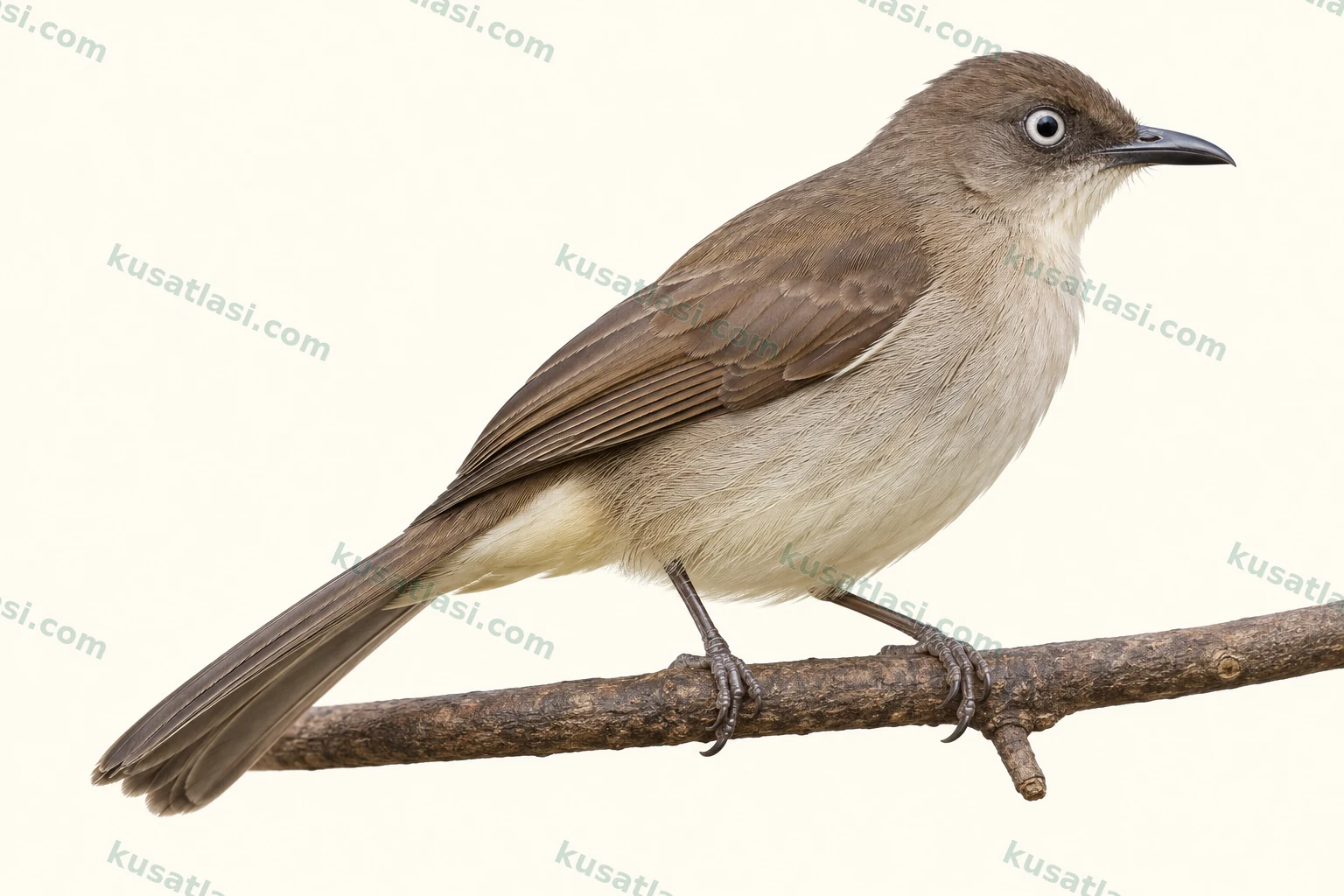
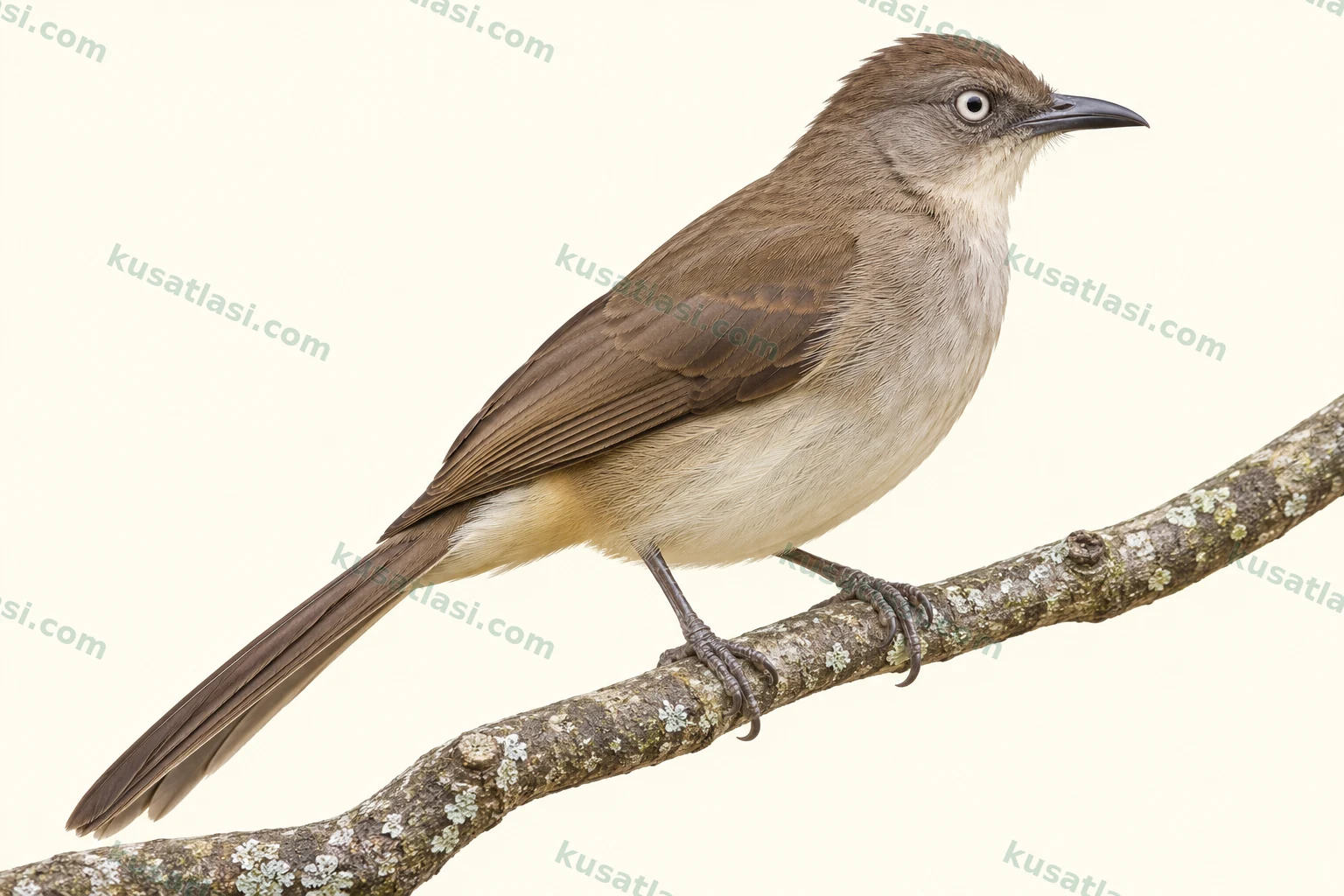
Pycnonotidae · Passeriformes
Cream-vented Bulbul
Pycnonotus simplex
Ak Gözlü Arapbülbülü
Assess plain brown upperparts, creamy underparts and geographically variable iris colour together.
- Order
- Passeriformes
- IUCN Status
- LCLeast Concern
Biometrics
Length
- Male
- 18 cm
- Female
- 18 cm
Wing length
- Male
- 7.96 cm
- Female
- 7.96 cm
Weight
- Male
- 17–27.2 g
- Female
- 17–27.2 g
Detailed explanations of these measurements are available on our website, on the same species page.
At a Glance
- Creamy throat and belly
Breast sides and flanks are browner.
- Geographically variable iris
Adults can be pale-eyed on the Malay Peninsula and red-eyed on Borneo.
- Plain brown upperparts
Use face, underparts and locality together.
Adult sexes look alike; age- and island-related iris variation is not a sex difference.
Calendar
The calendar shows the overall February–October span of breeding records in the synthesis, not identical continuous breeding on every island or in every country. See Habitat for regional context.
January
Outside the stated window
February
Reported record window
March
Reported record window
April
Reported record window
May
Reported record window
June
Reported record window
July
Reported record window
August
Reported record window
September
Reported record window
October
Reported record window
November
Outside the stated window
December
Outside the stated window
Species Information
Quick Identification
Cream-vented Bulbul is a plain brown passerine of Southeast Asian wooded habitats. Assess the olive-brown upperparts, pale creamy throat and belly, and browner sides of the breast together. Adults on the Malay Peninsula have pale eyes, whereas the same species on Borneo can be red-eyed. Eye colour needs locality and age context rather than being used as an isolated identification character.
Appearance and Posture
The adult crown, face and ear coverts are warm olive-brown like the back. The head is plain rather than marked by a conspicuously coloured crest or sharp facial stripes. The whitish throat has a slight cream tinge. Cream fringes on pale brown breast feathers soften the transition from throat to breast; the flanks are browner than the centre of the belly.
Pale cream with a slight yellow tinge extends from belly to undertail coverts, which are among the palest areas. A grey-brown wash may cover the breast and flanks. The underparts should therefore not be described as uniformly bright yellow or pure white. Check the pattern of pale throat, brownish breast and pale belly together.
The tail is dark olive-brown with a slight rufous tinge, darker than the upper tail coverts. Wing coverts share the general upperpart colour, while some inner flight-feather edges are brighter. The bill is black or dark horn, and legs and feet brown or brownish pink. The pale area is the iris itself; it should not be described as a thick white ring surrounding the eye.
Birds can be encountered in more open lower and middle layers along forest trails, occasionally ascending to the canopy. Single birds and pairs are usual. Several individuals gathering at a fruit source do not establish a habit of forming persistent large flocks.
Males, Females and Young Birds
Males and females look alike in plumage, and an eye-colour difference is not automatically a sex difference. Juveniles have warmer brown on crown, upperparts and wing-feather edges; the bill can be dark brown and feet brownish pink. On the Malay Peninsula, the initially grey-brown iris becomes paler during development. That sequence should not be transferred in every detail to populations with red-eyed adults on Borneo.
The Javan subspecies prillwitzi can show paler upperparts and yellower underparts, with red, orange or reddish-brown eyes. This geographic variation within the species explains why identification as merely a “white-eyed bird” is inadequate. Age, island and the other plumage areas need to be considered together.
Appearance in Flight
Underwing coverts are pale creamy yellow, while the flight feathers are darker. The entire underside of the wing is not a uniform pale surface. A brief flight view may conceal iris colour and the transition between breast and belly. The reviewed sources do not describe a uniquely diagnostic wingbeat pattern, making a view of the perched bird’s head and underparts important.
Voice and Behaviour
The song consists of short, emphatic phrases, rendered approximately as “quik-chop” or “quik-plik-chop”. Harsher repeated calls and subdued quavering notes are also given. Written renderings are only approximations. In particular, an older Bornean sound recording cannot automatically be assigned to one species without iris information or other reliable supporting identification.
Birds gather with other bulbuls at fruiting trees and shrubs and also join mixed insectivorous feeding parties. All the birds in one tree need not belong to the same species. Photographs or iris notes are particularly useful when separating similar-sounding brown bulbuls.
Similar Species
1. Cream-eyed Bulbul (Pycnonotus pseudosimplex): A separate Bornean species. Its pale creamy-yellow adult iris is important in separating it from red-eyed Pycnonotus simplex there; throat and vent may also look yellower. That rule must not be moved to the Malay Peninsula, where pale-eyed adults can be Pycnonotus simplex.
2. Red-eyed Bulbul (Pycnonotus brunneus): Similar in plain brown appearance. Pycnonotus simplex has relatively colder brown upperparts, cleaner creamy-white underparts and paler rear flanks. Juvenile simplex and red-eyed island populations need particular care. Assess the eye, underparts and overall appearance together.
3. Spectacled Bulbul (Rubigula erythropthalmos): The yellow bare-skin ring around its red eye is important. This ring is anatomically different from the pale iris of Cream-vented Bulbul. Buff-vented Bulbul (Iole crypta) is compared by its more sloping, flatter crown and buff eyebrow.
World Distribution
The native range extends from southern Thailand south along the Malay Peninsula to Singapore, Sumatra, Borneo, Java and some neighbouring island groups. The Riau and Lingga archipelagos and the Anambas and Natuna islands are also included. Island populations differ in iris colour and some plumage tones; identical appearance should not be expected everywhere.
Status within Its Range
Encounter frequency and forest use vary regionally. The Bird Society of Singapore describes it as an uncommon resident forest bird in Singapore. That local assessment does not assign the same abundance to all Southeast Asia. Mature forest, developed secondary growth and edges that retain a connection with tall trees are important.
Seasonal Movements
Regarded as resident. Three birds radio-tracked in Nee Soon secondary forest, Singapore, in May 1998 used limited areas during the ten-day study. This small, short sample supports local sedentary behaviour, rather than proving no movement throughout the year or identical space requirements on every island. No single established long-distance migration route is assigned to the species.
Breeding Habitat
It uses broadleaved evergreen forest, disturbed forest retaining tree structure, developed secondary growth and forest edges. Peatswamp forest and heath-like kerangas forest on nutrient-poor soils are also used. It should not be treated simply as an open-country or garden bird: tall-tree associations remain important over much of the range.
Nest Site
The Cornell synthesis places breeding records overall between February and October; this does not mean uninterrupted breeding in the same period in every country. Nest building has been recorded in late February and late April on the Malay Peninsula. Some old Perak nest records were not considered safely identified and are not added as firm calendar evidence.
The cup nest is built with small twigs, creeper tendrils and rootlets. It may occupy an upright fork or be attached to vertical stems in dense undergrowth. The expert account reports two eggs, described as white with small grey and reddish-brown marks. Incubation and nestling durations could not be verified. Both pair members may care for fledglings. Observe normal parental visits from a distance without exposing the nest.
Daily Habitat Use
Foraging extends from lower and middle layers into fruiting tree crowns. Forest structure and food resources need consideration alongside stand age. Birds concentrating at one fruit tree do not indicate equally intensive use of the entire surrounding forest.
Diet
Fruit is eaten along with insects and caterpillars; the expert synthesis also lists cockroaches. Small fruits and figs are regular resources. Records from the Malay Peninsula include Fagraea fragrans and several Ficus species. Those plant records do not imply an exclusively fig-based diet or access to identical fruit species throughout the range.
Foraging
Birds visit fruiting trees and shrubs and may share a resource with other bulbuls. Joining mixed insectivorous feeding parties is also consistent with a diet broader than fruit alone. Searches in lower and middle layers can extend higher into trees.
The Cornell account reports use of multiple fig species in a study at Kerau on the Malay Peninsula. This documents regional food diversity, not a measured fruit-to-insect ratio across the entire range. No dietary percentage is derived from the reviewed sources.
Molt on the Malay Peninsula
The Cornell synthesis describes wing molt in a sample of 144 adults from the Malay Peninsula covering all months. Molt began between May and August and finished between July and November; the December–April samples showed no wing molt. This does not establish an identical schedule on every island.
The long outer flight feathers are generally renewed in a regular sequence, usually with no more than two, very rarely three, growing at the same time. Suspension followed by renewed molt has also been reported. These regional records describe a staggered renewal process rather than a simultaneous one-day replacement.
Moving within a Range and Defending It
Peh and Ong’s Singapore data showed overlapping ranges. Feeding areas were therefore not wholly separate, but the authors noted that this does not rule out territories around nests.
What a Recapture Interval Shows
The Cornell synthesis reports a 94-month interval between captures of one bird on the Malay Peninsula. Its age at first capture was unknown, so the interval is not its exact total lifespan. A record of survival over a known period should be distinguished from the species’ average life expectancy.