
World Birds
Field Guide Plates
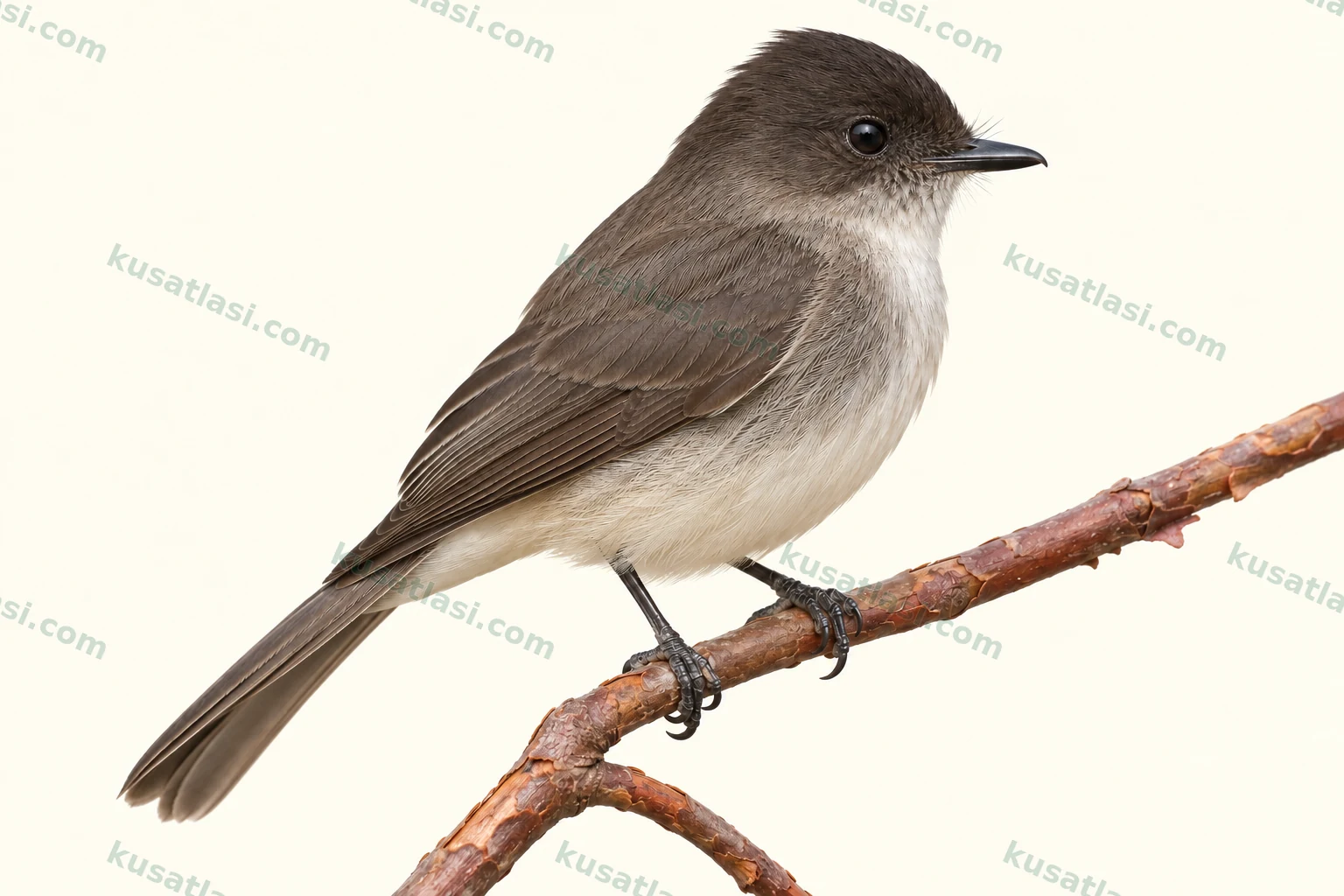
Swipe between the two adult plates.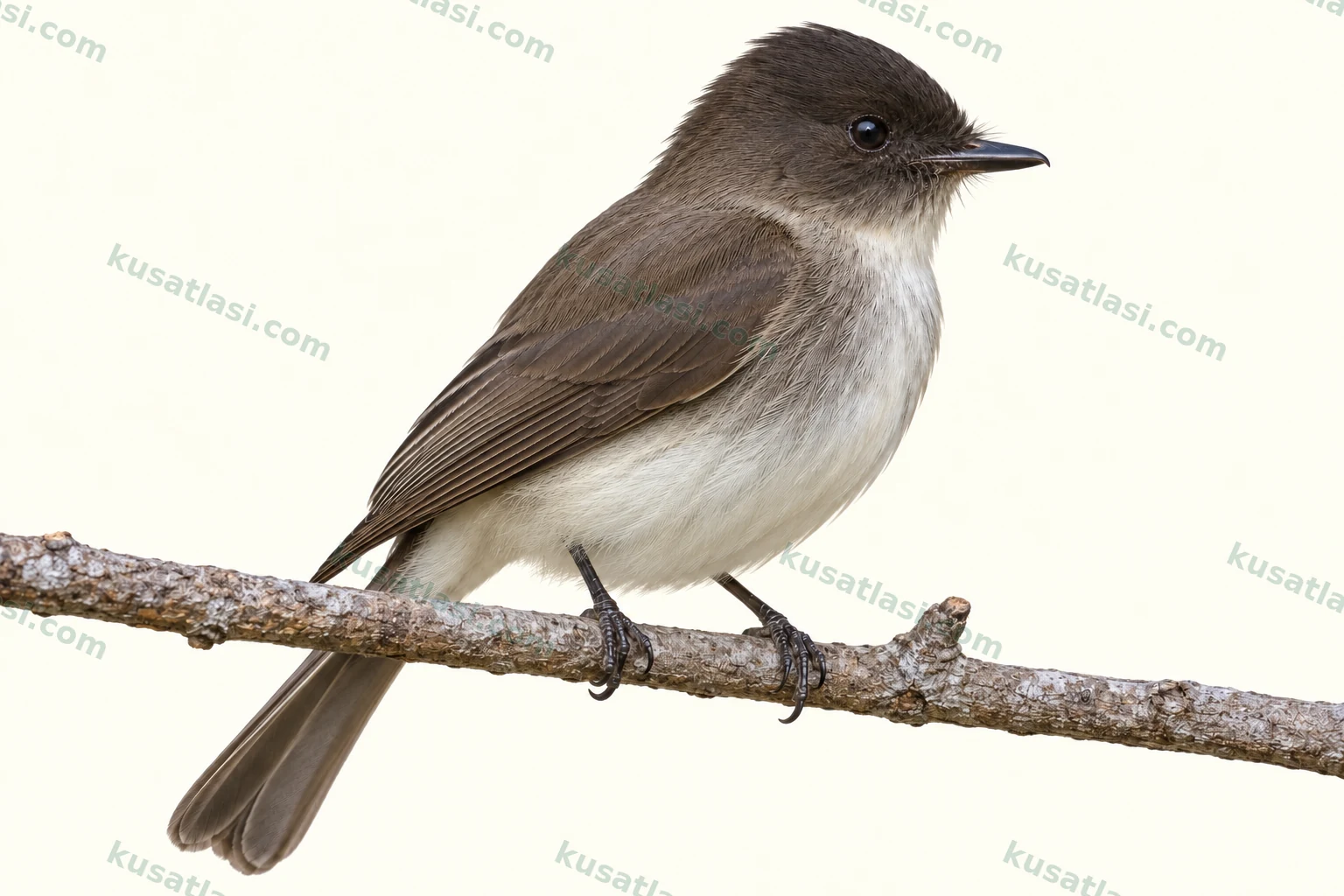
Tyrannidae · Passeriformes
Eastern Phoebe
Sayornis phoebe
Ak Karınlı Fibi
Brownish upperparts, pale belly and an active tail.
- Order
- Passeriformes
- IUCN Status
- LCLeast Concern
Biometrics
Length
- Male
- 12–17 cm
- Female
- 12–17 cm
Wingspan
- Male
- 26–28 cm
- Female
- 26–28 cm
Weight
- Male
- 19.4–20 g
- Female
- 16.7–20.5 g
Detailed explanations of these measurements are available on our website, on the same species page.
At a Glance
- Upperparts
Brownish.
- Underparts
Pale.
- Tail
Frequently wagged.
Adult sexes look similar at a distance.
Calendar
Massachusetts: late March–early April arrival.
Species Information
Quick Identification
Brownish above and pale below, sometimes with a faint yellow belly wash. Persistent tail-wagging is conspicuous.
General Appearance and Posture
It is large-headed, with a short, thin bill. Crown feathers may be raised. Fresh autumn plumage may show pale edging on the wing feathers.
Males, Females and Young Birds
Adult sexes look similar. In birds studied in Ontario, Canada, during 1988–1990, the grey breast area did not differ significantly between sexes but was more extensive in second-calendar-year than older birds. This result does not describe newly fledged juveniles.
Appearance in Flight
It leaves its perch on quick wingbeats for a short prey-chasing flight.
Sounds and Behaviour
In spring, listen for a harsh, raspy “FEE-bee”. The similarly patterned song of Poecile atricapillus is a higher, sweeter whistle.
Similar Species
Contopus virens has clearer white wingbars and a more peaked head; it does not bob its tail as frequently. Its voice also differs.
World Distribution
It breeds in eastern Canada and the USA, wintering south to southeastern Mexico. AviList 2026 recognises no subspecies of Sayornis phoebe.
Status Within Its Natural Range
The accessed BirdLife assessment, dated 2021, reports an increasing population trend. Its 2019 global estimate is 35 million mature individuals, with data quality marked poor. This is an estimate, not a current count of individually enumerated birds.
Movements
It is migratory, with year-round occurrence in parts of the USA. The Massachusetts atlas account describes arrival in late March–early April and autumn departure in late September–mid-October. These dates are regional rather than one calendar for the entire range.
Breeding Habitat
In North America it breeds in open wooded surroundings, often near water, where suitable nest supports occur. Eaves, bridges and culverts are commonly used, along with natural rock ledges.
Nest Site
The female builds a cup of mud and plant material beneath a sheltered overhang. Cornell gives 2–6 eggs, 15–16 days of incubation and a nestling period of 16–20 days.
Daily Habitat Use
Usually seen singly or in pairs in relatively open places, including woodland edges, brushy fields and pond margins.
What It Eats
Flying insects dominate the diet. Missouri’s conservation agency lists wasps, beetles, butterflies, moths, dragonflies and small flies, together with spiders, centipedes and ticks. Small amounts of fruit and seeds are also eaten.
How It Forages
It watches insects from a perch with a clear view, darts out to catch one passing through the air and often returns to the same perch.
An Unlearned Song Can Still Mature Gradually
A 2013 study of a small laboratory-reared sample collected at Millbrook, New York, USA, showed that song changes during development. In a bird raised without exposure to adult conspecifics, an early approximation of adult song was initially variable and became more stable with age. Developing song without imitation therefore does not mean singing like an adult immediately after hatching. The researchers’ suggestion that this process may practise coordination of breathing and sound production remains an explanatory proposal.
A Singing Bird Is Not Necessarily Male
The appearance study in Ontario, Canada, notes that females can also give territorial song. Even the researchers’ measurement-based sex classification misclassified some birds and had not been tested on an independent sample. Results from that one site are not a key for determining the sex of every bird seen at a distance.
Incubation and Feeding Young Are Different Tasks
The Massachusetts atlas account states that only the female incubates, while both parents feed the young. When she starts a second clutch, the male may continue feeding the first fledglings alone. The same account reports that Molothrus ater can lay eggs in phoebe nests.