
World Birds
Field Guide Plates
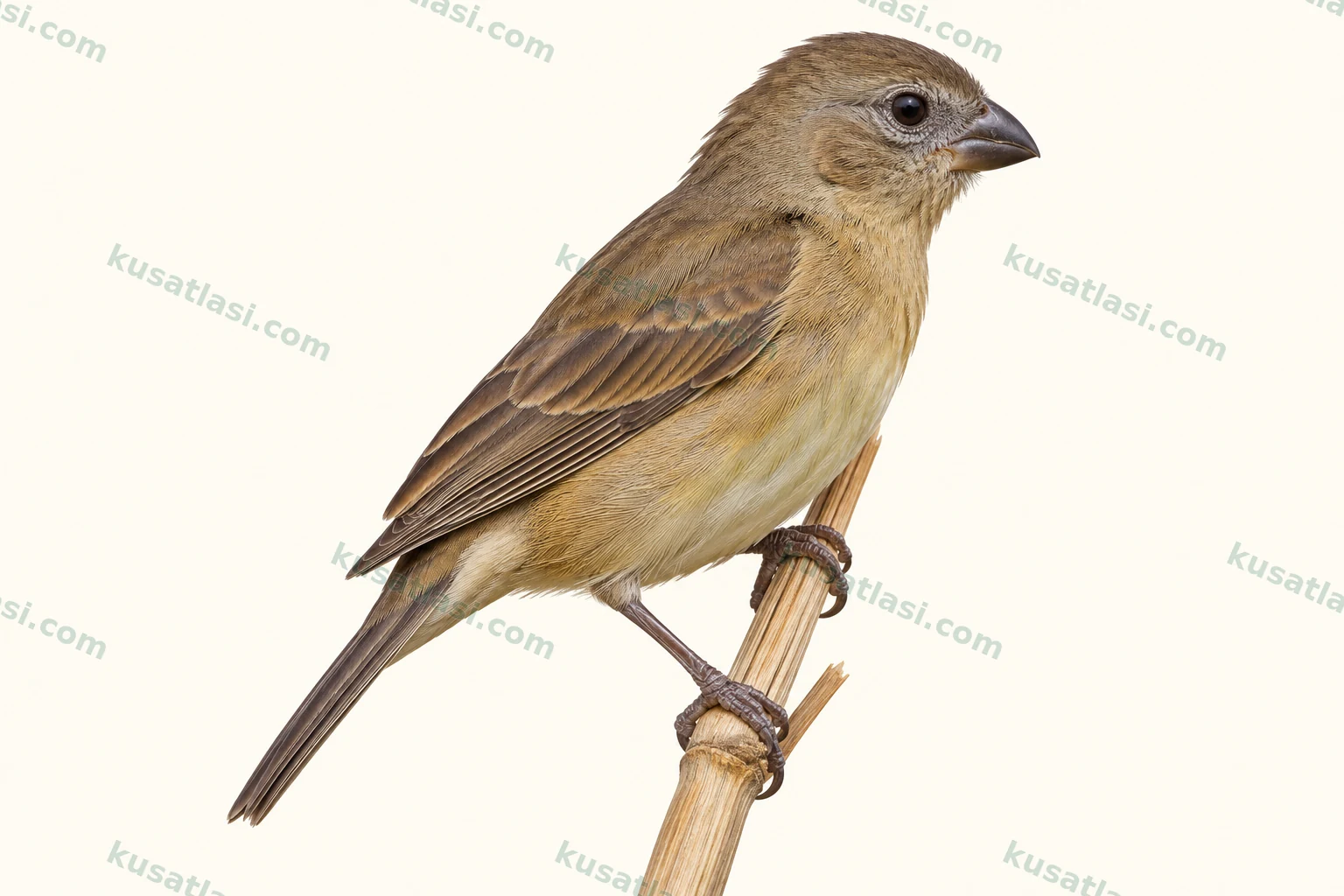
Swipe between the two adult plates.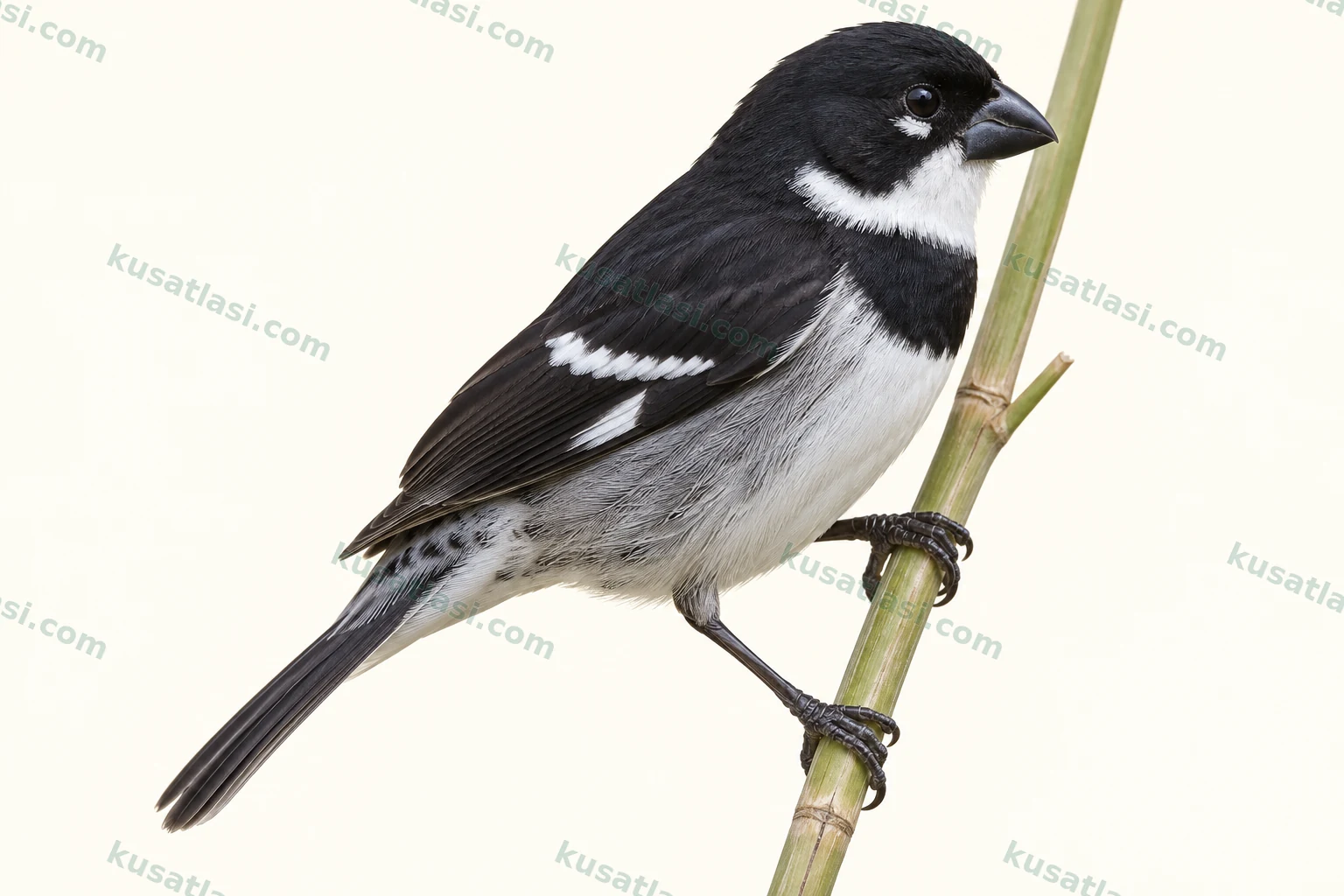
Thraupidae · Passeriformes
Wing-barred Seedeater
Sporophila americana
Ak Kanatlı Tohumcul
Check the male’s white throat, black upperparts and wing pattern together.
- Order
- Passeriformes
- IUCN Status
- Source-taxon assessment
Biometrics
Length
- Male
- 10–11 cm
- Female
- 10–11 cm
Wingspan
- Male
- Data unavailable
- Female
- Data unavailable
Weight
- Male
- 10–14 g
- Female
- 10–14 g
Detailed explanations of these measurements are available on our website, on the same species page.
At a Glance
- Male
White throat, dark cheeks.
- Wing
Prominence of white bars varies.
- Female
Brown plumage alone does not establish identification.
Females and immatures are brownish and can resemble other seedeaters.
Calendar
A monthly breeding calendar covering all subspecies was not verified.
Species Information
Quick Identification
Assess the male’s black upperparts, white throat and pale underparts together. White in the wing alone is insufficient.
General Appearance and Posture
The Guianas guide describes a grey rump, black bill and pale grey flanks in males. Two white wing bars and a separate white patch may be visible; their prominence is not uniform across subspecies.
Males, Females and Young Birds
Females and immatures in the Guianas are described as olive-brown above and yellowish-brown below. Females can be difficult to distinguish from female Sporophila of other species.
Appearance in Flight
This review did not verify a reliable species-specific flight identification key. Check wing markings alongside the head and throat pattern.
Voice and Behaviour
The classification committee’s 2022 review notes similar singing styles in americana and murallae. It also stresses insufficient recordings for a rigorous vocal separation; that assessment is not a detailed acoustic experiment.
Similar Species
When comparing males of Sporophila lineola and S. bouvronides, check the white throat, dark cheeks and white sides of the neck. Male S. luctuosa has extensive black on the throat and upper breast; it has a white wing patch but lacks white wing bars.
World Distribution
It occurs in northern South America and Amazonia. AviList 2026 defines its species range from southeastern Colombia to the Guianas and through Amazonian Ecuador, Peru and Brazil.
Status Within Its Natural Range
Current taxonomy includes three subspecies: americana, dispar and murallae. The Caqueta Seedeater, treated as a species in older sources, is included here as subspecies murallae. Older maps restricted to eastern Amazonia can therefore underrepresent the present species concept.
Movements
Cornell’s 2023 account describes it as resident. This review did not verify a monthly movement schedule covering all subspecies or a directly tracked migration route.
Breeding Habitat
The Guianas guide reports forest-edge openings and cultivated areas. This habitat description does not establish breeding at every observation site.
Nest Site
Nest structure, clutch size, incubation and nestling duration securely attributable to the current species concept were not verified in this review. Durations reported for Middle American birds under the same historical scientific name were not transferred.
Daily Habitat Use
It uses grassy habitats, lake edges and river islands.
What It Eats
It feeds primarily on grass seeds.
How It Forages
The Guianas guide reports birds in pairs. Detailed seed-harvesting movements and dietary proportions were not verified in this review.
Wing Bars Do Not Define a Sharp Boundary
The 2022 classification review documents prominent double wing bars in murallae from Amazonian Colombia and Ecuador, and complete black breast bands in birds from the Guianas. This overlap contributed to merging the former species; one plumage feature does not establish a definite subspecies identification.
Clues from Genetic Research
A genomic study published in 2022 examined rapid diversification and historical gene flow in the tropical American seedeater group that includes this species. Plumage divergence was assessed alongside genetic relationships; a colour difference alone does not prove that each group is a separate species.