
World Birds
Field Guide Plates
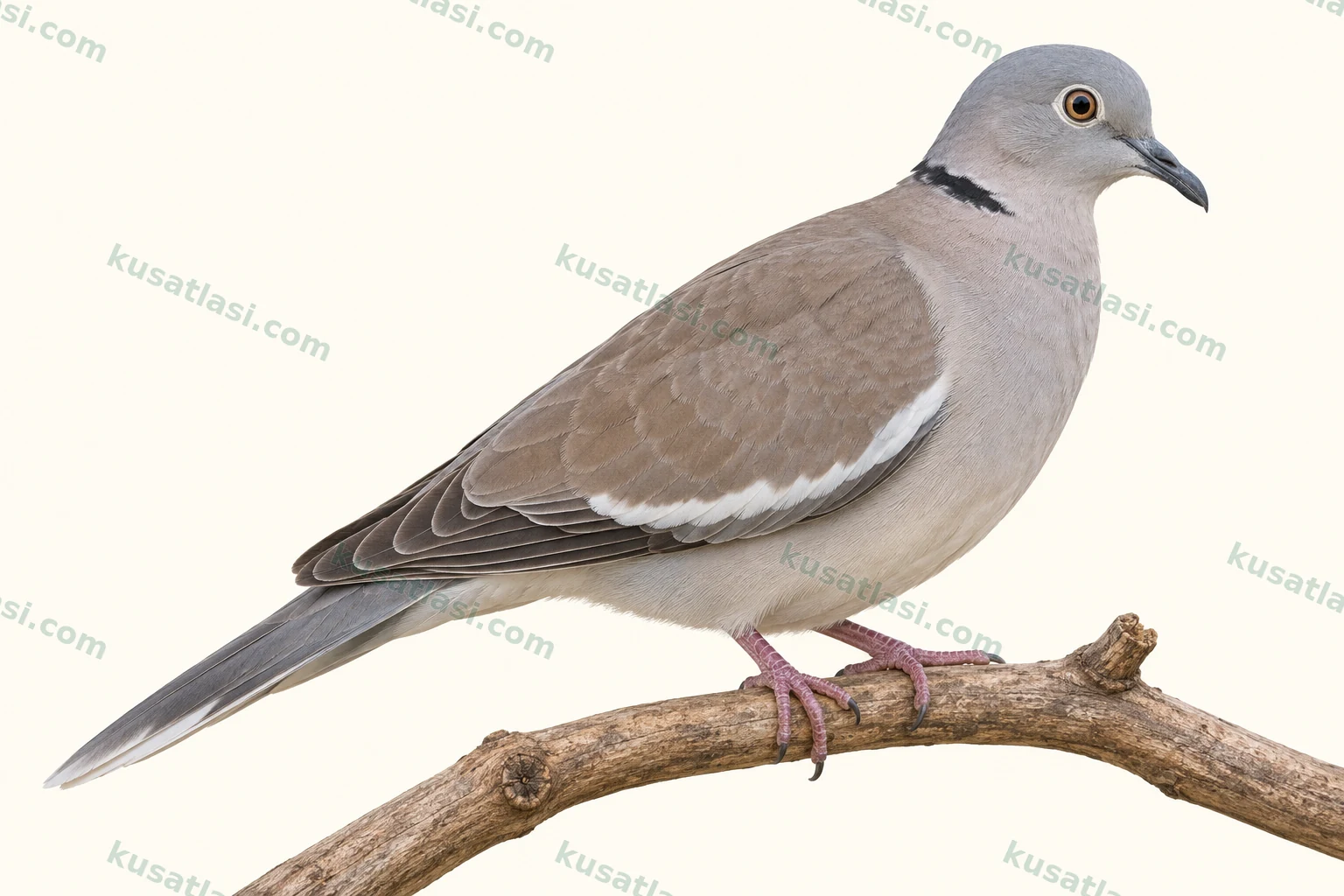
Swipe between the two adult plates.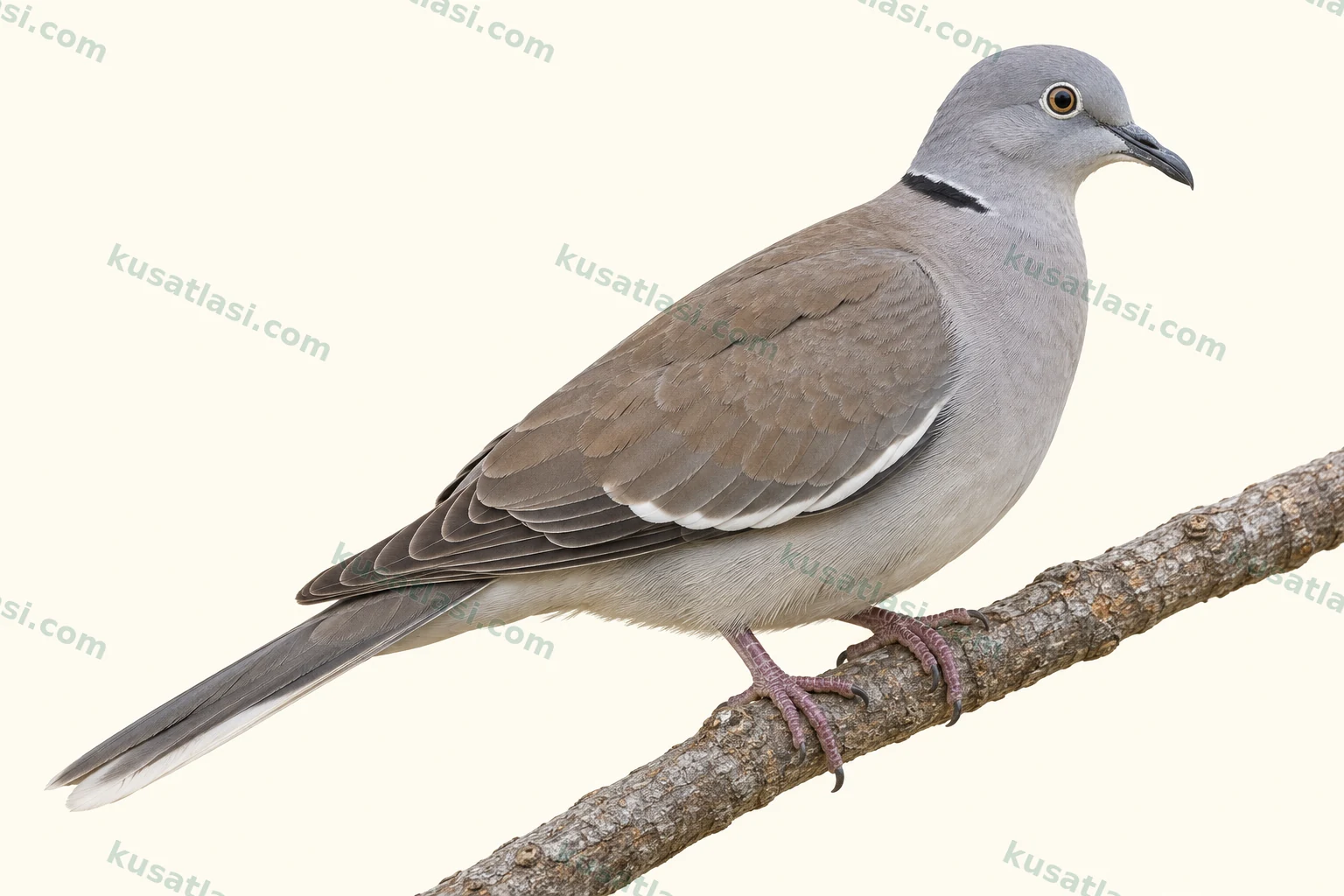
Columbidae · Columbiformes
White-winged Collared Dove
Streptopelia reichenowi
Ak Kanatlı Halkalı Kumru
Look for the white feathered eyering, hindneck collar and pale wing-coverts together.
- Order
- Columbiformes
- IUCN Status
- LCLeast Concern
Biometrics
Length
- Male
- 25 cm
- Female
- 25 cm
Wing length
- Male
- 14.02 cm
- Female
- 14.02 cm
Weight
- Male
- Data unavailable
- Female
- 119 g
Detailed explanations of these measurements are available on our website, on the same species page.
At a Glance
- White eyering
Formed by tiny white feathers.
- Black hindneck collar
Insufficient for identification alone.
- Pale wing area
Can become clearer when the wing opens.
Sexes look similar overall; do not claim certain sexing from a brief view.
Calendar
Incubation was observed at Gode in February 1977; this is not a complete range-wide calendar.
Species Information
Quick Identification
Look for the grey-toned body, black hindneck collar and conspicuous ring of tiny white feathers around the eye. Despite the name, the wing white is not always obvious on a perched bird.
General Appearance and Posture
The historical East African specimen account describes a blue-grey head and breast, browner-grey back, and white belly and undertail. Dark outer flight feathers contrast with paler wing coverts. The bill is dark.
Males, Females and Young Birds
Sexes have similar overall plumage, and a brief view should not be used for certain sexing. The historical juvenile description notes pale-tipped back and wing-coverts; in the following plumage those tips disappear and the hindneck collar appears. This is not a precise month-by-month ageing key.
Appearance in Flight
When the wing opens, white edges on some upperwing coverts become more conspicuous. This does not mean that the whole wing or the outer flight feathers are white.
Voice and Behaviour
At a nest in Gode, southeastern Ethiopia, in 1977, low, throaty two-part calls were repeated rapidly, with softer crooning also recorded. The birds answered one another during nest relief.
Similar Species
Mourning Collared Dove (Streptopelia decipiens) is an important comparison. Brown’s East African key contrasts that species’ red orbital ring with White-winged Collared Dove’s white feathered eyering. Against other collared doves such as Ring-necked Dove (S. capicola), combine voice, orbital appearance and wing pattern; a black hindneck collar alone is insufficient.
World Distribution
It occurs in Ethiopia, Somalia and Kenya. Well-known areas include the Jubba and Shabeelle basins and the Dawa River. The 2024 expert assessment includes records from more of Ethiopia, so older descriptions restricting it to the southeast do not cover the current treatment.
Status Within Its Natural Range
Although described as locally common in some places, the global population has not been quantified. Loss of riverine woodland for fuelwood and agriculture is a threat. Recognition of a wider range does not establish growth in every local population.
Movements and Migration
The expert assessment treats it as non-migratory. Local movements to water or feeding areas are not long-distance seasonal migration. A detailed individually tracked movement route was not verified in this review.
Breeding Habitat
Riverine woodland is important habitat. The 1977 Gode study in southeastern Ethiopia also documented use of planted windbreaks around irrigated plots. That observation does not establish suitability of all farmland.
Nest Site
The Gode nest found by Brown was a loose platform of twigs and leaf stalks in Parkinsonia aculeata and contained two white eggs. Both adults were observed incubating. Total incubation and chick-development durations were not verified in this review and are not borrowed from other doves. Do not approach nests to inspect them.
Daily Habitat Use
It feeds mainly on the ground. Besides woodland near water, it can use drier vegetation some distance from rivers. Historical observations of gathering at water in Kenya/Jubaland do not establish that it always lives in large flocks.
What It Eats
Small fleshy fruits are an important food. A detailed list of food plants and seasonal dietary proportions were not verified in this review.
How It Forages
The specialist assessment describes predominantly ground feeding. Watch both riverine cover and areas where birds descend; a sighting at water does not define the entire daily feeding area.
A Mark More Obvious Than Its Name
Brown’s southeastern Ethiopian field study emphasised the white feathered eyering as more readily visible than white on the folded wing. A feature highlighted by a species name need not be its most useful field mark.
Old Knowledge Gaps Are Not Range Boundaries
The 1977 paper relates omission from an older Ethiopian checklist to uncertainty about records. As knowledge improved, documented areas expanded. Absence from an old book is not proof that the bird was absent from that place at the time.