
World Birds
Field Guide Plates
Swipe between the two adult plates.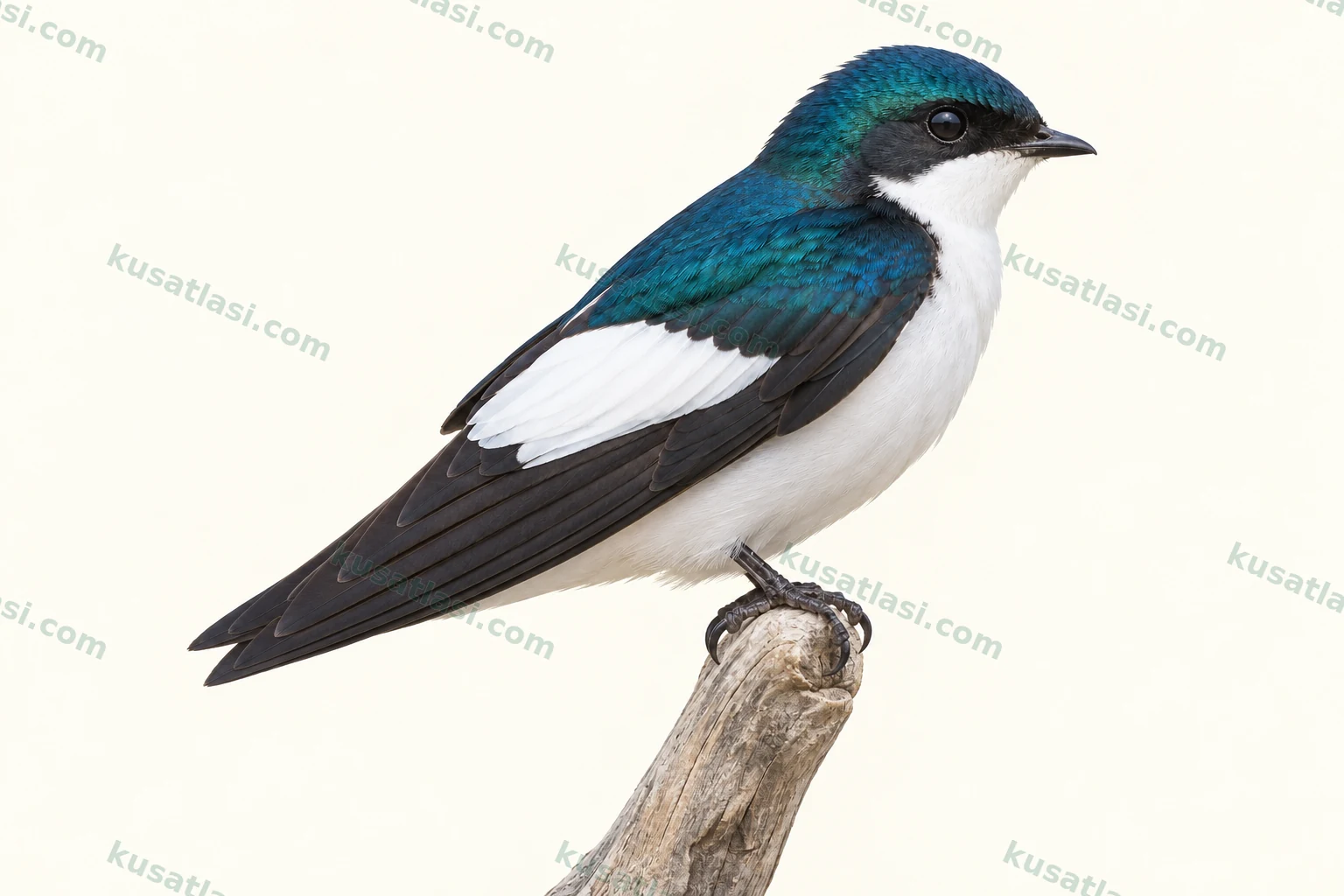
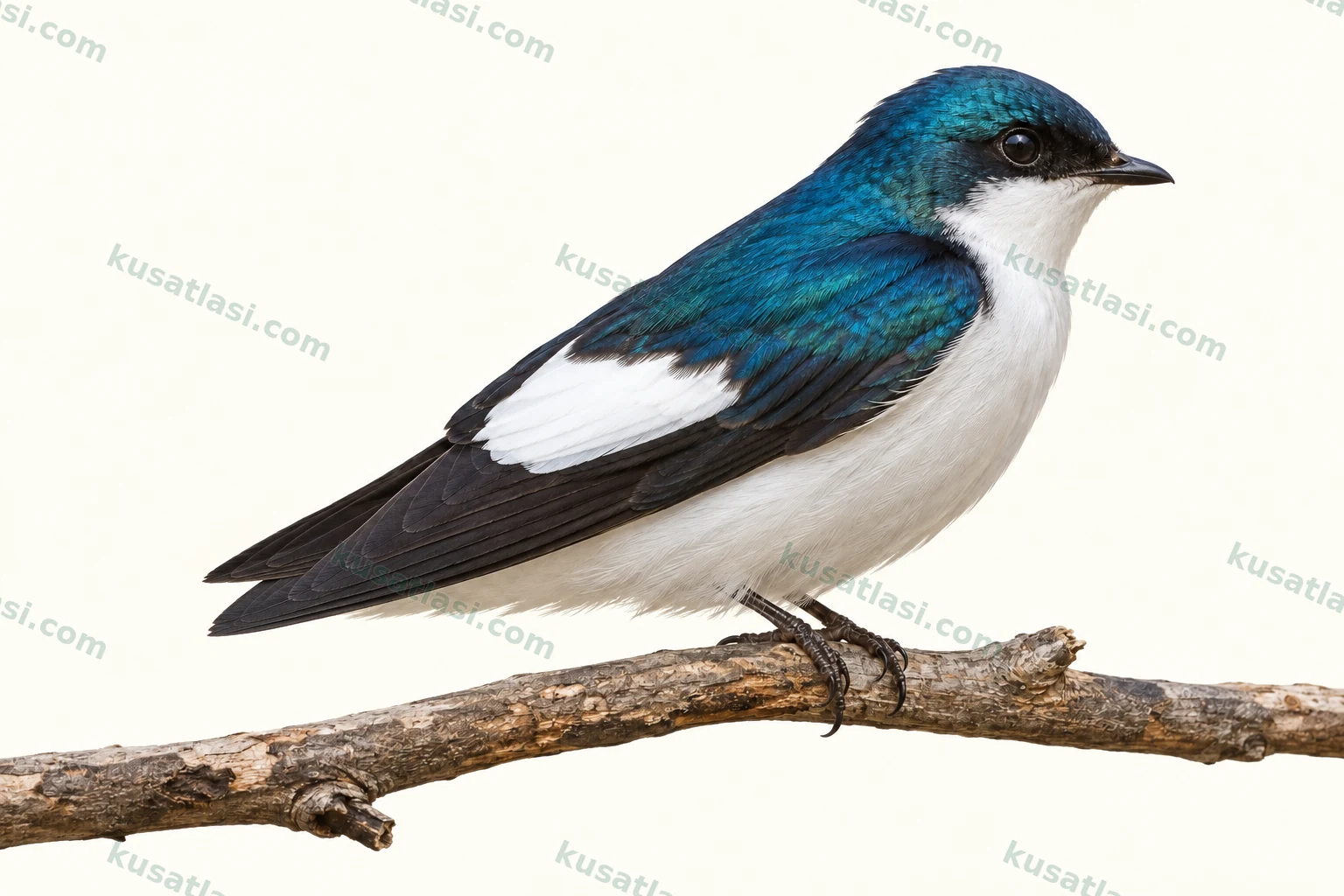
Hirundinidae · Passeriformes
White-winged Swallow
Tachycineta albiventer
Ak Kanatlı Kırlangıç
Check the glossy upperparts, white rump and wing white together.
- Order
- Passeriformes
- IUCN Status
- LCLeast Concern
Biometrics
Length
- Male
- 14 cm
- Female
- 14 cm
Wing length
- Male
- 10.07 cm
- Female
- 10.07 cm
Weight
- Male
- 14–20 g
- Female
- 14–21 g
Detailed explanations of these measurements are available on our website, on the same species page.
At a Glance
- White rump
Underparts are also white.
- Glossy blue-green back
Young are browner.
- White wing patch
Its extent varies.
Young are duller with a dusky breast; white patch size alone is not a sex key.
Calendar
August and September chick records from Ecuador do not establish a whole-range monthly calendar.
Species Information
Quick Identification
Look for glossy blue-green upperparts, white underparts and a white rump together. The white wing patch is important; a white belly alone is insufficient for identification.
General Appearance and Posture
Wing white varies; reduced white alone does not establish another species.
Males, Females and Young Birds
Young birds are duller and browner, with a dusky breast and less white in the wing. The amount of wing white should not be used alone as a reliable male–female key.
Appearance in Flight
It often flies close to river or lake surfaces. Pairs and small parties perch on dead branches standing in water. Following a flying bird back to its perch helps reveal its upperparts and wing pattern.
Voice and Behaviour
Calls include rapid rising notes and buzzes. Regional variation limits identification from one short sound.
Similar Species
When comparing Mangrove Swallow (Tachycineta albilinea), check the pale line above the area between bill and eye and the upper tail coverts; both species have a white rump. Dark-winged birds in Colombia require particular care.
World Distribution
It is widespread along river systems of eastern South America, reaching southern Brazil and northeastern Argentina. Cornell’s expert account describes it as resident across most of this range.
Status Within Its Natural Range
In the Miranda sector of Brazil’s Pantanal, its occurrence on flooded grasslands changes seasonally. A 2026 regional synthesis reports a return during February–March flooding after absence for much of the year. This is a local pattern, not a calendar for all South America.
Movements and Migration
The southernmost populations migrate north, and southern Brazil is occupied in the austral summer. Venezuelan populations are resident. Describing every population as migratory, or every bird as remaining in one place year-round, would be misleading.
Breeding Habitat
It is closely associated with large rivers, lakes and open shorelines, and also uses mangroves. Breeding records from Amazonian Ecuador document nesting opportunities in waterside tree cavities.
Nest Site
A nest found at Cuyabeno on 30 August 2003 was inside a hollow branch above water, lined with large feathers from other birds and a little plant down. A 2012 comparative synthesis lists 3–6 eggs for this species. No verified incubation or nestling duration is supplied.
Daily Habitat Use
Dead branches in water provide resting and lookout sites. In the Pantanal, pairs also occur around flooded grassland, small rivers and side channels; suitable habitat is not restricted to the main channel of a large river.
What It Eats
It feeds on flying insects. Detailed prey groups and seasonal dietary percentages have not been verified across its range, so no particular insect is presented as a universal staple.
How It Forages
It catches prey in flight, feeding low over water or ground. Although often hunting alone, it also feeds in small groups. Grassland and other open grassy areas away from water can also be used.
Three Chicks Do Not Establish Clutch Size
The Cuyabeno nest contained three young with closed eyes. Because the eggs were not counted, that observation does not establish the original clutch size. Birds feeding nestlings were also recorded at La Selva, Ecuador, on 28 September 2003; these observations do not demonstrate continuous year-round breeding.
The Western Colombian Subspecies
Donegan’s 2024 study named western Colombian birds as subspecies magdalenae. The current ITIS record includes this name under Tachycineta albiventer, rather than as a separate species.
Flood-season Presence Does Not Reveal a Route
The Pantanal synthesis discusses the possibility that birds absent from Miranda move to other river-rich areas or outside the floodplain in the dry season, while stating that routes remain unknown. That possibility should not be mapped as a tracking-confirmed migration route.