
World Birds
Field Guide Plates
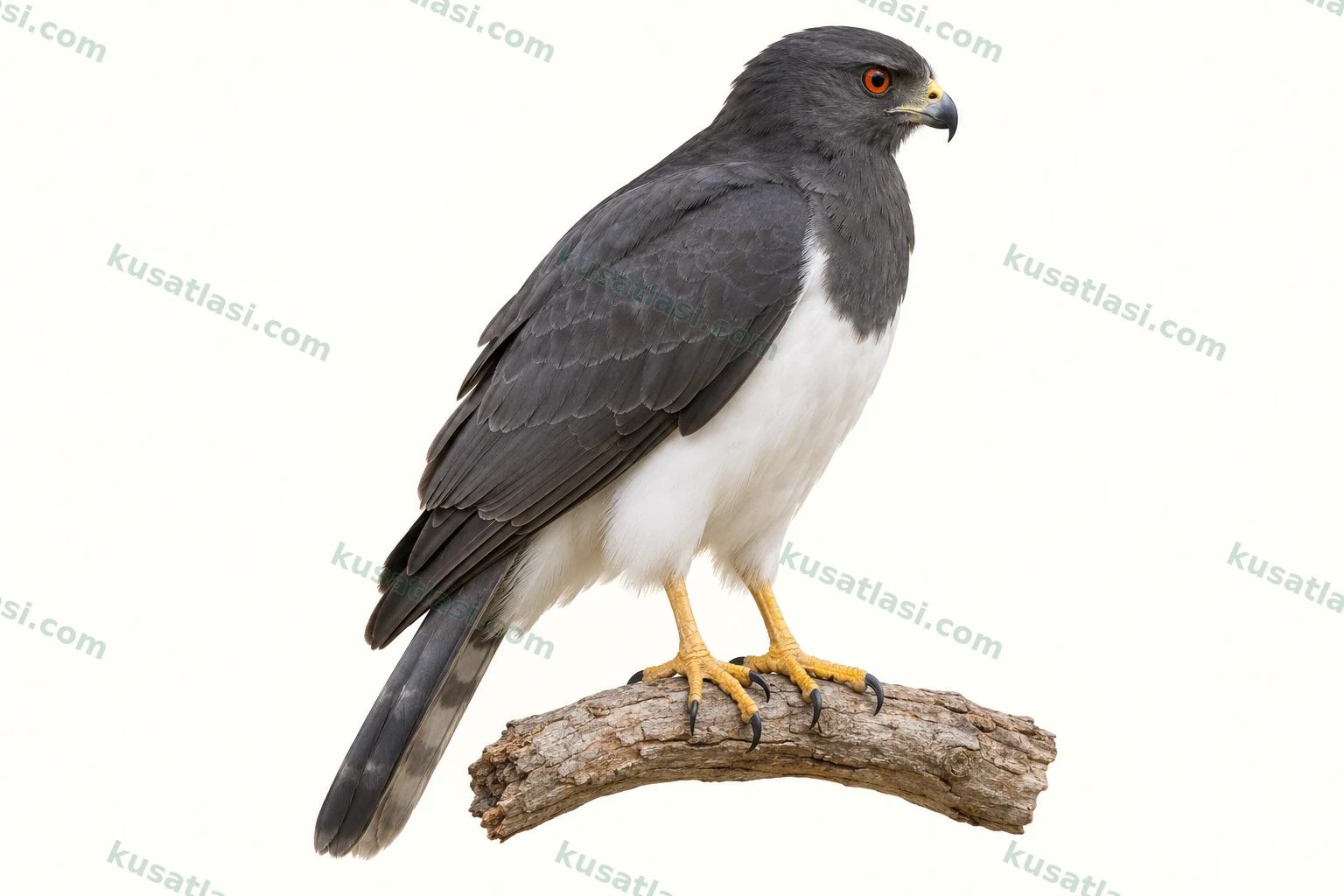
Swipe between the two adult plates.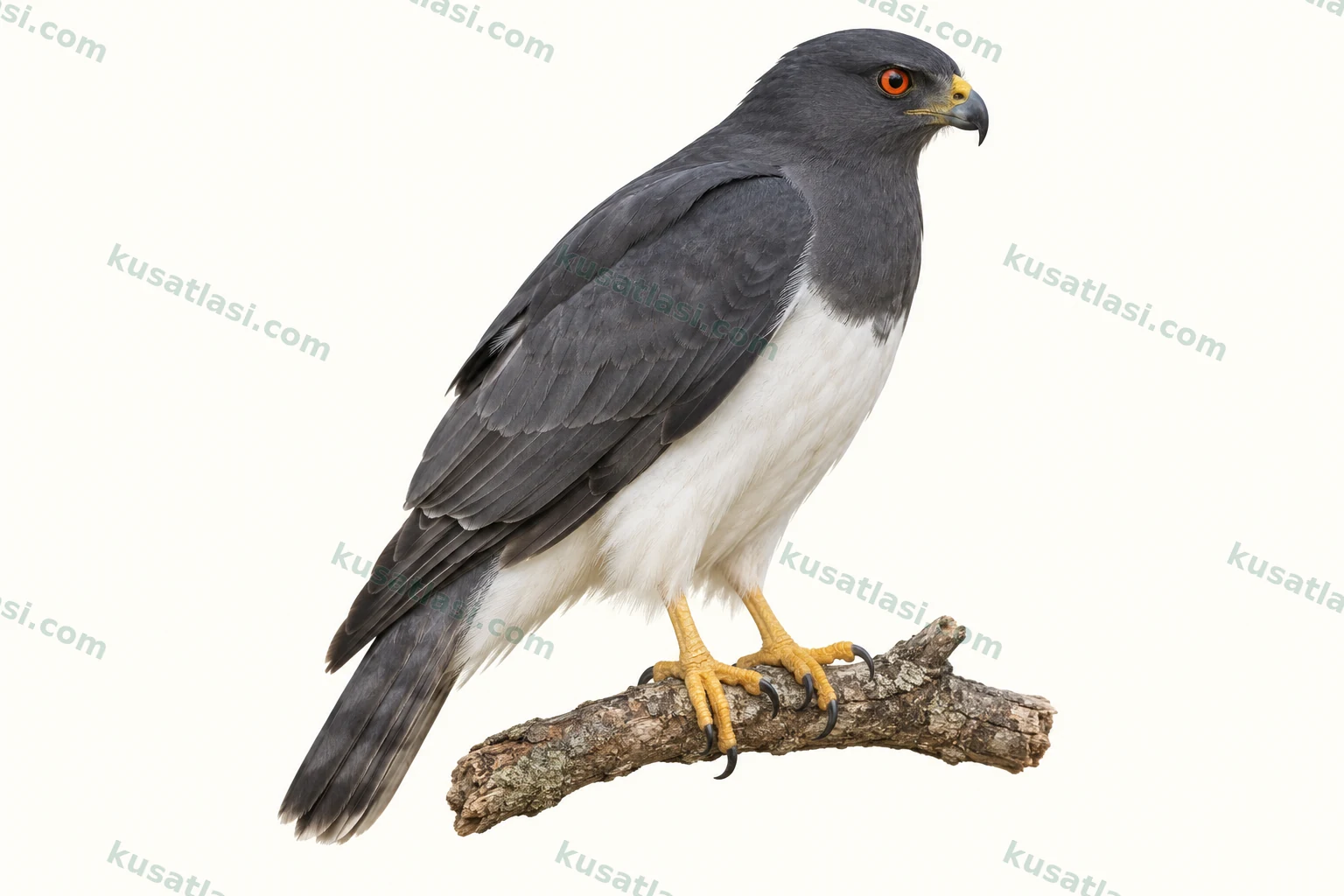
Accipitridae · Accipitriformes
White-bellied Goshawk
Tachyspiza haplochroa
Ak Karınlı Çakır
Dark grey upperparts and a white belly.
- Order
- Accipitriformes
- IUCN Status
- NTNear Threatened
Biometrics
Length
- Male
- 32–40 cm
- Female
- 32–40 cm
Wingspan
- Male
- 58–74 cm
- Female
- 58–74 cm
Weight
- Male
- 152–218 g
- Female
- 227–281 g
Detailed explanations of these measurements are available on our website, on the same species page.
At a Glance
- Upperparts
Dark grey in adults.
- Underparts
White belly in adults.
- Eye
Reddish-orange.
Juvenile patterning does not indicate an adult female.
Calendar
Laying in New Caledonian field notes: September–October.
Species Information
Quick Identification
In adults, the dark grey head and upperparts contrast with the white belly.
General Appearance and Posture
The legs are yellow and the eye reddish-orange.
Males, Females and Young Birds
Juveniles have dark brown upperparts, a spotted breast and barred belly. This juvenile pattern should not be interpreted as the appearance of an adult female.
Appearance in Flight
Consider age-related plumage differences in flight.
Voice and Behaviour
Its calls are described as very rapid and high-pitched.
Similar Species
Juveniles can resemble Brown Goshawk, which has a longer tail and more rufous tones. Colour alone should not be treated as sufficient.
World Distribution
It is endemic to New Caledonia. AviList 2026 accepts Tachyspiza haplochroa; the older name Accipiter haplochrous refers to the same species.
Status Within Its Natural Range
The Peregrine Fund identifies habitat loss and killing by people where it takes chickens among the threats.
Movements
The 2016 IUCN assessment classifies it as non-migratory.
Breeding Habitat
Historical field notes from New Caledonia describe dense forest and gallery forest as its habitat.
Nest Site
One stick nest was on a banyan’s horizontal branch; this single observation cannot be generalised.
Daily Habitat Use
In the 1993 comparison of 100 sample plots in New Caledonia, overlap with Brown Goshawk occurred in semi-forested lowland areas.
What It Eats
It takes lizards, rats, birds and some insects.
How It Hunts
René de Naurois’s New Caledonian notes describe it watching motionlessly from a branch. Finding small Zosterops birds in stomach contents provides direct evidence of avian prey, but does not establish proportions across the whole diet.
Predation Documented on Camera
In the study monitoring Gerygone flavolateralis nests on Grande Terre, New Caledonia, cameras recorded this goshawk depredating eight nests: six with eggs and two with nestlings. These were nests of its prey, not goshawk nests.
The Observation Sample
In the same New Caledonian study, 117 active bird nests were camera-monitored across eight breeding seasons. The eight recorded attacks do not measure how much of all goshawks’ diet consists of eggs.
Limited Breeding Records
One nest reported by the Peregrine Fund contained three eggs; a single nest is insufficient to establish a typical clutch size.