
World Birds
Field Guide Plates
Swipe between the two adult plates.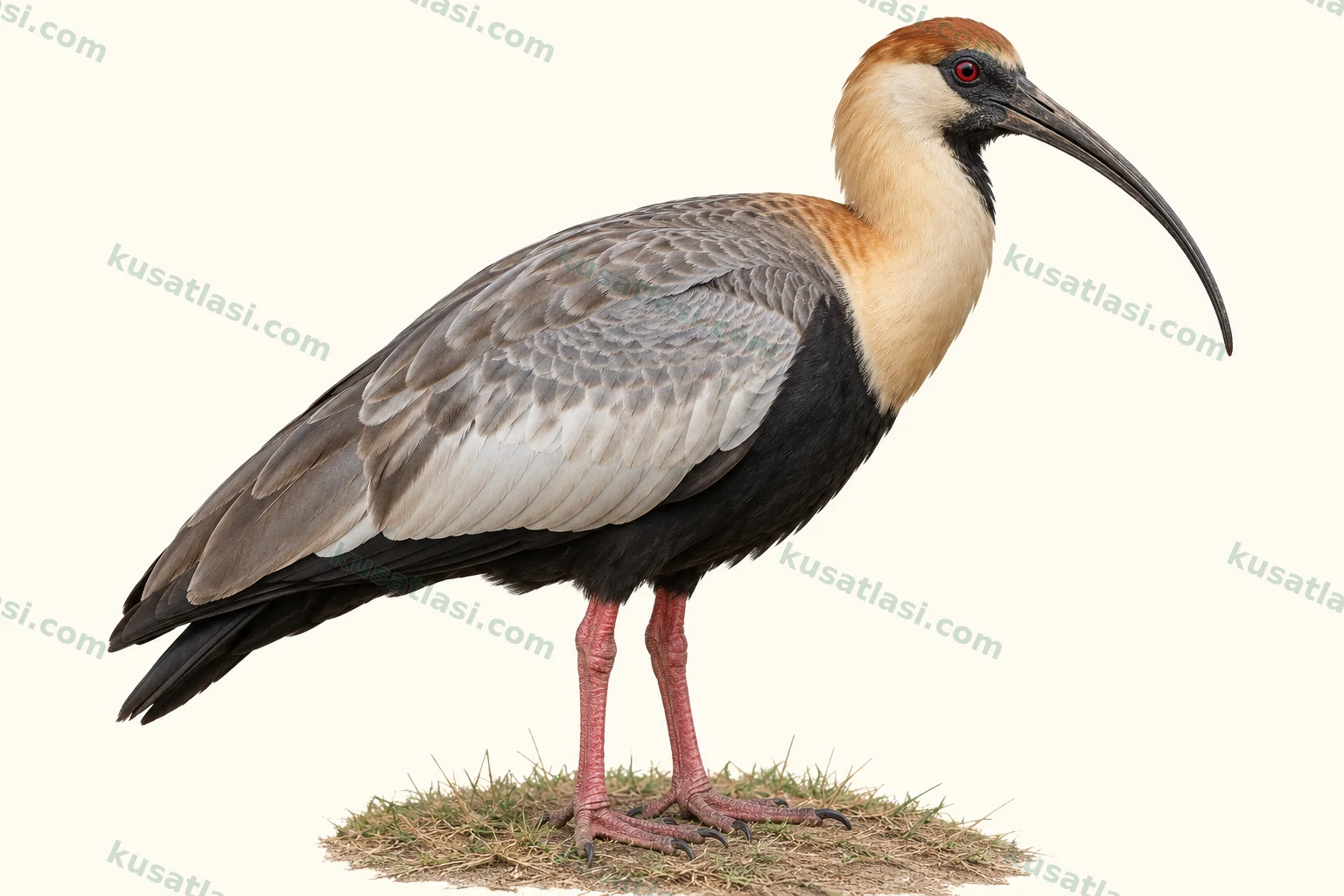
Threskiornithidae · Pelecaniformes
Buff-necked Ibis
Theristicus caudatus
Ak Kanatlı Sarıca Aynak
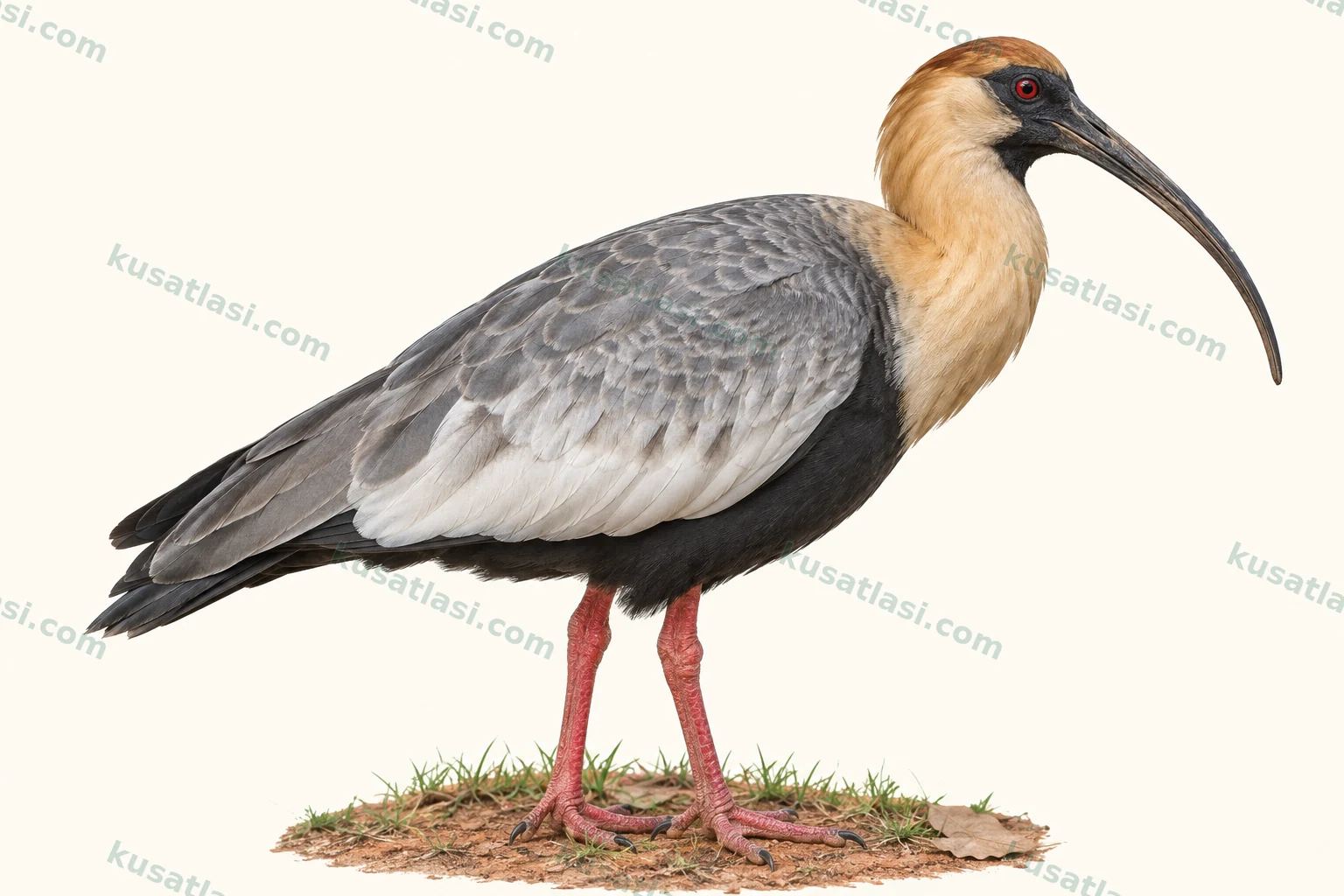
Check the pale neck, grey back, dark belly and white wing area together.
- Order
- Pelecaniformes
- IUCN Status
- LCLeast Concern
Biometrics
Length
- Male
- 71–76 cm
- Female
- 71–76 cm
Wing length
- Male
- 39.3 cm
- Female
- 39.3 cm
Weight
- Male
- 1.466–1.95 kg
- Female
- 1.466–1.95 kg
Detailed explanations of these measurements are available on our website, on the same species page.
At a Glance
- Bill
Long and downcurved.
- Body
Grey back and dark belly.
- Head and neck
Buff; adults have red eyes.
Sexes lack conspicuously different colours; young have darker eyes and shorter bills.
Calendar
Breeding evidence is regional; a single monthly calendar for the entire range was not verified.
Species Information
Quick Identification
Check the long downcurved bill, buff head and neck, grey back, dark belly and white wing area together.
General Appearance and Posture
Adults have red eyes, a darker crown and a chestnut breast patch. At El Hatico reserve in Colombia, birds mainly walked on the ground to forage and used palms and some other trees to rest.
Males, Females and Young Birds
Males and females lack conspicuously different plumages. Subtle plumage, vocal and behavioural differences were reported in Colombia, but neck darkness in one photograph is not a reliable sex determination. Young examined in that region had shorter bills, dark brown eyes and paler legs, with brown streaks on the forehead and breast and a white cheek area. These features do not establish an exact daily age.
Appearance in Flight
It flies with the neck extended. Assess the white wing area and pale neck together with the dark underbody.
Voice and Behaviour
The Colombian study at El Hatico distinguished a two-note call frequently given in flight and repeated calls at resting sites. Several birds can call over one another. Birds were also observed to be quite quiet during nest building and early incubation; silence does not establish that the habitat is unused.
Similar Species
A pale neck alone is insufficient. Black-faced Ibis (Theristicus melanopis) is a separate species in the current treatment; historical uses of Theristicus caudatus do not always match its present restricted meaning. Check wing pattern, body colours and location together.
World Distribution
Its South American range extends from Colombia and Venezuela through the Guianas and Brazil, and south to eastern Bolivia, Paraguay, northern Argentina and Uruguay. The current species account recognises two subspecies.
Status Within Its Natural Range
Research at El Hatico in Colombia’s Valle del Cauca documented feeding, resting and breeding use of an agricultural landscape between June 2006 and February 2007. The Brazilian Pantanal study examined breeding records dated 2007–2019. These studies demonstrate use of particular places, rather than measuring the current continental population or an increase throughout the range.
Movements
The El Hatico study notes regional movements while acknowledging that their details are unknown. Numbers at the same night roost varied between months; that change alone does not establish a migration route. A monthly journey schedule for the entire range is not supplied without verified tracking evidence.
Breeding Habitat
In the Brazilian Pantanal it uses open grasslands, pastures and wetland surroundings. At El Hatico reserve in Colombia it foraged in production systems combining trees and grazing areas, and in sugarcane fields. Searching only in standing water would miss important habitat.
Nest Site
Both El Hatico nests were in royal palms, with a loose structure of branches and dry leaves. Their height prevented egg counts. Of ten nests examined in the Brazilian Pantanal, six were in palms, three in other trees and one on an electricity pole. These are local records, not evidence that every pair chooses the same support. This review did not establish sufficiently reliable typical clutch, incubation or nestling-duration values. Avoid approaching nests in ways that obstruct adults.
Daily Habitat Use
Palms were particularly used for daytime rest and night roosting at El Hatico. At the same roost, 18 birds used four palms in August–September 2006, while six birds used one palm in February 2007. The size of a roosting aggregation should not be confused with that of a simultaneously feeding group.
What It Eats
Direct observations at El Hatico reserve in Colombia documented earthworms, ants and a beetle being eaten. Faecal analysis emphasised arthropods, especially insects, with smaller amounts of other animal remains. The presence of plant and mineral fragments does not establish that these were deliberately selected staple foods.
How It Forages
At El Hatico birds probed the ground and investigated roots, clods, dry leaves and irrigation ditches. They shook and pulled large prey from the substrate, then tilted the head backwards to swallow. Foraging was mainly in pairs or small groups. These field observations do not establish a fixed daily food intake throughout the range.
Interpreting Ant Remains
In the Colombian El Hatico study, about 91% of 258 identifiable prey remains were ants. This is not a percentage of all food by mass: hard parts can be more readily recognised, and one faecal sample could include material from more than one bird. The result shows that ants were prominent in these local samples, rather than that ants constitute 91% of the diet everywhere.
Reading Breeding Timing Regionally
The study of 2007–2019 records in the Brazilian Pantanal separated 12 breeding-activity records for this species. All four records of incubating adults were in September, but nests with young included a May record. Sparse photographs taken on different dates do not show that breeding is possible only within one fixed interval. At El Hatico in Colombia, mating and nest-material transport were observed in January 2007, followed by active-nest behaviour in February. The two regions cannot be assigned one identical annual schedule.
First Flight Is Not Feeding Independence
Colombian field observations documented young continuing to receive food after leaving the nest. A young bird inserts its bill into an adult’s mouth to receive regurgitated food. Seeing a flying juvenile does not establish complete independence that day or reveal its exact age.