
World Birds
Field Guide Plates
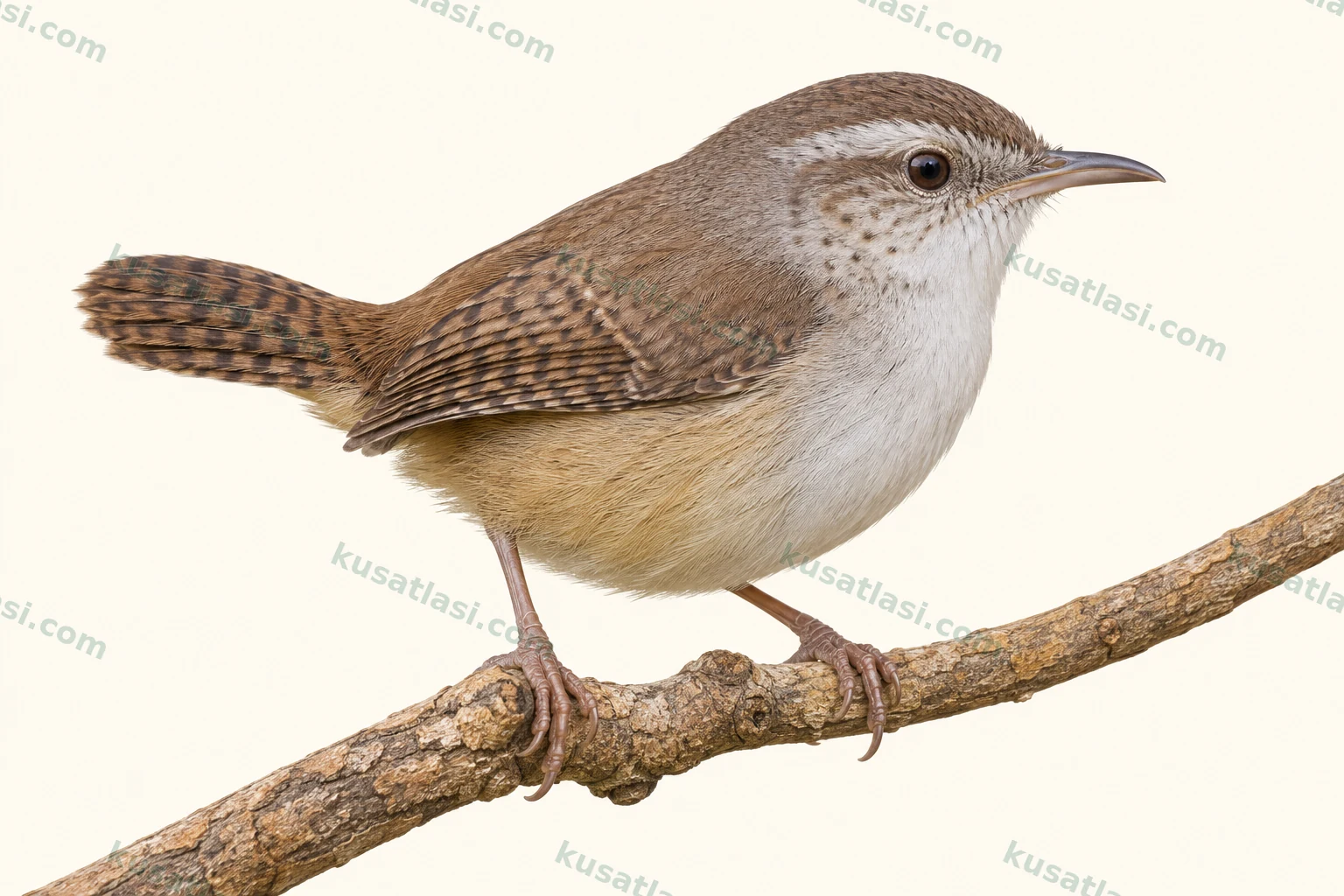
Swipe between the two adult plates.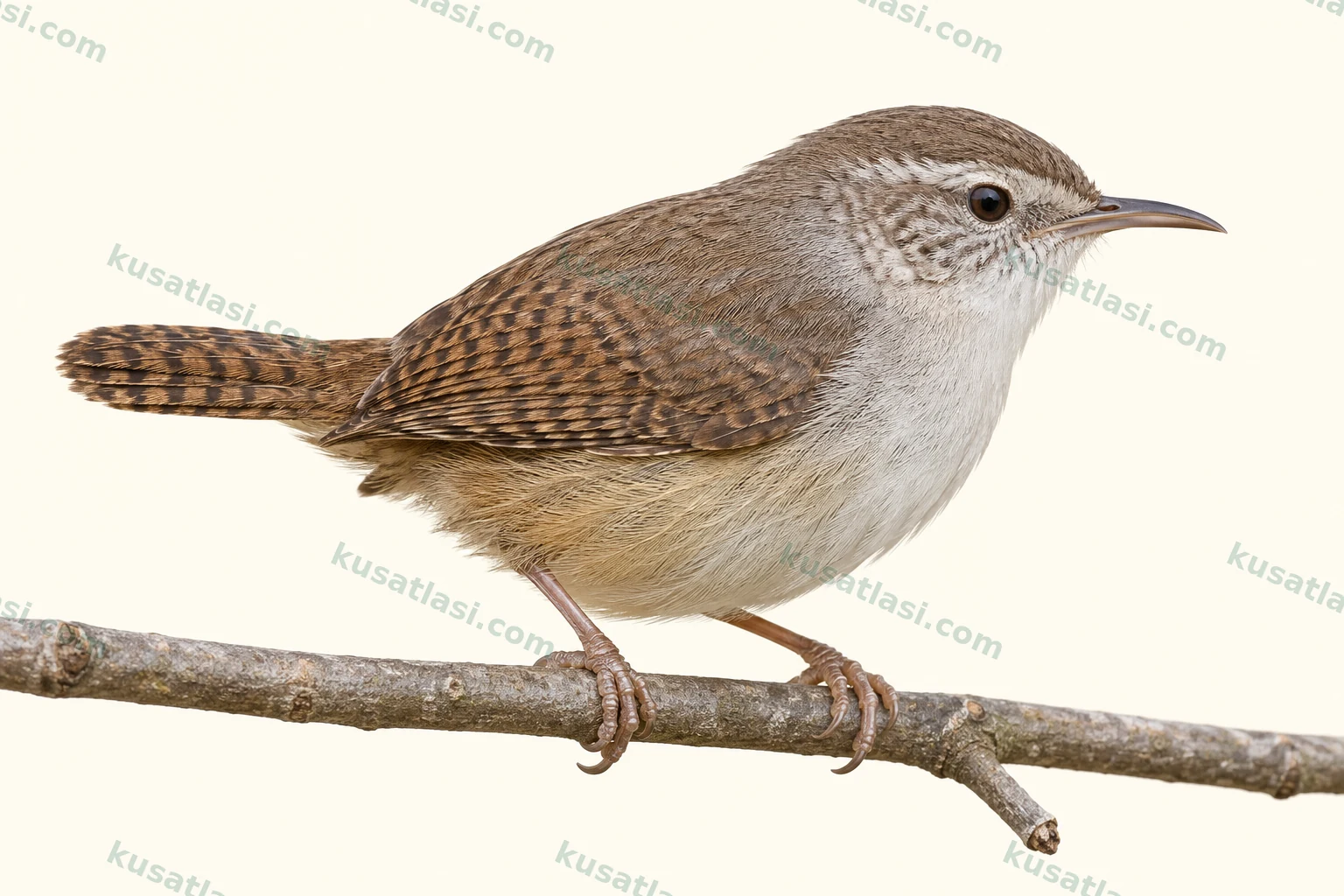
Troglodytidae · Passeriformes
White-bellied Wren
Uropsila leucogastra
Ak Karınlı Çıtkuşu
Plain pale face, broad whitish eyebrow and stubby tail.
- Order
- Passeriformes
- IUCN Status
- LCLeast Concern
Biometrics
Length
- Male
- 9–10 cm
- Female
- 9–10 cm
Wing length
- Male
- 5.04 cm
- Female
- 5.04 cm
Weight
- Male
- 9.8–10.5 g
- Female
- 8–9.1 g
Detailed explanations of these measurements are available on our website, on the same species page.
At a Glance
- Face
Pale and plain.
- Eyebrow
Broad, whitish.
- Tail
Stubby.
Appearance does not separate sexes.
Calendar
Range-wide laying calendar not verified.
Species Information
Quick Identification
Look for a stubby tail, broad whitish eyebrow and plain pale face.
General Appearance and Posture
It is brownish grey above and greyish white below, with faint dark barring on the wings and tail.
Males, Females and Young Birds
The Chamela, Mexico study reports no sexual dimorphism. A reliable distant juvenile key was not verified.
Appearance in Flight
In Tamaulipas, Mexico, in 1947, birds moved through vegetation mostly by hopping and less often by flying. This observation does not establish a flight-specific plumage mark.
Voice and Behaviour
The song is a short, pleasant “tiddle-ee” or “tiddle-ee-oo”. It can clamber at mid-levels in open understory.
Similar Species
When separating small forest wrens, check the short tail and facial pattern as well as pale underparts. Its song is simpler than those of most wrens.
World Distribution
AviList 2026 places it on Mexico’s Pacific slope from southern Nayarit to Guerrero, and on the Caribbean slope southward from southern Tamaulipas. Its range includes the Yucatán Peninsula but not Cozumel, northern Guatemala and a separate area in north-central Honduras.
Status Within Its Natural Range
Belize is also within its natural range. In the 2002–2003 survey at Shipstern, northeastern Belize, it was a common resident forest bird; this local result is not a current global population census.
Movements
The American Ornithologists’ Union checklist describes it as resident across its range from Mexico to Belize, northern Guatemala and locally north-central Honduras.
Breeding Habitat
It inhabits tropical woodland, generally being commoner in drier areas and more local in humid ones.
Nest Site
The occupied nest Sutton examined at Mesa de Llera, Tamaulipas, Mexico, in 1947 was on an acacia branch. It had an oval body with a downward-facing entrance tunnel and contained fine dead plant stems, lichens and moss. He explicitly stated that he had not witnessed its construction.
Daily Habitat Use
The checklist published by AOS also lists lowland evergreen forest and secondary forest among its habitats.
What It Eats
In Chamela, Mexico, it was observed feeding on insects and spiders.
How It Forages
At Shipstern, Belize, it was recorded following army ants. This does not establish that it ate the ants themselves.
A Local Breeding Record
The Chamela, Mexico thesis reports 16 days of incubation, with incubation followed to completion at only two nests. The interval runs from laying of the last egg to hatching of the last chick.
Leaving the Nest
In the same Chamela study, chicks remained for 16 days in a nest where handling was reduced. This is not a fixed duration established for every population.
Nest Building Is Not Necessarily Egg Laying
At Shipstern, Belize, feeding of young outside the nest was recorded on 12 July and 16 August 2002, and nest building on 1 December. The last record does not mean that eggs were found in December.