
World Birds
Field Guide Plates
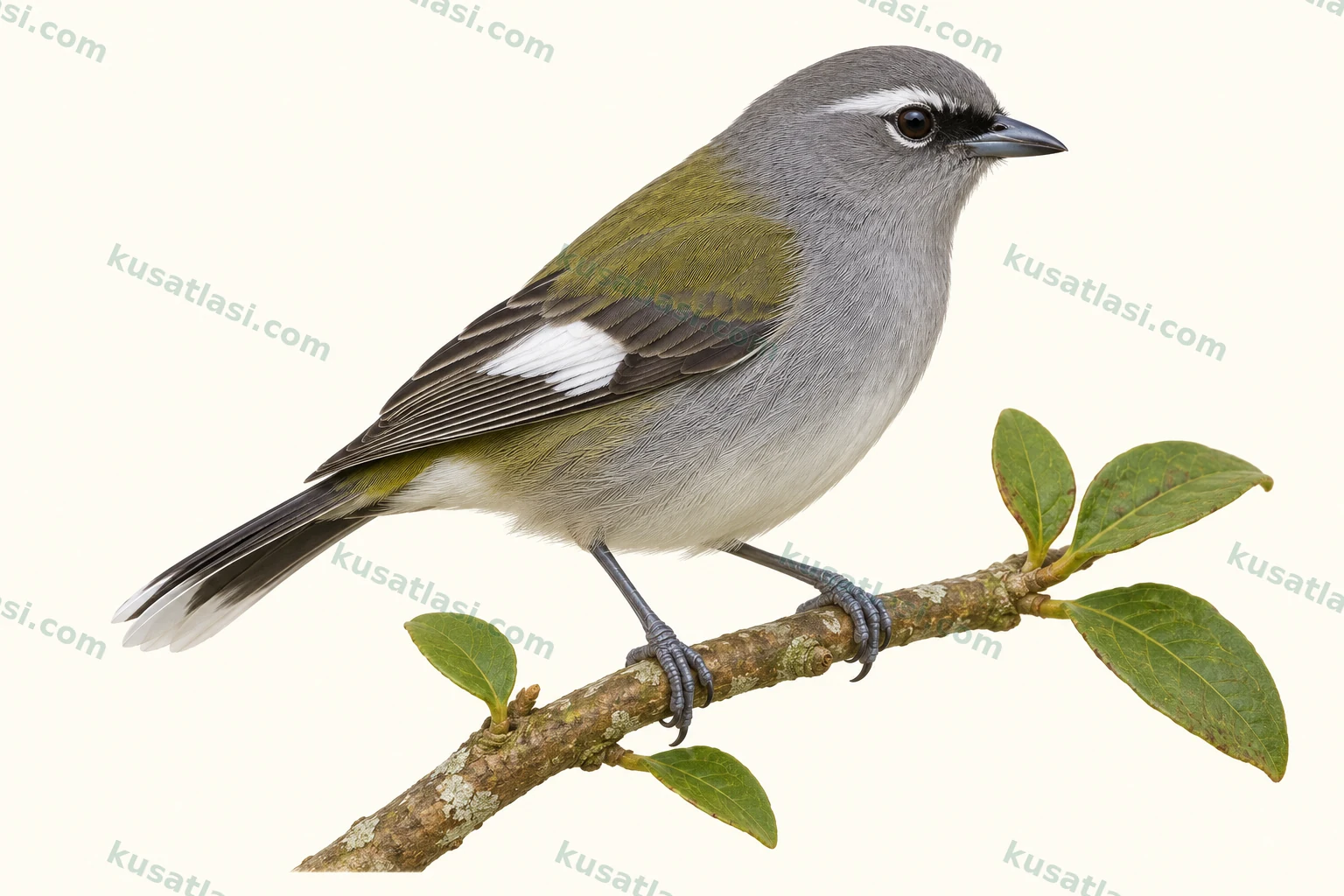
Swipe between the two adult plates.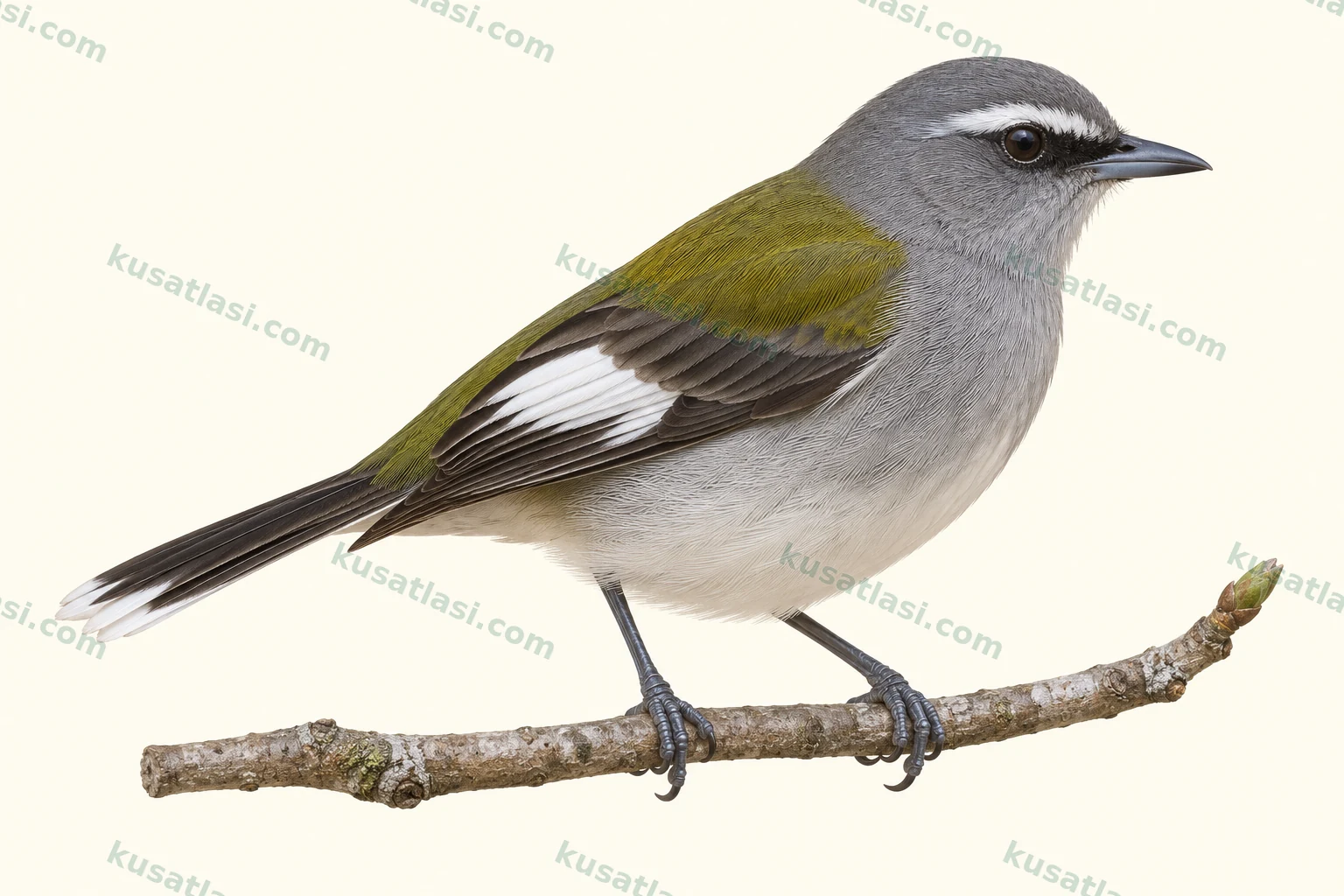
Phaenicophilidae · Passeriformes
White-winged Warbler
Xenoligea montana
Ak Kanatlı Ötleğen Tangarası
Look for the gray head, white around the eye and white wing patch together.
- Order
- Passeriformes
- IUCN Status
- VUVulnerable
Biometrics
Length
- Male
- 14 cm
- Female
- 14 cm
Wing length
- Male
- 6.42 cm
- Female
- 6.42 cm
Weight
- Male
- 10.1–14 g
- Female
- 10.1–14 g
Detailed explanations of these measurements are available on our website, on the same species page.
At a Glance
- Gray head
Contrasts with the olive back.
- White around the eye
Check the white area in front of the eye too.
- White primaries
Microligea palustris lacks the same white pattern.
A definitive photographic key for adult sex identification was not verified.
Calendar
The 2004 nest record from the Dominican Republic does not define a monthly breeding calendar for the island.
Species Information
Quick Identification
Look for the gray head, olive upperparts and white wing patch, together with white around the eye and a small white spot in front of it.
General Appearance and Posture
The bill is stout and dark, the underparts whitish. White is present on the outer feathers of the dark tail. Views within dense vegetation may be brief.
Males, Females and Young Birds
A juvenile documented in the Dominican Republic in 2004 had a brownish-gray head, olive-brown upperparts and a grayish-flesh bill. This is not an exact daily ageing or sexing key.
Appearance in Flight
White occurs in the primary flight feathers, rather than across the entire wing. A detailed diagnostic flight-pattern key was not verified.
Voice and Behaviour
Its song consists of accelerating high notes; it also gives thin calls. It may occur in pairs and mixed-species feeding groups.
Similar Species
Green-tailed Warbler (Microligea palustris) is less contrasting and lacks the same white pre-eye spot and white primaries.
World Distribution
It is endemic to Hispaniola, shared by Haiti and the Dominican Republic. No natural range outside the island is established. Its association with mountain forests does not imply occupation of the entire island.
Status Within Its Natural Range
Principal recorded areas include Haiti’s Massif de la Hotte and the Dominican Republic’s Sierra de Bahoruco, Sierra de Neiba and Cordillera Central. Forest loss has fragmented its range; historical records from Haiti’s Massif de la Selle do not establish a continuous present population.
Movements
It is an island resident. Autumn and winter observations in the Dominican Republic show it using fruiting trees also visited by migrants from North America; sharing a food source does not mean sharing their migration. A species-specific monthly movement route has not been verified.
Breeding Habitat
It is associated with humid mountain forests and wet karst limestone forests. Dense understory is important, and it has also been recorded in broadleaf vegetation mixed with pines. The documented nest in the Dominican Republic’s Sierra de Bahoruco was within closed-canopy broadleaf forest.
Nest Site
A nest found in Sierra de Bahoruco on 27 June 2004 was an open cup of moss and fine plant material in tangled vines, 2.5 m above ground. It held one egg and one chick; the chick left the following day. Typical clutch size, incubation and nestling duration remain unverified.
Daily Habitat Use
At Las Abejas in the Dominican Republic, it used fruiting Trema micrantha trees associated with natural gaps and former agricultural clearings within moist broadleaf forest. This local feeding record does not demonstrate tolerance of extensive deforestation. Observe without entering nesting thickets or flushing birds.
What It Eats
It takes plant foods as well as insects. A study conducted in 1997 in Sierra de Bahoruco, Dominican Republic, and published in 2018 directly documented eating Trema micrantha fruit. Describing the species as exclusively insectivorous would therefore be incomplete. The study does not establish year-round dietary proportions or obligatory dependence on a single plant.
How It Forages
It searches leafy vegetation for insects and visits fruiting trees. It was a frequent visitor to the four Trema trees studied at Las Abejas. Tree visits can include returns by the same bird, so visit totals alone are neither individual counts nor population density. Other birds searching the same trees for insects do not establish exclusively insect feeding by this species.
One Fruit Tree, Several Birds
Latta’s 1997 study in the Dominican Republic showed Trema micrantha being used by resident birds and overwintering migrants. White-winged Warbler was an important visitor in broadleaf forest. However, the study found no evidence that any bird depended exclusively on this fruit or that the plant depended on one bird species. A possible contribution to restoration does not establish this bird alone as responsible for forest regeneration.
Why the Starting Year Matters
A mist-netting study at two sites in the Dominican Republic’s Sierra de Bahoruco examined trends during the winters of 1997–2010. An initial decline was influenced by exceptionally high capture rates in 1997. Excluding that year removed the apparent temporal trend, and the authors explicitly expressed low confidence in the species-specific result. This does not establish absence of conservation risk; it identifies a limitation of a particular local dataset.
The Name Warbler Does Not Define Its Family
It is currently placed in Phaenicophilidae and is the only species in Xenoligea, with no recognised subspecies. The name Hispaniolan Highland-tanager used in research refers to the same bird; differently named nesting and feeding studies are not accounts of a separate species.