
Approved field-guide plates
Pine Bunting identification views
Swipe left or right through all five plates.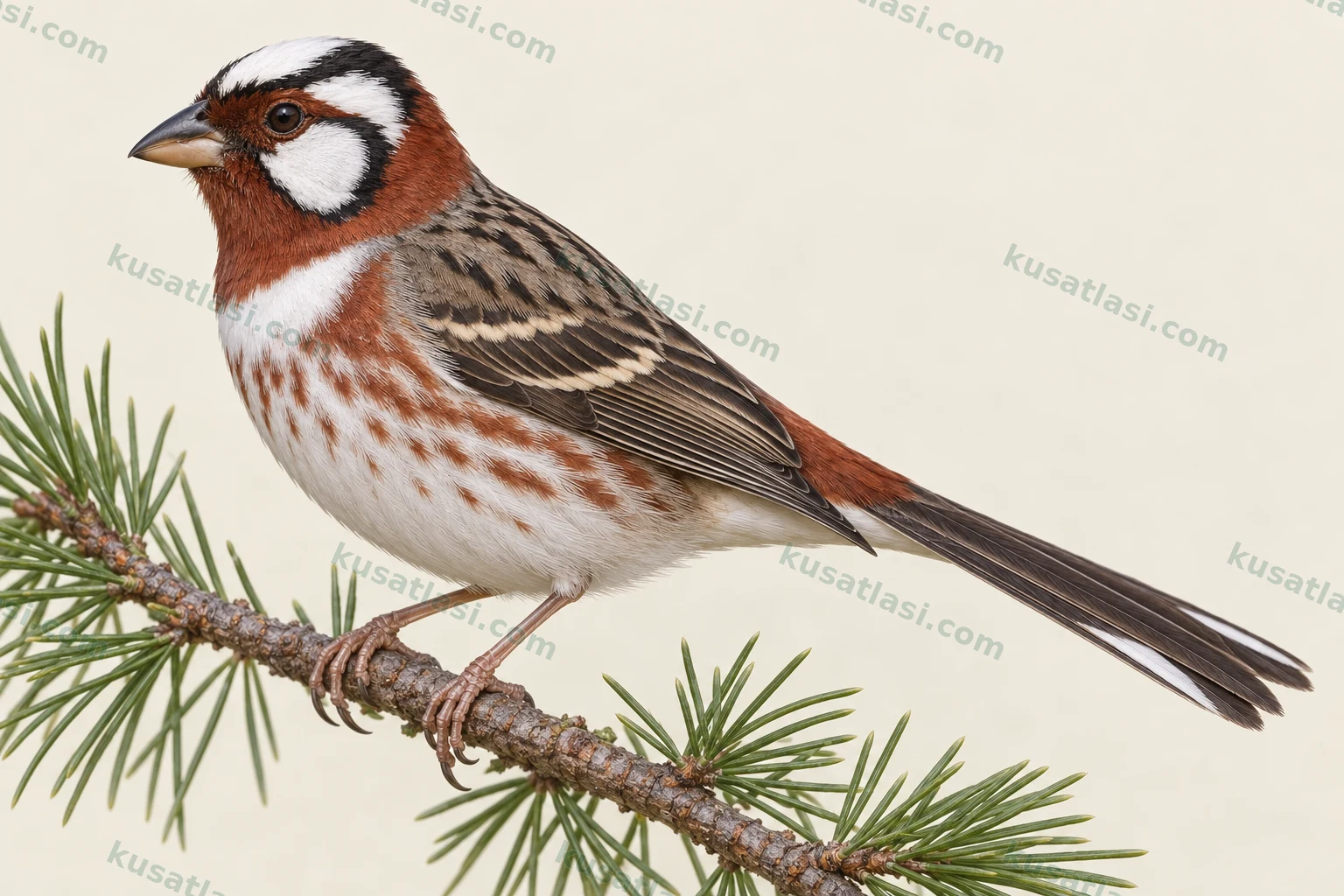
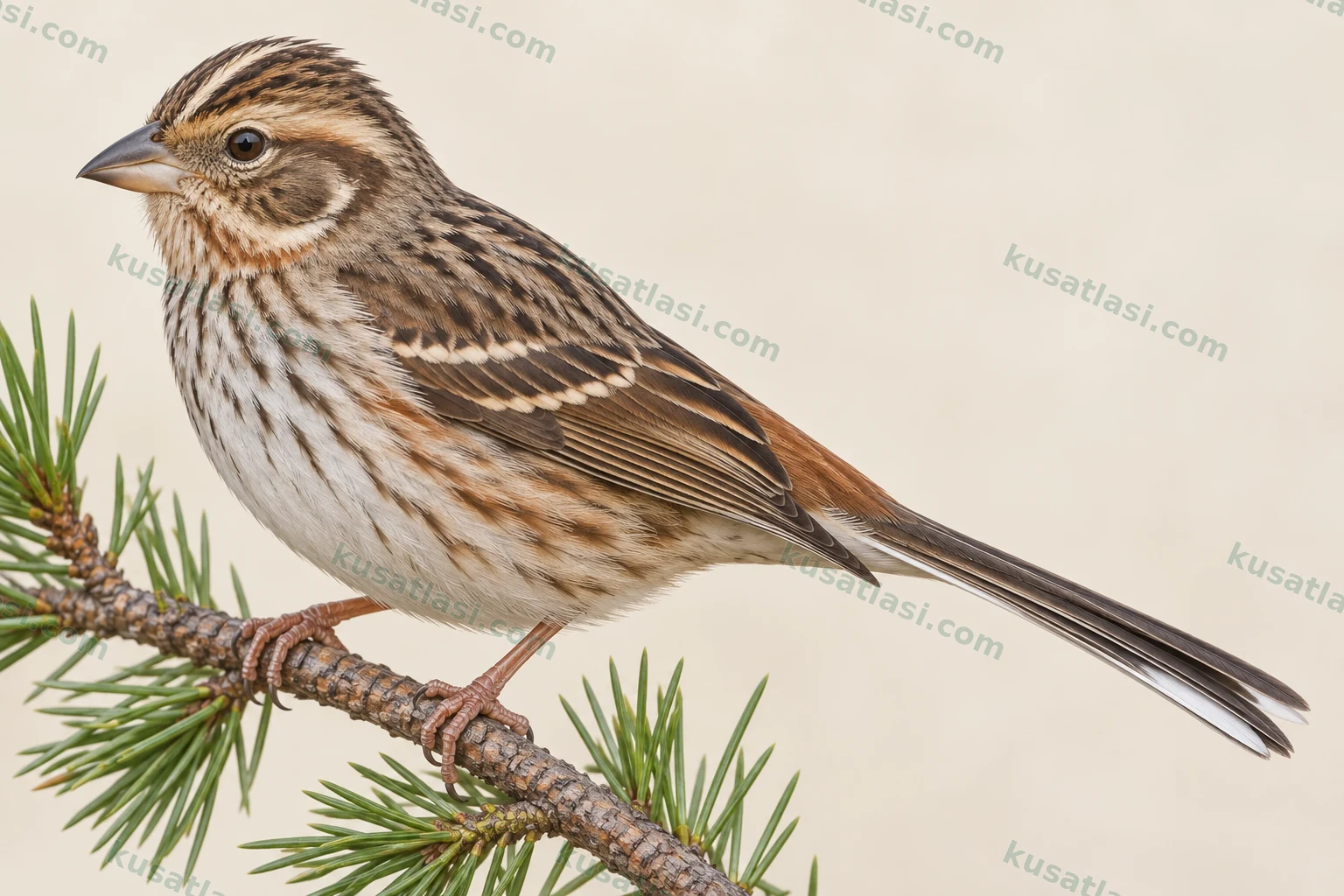
Old World Buntings
Pine Bunting
Emberiza leucocephalos
Ak Başlı Çinte
Combine head, throat, underparts and rump; lack of visible yellow alone does not eliminate Yellowhammer or hybrid possibilities.
- Order
- Passeriformes
- Conservation status
- LC Least Concern
First look in the field
Quick identification
- White head
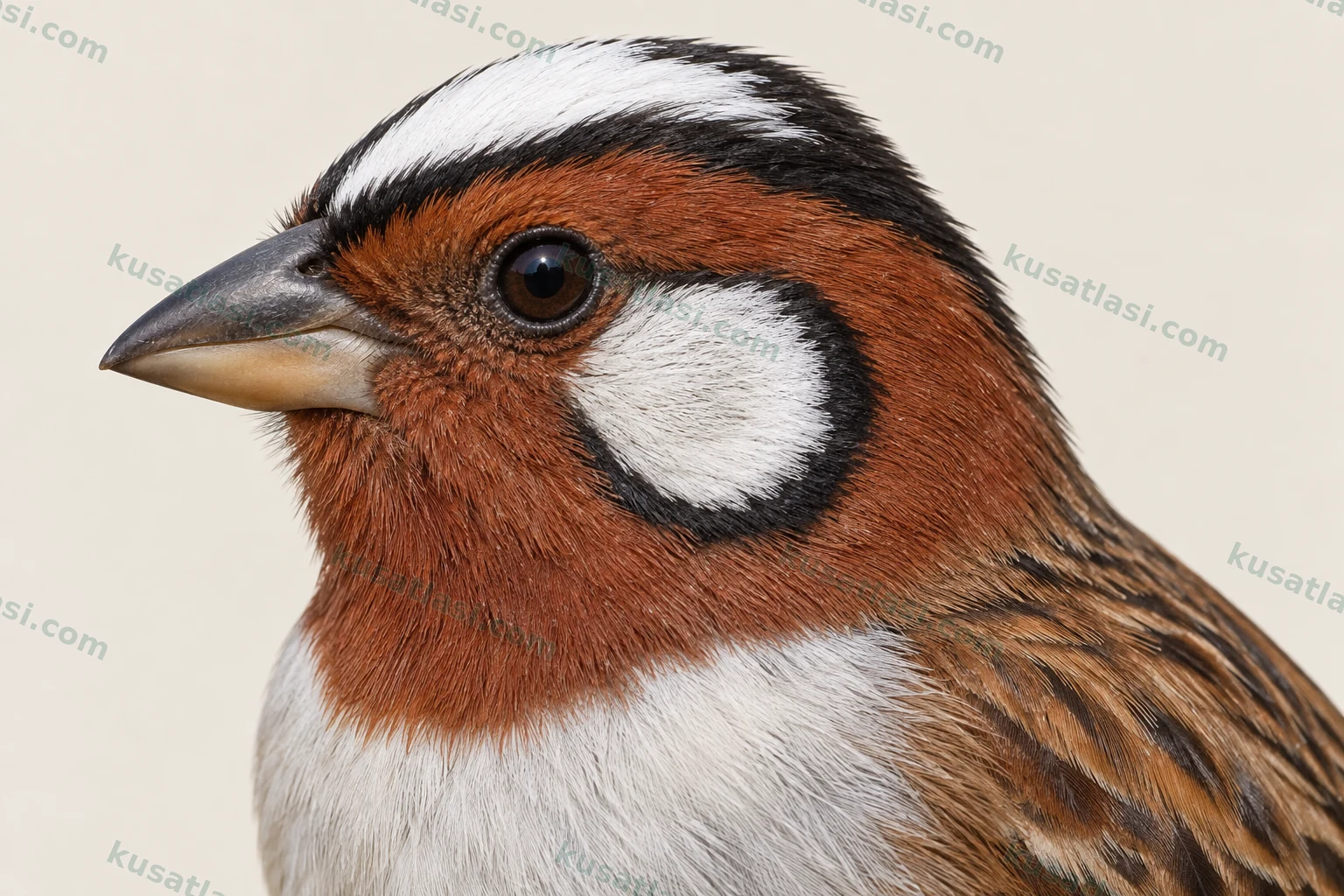
Breeding males combine white head areas with a chestnut face.
- Rufous rump
Assess the warm rufous rump with the head and underside pattern.
- Possible hybrids
Birds with mixed Pine Bunting and Yellowhammer features can occur.
Biometrics
Length
- Male
- 16–17 cm
- Female
- 16–17 cm
Wingspan
- Male
- 25–30 cm
- Female
- 25–30 cm
Weight
- Male
- 28 g
- Female
- 28 g
Detailed explanations of these measurements are available on our website, on the same species page.
World distribution
Pine Bunting
Customize map layers
Observation Sites
Bird Atlas recordsLoading observations…
Monthly record intensity
12 monthsRecord intensity is affected by observation effort.
Rotate the globe and compare the supported layers. Colours show broad range areas, not exact sightings or nests.
- Jan
- Apr
- Jul
- Oct
- Dec
Generalised data and method
Basemap: Natural Earth (public domain).
Bibliography ↗Authentic bird sound and ethical use
Voice and listening
See the detailed species account below.
Spoken guide
Narration has not been recorded; no audio file has been created.
Observe without approaching the nest
Breeding
Open coniferous woodland, forest margins and clearings characterize much of the natural breeding habitat. Ground vegetation and bushes alongside trees are important. Dark closed forest is not equivalent to an open floor where birds can feed.
Scientific species guide
Detailed account
Identification
Pine Bunting is a fairly large, brown, streak-backed bunting with a patterned head and relatively long tail. It is rare or accidental in Türkiye. Compare carefully with Yellowhammer, with which it hybridizes where their ranges overlap. Failure to see yellow in one image is not a complete identification test.
Adult Male
Breeding males combine a white crown and cheek with dark borders and chestnut face and throat. The belly is paler and the flanks can show warm colour and streaking. Fresh feather margins may partly conceal the pattern in autumn, so a male need not always resemble a bright spring bird. Check the position of white rather than merely noting a pale mark on the head.
Female and Young
Females are duller, greyer-brown and streakier, without the male's equally bold chestnut-and-white face. Some female Yellowhammers are also very pale. Immatures may lack the large adult cheek patch and can resemble Rustic Bunting. Do not assign sex simply because the bird is dull; retain uncertainty when age and plumage cannot be assessed.
Wing and Tail Views
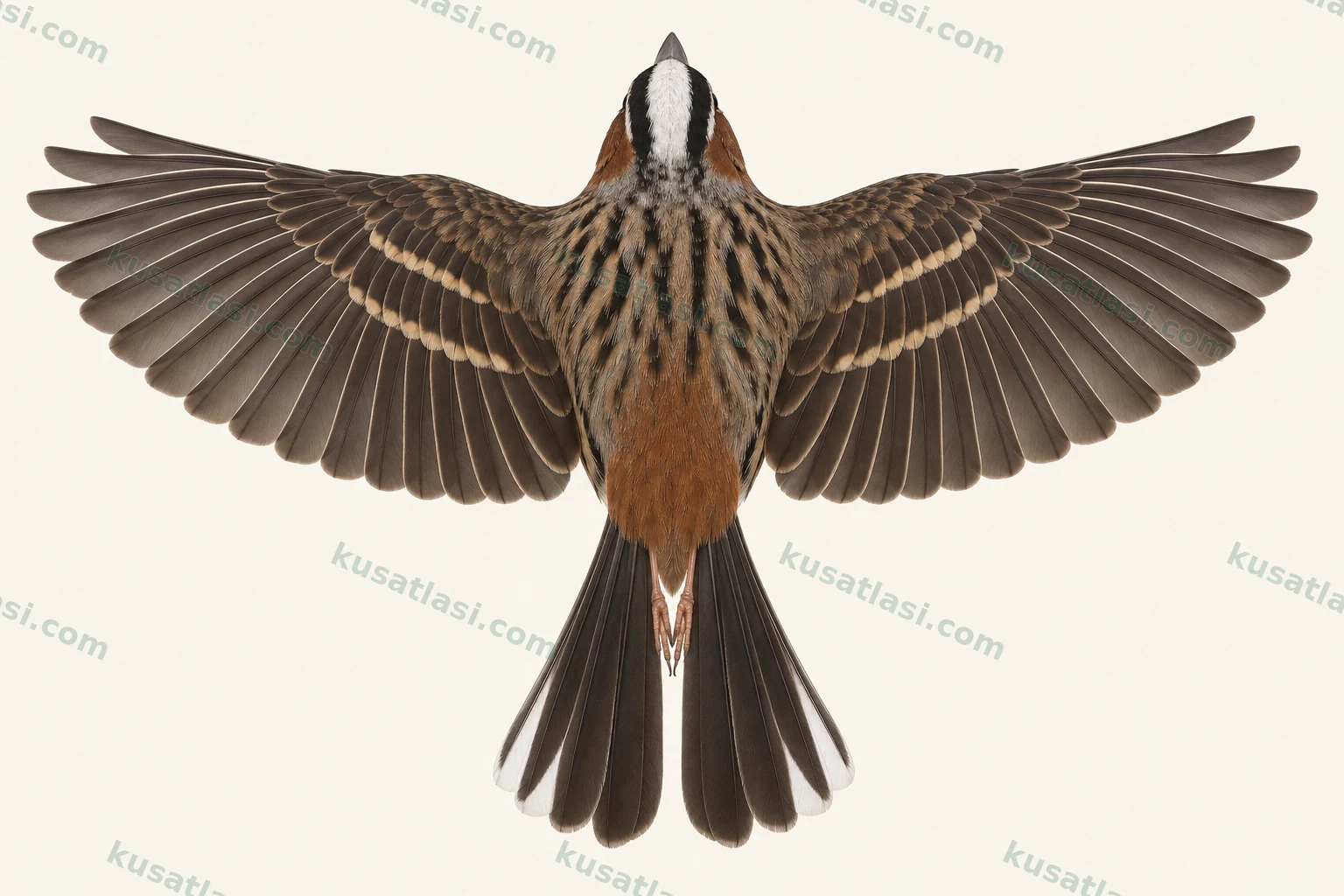
1. Above: Combine streaked back, warm rump and white outer tail areas when exposed. A closed tail may hide white.
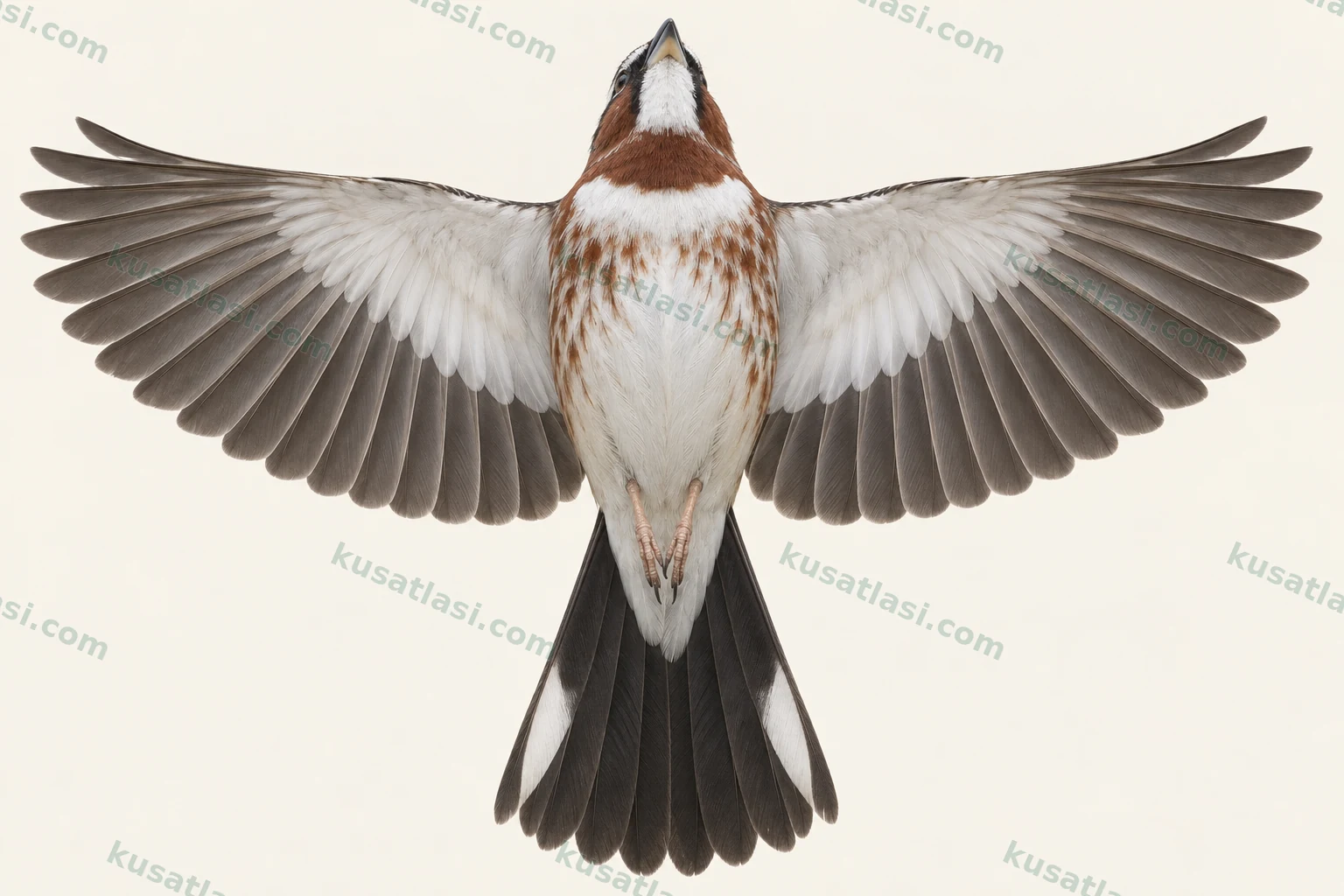
2. Below: Assess breast, belly and flank markings separately from wing shadows. Dorsal back markings cannot be applied to a ventral view.
3. Limits: White outer tail feathers occur in other buntings too. Recheck the face, throat and feather edges when the bird lands.
4. Hybrids: Mixed characters require closer assessment. Neither a yellow reflection nor an unusual-looking individual automatically proves hybrid origin.
Nest, Eggs and Incubation
On natural breeding grounds the female builds a grass, root and stem cup in a sheltered ground depression, lined with finer material and sometimes hair. Four or five eggs are typical, occasionally six. Incubation lasts about 13 days and is by the female; both parents feed the young. These facts do not imply regular breeding in Türkiye.
Measurements
| Measure | Value | |---|---| | Length | Male: 16–17 cm; Female: 16–17 cm | | Wingspan | Male: 25–30 cm; Female: 25–30 cm | | Mass | Male: 26–35 g; Female: 24–34 g |
MME provides sex-specific masses but shared length and span. Other guides give a broader length of 16–18 cm; this is not an additional sex difference. Overlap makes apparent size alone unsuitable for sexing.
Natural Range
The main breeding range extends eastwards from the Urals through open parts of the Asian forest belt. Migratory populations winter farther south in Asia, with destinations varying geographically. The English name does not mean that the species remains in pine trees throughout the year.
Türkiye
The Turkish Bird Records Committee lists Pine Bunting among rare and accidental species. It is not presented here as a regular summer visitor or a winter bird expected in every region. European autumn and winter records, including British seasonal peaks, cannot be converted directly into a Turkish probability calendar.
Mixed Flocks
Outside breeding, birds may join other buntings. Inspect individuals rather than assigning the whole flock the name of the first bird identified. Repeated observations may involve the same individual. Likewise, points on a map are occurrences, not necessarily successive fixes of one tracked bird.
Evidence
Record place, date, duration, numbers and associated species. Save original images of crown, cheek, throat, feather edges and rump under different lighting. Explain how Yellowhammer and hybrid possibilities were considered. An uncertain preliminary identification should remain separate from a formally assessed record.
Breeding Landscape
Open coniferous woodland, forest margins and clearings characterize much of the natural breeding habitat. Ground vegetation and bushes alongside trees are important. Dark closed forest is not equivalent to an open floor where birds can feed. This habitat description is not a list of verified Turkish breeding sites.
Outside Breeding
Fields, grassy areas, fallow ground and scrubby openings may be used. Nearby trees and bushes provide refuge and resting places while feeding takes place on the ground. A small patch combining cover with food can therefore differ from a much larger bare field.
Field Search
A rare species is not guaranteed to return to one location every year. Watch bunting flocks from a stable distance and allow birds to emerge naturally. Do not follow them repeatedly with a vehicle, surround bushes or flush a bird for a flight photograph. Leave a clear retreat into cover.
Recording Habitat Use
A bird photographed on a branch may have been feeding on the ground moments earlier. Record substrate, nearby vegetation and behaviour together. Conserving seed-bearing margins and refuge cover as a connected patch is more informative than assuming that the word 'pine' describes every habitat requirement.
Winter Seeds
Grass and cereal seeds are important outside the breeding period. Birds may advance over the ground in short hops while collecting food. A flock beside a crop does not necessarily feed only on the crop; wild plants in the margin may also matter. Describe the action if the food item cannot be seen.
Breeding Diet
Insects and other small invertebrates become important on the breeding grounds, especially in food supplied to chicks. A seed-eating winter bird should not therefore be assumed to rear its young solely on seeds. These general facts do not prove breeding by an individual observed in Türkiye.
Food and Cover
A bird may alternate between open feeding ground and nearby branches. Intermittent visibility need not mean departure from the site. Following this natural sequence from a distance helps document both behaviour and head pattern without placing food or moving the flock.
Responsible Records
Separate searching, visible seed-taking and invertebrate capture instead of estimating unseen dietary percentages. Do not attract a rare bird towards roads or crowded places. Seed-bearing field margins and protective scrub should remain usable together; repeated flushing removes time that small birds could spend feeding.
A Seasonal Head Pattern
The white crown is most conspicuous in the adult male's distinctive plumage. Fresh feather edges can conceal colour and wear can reveal more of the underlying pattern. A duller head does not automatically mean female: age, season and light all need consideration.
Why Hybrids Matter
Natural hybridization with Yellowhammer means some individuals cannot be assigned confidently from one convenient character. Absence of visible yellow is useful evidence but not a final verdict. Compare face, throat, feather edges, underparts and rump, and preserve uncertain records as uncertain rather than forcing a species name.
Sound Is Supporting Evidence
The song may combine repeated notes with a different ending and resembles Yellowhammer in structure. Brief contact or flight calls should not replace good visual documentation. Record naturally occurring sound with its date and context; avoid playback intended to provoke a response.
Global Status Versus Local Rarity
Pine Bunting is globally Least Concern, while rare in Türkiye. Those statements describe different scales and do not contradict one another. A few observations cannot establish a population trend. Consistent observer effort and retained original evidence make later comparisons more meaningful than isolated claims of increase or decline.
Species text and plates come from existing atlas records. Measurements were checked against reliable species sources.
Open bibliography