
Approved field-guide plates
Kentish Plover identification views
Swipe left or right through all five plates.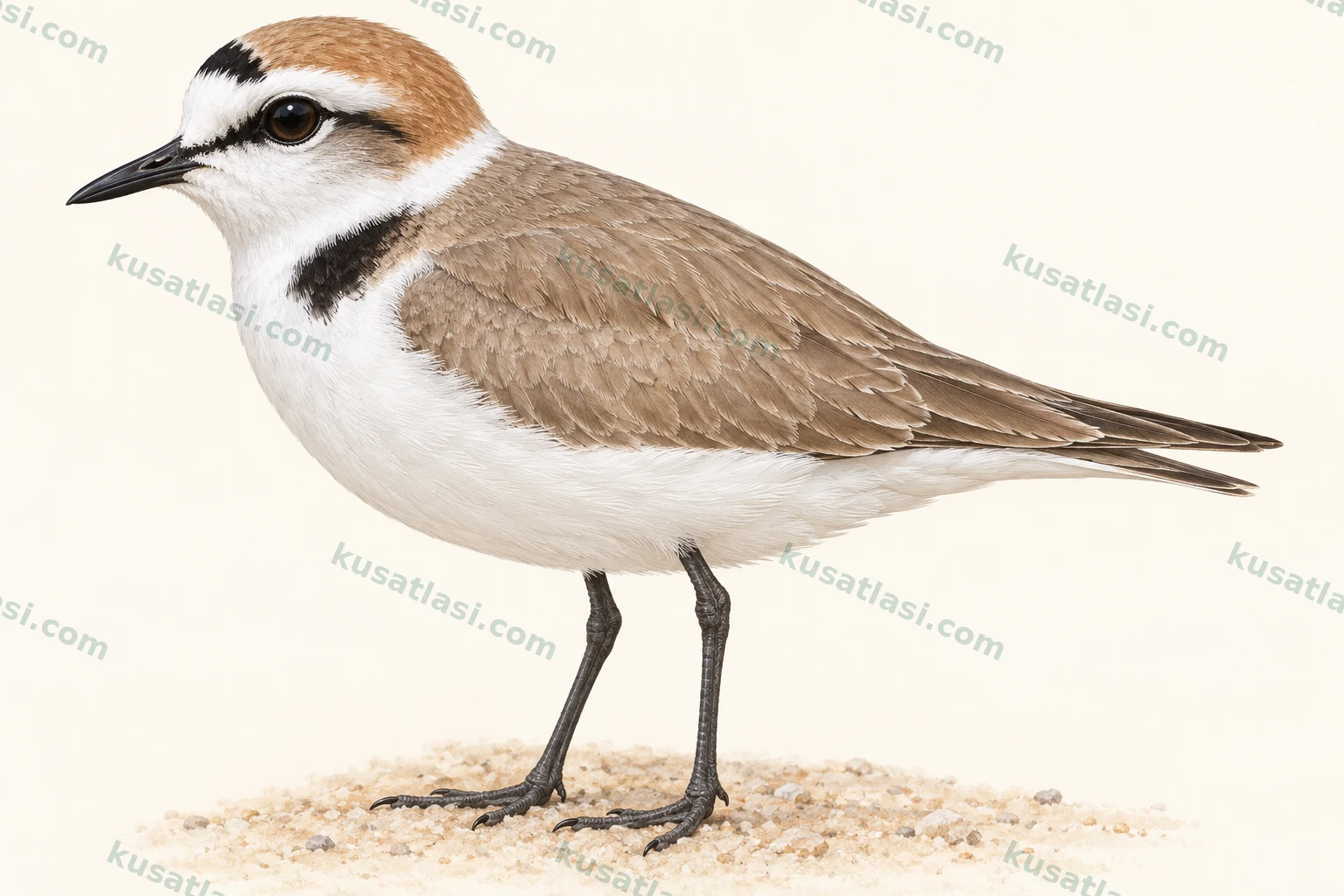
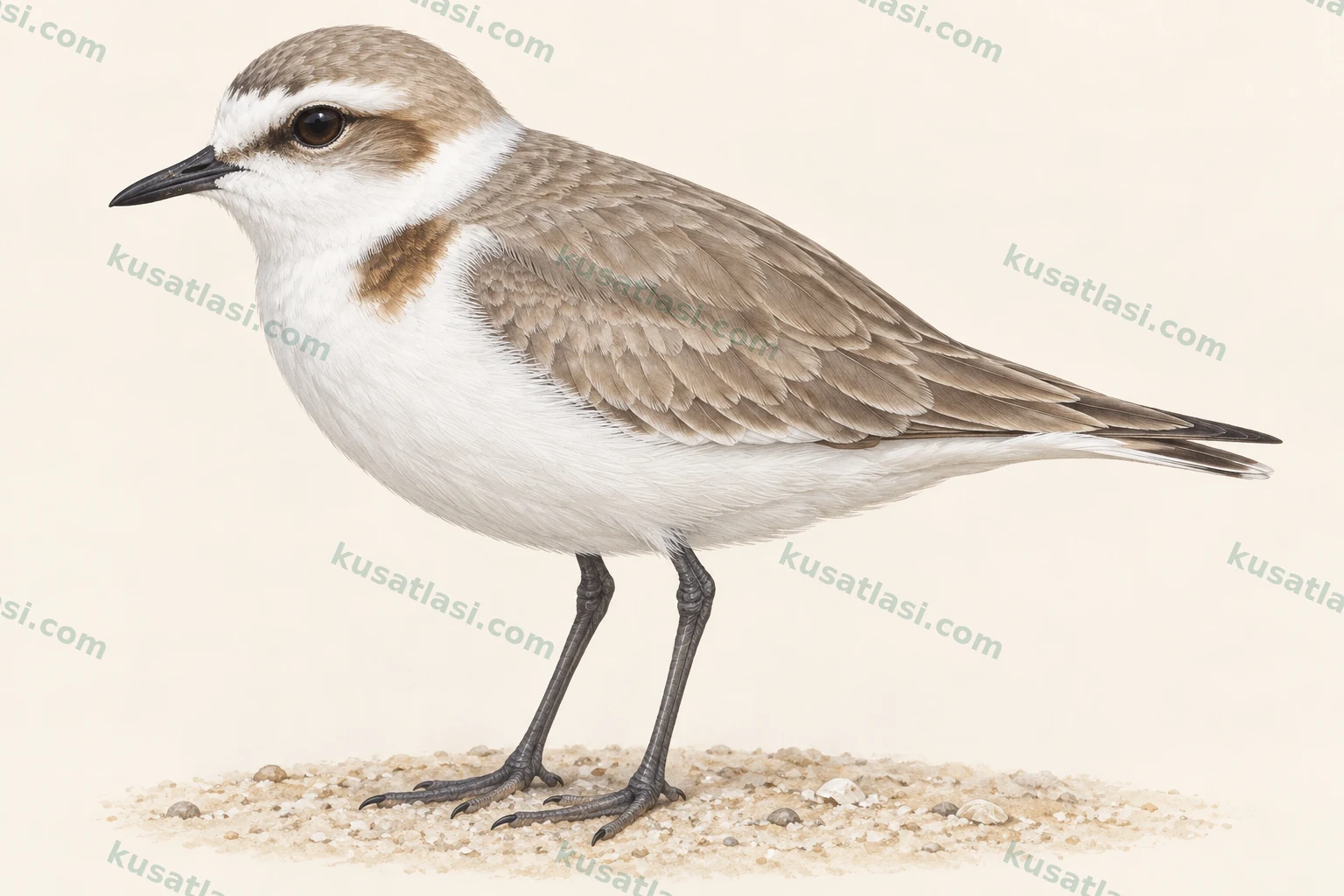
Plovers and Lapwings
Kentish Plover
Anarhynchus alexandrinus
Akça Cılıbıt
Combine lateral breast patches, fine dark bill and dark legs; a white wing stripe alone is insufficient.
- Order
- Charadriiformes
- Conservation status
- LC Least Concern
First look in the field
Quick identification
- Open breast band
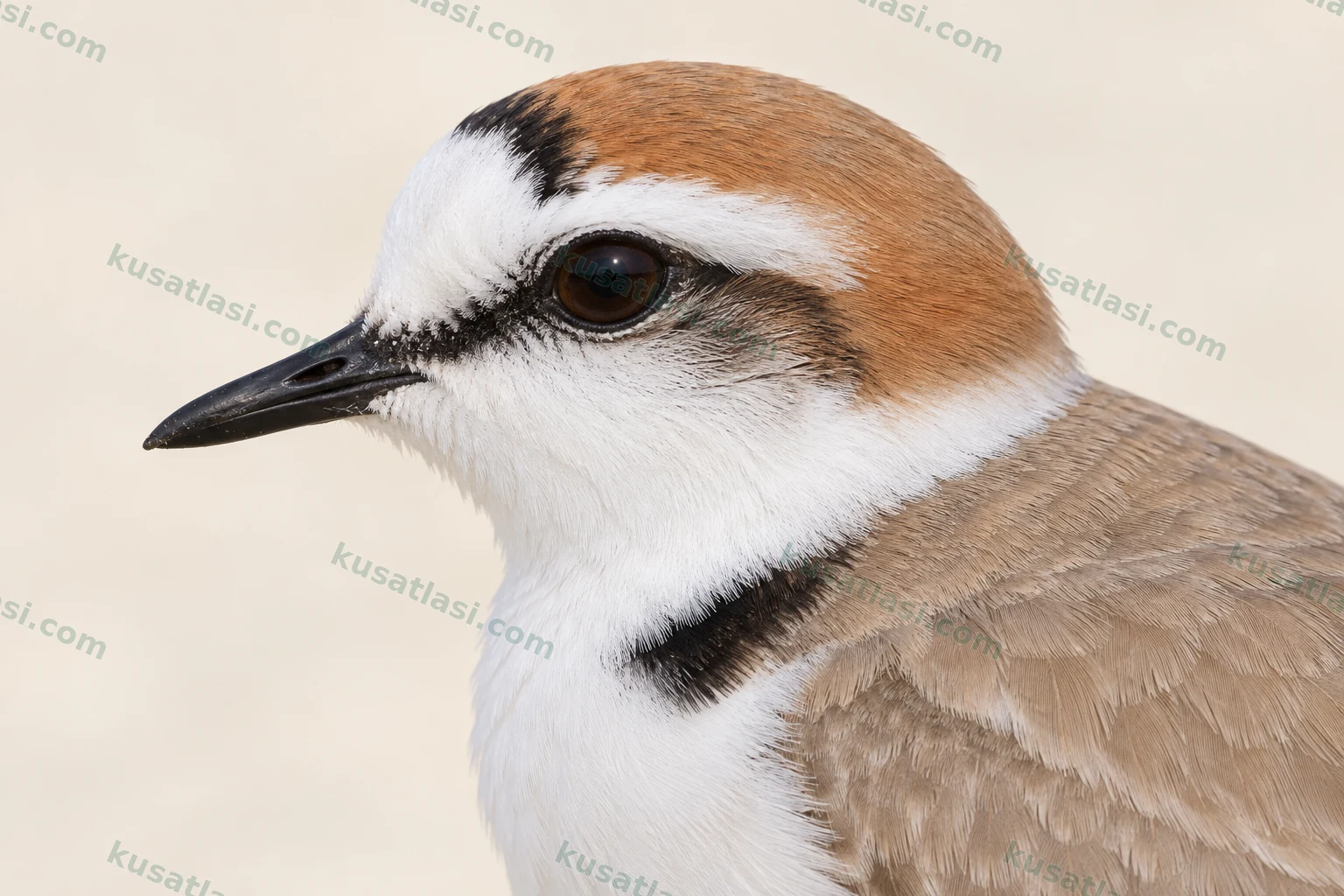
Dark patches on the sides of the breast do not join across the front.
- Fine dark bill
Combine the fine bill with dark legs and a small, pale body.
- Sandy upperparts
Sandy upperparts and white underparts can blend into a beach.
Biometrics
Length
- Male
- 15–18 cm
- Female
- 15–18 cm
Wingspan
- Male
- 42–45 cm
- Female
- 42–45 cm
Weight
- Male
- 40–42.3 g
- Female
- 40–42.3 g
Detailed explanations of these measurements are available on our website, on the same species page.
World distribution
Kentish Plover
Customize map layers
Observation Sites
Bird Atlas recordsLoading observations…
Monthly record intensity
12 monthsRecord intensity is affected by observation effort.
Rotate the globe and compare the supported layers. Colours show broad range areas, not exact sightings or nests.
- Jan
- Apr
- Jul
- Oct
- Dec
Generalised data and method
Basemap: Natural Earth (public domain).
Bibliography ↗Authentic bird sound and ethical use
Voice and listening
See the detailed species account below.
Spoken guide
Narration has not been recorded; no audio file has been created.
Observe without approaching the nest
Breeding
See the detailed species account below.
Scientific species guide
Detailed account
General Appearance
Kentish Plover is a small, pale shorebird with sandy upperparts, white underparts and a fine dark bill. Dark patches on the sides of the breast leave the front open rather than forming a complete collar. Combine that pattern with the bill and dark legs; a side-on photograph can conceal the central gap.
Male, Female and Young
The breeding male has stronger black head and lateral breast markings, with warm colour on the crown. Females usually have softer brown markings. Juveniles show pale feather fringes and subdued patches. Autumn plumage reduces sex differences, and juvenile sex cannot reliably be assigned from these plumage characters. Dullness alone does not prove female or juvenile.
Flight Views
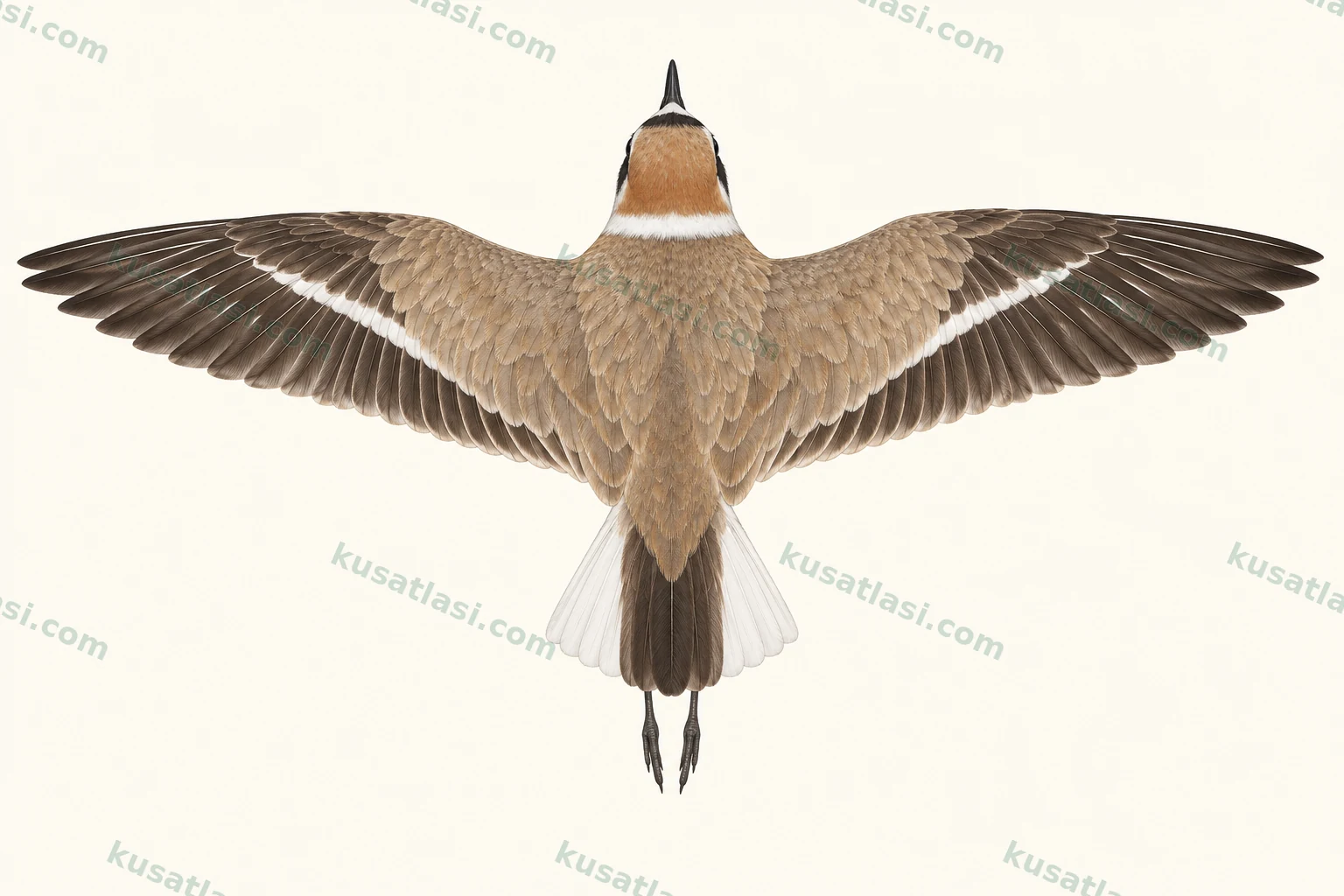
1. From above, look for a white stripe across the brown wing against darker flight feathers.
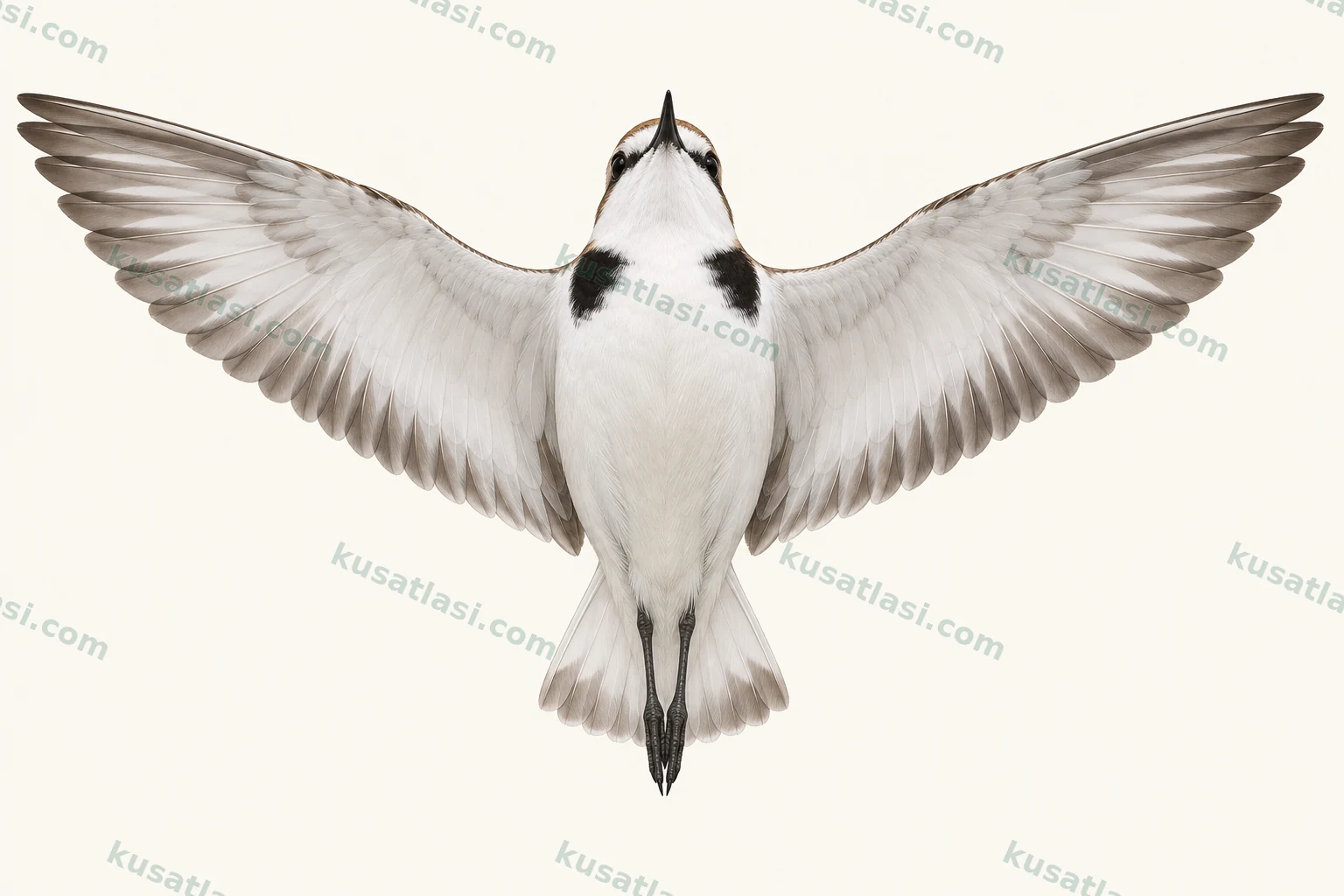
2. From below, assess the pale underparts and allow for shadow; do not describe an upperwing pattern you have not seen.
3. Common Ringed Plover also shows a white wing stripe. Little Ringed Plover lacks a conspicuous one, but flight evidence still needs confirmation on the ground.
4. After landing, reassess breast pattern, bill and legs without flushing the bird deliberately.
Nesting
A shallow ground scrape on sand, gravel or saline ground can contain small local fragments. Three eggs are typical, with two to four reported. Incubation takes about 24–26 days and is shared. Mobile chicks leave the scrape early and collect their own food, while adults provide protection and brooding. Walking chicks are not yet independent.
Measurements
| Measure | Value | |---|---| | Length | Male: 15–17 cm; Female: 15–17 cm | | Wingspan | Male: 42–45 cm; Female: 42–45 cm | | Mass | Male: 39–56 g; Female: 39–56 g |
Length and span are species ranges. MME lists the same mass range for both sexes; this does not imply identical individual weights.
Türkiye
The species breeds in suitable coastal and inland wetlands, occurs on passage and has winter records at some sites. Calling it only a summer visitor throughout Türkiye would therefore be misleading. Presence in different seasons also does not establish that the same individuals remain year-round.
Local Evidence
DKMP identifies semi-saline flats at Acıgöl as breeding habitat. The Tuzla population in southern Türkiye has contributed to parental-care research. The ODTÜ Erdemli campus list instead records passage without local breeding. These are different local situations, not conflicting national conclusions.
Seasons and Maps
Spring passage can overlap breeding preparation; nesting and chick care occupy part of spring and summer, followed by dispersal and passage. Winter counts demonstrate use during colder months at suitable places. Calendar cards are broad guidance, not fixed dates for every wetland. Occurrence dots do not reveal an individual's origin or destination, and historical count totals are not current population estimates.
Open Shore
Search dry sandy margins as well as nearby damp feeding ground. Sparse vegetation, shell fragments and pale substrate can conceal a motionless bird. Scan from a fixed position rather than walking rapidly through a potential nesting area.
Lagoons and Inland Lakes
Saline flats, saltpans and lagoon edges are useful habitats, but the species is not restricted to marine beaches. Inland breeding habitat at Acıgöl illustrates this. Open-water area alone says little about suitability; exposed substrate, moisture and safe dry ground matter together.
Protect the Whole Family Area
A shallow nest is easily overlooked, and chicks move away after hatching. Feeding ground and shelter therefore need to remain connected. Keep vehicles off shore flats, respect marked restrictions and prevent dogs from approaching birds. Do not rearrange natural debris for a photograph or search vegetation for eggs. Withdraw when birds become alarmed and leave families a clear route back together.
Invertebrate Food
Small insects, spiders, crustaceans, worms and molluscs contribute to the diet. Their importance varies between substrates and seasons. A dominant prey item measured abroad should not be treated as the dominant food throughout Türkiye.
Watching Feeding
Short advances, pauses and pecks reveal feeding behaviour; the actual prey can be too small to identify. Foot movements may help reveal prey in suitable substrate. Keep observed actions separate from inferred prey identity in field notes. A bird resting on dry sand may later return to the adjacent damp feeding strip.
Chicks and Access
Chicks collect food themselves but still require parental protection and brooding. Do not interpret their mobility as independence or separate them from adults for a photograph. Changing water levels alter the accessible feeding edge, so watch the wider habitat without repeatedly moving the flock. Food placement is unnecessary and can disrupt natural behaviour; retain distance and document what occurs naturally.
Reading an Incomplete Collar
The open breast centre is useful only when the viewing angle reveals it. A dark side patch does not show the whole collar. Bill, legs and breast should be checked together, especially in young and nonbreeding birds with subdued markings.
Research in Türkiye
Tuzla birds have contributed to research on shared incubation. Both parents participate, with effort varying with time and temperature. One adult visible on a nest does not mean the other never incubates, nor does a study imply a fixed timetable for every pair.
Mobile but Vulnerable
Young chicks can walk before they can fly. An apparently solitary chick may have parents waiting nearby for people to retreat. Increase distance rather than handling it. Global Least Concern status does not remove local risks: habitat alteration and disturbance can still reduce breeding success. A useful conservation record considers safe chick-rearing habitat as well as the number of adults present.
Species text and plates come from existing atlas records. Measurements were checked against reliable species sources.
Open bibliography