
Approved field-guide plates
Greater Whitethroat identification views
Swipe left or right through all five plates.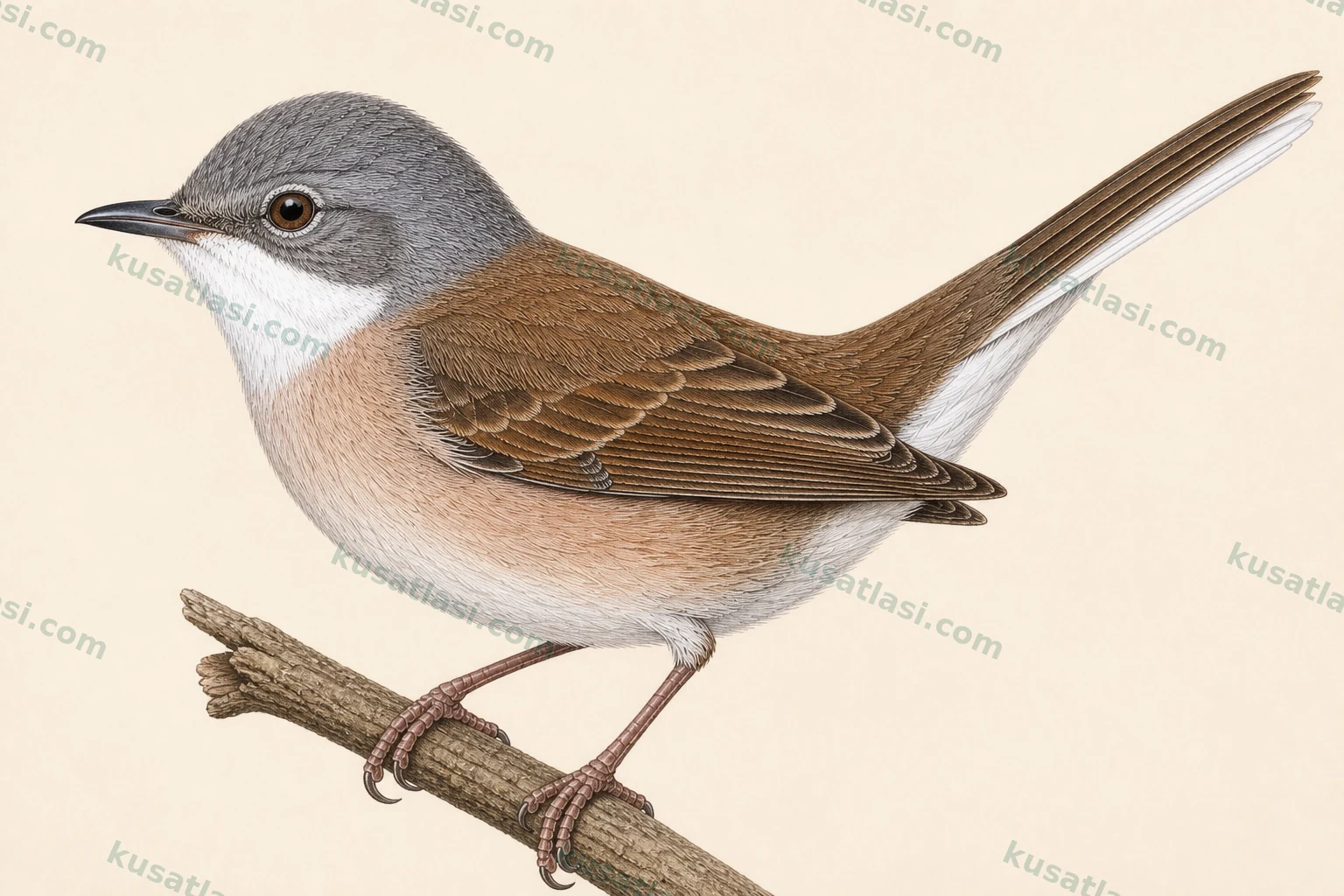
Sylviid Warblers and Allies
Greater Whitethroat
Curruca communis
Ak Gerdanlı Ötleğen
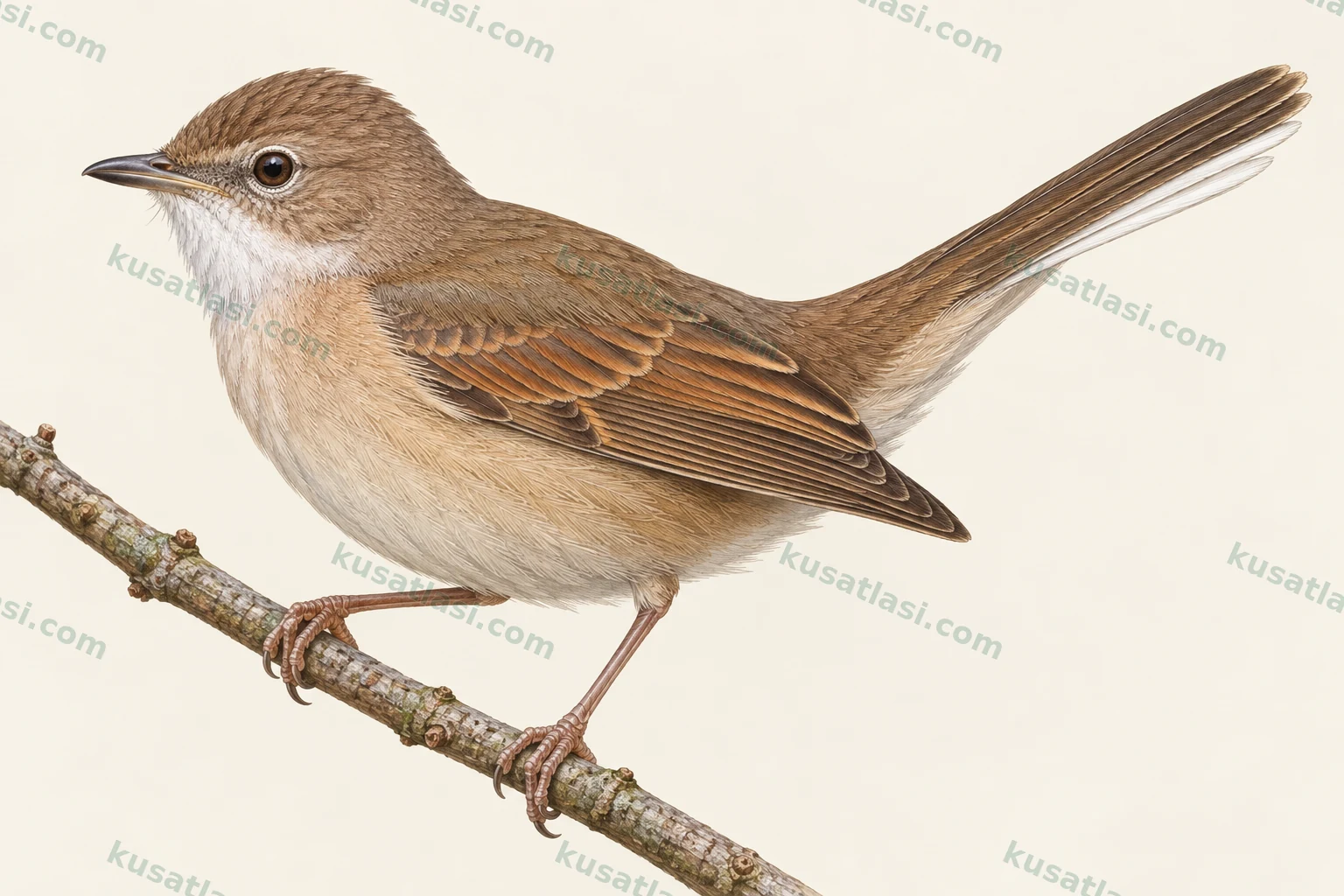
Combine pale throat, warm wing edges and slim long-tailed shape; a brown head does not automatically mean female.
- Order
- Passeriformes
- Conservation status
- LC Least Concern
First look in the field
Quick identification
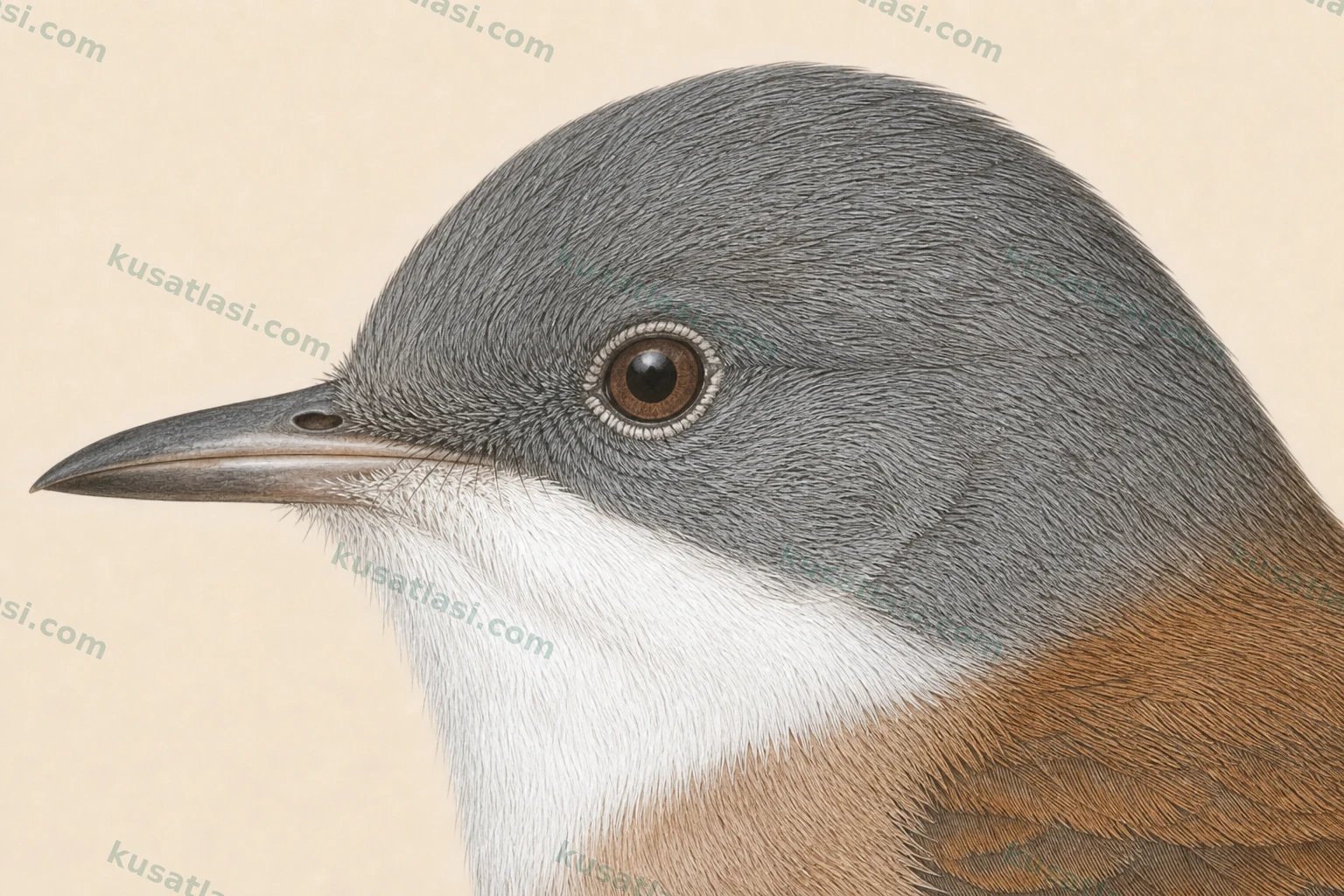
- White throat
Use the white throat with wing and tail structure, not alone.
- Warm wing
Warm brown feather edges stand out on the folded wing.
- Long tail
The tail is fairly long for the slim, active body.
Biometrics
Length
- Male
- 14 cm
- Female
- 14 cm
Wingspan
- Male
- 22 cm
- Female
- 22 cm
Weight
- Male
- 15.1 g
- Female
- 15.1 g
Detailed explanations of these measurements are available on our website, on the same species page.
World distribution
Greater Whitethroat
Customize map layers
Observation Sites
Bird Atlas recordsLoading observations…
Monthly record intensity
12 monthsRecord intensity is affected by observation effort.
Rotate the globe and compare the supported layers. Colours show broad range areas, not exact sightings or nests.
- Jan
- Apr
- Jul
- Oct
- Dec
Generalised data and method
Basemap: Natural Earth (public domain).
Bibliography ↗Authentic bird sound and ethical use
Voice and listening
See the detailed species account below.
Spoken guide
Narration has not been recorded; no audio file has been created.
Observe without approaching the nest
Breeding
Low nesting makes the vegetation itself important. Cutting or clearing during breeding can remove shelter and nesting substrate. If an adult alarms or waits with food, retreat and clear its route.
Scientific species guide
Detailed account
Overall Appearance
A slim, fairly long-tailed scrub warbler with a pale throat and warm feather edges on the folded wing. Use structure, wing pattern and the head-throat contrast together. Neither a white throat nor white outer tail feathers establishes the species by itself.
Male, Female and Immature
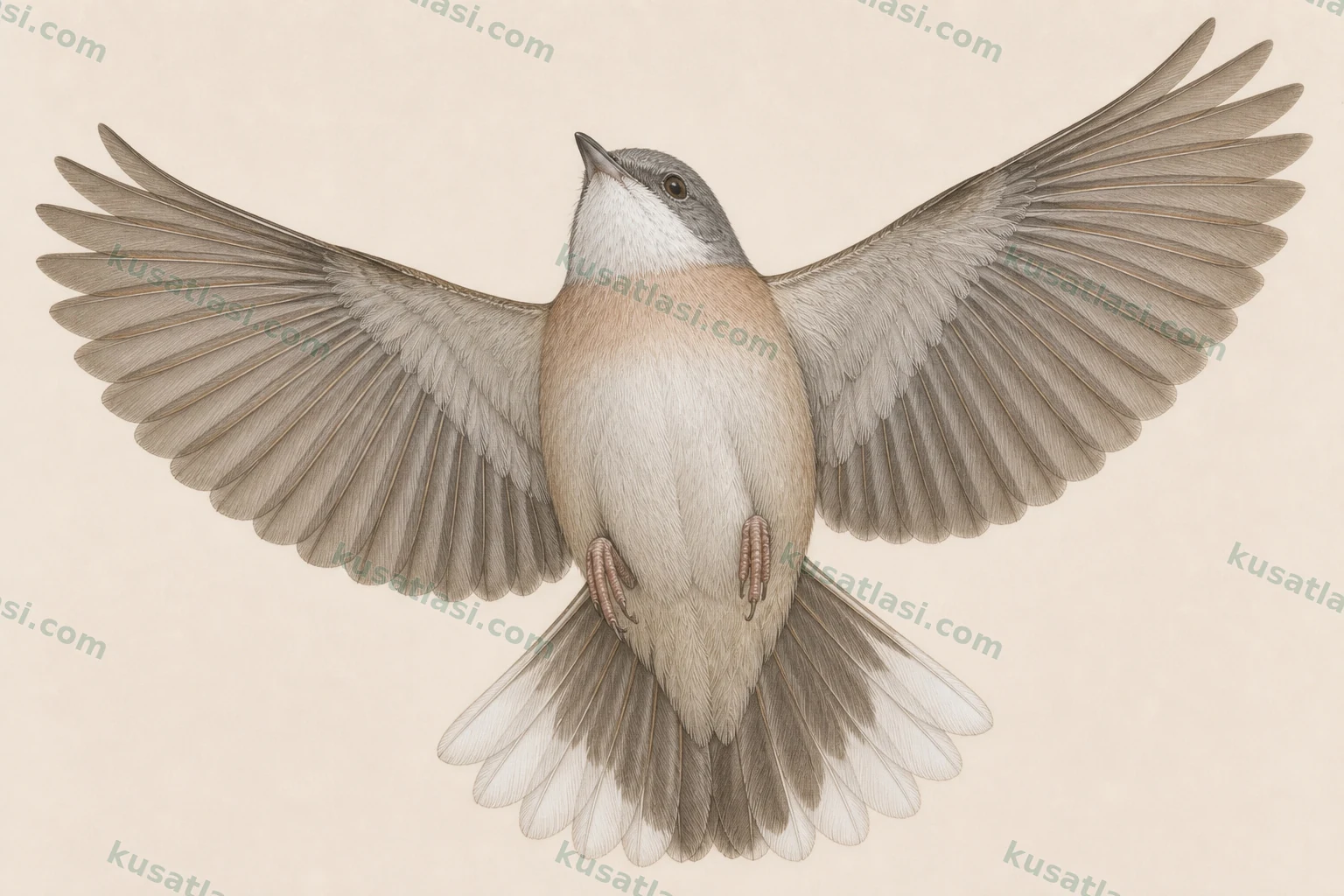
A typical spring male has a grey head and may show a pinkish breast. Females are generally browner-headed, but overlap with younger males occurs. The ageing and sexing guide by Blasco-Zumeta and Heinze stresses intermediate birds: many cannot safely be sexed from plumage. Brown-headed autumn birds are not automatically females; juveniles also resemble them. The plates show examples, not an exhaustive set of appearances.
Flight and Regional Variation
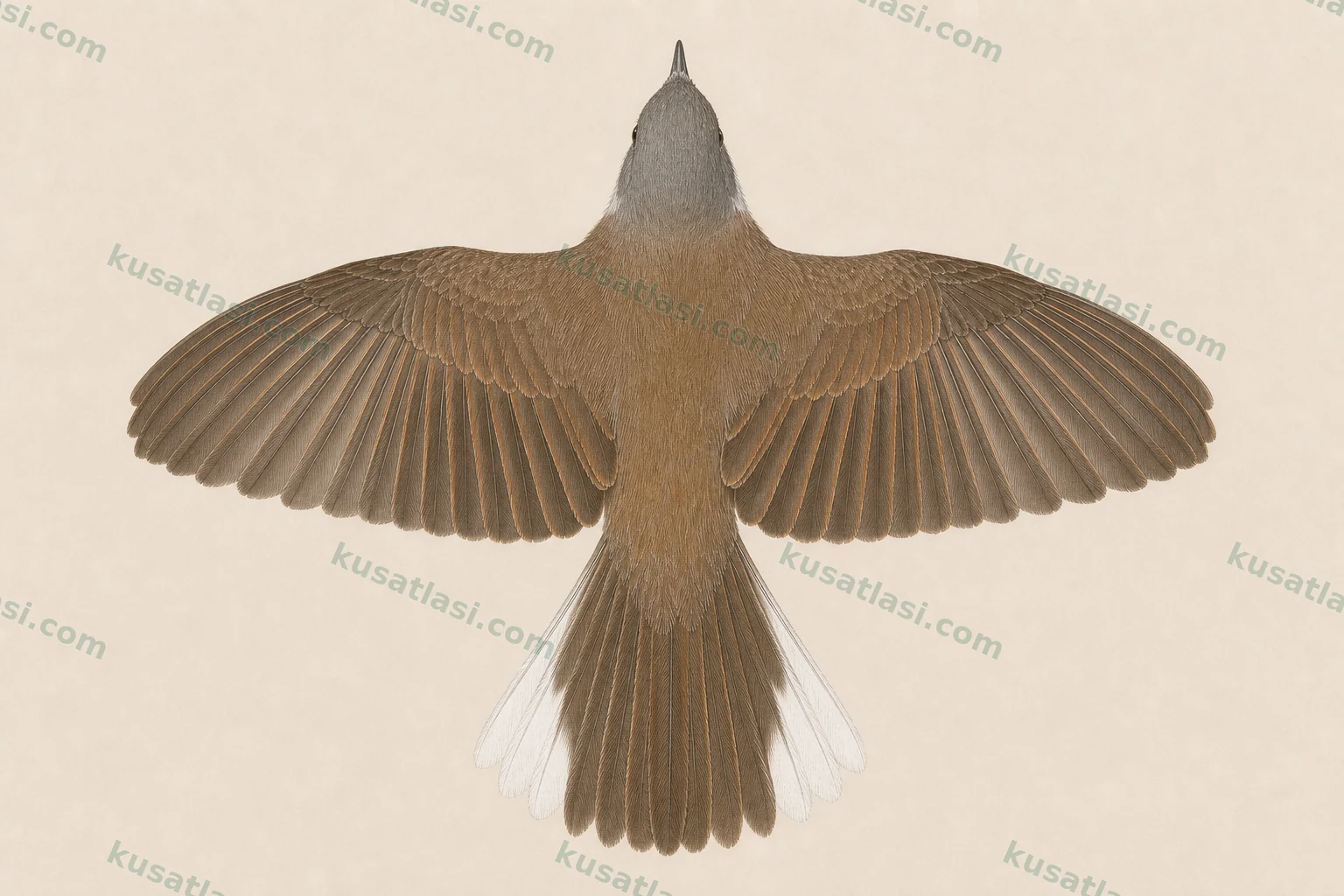
The flight card shows the upper surface. Check the brown back and warm wing edges, then look for white outer tail areas during natural movement. This view does not reveal the throat or underwing. Eastern-looking birds can have more buff than chestnut wing edges, so colour saturation should not be treated as a fixed requirement.
Nesting and Measurements
The open cup is hidden low in dense herbs or shrubs and built from dry plant material with a finer lining. Typically 4–5 eggs are incubated by both parents for about 12 days. Young leave the nest at roughly 12–14 days and still require care. Do not open vegetation to locate the nest.
| Measure | Value | |---|---| | Length | Male: 13–15 cm; Female: 13–15 cm | | Wingspan | Male: 18–23 cm; Female: 18–23 cm | | Mass | Male: 13–18 g; Female: 13–18 g |
Shared ranges do not determine sex. Wingspan is not the length of a single folded wing.
Türkiye
Türkiye lies within the breeding range and migration network. Search suitable scrub for summer visitors and passage birds. A brief spring sighting is not proof of nesting; repeated territorial presence is different from a short stopover.
Approximate Season
April–May is an important spring period, with autumn movement in August–September and some later passage in October. These are broad regional expectations, not identical dates for every Turkish locality. Elevation, weather and coastal or inland position matter. Unusual winter records need particularly careful documentation.
Evidence and Limits
Tracking research published in 2022 followed a small sample wintering in Nigeria; some Russian breeders stopped in Türkiye during autumn. This demonstrates one connection, not a compulsory route for every Turkish bird. The Kızılırmak Delta also has a published research record concerning migration, but a study title alone supplies no current abundance or peak date. Occurrence points on a map should not be joined and presented as a measured individual flight track.
Open Scrub
Look for low bushes mixed with tall herbs and open ground rather than the interior of closed forest. A relatively small patch can provide shelter, foraging surfaces and nesting cover. The arrangement of vegetation matters more than a broad label such as farmland.
Edges and Observation
Rough field margins, bramble patches and open woodland edges are useful places to search. At wetlands, the bird can use the vegetated margin rather than open water. A singing male may appear on a bush top or in a short display flight, while quiet birds remain concealed. Listen first and wait for natural reappearance instead of entering the cover.
Protecting the Low Nest
Low nesting makes the vegetation itself important. Cutting or clearing during breeding can remove shelter and nesting substrate. If an adult alarms or waits with food, retreat and clear its route. Identification does not require finding the nest, and a general habitat note need not expose a sensitive location.
Small Prey
Invertebrates are important during breeding, including caterpillars and spiders. Birds search through low vegetation and may approach the ground. Record a prey item only when visible; a pecking movement alone does not identify what was eaten.
Seasonal Fruit
Small fruits supplement the diet from late summer and during migration. Fruiting scrub can provide both cover and food. Feeding behaviour is not a substitute for identification, however: check the bird first, then describe the plant and observed action separately.
Young and Stopovers
Parents carry prey to chicks and continue caring after they leave the nest. A lone juvenile in cover is not necessarily abandoned. Adults waiting with food should be allowed to return without obstruction. Migrants also need feeding stops, so several days at one site do not automatically indicate breeding. Observe natural feeding rather than attracting birds with bread or other artificial food.
Names Through Time
Sylvia communis, Common Whitethroat and Greater Whitethroat refer to this taxon in different sources. Checking the scientific identity prevents confusion with Lesser Whitethroat. The common name is a memory aid, not a complete diagnosis.
A Brief Aerial Display
A concealed male may suddenly climb in a short singing flight. Watch the bush tops as well as fixed song perches. Singing alone does not prove a nest; document the action separately from the breeding interpretation.
Honest Uncertainty
Spring males and typical females can differ, but intermediate and autumn plumages complicate sexing. Leaving sex unknown is better than assigning every brown-headed bird to female. Species, age and sex can each have different confidence levels.
Connected Landscapes
A small tracking sample showed that birds sharing a Nigerian winter site bred across different parts of Europe. Such research warns against a single universal route. Breeding scrub, stopover habitat and African winter areas all contribute to the annual cycle. Least Concern status does not make local habitat expendable.
Species text and plates come from existing atlas records. Measurements were checked against reliable species sources.
Open bibliography