
Approved field-guide plates
Eastern Orphean Warbler identification views
Swipe left or right through all five plates.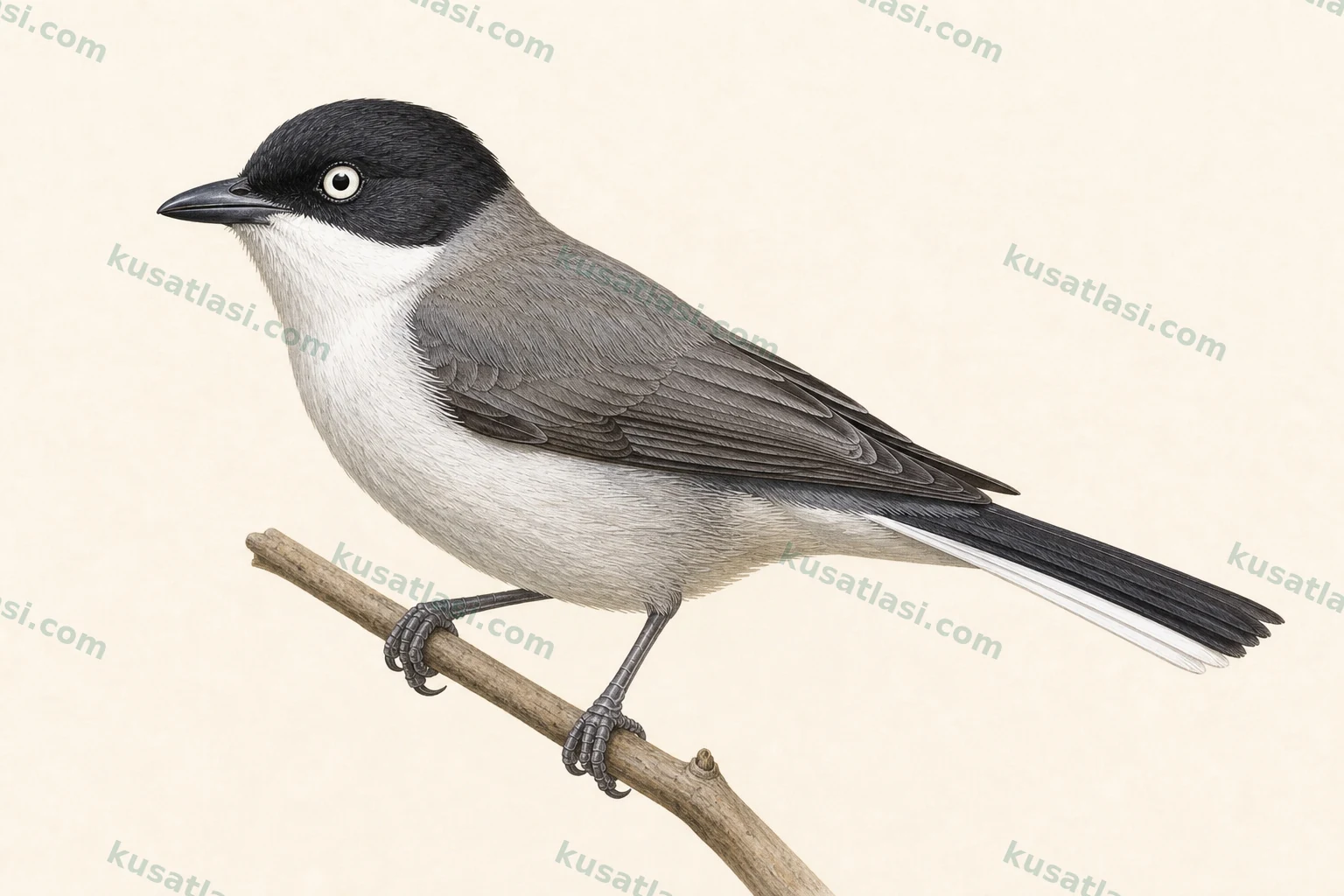
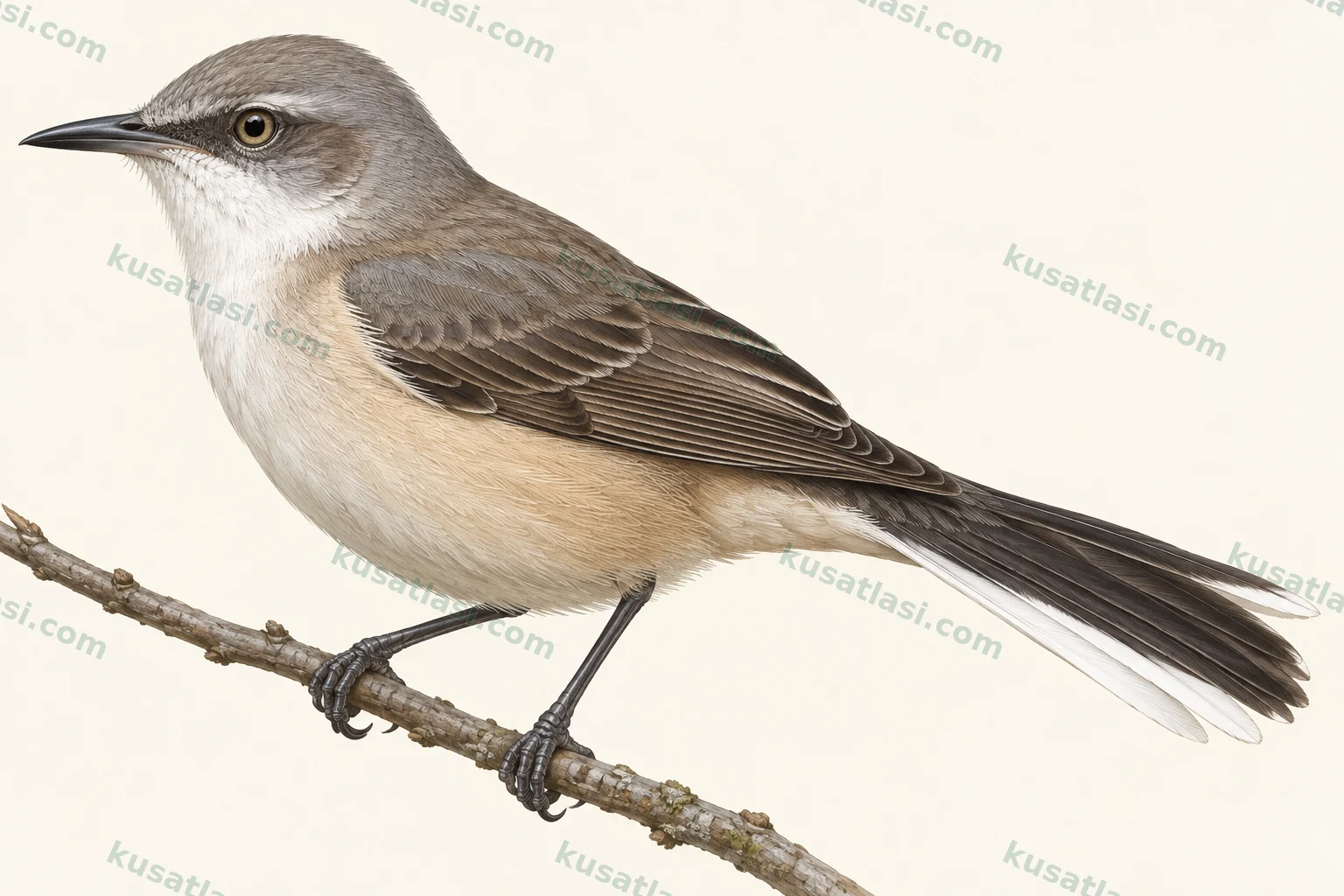
Sylviid Warblers and Allies
Eastern Orphean Warbler
Curruca crassirostris
Ak Gözlü Ötleğen
Combine strong bill, head–throat contrast and grey upperparts; a pale iris is not universal.
- Order
- Passeriformes
- Conservation status
- LC Least Concern
First look in the field
Quick identification
- Strong bill
Combine the strong bill with a full body and grey upperparts.
- Head and throat
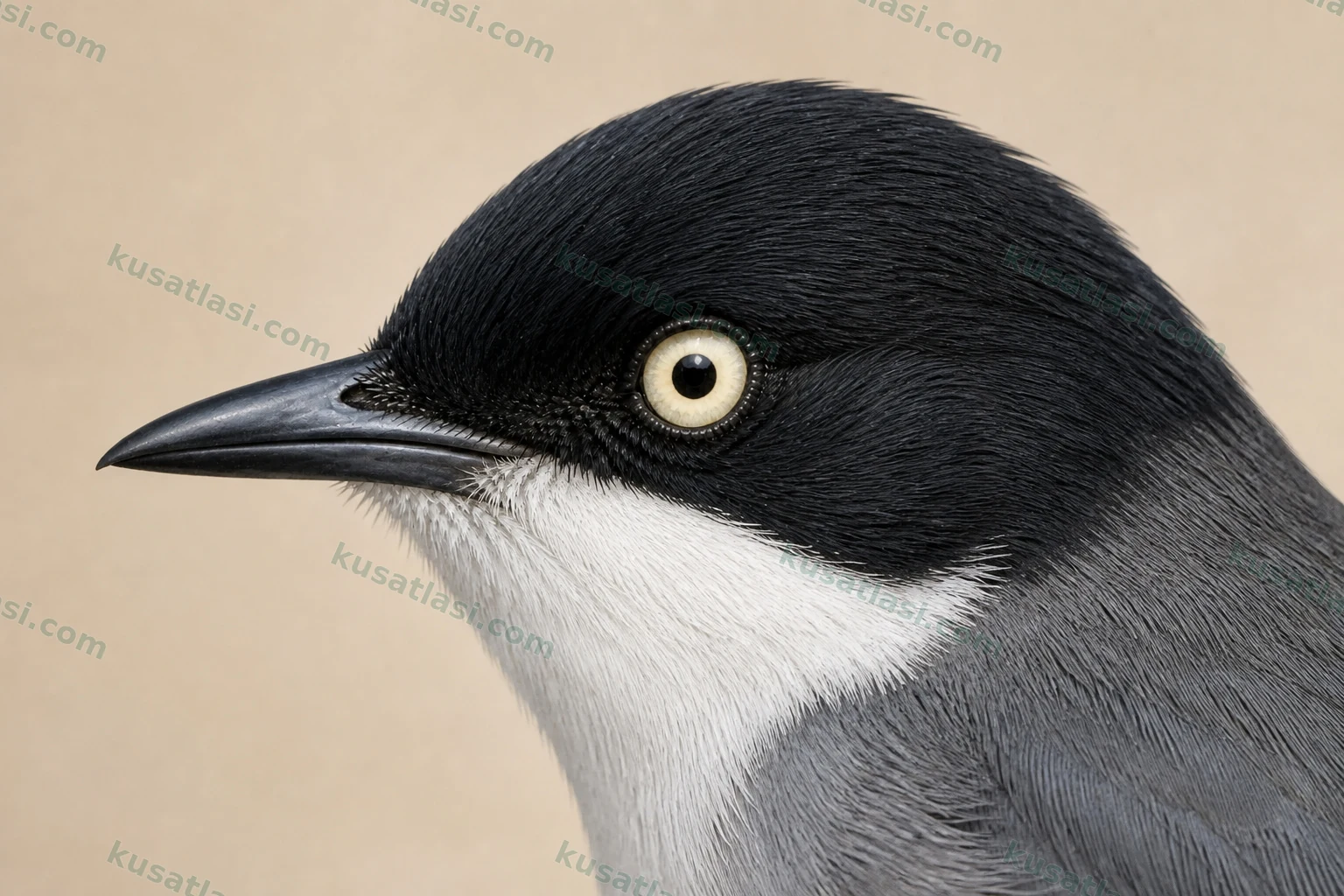
Typical adults show a dark head contrasting with a white throat.
- Iris is not enough
A pale iris is not equally obvious in every age or individual.
Biometrics
Length
- Male
- 15 cm
- Female
- 15 cm
Wingspan
- Male
- 21–23 cm
- Female
- 21–23 cm
Weight
- Male
- 21 g
- Female
- 21 g
Detailed explanations of these measurements are available on our website, on the same species page.
World distribution
Eastern Orphean Warbler
Customize map layers
Observation Sites
Bird Atlas recordsLoading observations…
Monthly record intensity
12 monthsRecord intensity is affected by observation effort.
Rotate the globe and compare the supported layers. Colours show broad range areas, not exact sightings or nests.
- Jan
- Apr
- Jul
- Oct
- Dec
Generalised data and method
Basemap: Natural Earth (public domain).
Bibliography ↗Authentic bird sound and ethical use
Voice and listening
See the detailed species account below.
Spoken guide
Narration has not been recorded; no audio file has been created.
Observe without approaching the nest
Breeding
See the detailed species account below.
Scientific species guide
Detailed account
Structure and Plumage
Eastern Orphean Warbler is a substantial grey-backed warbler with a strong bill and pale underparts. Typical males have a dark head contrasting with the white throat; females look softer and greyer or browner. Combine shape, bill and head pattern instead of relying on a single colour.
Eye, Age and Sex
The pale feature is the iris, not merely a ring of feathers outside the eye. Young birds may be dark-eyed, and dark-eyed eastern adult males have also been documented. Consequently, a dark eye neither excludes the species nor proves that a bird is female. Leave sex uncertain when the available view does not support it.
Flight and Similar Species
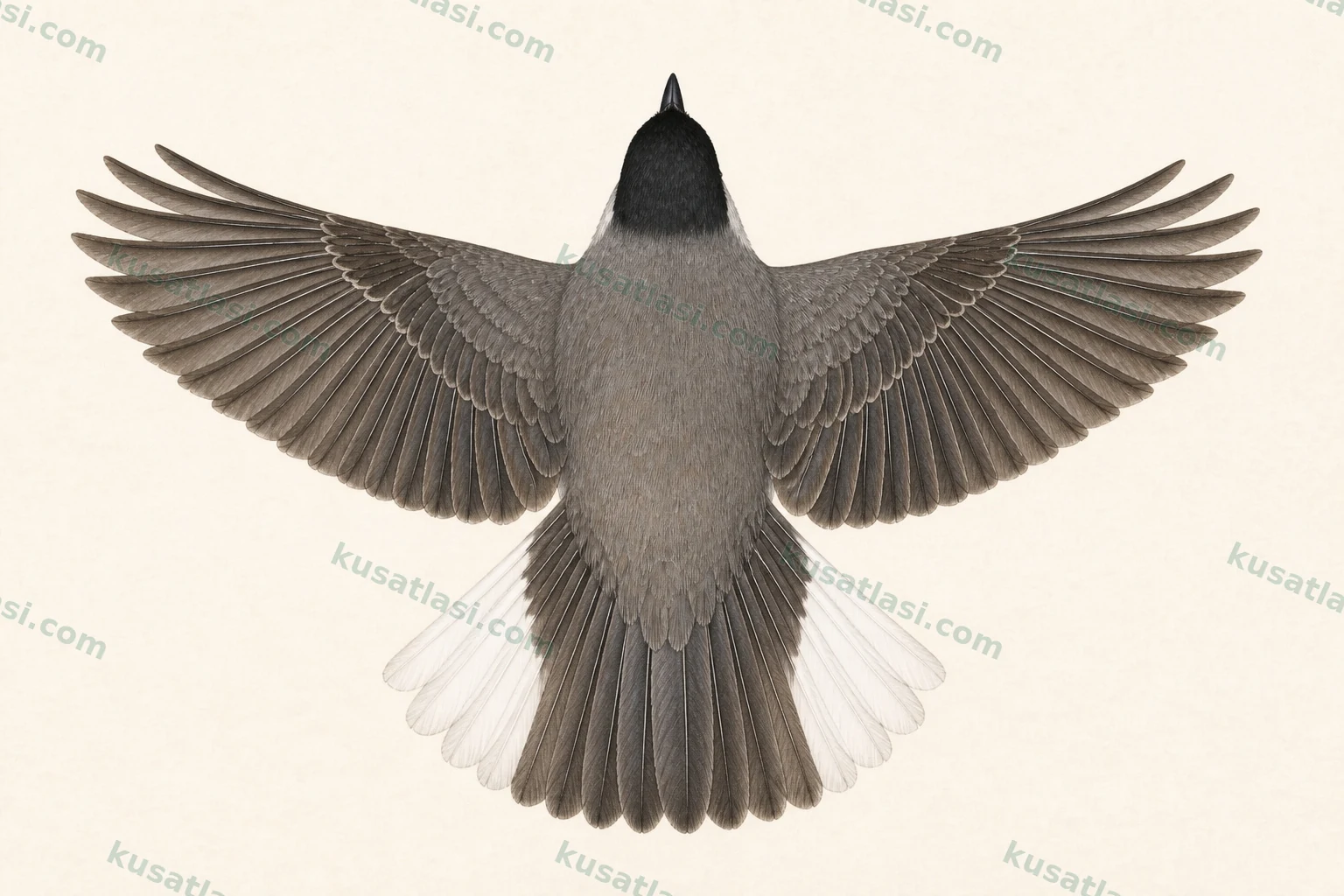
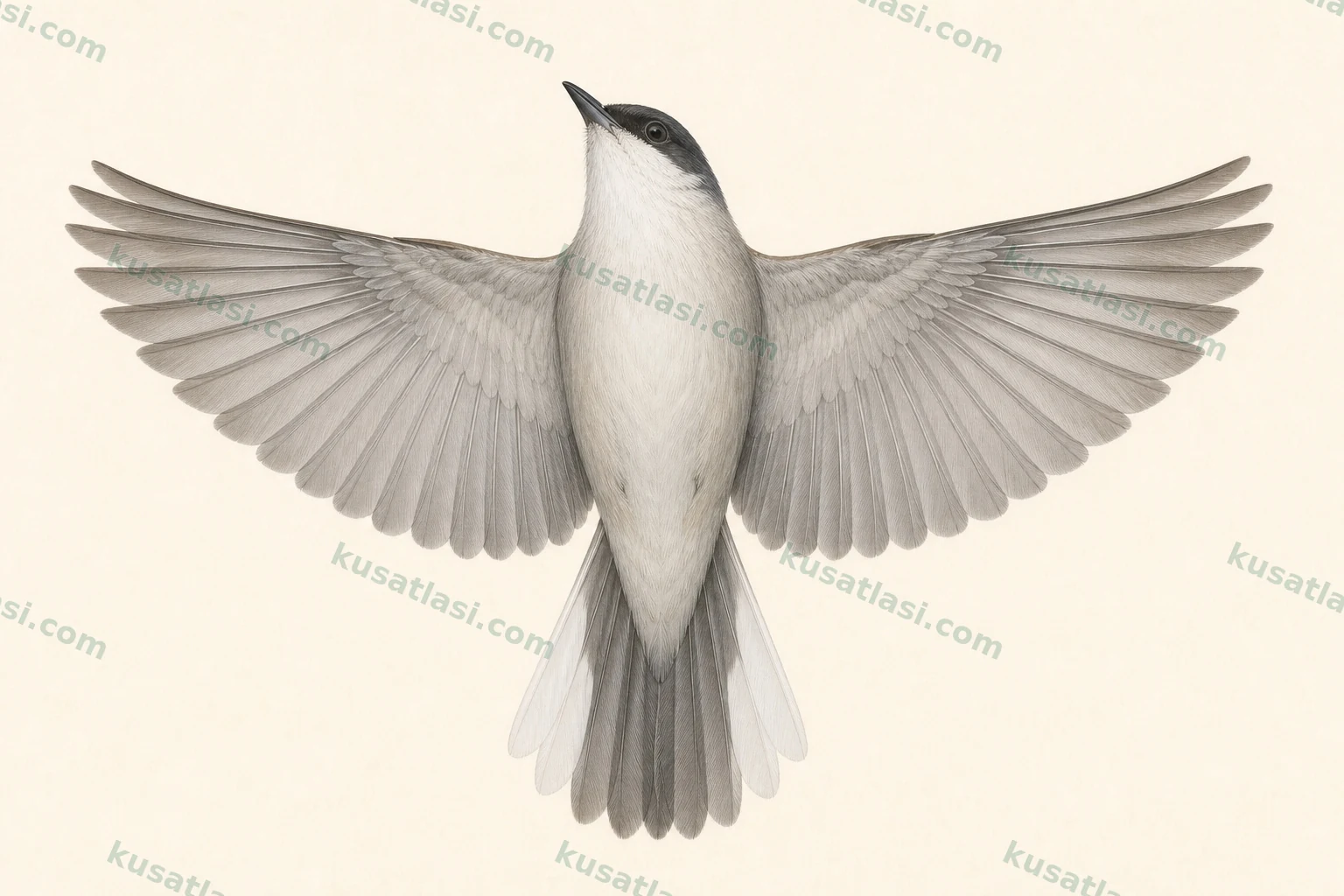
The flight illustration shows the upper surface: grey back and wings, with white outer tail areas. Undertail-covert markings must be assessed from below, not inferred from this dorsal view. Eastern versus Western Orphean identification can require clear photographs of those markings and voice. White tail edges alone are not diagnostic.
Nesting and Measurements
The open cup is concealed in a tree or bush. Regional accounts report clutches of 3–5 or 4–6. A Central Asian account gives 11–12 days of incubation by both parents and about 11 days in the nest; these are regional values, not a verified Turkish nest series.
| Measure | Value | |---|---| | Length | Male: 15–16.5 cm; Female: 15–16.5 cm | | Wingspan | Male: —; Female: — | | Weight | Male: 15–25 g; Female: 15–25 g |
Length and mass are shared regional species ranges from Mahmiyat, not independently measured sex-specific ranges. No sufficiently verified wingspan is supplied; wing length is a different measurement.
Turkey and the Breeding Range
Turkey lies within the breeding range extending from southeastern Europe into western and central Asia. Search suitable Turkish habitats during the summer visitor and passage periods. National occurrence does not imply equal abundance in every province or every patch of apparently suitable scrub.
Seasonal Context
Spring arrival, summer territories and young, and autumn movement form the broad annual cycle. The calendar is approximate guidance rather than measured provincial arrival dates. Timing can vary with locality and year. A single observation cannot establish season-long residence.
Beyond the Breeding Season
The wider winter range includes northeastern Africa, southern Arabia and parts of southern Asia. It is not one mandatory destination for all birds seen in Turkey. Map points show encounters, not tracked routes; record density is affected by observer effort. Keep dates and habitat notes, and do not turn an isolated record into nesting proof.
Open Woodland
Look in open tree cover with a shrub layer, not only in low scrub. A bird moving inside foliage can remain unseen even nearby. Watch quietly from an edge and allow natural movement to reveal it rather than pushing into cover.
Orchards and Edges
Regional accounts include oak woodland, orchards and olive-growing landscapes. The surrounding vegetation and available cover matter as well as the tree name. An intensively cleared plantation and an orchard with natural margins need not offer equivalent conditions.
Passage and Observation
Outside breeding, open thorn scrub and semi-arid habitats are also used. A stopover bush should not automatically be described as breeding habitat. Note vegetation and behaviour separately. Scan exposed branches for singing birds, but retreat when an adult alarms or waits with food. Preserving nesting cover is more important than obtaining a closer photograph.
Invertebrates
The species searches vegetation for small animal prey, including insects and larvae. A stout bill should not be interpreted as evidence of seed-cracking. If a prey item cannot be seen, record the feeding action without inventing an identification.
Fruit
Fruit is also part of the natural diet. A photographed Kuwait record documents feeding on Arabian Boxthorn berries, and a migration study measured fruit consumption in this species. Neither finding establishes a fixed dietary proportion or proves that the same plant is its principal food in Turkey.
Watching Feeding Birds
Vegetation can provide food during stopovers as well as shelter. Several days at a feeding site do not necessarily indicate breeding. Both parents feed young; adults waiting with food need an unobstructed return route. Observe natural feeding instead of attracting birds with artificial food, and distinguish observed prey from assumptions.
A Name Is Not a Diagnosis
The pale eye is memorable, but it is not universal across ages and regional forms. Separating iris colour from a feather eyering helps avoid a common observational mistake. Species identification and sex identification can have different confidence levels.
Older Names Need Context
Older Orphean Warbler accounts may combine birds now treated as Eastern and Western Orphean Warblers. Check geography before transferring a measurement or nesting value from an old source. Scientific names and the population studied matter more than a familiar common name.
Small Details Matter
Undertail markings may be more useful for a difficult comparison than a large head portrait. Obtain different views only through natural movements; do not disturb the bird to expose a feature. The documented Kuwait fruit record also illustrates the varied landscapes used over a yearly cycle. Least Concern status does not make local habitat expendable.
Species text and plates come from existing atlas records. Measurements were checked against reliable species sources.
Open bibliography