
Approved field-guide plates
White-winged Tern identification views
Swipe left or right through all five plates.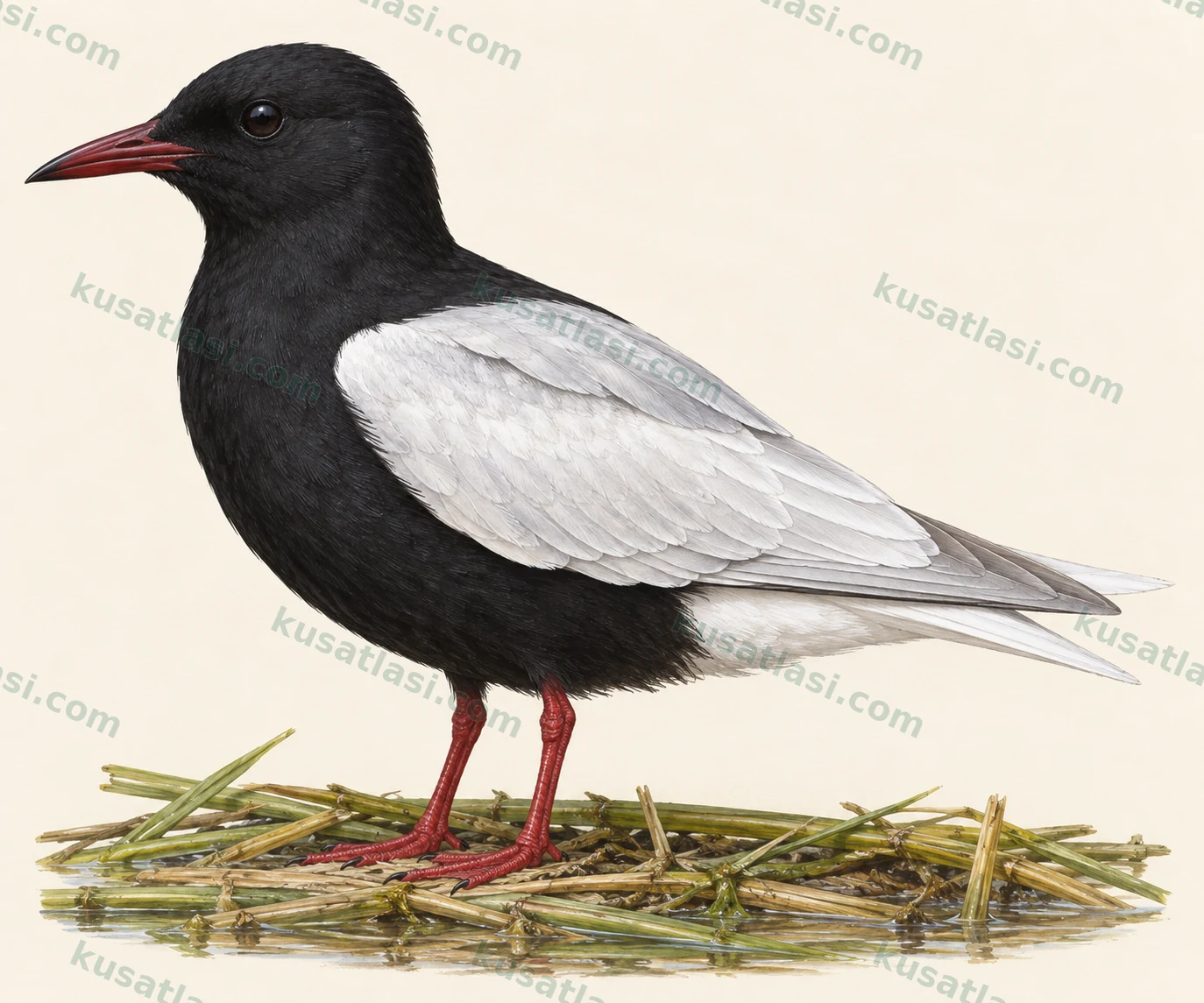
Gulls, Terns, and Skimmers
White-winged Tern
Chlidonias leucopterus
Ak Kanatlı Sumru
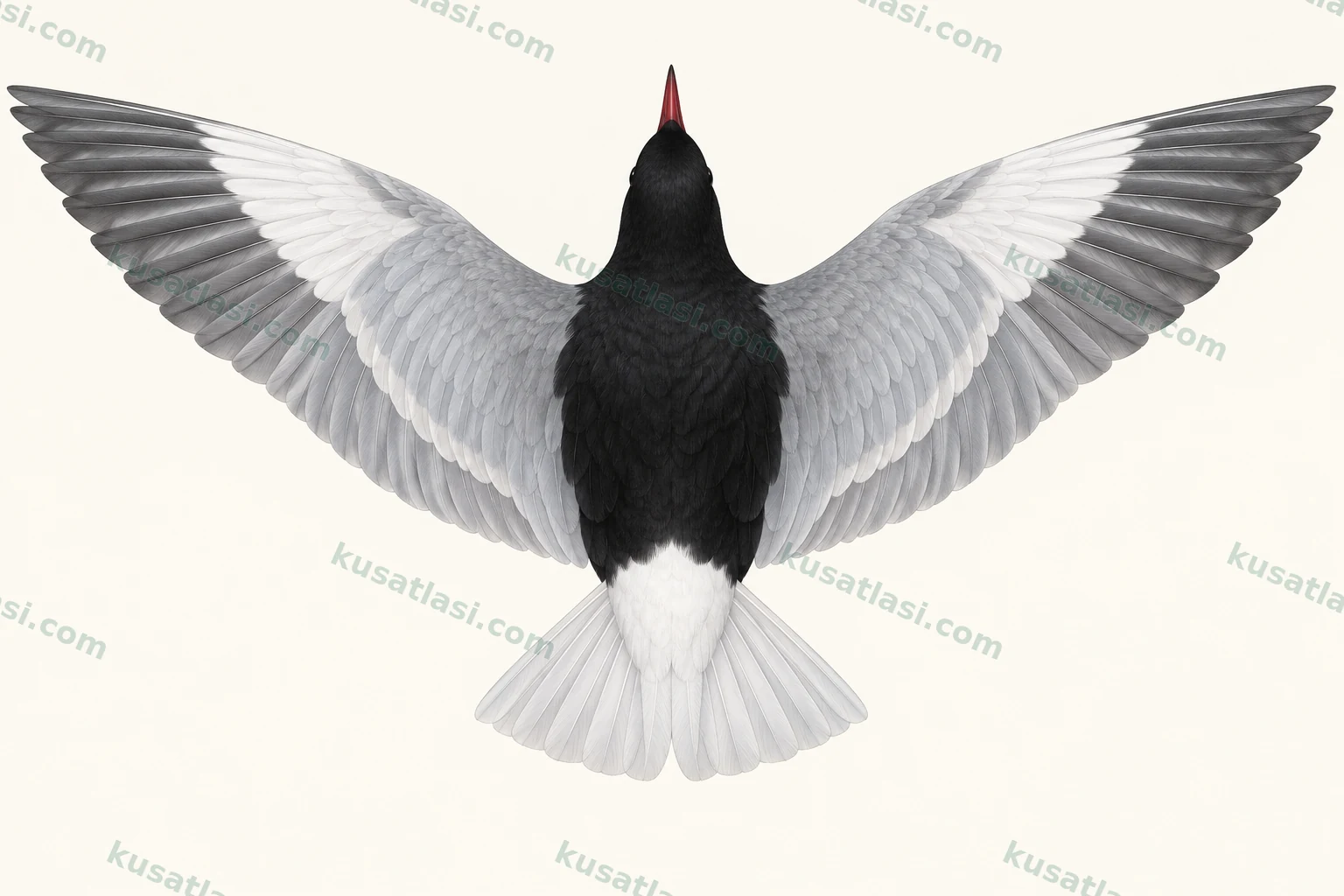
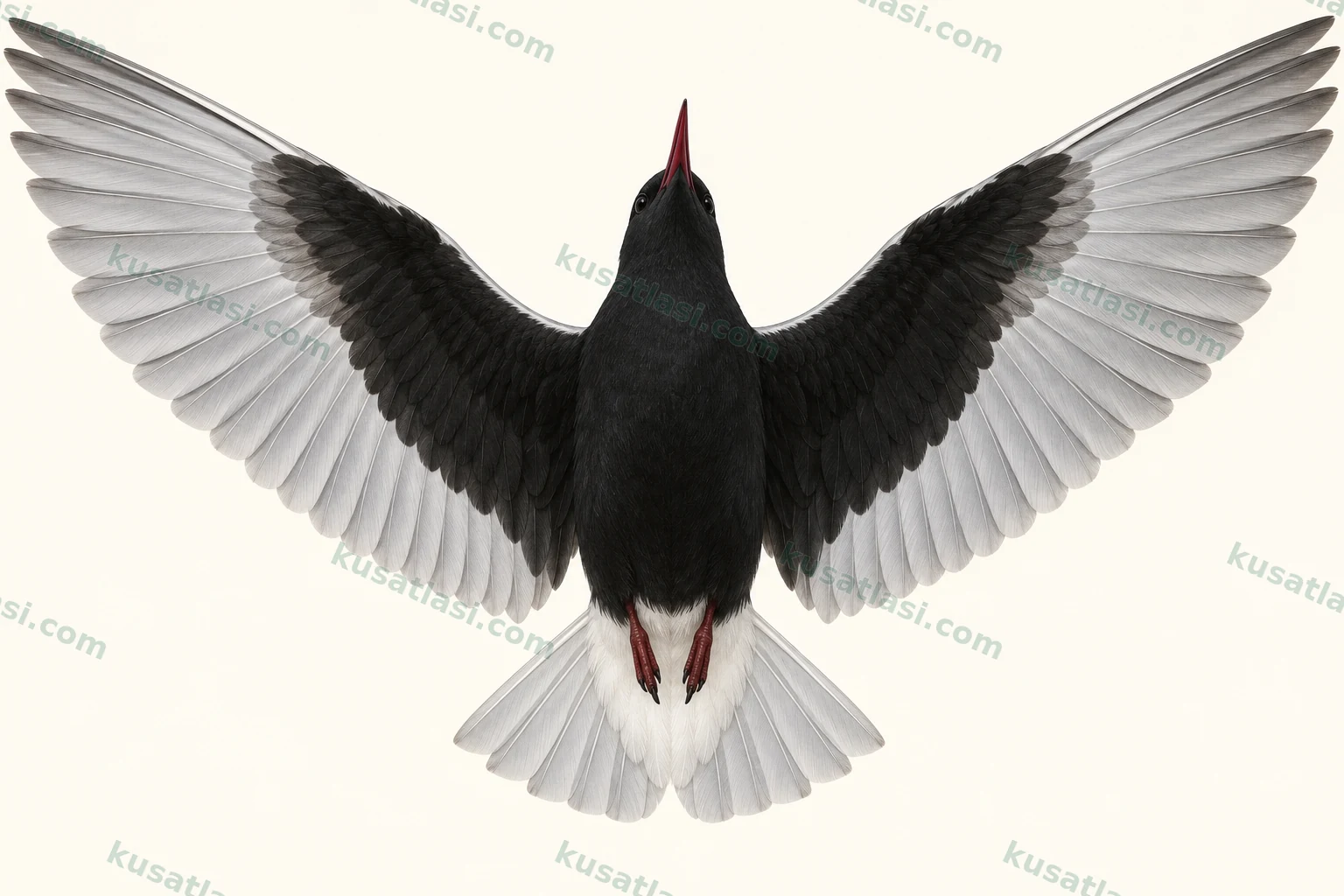
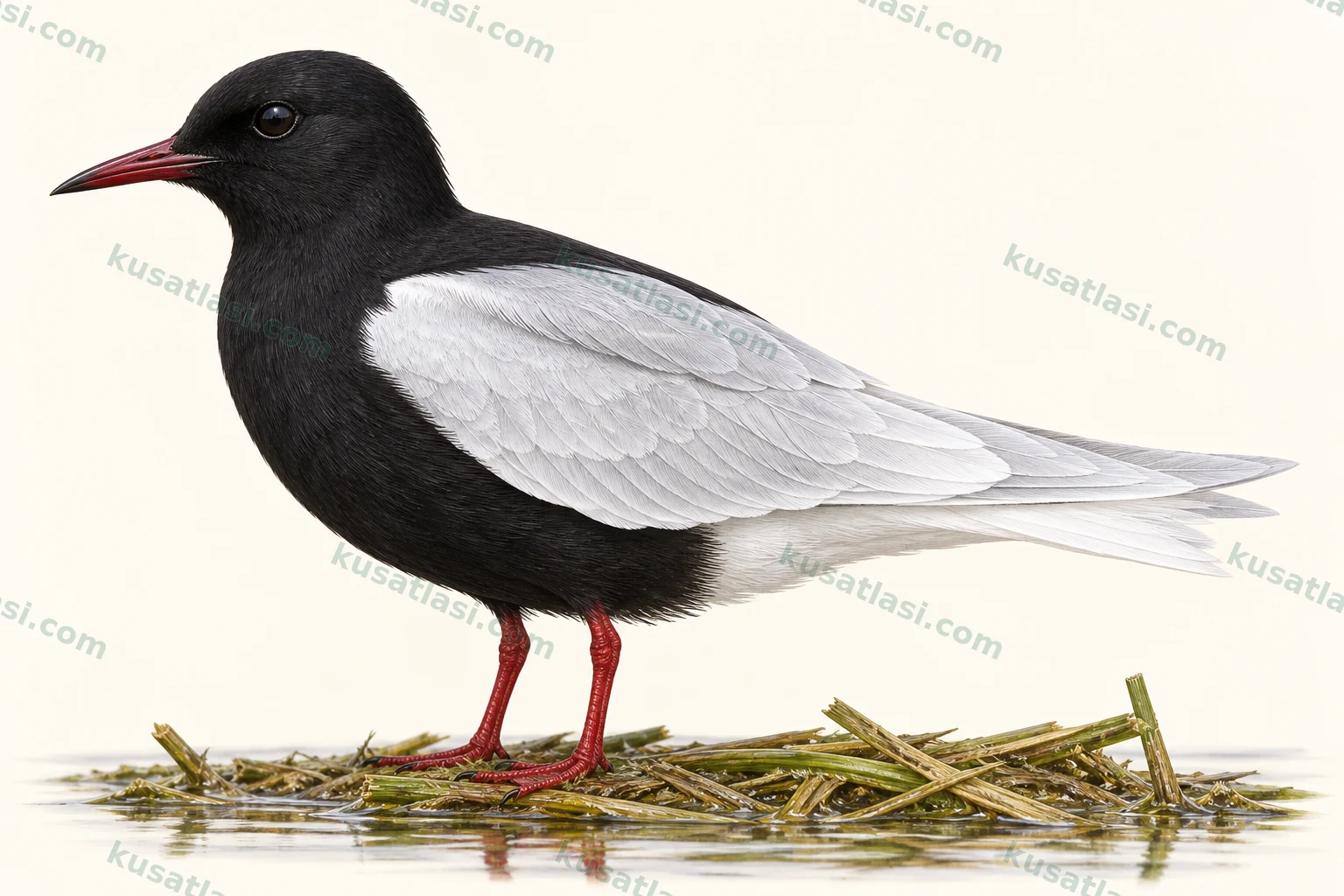
Assess seasonal plumage; compare pale upperwing, short tail and black breeding underwing coverts from the correct angles.
- Order
- Charadriiformes
- Conservation status
- LC Least Concern
First look in the field
Quick identification
- Breeding plumage
Breeding adults contrast a black body with pale upperwings.
- Underwing
Check the black underwing coverts in a suitable view and light.
- Plumage changes
Young and non-breeding birds lack the adult black-and-white pattern.
Biometrics
Length
- Male
- 23–27 cm
- Female
- 23–27 cm
Wingspan
- Male
- 63–67 cm
- Female
- 63–67 cm
Weight
- Male
- 54–66 g
- Female
- 54–66 g
Detailed explanations of these measurements are available on our website, on the same species page.
World distribution
White-winged Tern
Customize map layers
Observation Sites
Bird Atlas recordsLoading observations…
Monthly record intensity
12 monthsRecord intensity is affected by observation effort.
Rotate the globe and compare the supported layers. Colours show broad range areas, not exact sightings or nests.
- Jan
- Apr
- Jul
- Oct
- Dec
Generalised data and method
Basemap: Natural Earth (public domain).
Bibliography ↗Authentic bird sound and ethical use
Voice and listening
See the detailed species account below.
Spoken guide
Narration has not been recorded; no audio file has been created.
Observe without approaching the nest
Breeding
Nests may rest on tussocks or floating vegetation. Floating does not mean immune to flooding or waves. Protecting water conditions and plant cover together matters. An unidentified clump should not be assumed to contain a nest.
Scientific species guide
Detailed account
Structure and Breeding Plumage
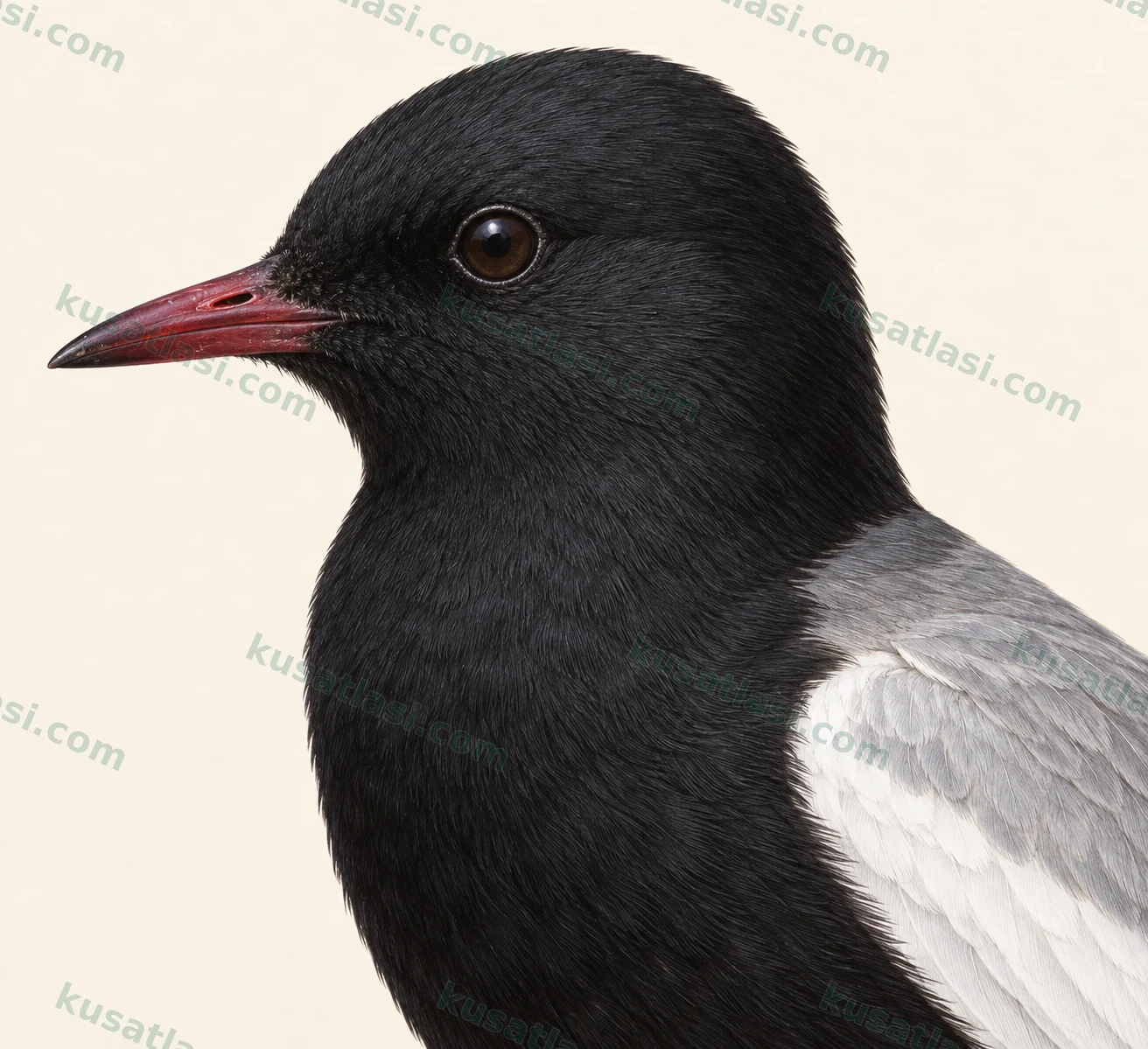
White-winged Tern is a small marsh tern with buoyant flight, a relatively short bill and a short, shallowly forked tail. Breeding adults combine black head and body with pale upperwings and a white rump and tail. The flight feathers are grey rather than uniformly paper-white.
Male, Female and Age
Both sexes share the same basic seasonal plumage. Do not label every black bird male and every pale bird female. Juveniles show a dark saddle against paler wings and rump; non-breeding adults become predominantly white and grey with a dark patch behind the eye. Transitional plumages require several features, not a calendar-based guess.
Wing Surfaces
Pale upperwings and black breeding underwing coverts describe different surfaces. The flight card presents a side angle showing the upperwing; assess the underside separately when a bird banks naturally. Hidden markings cannot be inferred from the illustration.
Nest and Development
The plant platform is built on a vegetation tussock or floating plants in shallow wetlands. Usually three eggs are incubated for about 20 days. Both parents participate. Chicks may leave the nest well before they can fly, becoming flight-capable at roughly 24 days.
| Measure | Value | |---|---| | Length | Male: 20–23 cm; Female: 20–23 cm | | Wingspan | Male: 63–67 cm; Female: 63–67 cm | | Weight | Male: 60–75 g; Female: 50–65 g |
MME provides shared length and span ranges but separate mass ranges. Overlapping weights are not a stand-alone field sexing method.
Turkey
The species is especially associated with passage through Turkish wetlands, with local breeding reported in the east. A spring feeding flock does not automatically establish a colony. Keep occurrence and breeding evidence separate in your notes.
Annual Movements
The wider breeding range extends across Eurasia; wintering areas include Africa, Southeast Asia and Australasia. Birds seen in Turkey need not all follow one route. The calendar is an approximate seasonal guide rather than a set of fixed arrival dates for every lake.
Unexpected Records
A recent study includes a February record from Gaziantep in near-breeding plumage. Winter should therefore not be treated as absolute absence, but one record does not demonstrate widespread Turkish wintering or winter breeding. Preserve dated evidence. Map points represent encounters, while repeated passes by a feeding flock can complicate counts.
Water and Vegetation
Search the meeting of open water and aquatic plants: marshes, vegetated lake edges and flooded grassland can provide feeding or nesting habitat. Not every part of a lake offers the same conditions. Scan shallow margins and gaps between plant patches.
A Vulnerable Nest Base
Nests may rest on tussocks or floating vegetation. Floating does not mean immune to flooding or waves. Protecting water conditions and plant cover together matters. An unidentified clump should not be assumed to contain a nest.
Passage and Watching
Ponds, slow river sections and coastal wetlands can also be used in migration. Resting sites are not necessarily colonies. Watch from the shore and let birds bank to reveal both wing surfaces; do not drive a boat through a flock or walk into nesting vegetation. Increase distance from alarmed adults or birds repeatedly carrying food to one patch.
More Than Fish
Aquatic insects and other small invertebrates are important food. This is not simply a miniature fish-eating sea tern. Flying prey can be caught in the air, and food can be picked from the water surface. A visible bill movement does not identify the prey item.
Feeding Flight
Birds work back and forth over water, sometimes pausing or dropping towards a target. Most feeding is at or near the surface, although occasional plunging means that “never dives” is too absolute. Small fish and other small aquatic animals can also be taken.
Young and Stopovers
Both parents feed young. Repeated returns to a plant patch may indicate care, but do not approach to force confirmation. A feeding stop can also be important to migrants. Observe naturally rather than baiting birds, and avoid repeatedly flushing a flock. Document what you actually see, not a presumed year-round dietary percentage.
A Name With Two Surfaces
The name White-winged does not mean that every part of the underside is white. The dark breeding underwing coverts contrast with pale flight feathers. Stating the viewing angle is therefore part of explaining an identification feature accurately.
Pale Birds in Summer
Age and moult can complicate the seasonal appearance. Do not reject a pale bird solely because the date is in summer, or turn plumage differences into male–female differences. Species, age and breeding status are distinct questions.
Leaving Before Flying
Chicks can move into surrounding vegetation before attaining flight. A temporarily unattended youngster need not be abandoned. Observe from a distance and leave its shelter intact.
Changing Water
Polish colony studies documented nest vulnerability to water and weather. Their percentages should not be transferred directly to Turkey, but the lesson is relevant: wetland condition includes how water levels change, not merely whether water is present on one visit.
Species text and plates come from existing atlas records. Measurements were checked against reliable species sources.
Open bibliography