
Approved field-guide plates
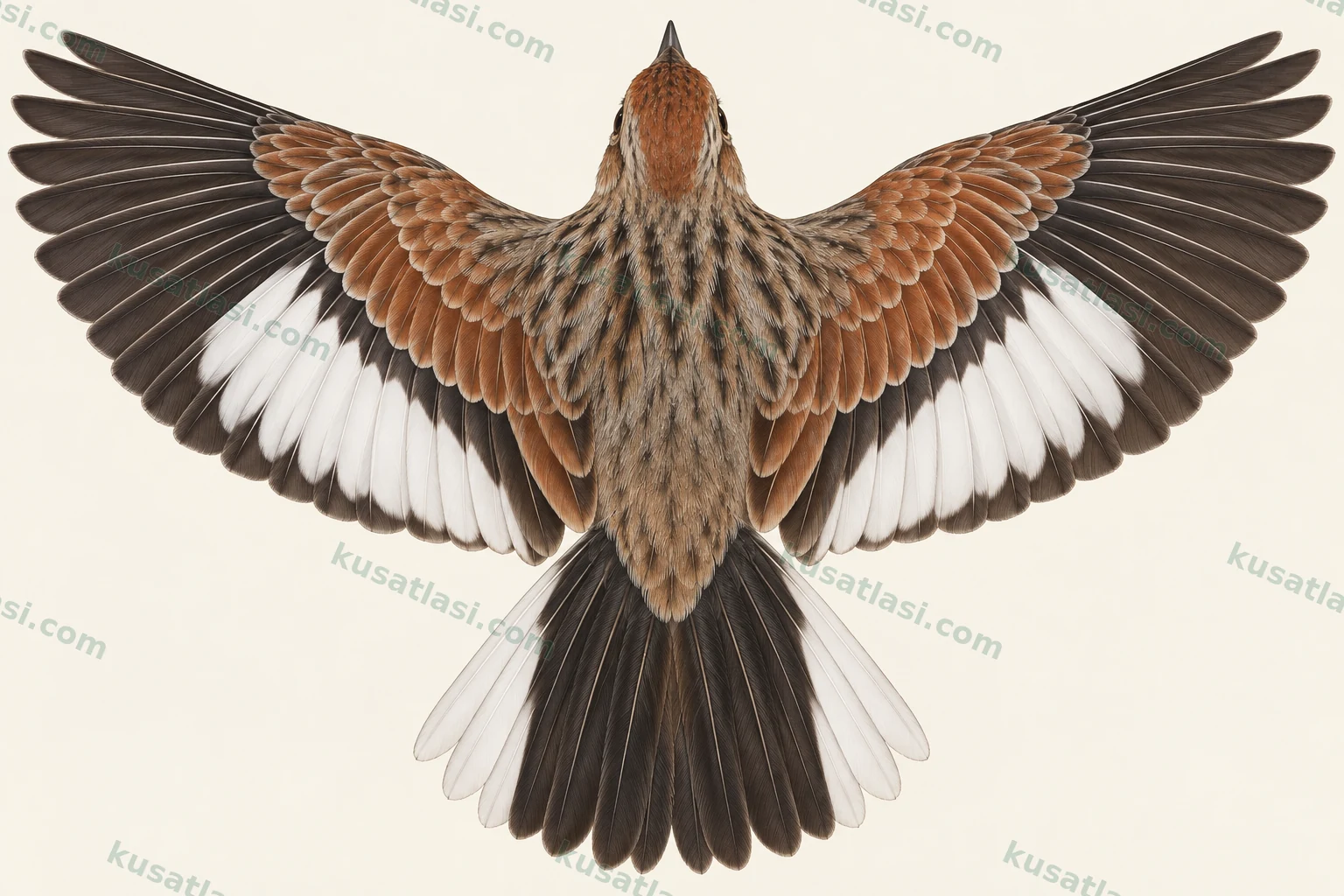
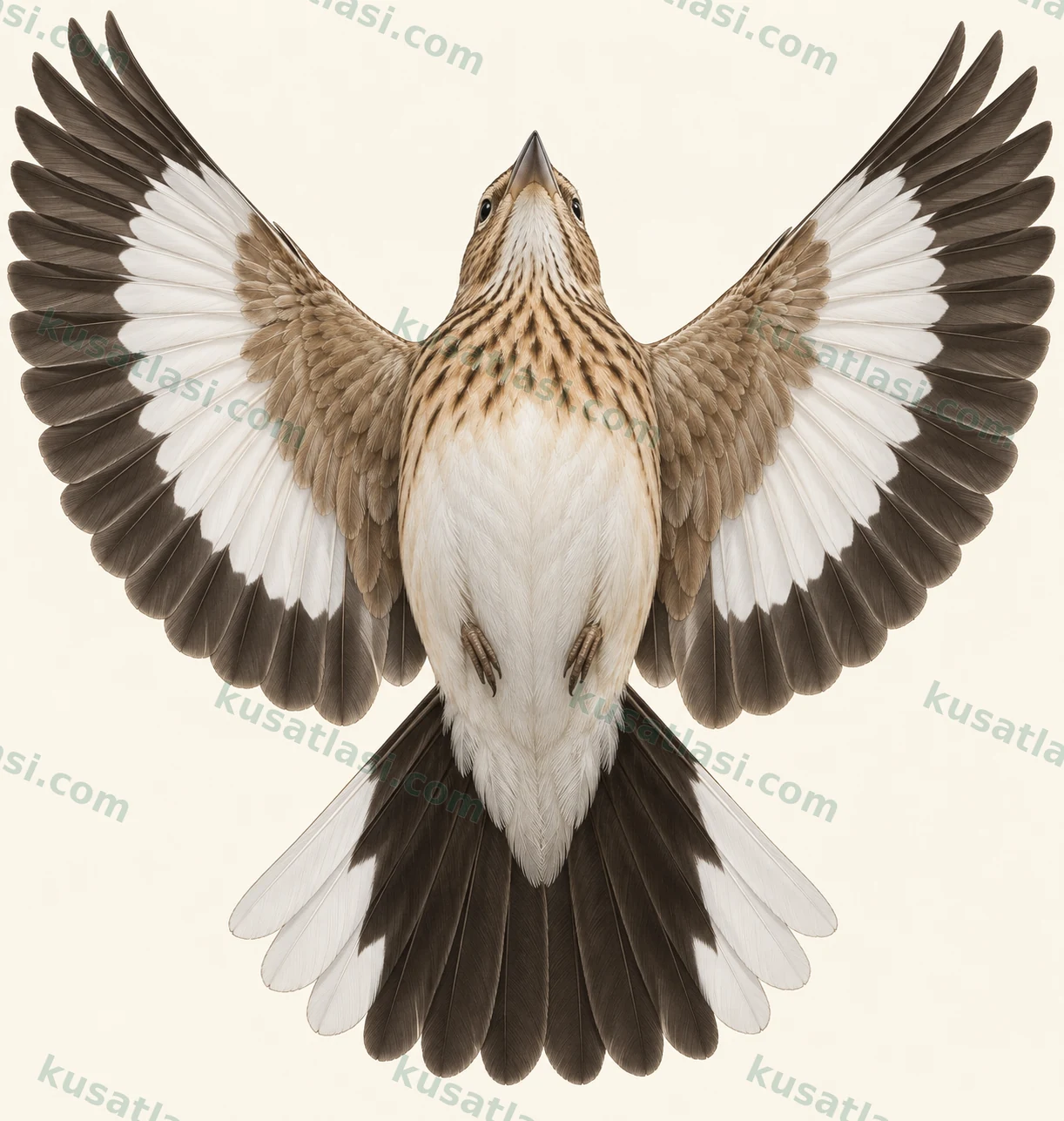
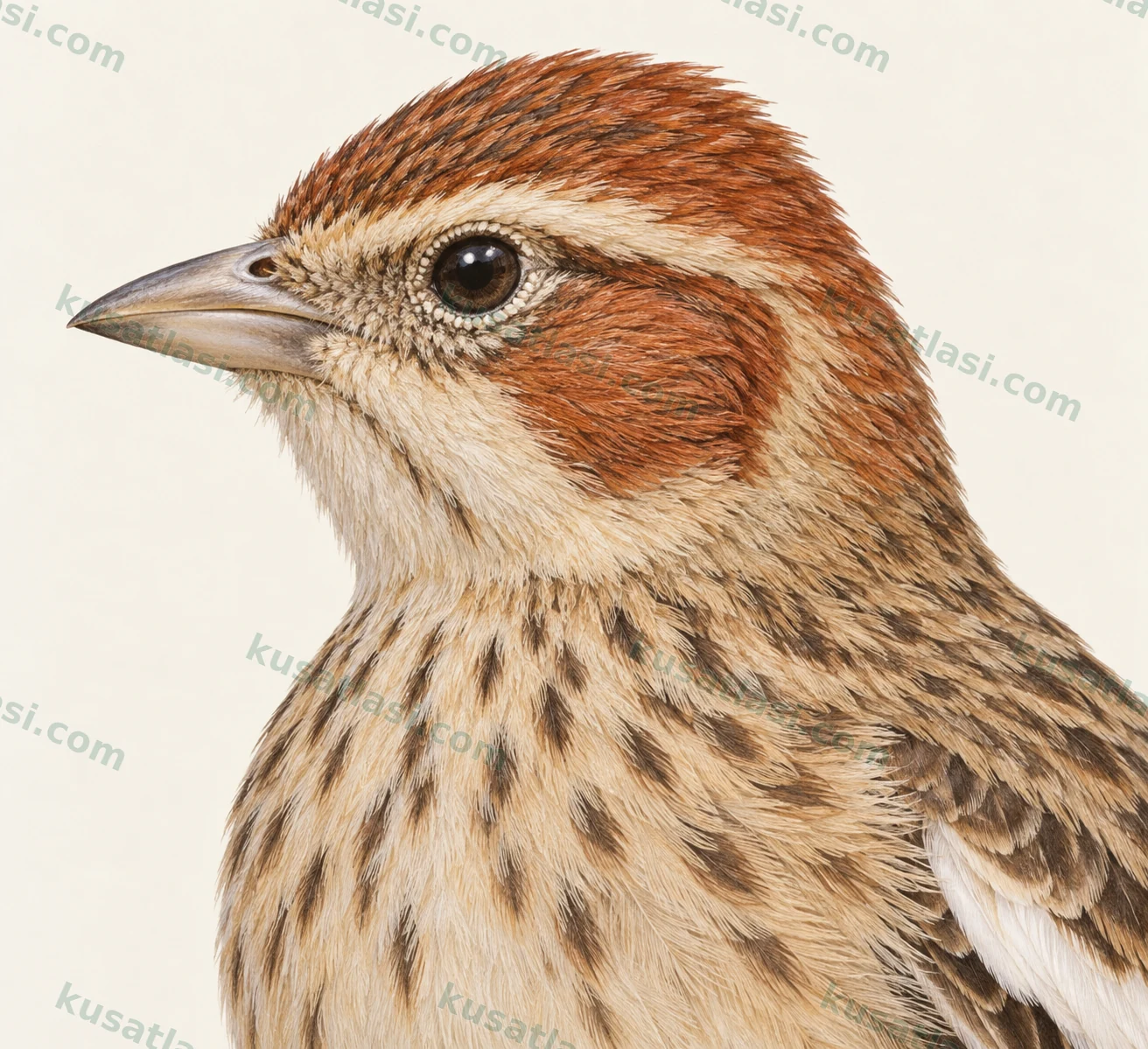
White-winged Lark identification views
Swipe left or right through all five plates.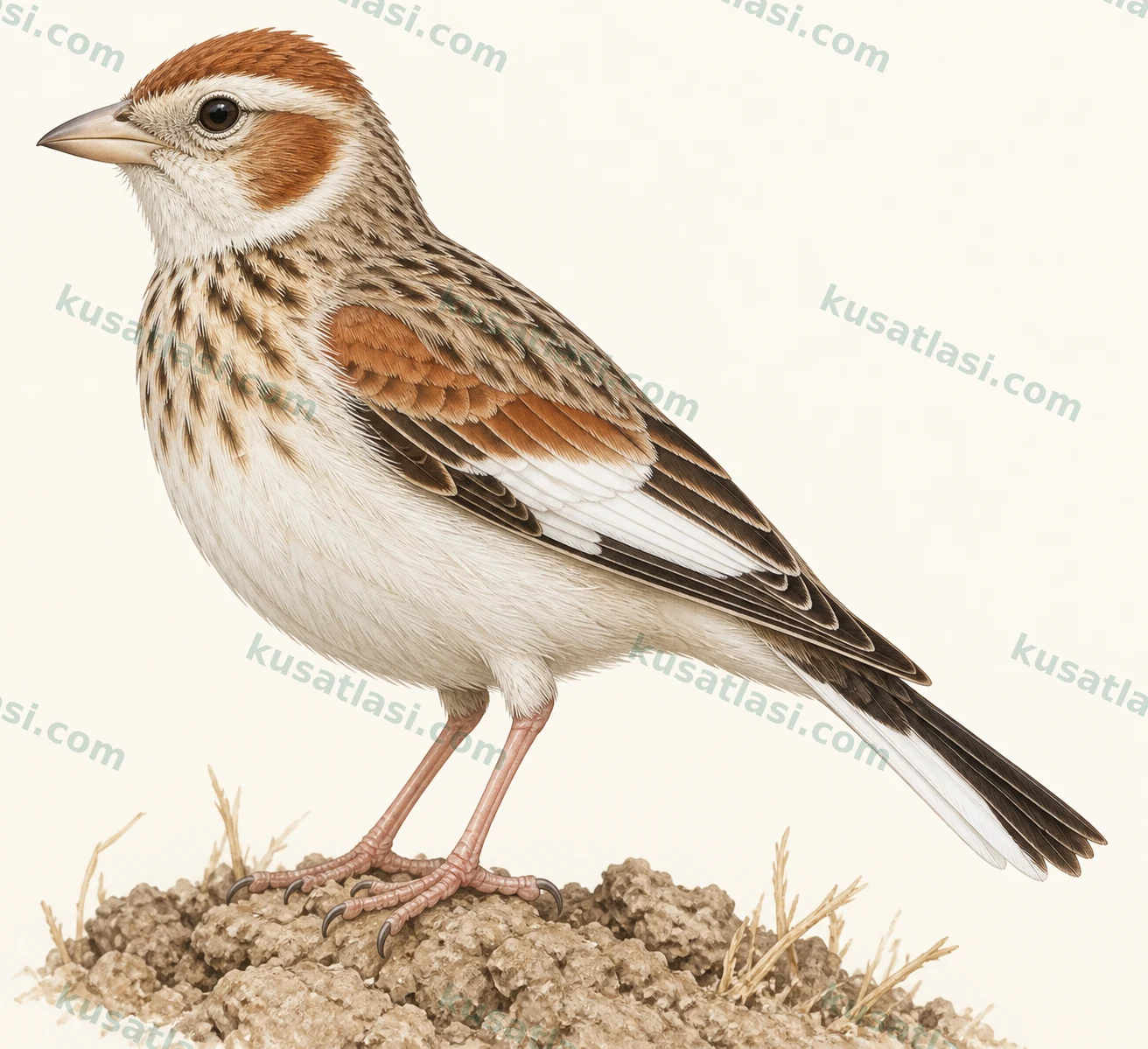
Larks
White-winged Lark
Alauda leucoptera
Ak Kanatlı Toygar
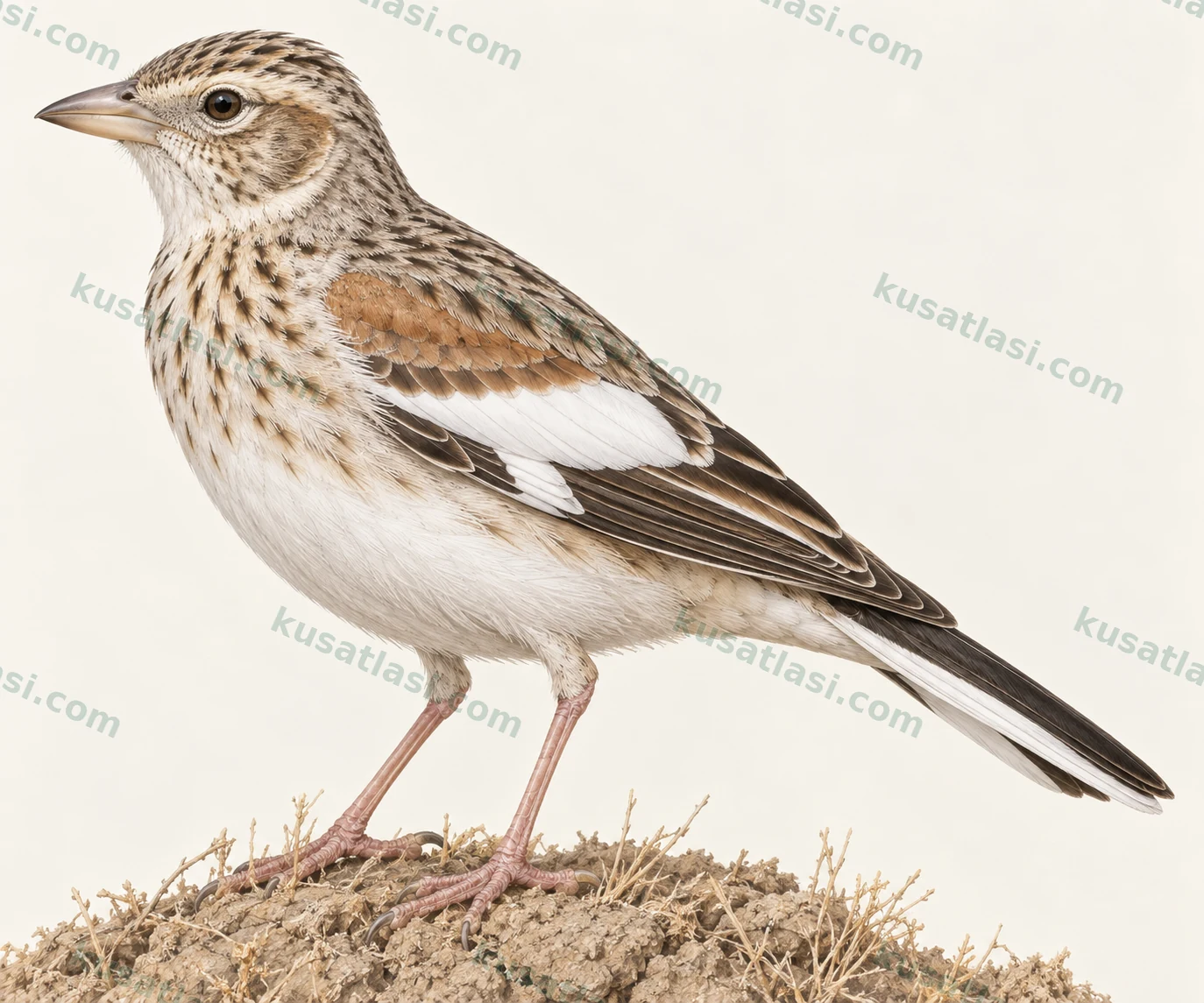
Combine chestnut shoulders, male head pattern and broad white inner flight-feather tips; a Turkish rarity.
- Order
- Passeriformes
- Conservation status
- LC Least Concern
First look in the field
Quick identification
- Rufous shoulder
Look for warm rufous shoulders on the streaked brown back.
- White wing
Broad white tips to inner flight feathers show well in flight.
- Head pattern
The male's rufous head pattern is weaker in females and young birds.
Biometrics
Length
- Male
- 18 cm
- Female
- 18 cm
Wingspan
- Male
- 35 cm
- Female
- 35 cm
Weight
- Male
- 36–52 g
- Female
- 36–52 g
Detailed explanations of these measurements are available on our website, on the same species page.
World distribution
White-winged Lark
Customize map layers
Observation Sites
Bird Atlas recordsLoading observations…
Monthly record intensity
12 monthsRecord intensity is affected by observation effort.
Rotate the globe and compare the supported layers. Colours show broad range areas, not exact sightings or nests.
- Jan
- Apr
- Jul
- Oct
- Dec
Generalised data and method
Basemap: Natural Earth (public domain).
Bibliography ↗Authentic bird sound and ethical use
Voice and listening
See the detailed species account below.
Spoken guide
Narration has not been recorded; no audio file has been created.
Observe without approaching the nest
Breeding
In the core breeding range the nest occupies a shallow ground depression, with nearby vegetation providing shelter. Suitable-looking Turkish habitat does not itself establish breeding. Avoid searching through tussocks and retreat from alarm-calling adults or concealed young.
Scientific species guide
Detailed account
Recognition
White-winged Lark combines a streaked brown back, pale underparts and warm chestnut shoulders. In Turkey it requires careful documentation as a rarity. Look for several characters together rather than identifying any brown bird with a pale wing stripe as this species. Folded feathers can partly conceal the diagnostic white area.
Sex and Age
Adult males have a more conspicuously chestnut crown and ear region; females are duller and more streaked. Fresh autumn feather fringes can obscure warm colours, while juveniles are more mottled. A pale head is therefore not a sufficient female character. Compare head, shoulder and wing under similar lighting.
Wing Pattern
The broad white region involves the tips of the inner flight feathers, reaching the trailing edge. A white bar across the middle of an otherwise dark wing is not equivalent. Distinguish the upperwing's chestnut area from the paler underside and wait for natural flight rather than flushing the bird.
Breeding and Measurements
Kazakhstan accounts describe a grass-lined ground cup, usually 4–6 eggs and about 12 days of incubation, mainly by the female. Male incubation assistance is uncertain; both parents feed young. This is not evidence of regular Turkish breeding. No verified fledging-age figure is supplied here.
| Measure | Value | |---|---| | Length | Male: 17–21 cm; Female: 17–21 cm | | Wingspan | Male: 27–37 cm; Female: 27–37 cm | | Mass | Male: 36–53 g; Female: 36–53 g |
These are shared species ranges, not separate sex-specific datasets. They should not be used to estimate the sex of a distant bird.
Turkish Status
The Turkish records committee lists White-winged Lark as a rarity. It is not presented here as a regular nationwide summer visitor or dependable winter bird. Record the date, habitat, accompanying species and diagnostic views for any possible sighting.
Core Range
Its main range lies in the steppe belt of Russia and Kazakhstan. Some populations move south outside breeding, while breeding and winter ranges overlap in places. Scattered Turkish records do not establish a compulsory migration corridor.
Calendar Limits
A reliable month-by-month Turkish arrival, breeding and departure sequence was not verified. Neutral calendar entries therefore indicate insufficient seasonal evidence, not certain absence. Do not transfer a Kazakhstan arrival date into a Turkish calendar.
Evidence
Keep perched head-and-shoulder views and natural flight sequences. Map dots are independent observations, not necessarily a tracked individual's journey. An unresolved identification should remain provisional rather than becoming a confident record through repetition.
Open Steppe
Low vegetation, open ground and broad sightlines characterize the main habitat. Woodland and dense scrub are not the principal setting. Consider vegetation height and ground structure rather than merely the brown colour of a landscape.
Farmland
Fallow land, stubbles and tracks may be used, especially outside breeding. Scan flocks from the field edge or a stationary vehicle without driving into them. A mixed gathering must be checked bird by bird rather than treated as one species.
Nest Cover
In the core breeding range the nest occupies a shallow ground depression, with nearby vegetation providing shelter. Suitable-looking Turkish habitat does not itself establish breeding. Avoid searching through tussocks and retreat from alarm-calling adults or concealed young.
Useful Notes
Describe whether a sighting involved short pasture, stubble or ploughed ground. A dry patch beside a wetland remains terrestrial habitat; its proximity to water does not make the lark a wetland specialist. Habitat guides the search but cannot replace plumage evidence.
Seasonal Food
Seeds and small invertebrates are included in the diet. General accounts emphasize animal food in the warmer period and grass seeds in autumn and winter. That does not establish fixed percentages for every place or a particular bird observed in Turkey.
Watch the Individual
Follow actual bill movements on the ground. If an item cannot be resolved, recording ground feeding is more accurate than inventing a prey identification. A flock's movement may cause an observer to switch individuals without noticing.
Parental Care
Both parents feed young in breeding areas. Repeated food carrying can be useful evidence, but following a bird to its concealed nest is unnecessary. Do not import a foreign dietary percentage as a Turkish measurement.
Leave Feeding Undisturbed
Avoid bait and repeated flushing. For a rare visitor, an uninterrupted feeding or resting period is more important than obtaining a closer photograph. Record the naturally observed behaviour and keep uncertainty explicit.
Where the White Belongs
The name does not mean an entirely white wing. The location of white on inner flight-feather tips matters more than the mere presence of a bright stripe. An illustration containing white is not automatically an anatomically correct identification reference.
Seasonal Disguise
Pale fringes on fresh feathers can soften chestnut head colours. Changes between photographs need not imply different sexes or species. Consider season and age before assigning a label.
An Older Name
Older literature uses Melanocorypha leucoptera for the bird now listed here as Alauda leucoptera. Match the taxon carefully when consulting older accounts rather than treating the changed genus as a different species.
Rare Is Not the Same as Threatened
BTO reports the global category Least Concern. This is compatible with rarity in Turkey: the two statements concern different geographical scales. Careful documentation is valuable, but repeatedly disturbing a rare bird does not improve the quality of a record.
Species text and plates come from existing atlas records. Measurements were checked against reliable species sources.
Open bibliography