
Approved field-guide plates
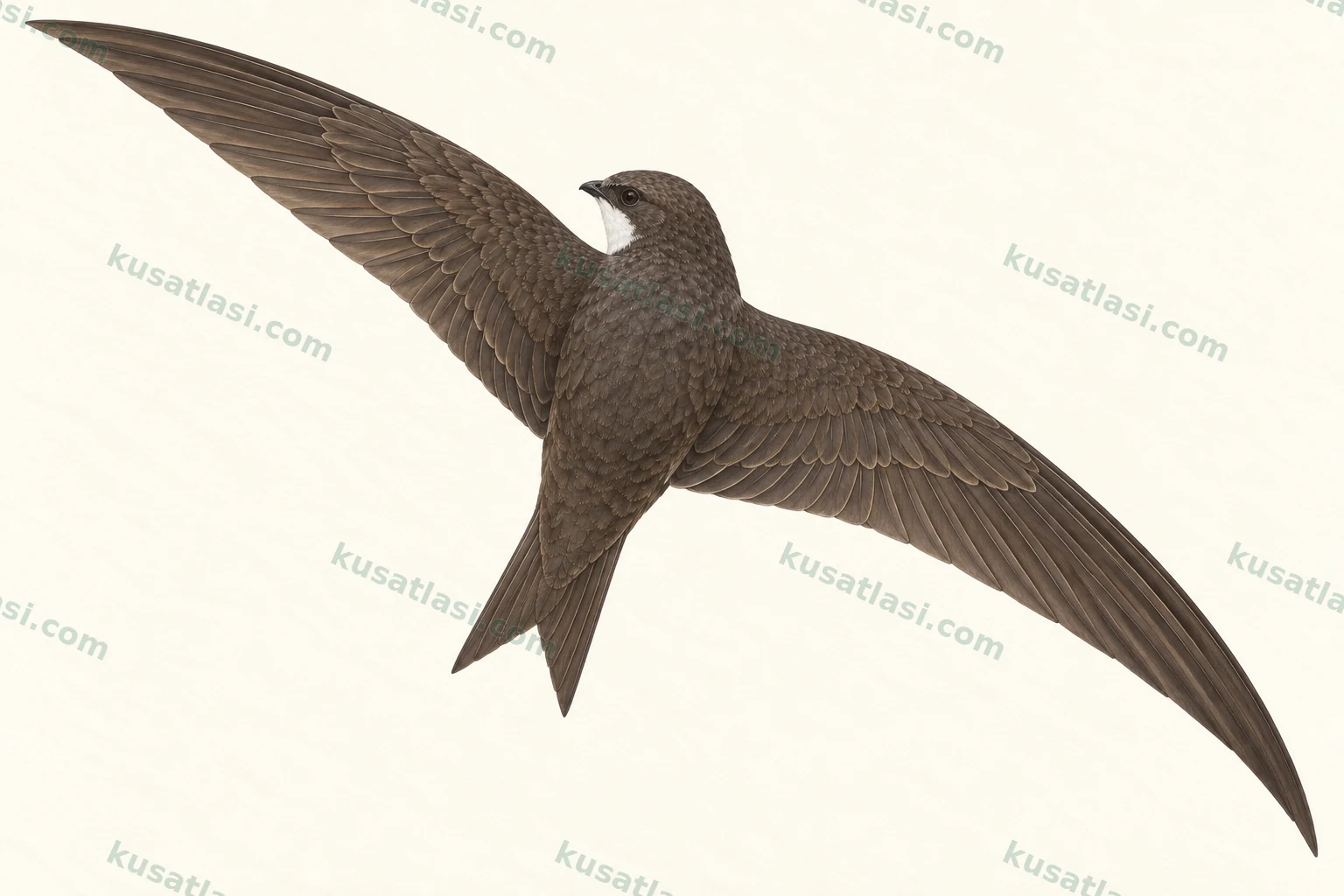
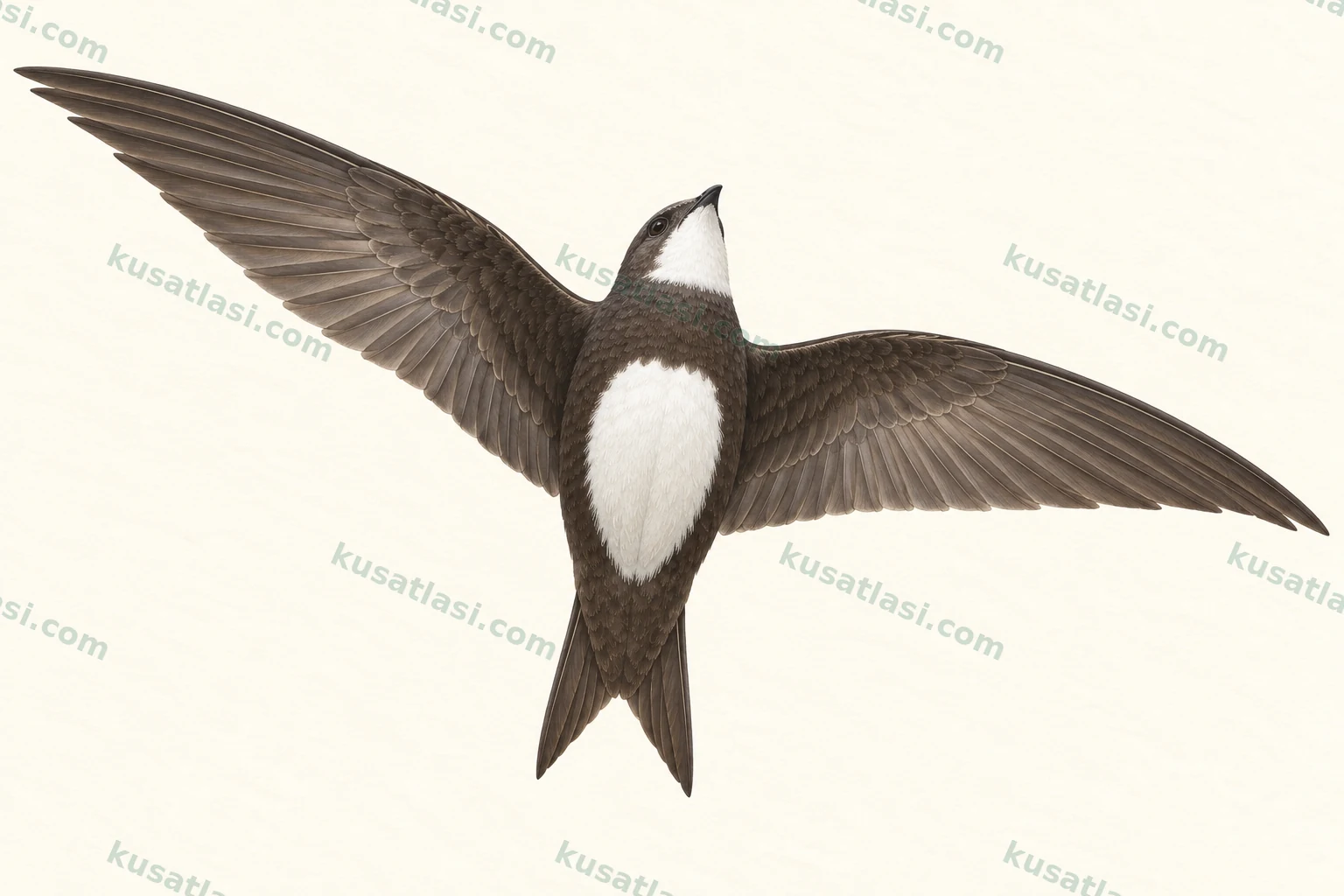
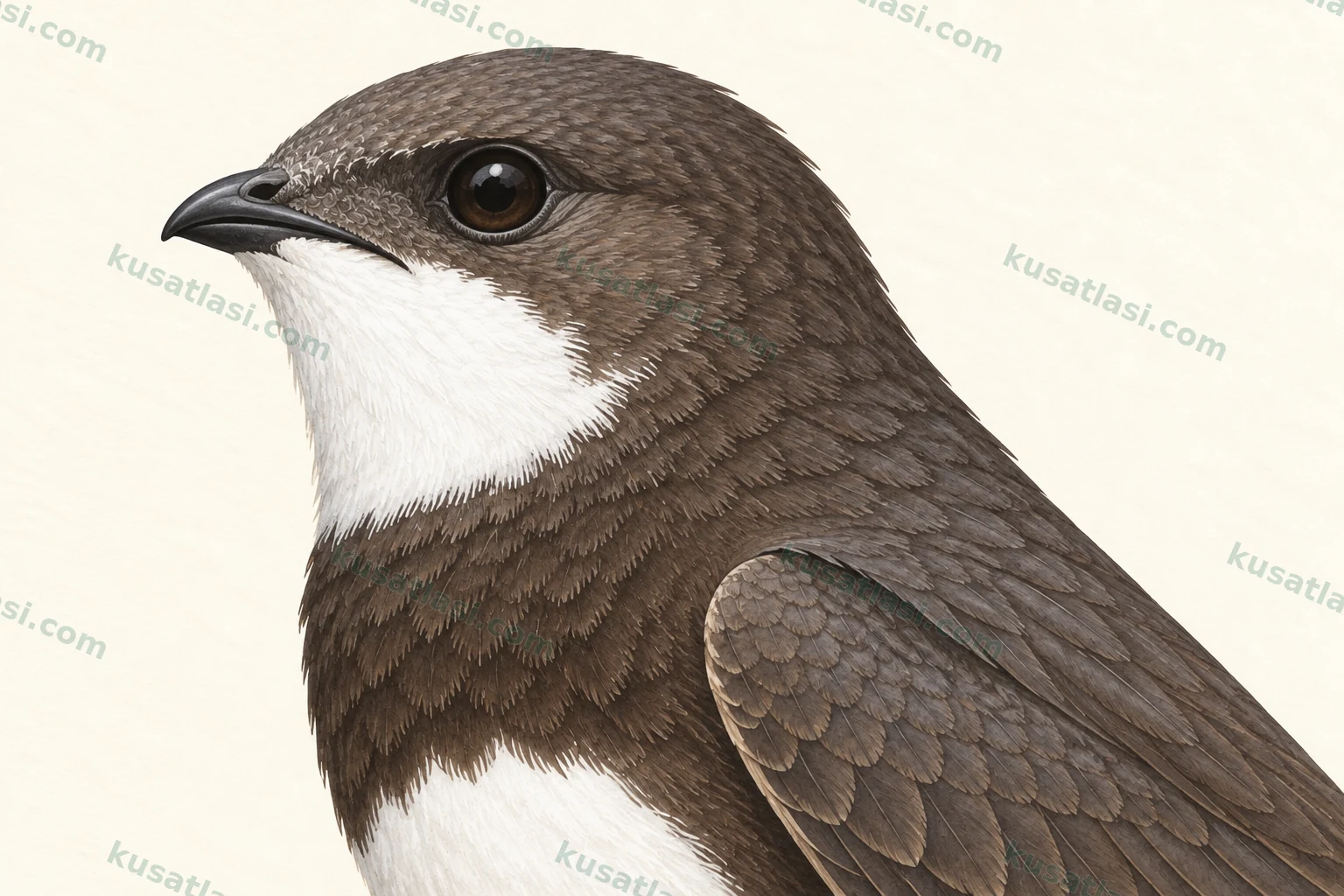
Alpine Swift identification views
Swipe left or right through all five plates.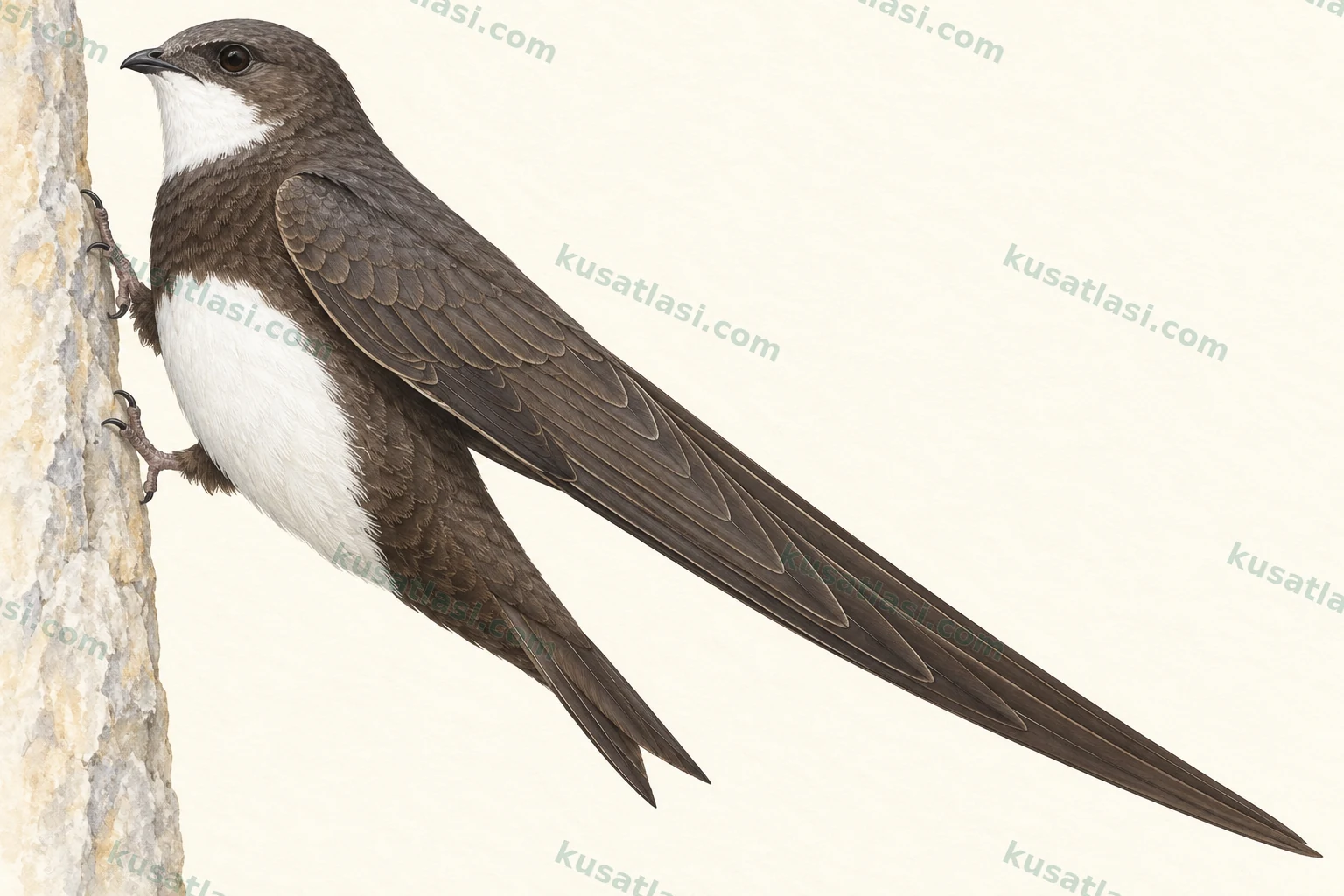
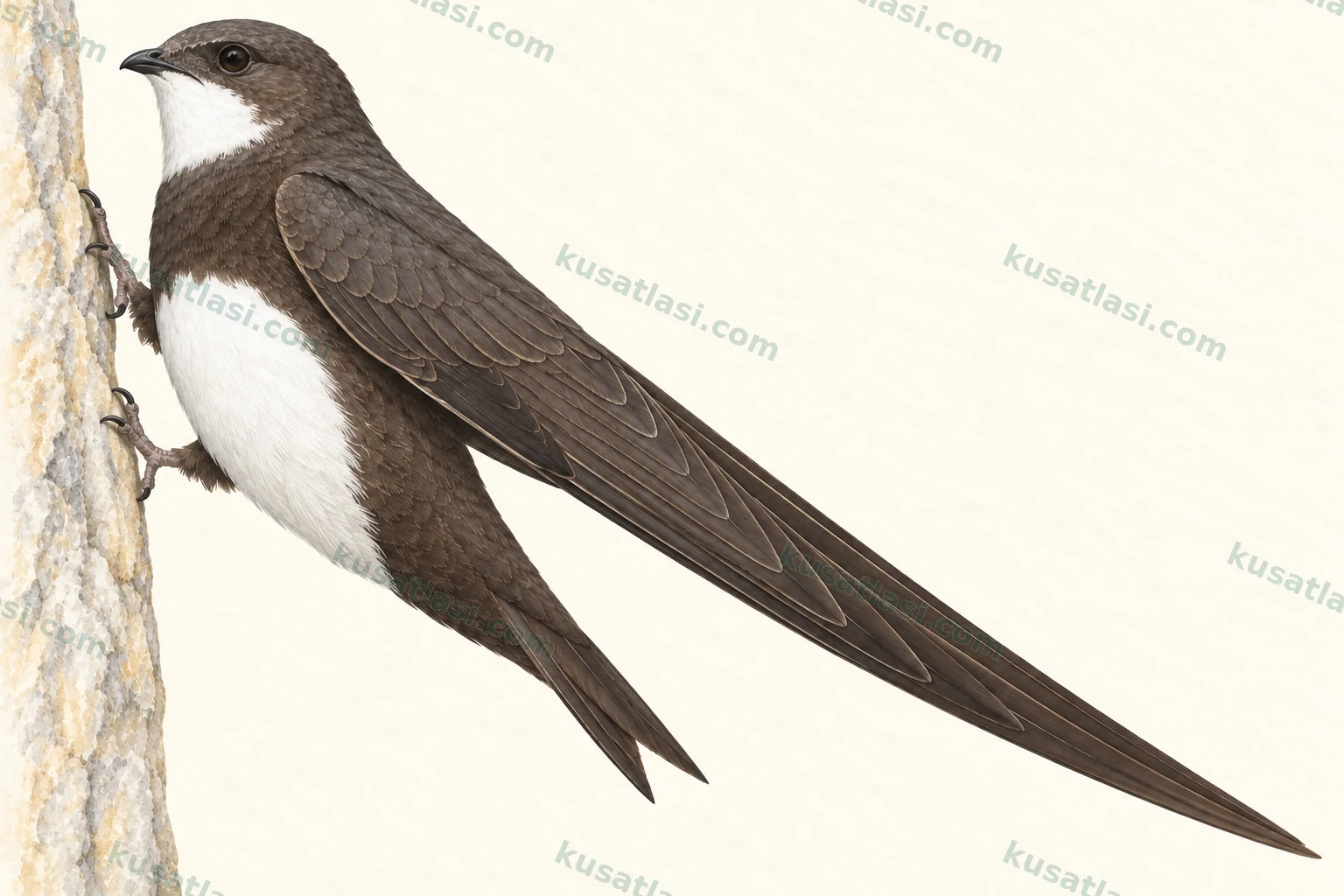
Swifts
Alpine Swift
Tachymarptis melba
Ak Karınlı Ebabil
From below, combine white throat–brown breast band–white belly with large size and long wings.
- Order
- Apodiformes
- Conservation status
- LC Least Concern
First look in the field
Quick identification
- Two white areas
A dark breast band separates the white throat and belly.
- Long pointed wings
Assess the large body together with long, pointed wings.
- Flight silhouette
Use size alongside the underside pattern, not on its own.
Biometrics
Length
- Male
- 20–22 cm
- Female
- 20–22 cm
Wingspan
- Male
- 54–60 cm
- Female
- 54–60 cm
Weight
- Male
- 100.4–120 g
- Female
- 100.4–120 g
Detailed explanations of these measurements are available on our website, on the same species page.
World distribution
Alpine Swift
Customize map layers
Observation Sites
Bird Atlas recordsLoading observations…
Monthly record intensity
12 monthsRecord intensity is affected by observation effort.
Rotate the globe and compare the supported layers. Colours show broad range areas, not exact sightings or nests.
- Jan
- Apr
- Jul
- Oct
- Dec
Generalised data and method
Basemap: Natural Earth (public domain).
Bibliography ↗Authentic bird sound and ethical use
Voice and listening
See the detailed species account below.
Spoken guide
Narration has not been recorded; no audio file has been created.
Observe without approaching the nest
Breeding
See the detailed species account below.
Scientific species guide
Detailed account
A Powerful Large Swift
Alpine Swift is a large brown swift with long pointed wings and a forked tail. Its wingbeats often appear slower and more powerful than those of Common Swift, with broad glides between them. Distance can distort size, so combine structure with plumage.
Read the Underside
A white throat and broad white belly are separated by a brown breast band. These are underside characters, not a white back patch. Establish which surface is visible before interpreting a photograph; glare and silhouette can conceal the pattern.
Sexes
Males and females share the basic pattern and cannot reliably be sexed by colour in the field. Small average differences detected in measurements are not a dependable visual threshold for an individual bird.
Nest and Young
Colonies occupy cliff crevices or suitable spaces in tall buildings. Lightweight material forms the nest. Usually 2–3 eggs are incubated for roughly 18–21 days by both parents. Young receive care for a long nest period, broadly about 50–70 days, varying with conditions. These are not fixed dates measured at every Turkish colony.
| Measure | Value | |---|---| | Length | Male: 20–22 cm; Female: 20–22 cm | | Wingspan | Male: 54–60 cm; Female: 54–60 cm | | Mass | Male: 76–125 g; Female: 76–125 g |
MME's shared ranges appear in both sex boxes. Wingspan and single-wing length are different measurements; neither should be estimated from a distant photograph to assign sex.
Turkey
Alpine Swift breeds in Turkey and is mainly a warm-season migrant. Rocky coasts, steep valleys and suitable tall structures offer opportunities for observation. A bird feeding above a building does not necessarily nest inside it.
Approximate Season
Spring return, summer breeding and autumn departure form a broad framework. Dates vary between regions, years and colonies. Keep evidence of unusual early, late or winter observations rather than treating the calendar as an absolute limit.
African Connections
Migratory European and eastern Mediterranean populations spend the non-breeding season in Africa. Tracking studies show variation among populations and individuals; a Swiss or Israeli track is not automatically the route of every Turkish bird.
Counting Colonies
Repeated entry into a particular opening is more informative about nesting than a circling flock alone. Avoid counting the same bird on each circuit, and record watch duration and the highest simultaneous count. Monthly records also reflect observer effort.
Cliffs and Crevices
Natural colonies use sheltered spaces in steep rock faces. Search airspace around cliffs, gorges and rocky coasts. Despite the English name, the species is not restricted to high alpine terrain.
Buildings
Roof spaces and façade openings can provide colony sites. Covering an entrance during repairs or with netting can prevent adults from feeding hidden chicks. Retaining a cavity is not sufficient if safe access to it disappears.
Feeding Airspace
Birds may forage over open country, water, valleys and towns, well beyond the immediate nest site. A bird above a park is not evidence of tree nesting. Scan different heights rather than watching only the roofline.
Observation
Keep entrances clear and avoid approaching or illuminating cavities. Note the date and opening used from a safe distance. Any proposed building work around an active colony needs appropriate expert assessment; this guide is not authorization to disturb it.
Aerial Prey
Alpine Swifts catch small flying insects and other airborne arthropods. The short bill is paired with a broad gape. Many prey items are too small for a ground-based observer to identify, so do not assume every capture involves a conspicuous large insect.
Flight Behaviour
Flapping and gliding accompany the search for food. Wide circles over one area need not indicate migration; distinguish local foraging from sustained directional passage where possible. An open bill alone does not prove either calling or successful prey capture.
Weather
Changing aerial prey conditions affect feeding opportunities and can influence nestling development. A low count on one visit is not proof that the colony has been abandoned. The nest period is not identical in every brood.
Feeding Young
Both parents deliver collected small prey to the nest. Visits can be watched without approaching the entrance, but their frequency does not reveal an exact chick count. Bread and grain do not substitute for this aerial diet; maintaining undisturbed access matters more.
Months Airborne
A 2013 tracking study provided evidence for an Alpine Swift remaining airborne for more than six months. It does not establish a compulsory identical duration for all birds. Breeding birds visit their nests, so the claim that the species never lands is wrong. Movement evidence is also distinct from direct physiological measurement of sleep.
Twilight Ascents
A further study including Turkish birds examined ascents near dawn and dusk. Their purpose remains incompletely understood. Proposed navigation and social explanations should be presented as hypotheses, not settled facts.
Subtle Sex Differences
Average measurement differences do not provide a reliable visual sexing rule. A relatively long-looking tail in a photograph cannot replace the controlled measurements or genetic methods used in research.
An Entrance Matters
BirdLife reported a Belgrade colony where façade covering blocked adults from reaching chicks. Conservation includes preserving safe entry, not only leaving the nest cavity physically intact. A small building opening can support a functioning colony.
Species text and plates come from existing atlas records. Measurements were checked against reliable species sources.
Open bibliography