
Approved field-guide plates
Hume's Leaf Warbler identification views
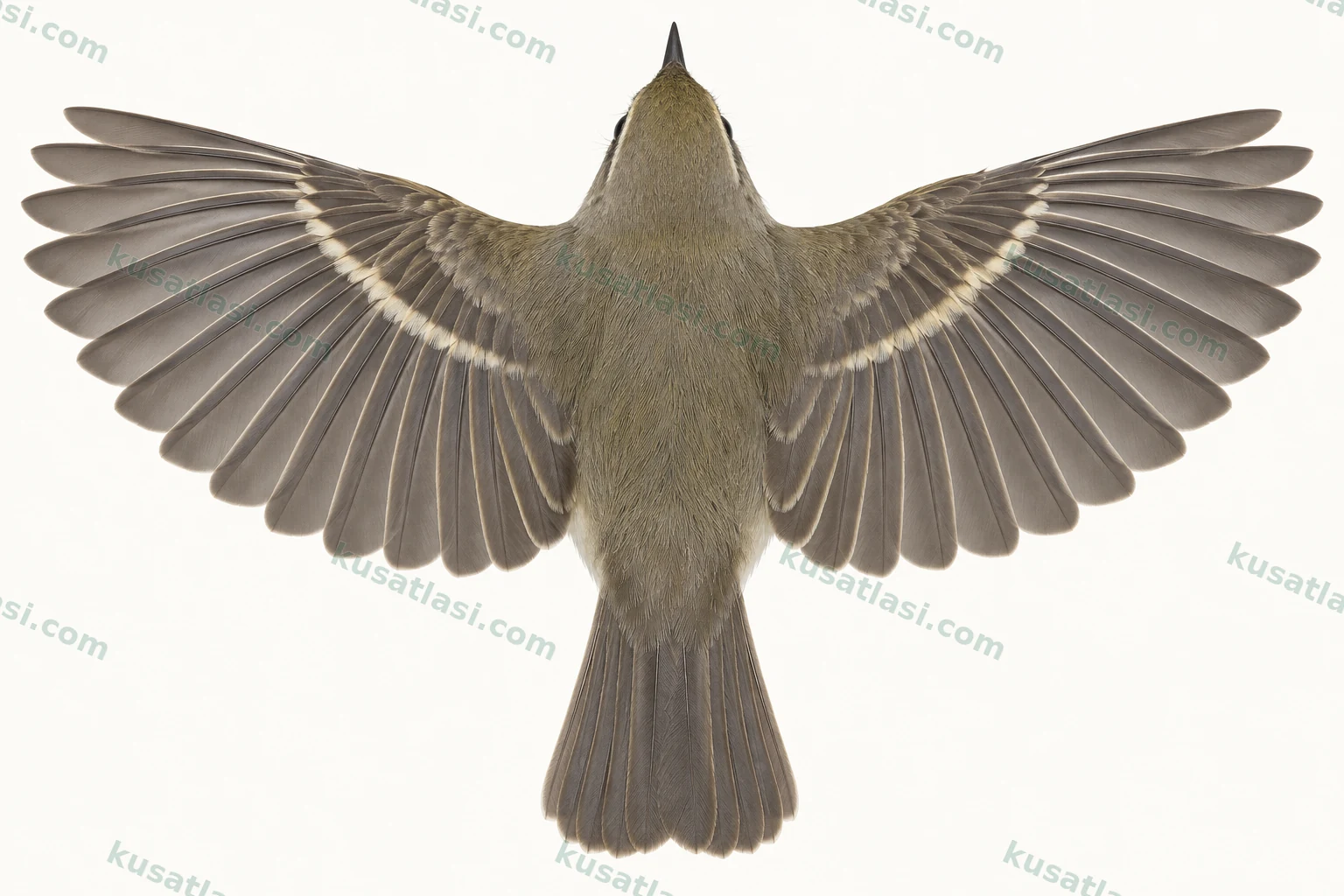
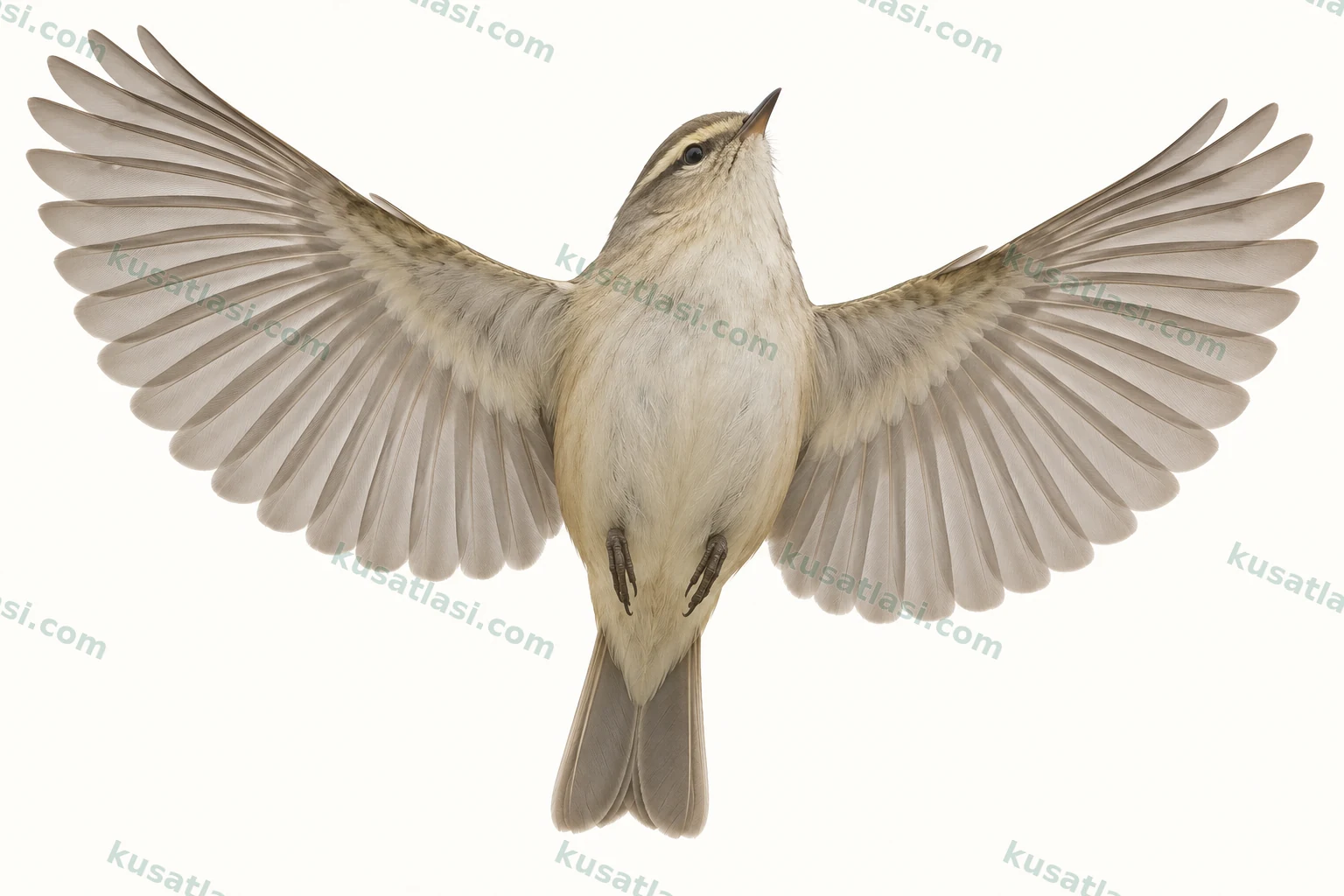
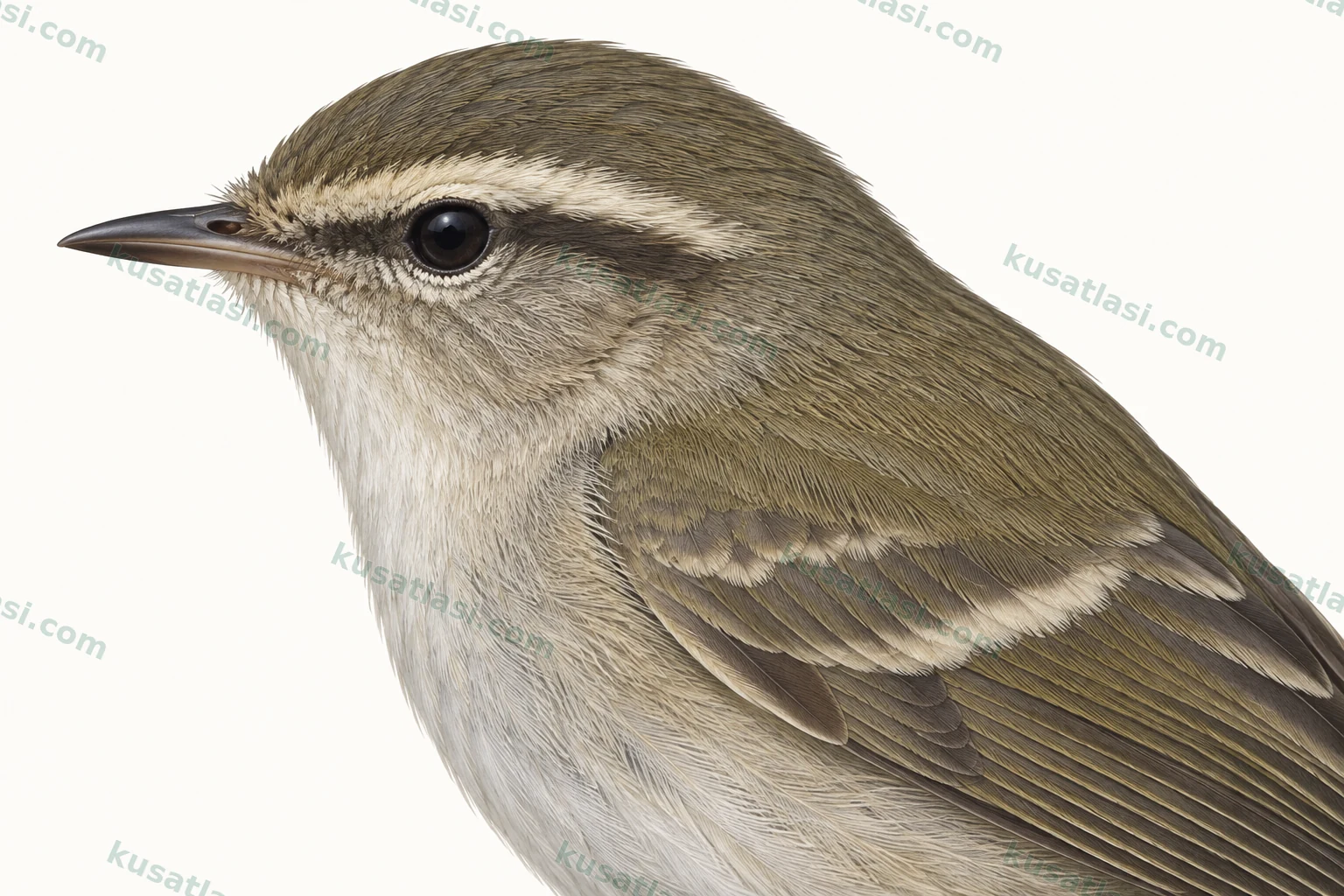
Swipe left or right through all five plates.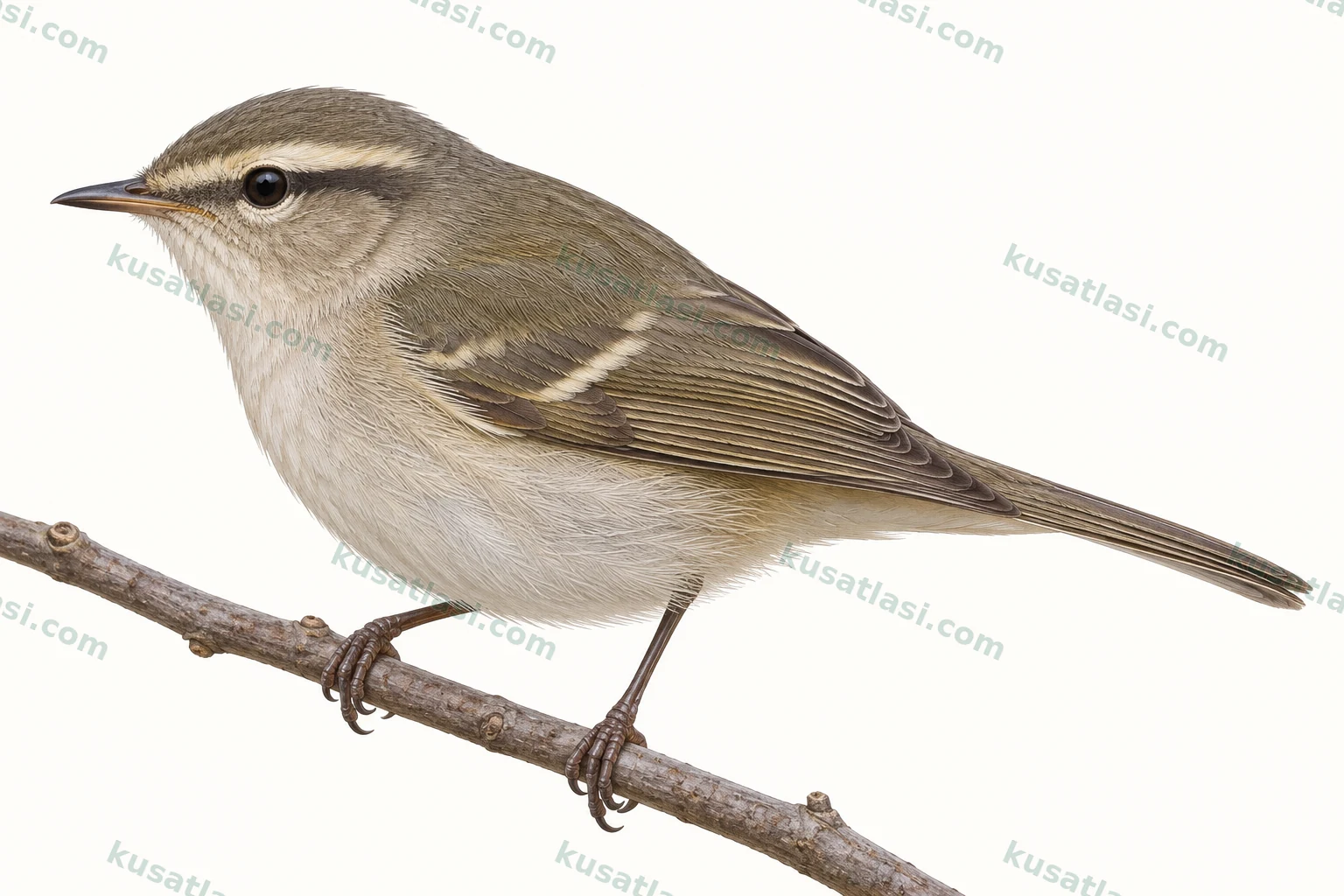
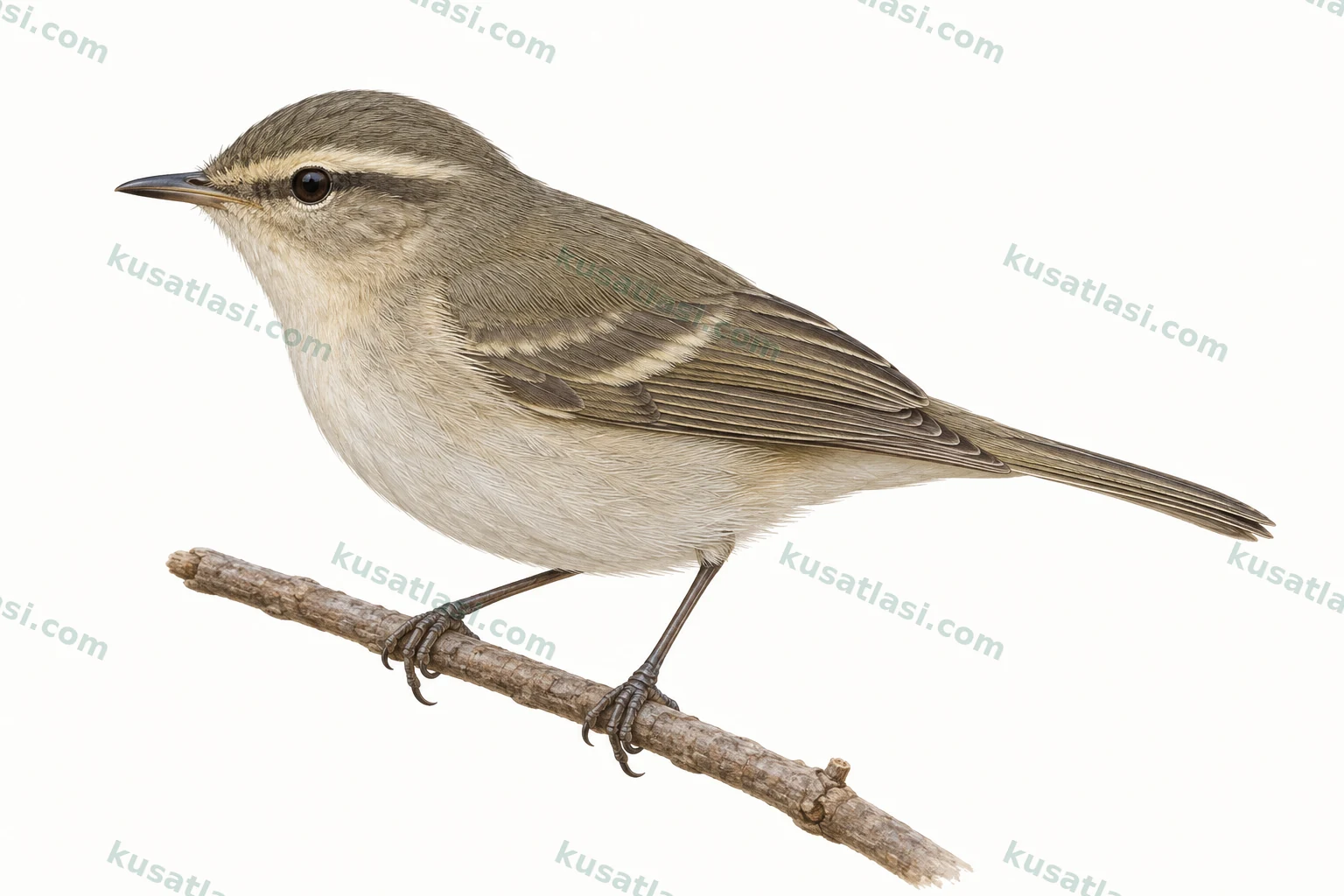
Leaf Warblers
Hume's Leaf Warbler
Phylloscopus humei
Ak Kaşlı Çıvgın
Combine subdued greyish plumage, usually weak second wing bar and the natural call.
- Order
- Passeriformes
- Conservation status
- LC Least Concern
First look in the field
Quick identification
- Grey-olive tone
The upperparts tend to look duller and greyer than Yellow-browed Warbler.
- Weak second bar
The second pale wingbar is often faint; check the lighting.
- Natural call
Document the natural call when separating similar species.
Biometrics
Length
- Male
- 10–11 cm
- Female
- 10–11 cm
Wingspan
- Male
- 14–20 cm
- Female
- 14–20 cm
Weight
- Male
- 6–7 g
- Female
- 6–7 g
Detailed explanations of these measurements are available on our website, on the same species page.
World distribution
Hume's Warbler
Customize map layers
Observation Sites
Bird Atlas recordsLoading observations…
Monthly record intensity
12 monthsRecord intensity is affected by observation effort.
Rotate the globe and compare the supported layers. Colours show broad range areas, not exact sightings or nests.
- Jan
- Apr
- Jul
- Oct
- Dec
Generalised data and method
Basemap: Natural Earth (public domain).
Bibliography ↗Authentic bird sound and ethical use
Voice and listening
One pale wing bar is usually conspicuous and the second weaker. A missing-looking bar is not conclusive without considering wear and angle. Combine the whole pattern with the usually dark bill and legs and, importantly, the natural call.
Spoken guide
Narration has not been recorded; no audio file has been created.
Observe without approaching the nest
Breeding
Groves, riverside trees, gardens and bushes may provide feeding opportunities. Search different vegetation levels rather than only treetops. A bird disappearing briefly into foliage has not necessarily left the area.
Scientific species guide
Detailed account
A Difficult Small Warbler
Hume's Warbler is a tiny active leaf warbler with subdued grey-olive upperparts, whitish underparts and a pale eyebrow. Yellow-browed Warbler is extremely similar. Reflected light and photographic colour balance can exaggerate yellow or grey tones.
Wing Pattern and Call
One pale wing bar is usually conspicuous and the second weaker. A missing-looking bar is not conclusive without considering wear and angle. Combine the whole pattern with the usually dark bill and legs and, importantly, the natural call.
Sexes
Males and females cannot reliably be separated by basic field plumage. A brighter eyebrow or stronger bar is not a male character. Keep sex uncertain when no independent evidence exists.
Breeding
In Asian breeding areas, a concealed domed nest is usually placed on or near the ground beneath vegetation, roots or stones. Usually 4–6 eggs are laid, with seven reported regionally. The female incubates for about 11–14 days; both parents feed young, which fledge at roughly 11–15 days. This does not establish regular breeding in Turkey.
| Measure | Value | |---|---| | Length | Male: 10–11 cm; Female: 10–11 cm | | Wingspan | Male: —; Female: — | | Mass | Male: 6–7 g; Female: 6–7 g |
These are shared values, not sexing thresholds. A reliable wingspan was not verified. The roughly 55-mm single-wing measurement found in sources must not be substituted for wingspan.
Rare in Turkey
The Turkish records committee's 2025 report includes a bird in the Kızılırmak Delta, Samsun, on 8 April. This documents a spring occurrence, not an annual April passage or guaranteed return to the site.
Asian Range
The main breeding range lies in Central Asian mountain belts and around the Himalayas. Some populations move into lower South Asian areas outside breeding. This broad pattern does not reveal the precise origin or route of an individual recorded in Turkey.
Separate Regional Calendars
British and Dutch accounts describe late-autumn visitors and sometimes prolonged winter stays. Their seasonal pattern is not a ready-made Turkish calendar. Neutral monthly cards avoid claiming a regular arrival, breeding and departure cycle from sparse evidence.
Document Carefully
Keep date, location, duration and original photographs or recordings. Repeated reports of one lingering bird do not imply new arrivals every day. Marks learned afterwards from a guide must not be added to the observation as if they were actually seen.
Mountain Woodland
Breeding habitats include mountain forest, wooded openings and scrub. Regional accounts mention several tree and shrub types, so the species should not be reduced to one plant or one elevation. Asian height ranges do not prescribe where a rare Turkish bird must occur.
Outside Breeding
Groves, riverside trees, gardens and bushes may provide feeding opportunities. Search different vegetation levels rather than only treetops. A bird disappearing briefly into foliage has not necessarily left the area.
Listen First
Locate a natural call and then scan the relevant cover. Reflections and other calling birds can mislead, so pause and keep a broad view. Do not assign a call to the first small bird that happens to appear.
Give Space
Avoid entering bushes or repeated playback to expose the bird. Keep pathways open and respect access rules. A fixed viewing position allows natural movement between cover and food without a crowd blocking the small feeding area.
Small Prey
Hume's Warblers mainly eat small invertebrates, including insects, their eggs and larvae, and spiders. The fine bill collects prey from leaves and twigs. Describe visible behaviour rather than inventing a prey identification too small to confirm.
Gleaning and Short Flights
Birds may inspect foliage from a perch, hover briefly or make a short pursuit. These actions are shared with other leaf warblers and support context rather than completing identification. Plumage and call still matter.
Mixed Groups
Outside breeding, individuals can forage with other small birds. In a busy group, ensure that the bird whose wing bars were seen is also the one producing the call. Rapid movements make accidental switching between individuals easy.
Avoid Interruption
Wait for natural pauses rather than repeatedly flushing a hidden bird. Providing artificial food is not necessary to observe this insectivorous behaviour. Vegetation level, search method and accompanying species make more useful notes than an unmeasured estimate of food intake.
Once Grouped Together
Hume's was formerly treated within Yellow-browed Warbler. Vocal differences as well as plumage contributed to recognition, illustrating why identification is more than colour alone. Different names in an old guide and a current list need not be typographical mistakes.
Heard Before Seen
A bird hidden in foliage can reveal itself through a conspicuous call. The two-part contact call and descending buzzing song are different vocalisations. Preserve original recordings so their structure and surrounding sounds can be assessed.
Two Different Measurements
Single-wing length and wingspan describe different measurements. Inserting a roughly 55-mm wing value into a wingspan box would create an error. An explicit unknown is preferable to disguising that distinction.
Rarity Is Not Global Threat
Rare occurrence in Turkey is compatible with a global Least Concern category. This does not make disturbance of a visiting individual harmless. Careful documentation and space for natural feeding remain important.
Species text and plates come from existing atlas records. Measurements were checked against reliable species sources.
Open bibliography