
Approved field-guide plates
Rustic Bunting identification views
Swipe left or right through all five plates.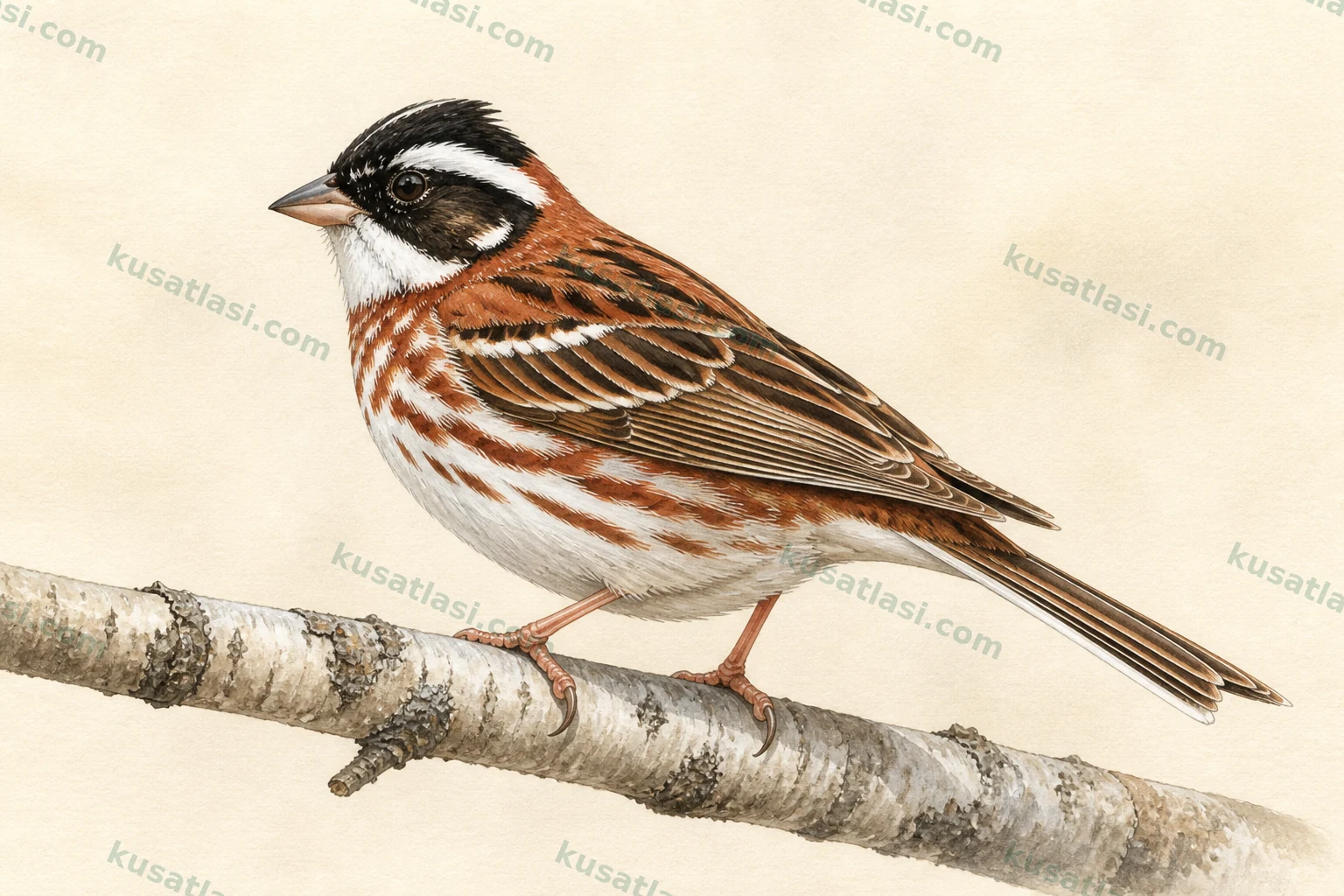
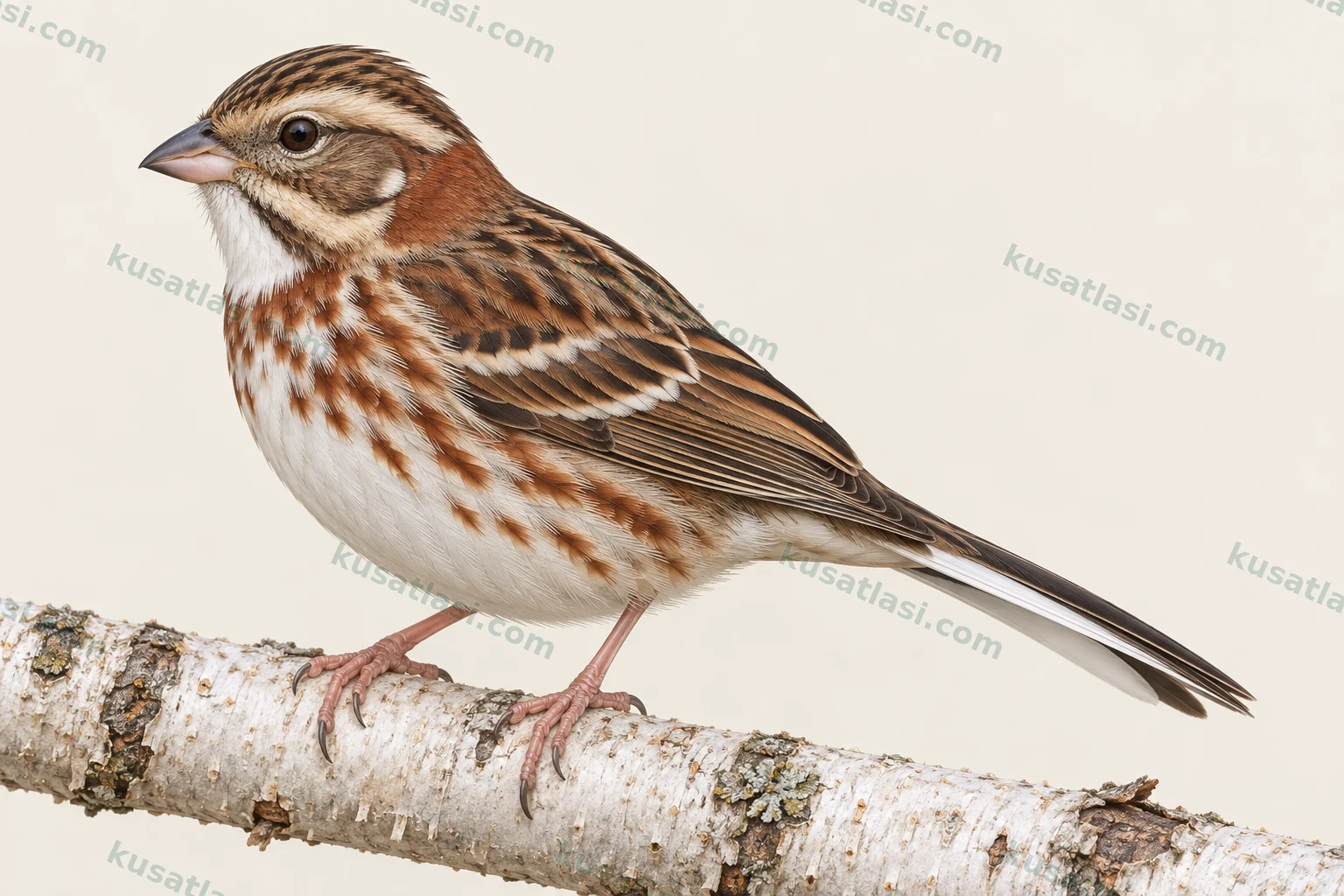
Old World Buntings
Rustic Bunting
Emberiza rustica
Ak Kaşlı Çinte
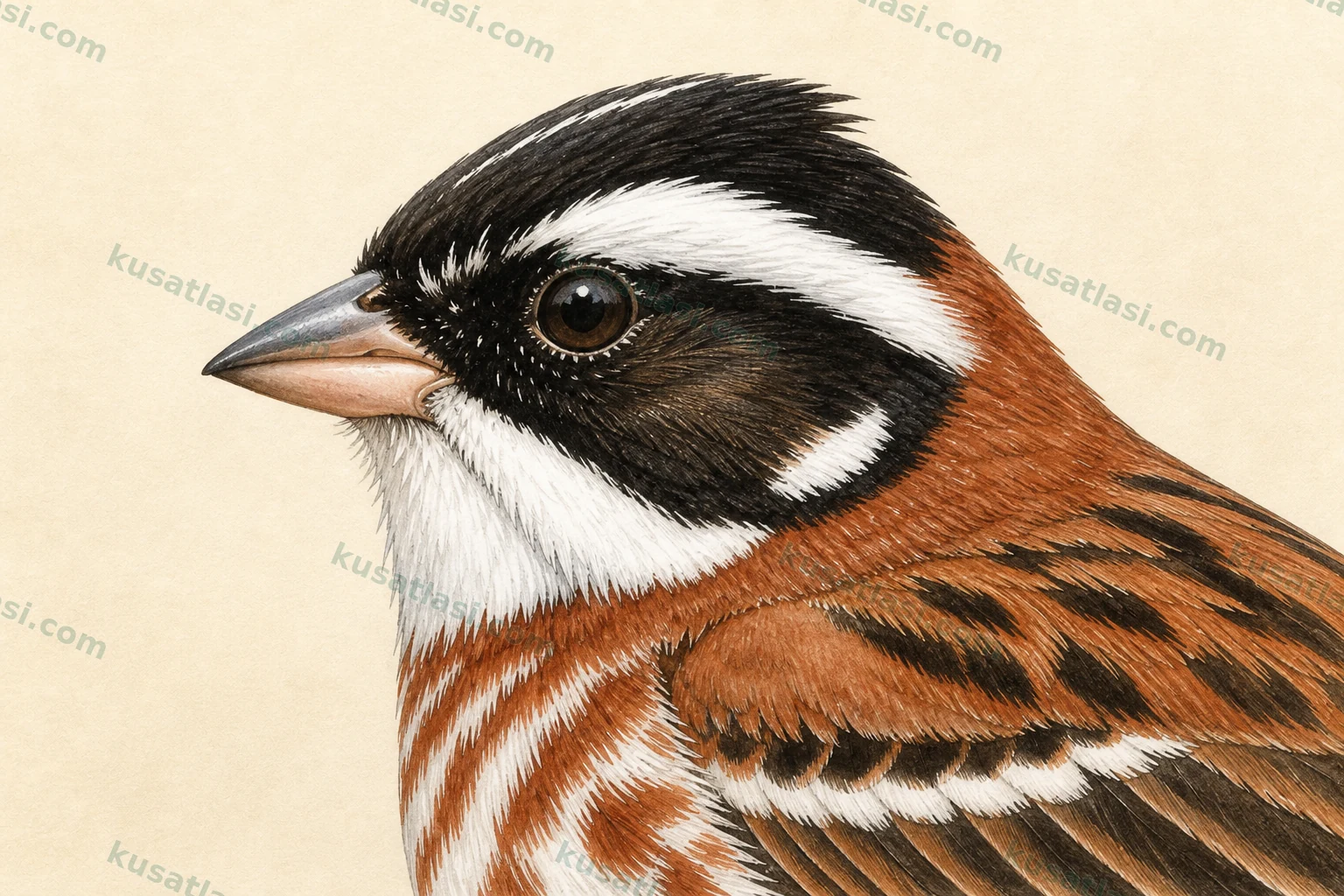
Combine eyebrow and pale rear-ear mark with rusty body markings, considering age and season.
- Order
- Neognathae
- Conservation status
- NT Near Threatened
First look in the field
Quick identification
- Brow and rusty tones
Combine the pale eyebrow with rusty breast and flank markings.
- Seasonal head pattern
Breeding males are more contrasting; do not sex dull birds by head colour alone.
- Tail and wing
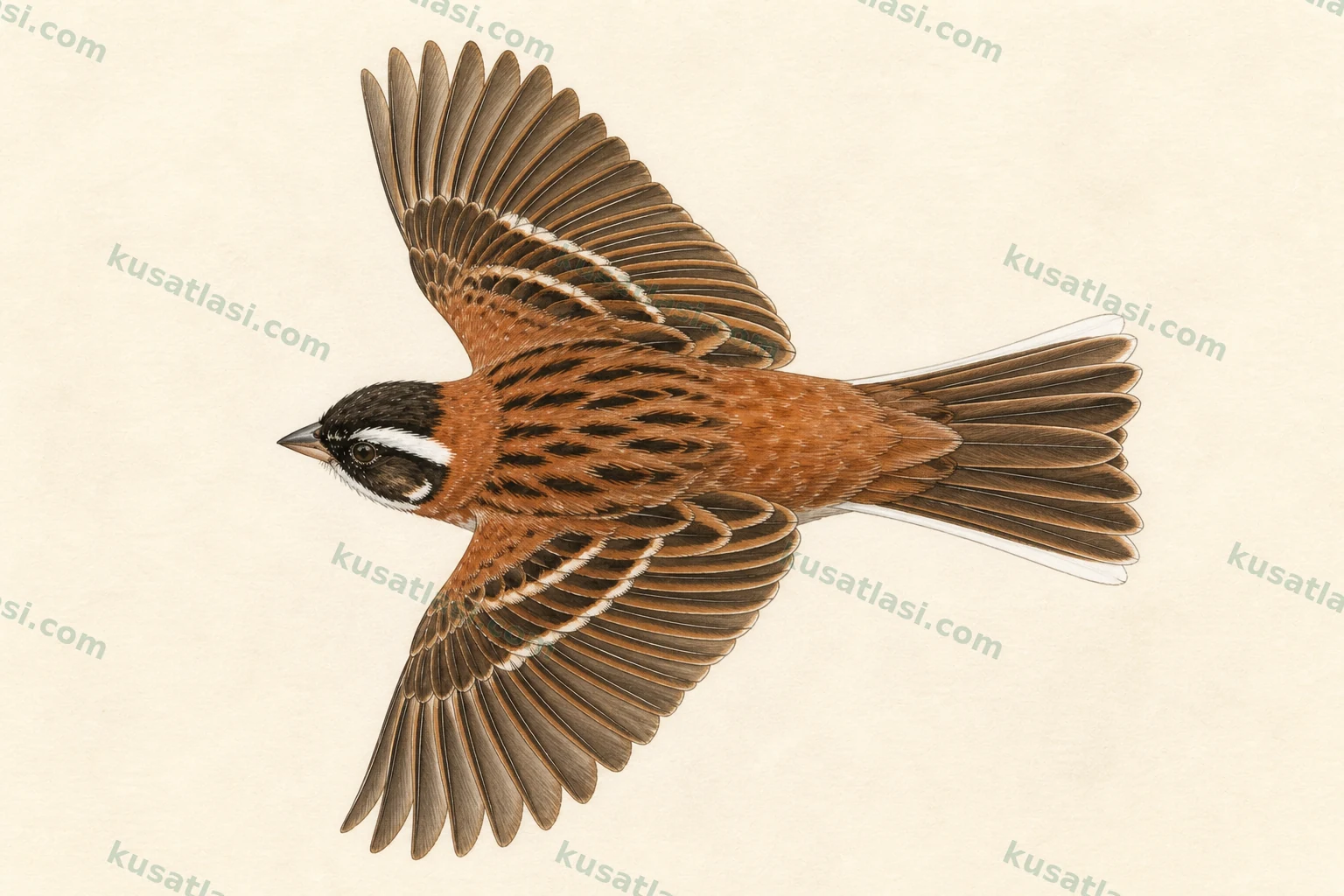
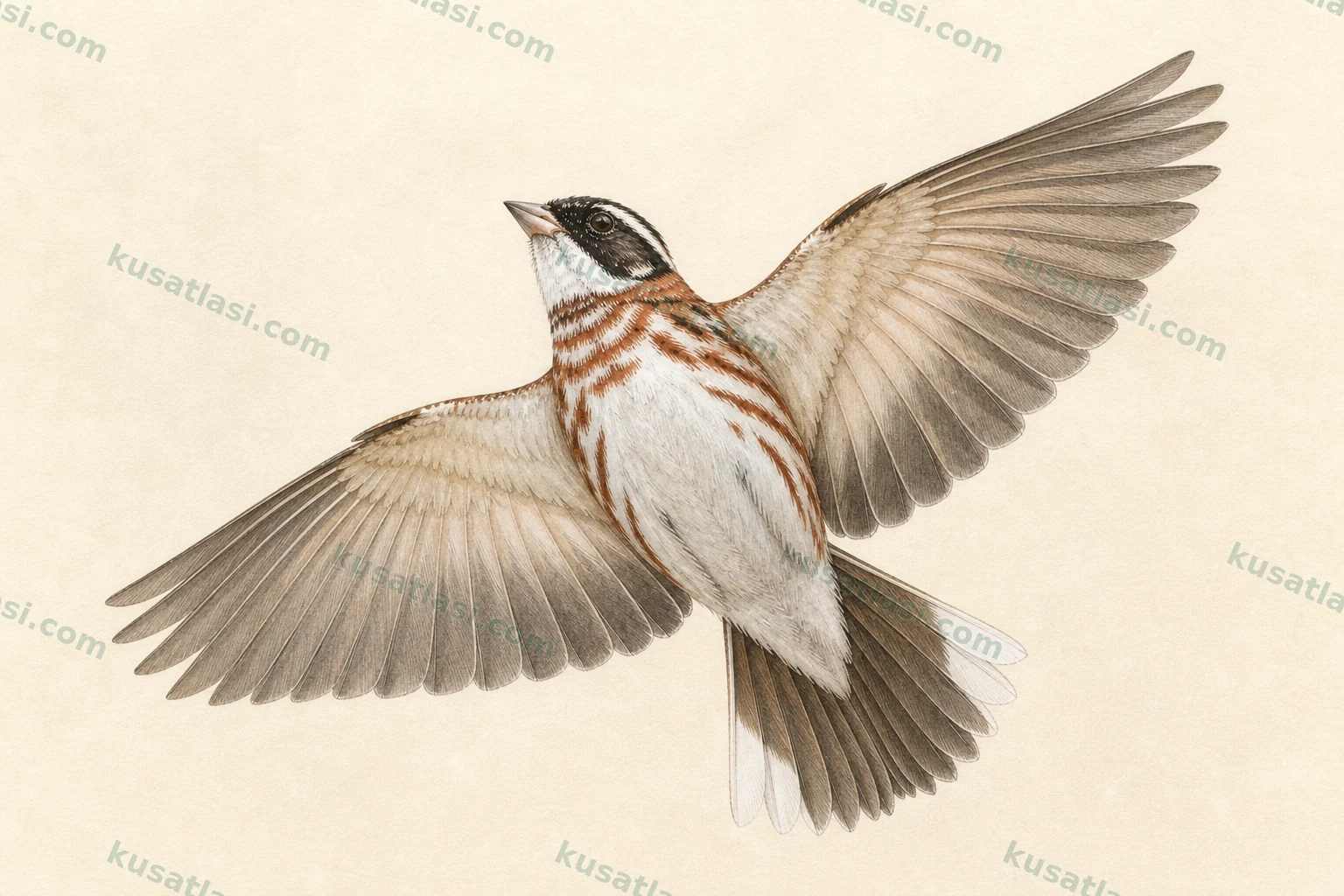
Two pale wingbars and white outer tail feathers offer supporting evidence.
Biometrics
Length
- Male
- 12–13 cm
- Female
- 12–13 cm
Wingspan
- Male
- 21–25 cm
- Female
- 21–25 cm
Weight
- Male
- 17–22 g
- Female
- 17–22 g
Detailed explanations of these measurements are available on our website, on the same species page.
World distribution
Rustic Bunting
Customize map layers
Observation Sites
Bird Atlas recordsLoading observations…
Monthly record intensity
12 monthsRecord intensity is affected by observation effort.
Rotate the globe and compare the supported layers. Colours show broad range areas, not exact sightings or nests.
- Jan
- Apr
- Jul
- Oct
- Dec
Generalised data and method
Basemap: Natural Earth (public domain).
Bibliography ↗Authentic bird sound and ethical use
Voice and listening
In the breeding range, song can form longer repeated sequences than calls. For a rare Turkish record, make sure the voice and the bird in view belong together.
Spoken guide
Narration has not been recorded; no audio file has been created.
Observe without approaching the nest
Breeding
A concealed ground cup in the northern breeding range; sometimes higher locally.
Typically four to five, with wider ranges in regional studies.
About 11–13 days; both sexes may contribute, mainly the female.
A rare sighting in Turkey is not proof of regular breeding.
Never rely on one mark
Similar species
Reed Bunting
Emberiza schoeniclusFemales and juveniles may have a pale brow; compare the whole head, rusty breast and tail together.
Scientific species guide
Detailed account
A Combination of Marks
Rustic Bunting is a compact small bunting. Combine the pale eyebrow, a small pale mark behind the ear region and rusty body markings. A conspicuous eyebrow by itself does not establish the identification.
Male, Female and Season
The breeding male has a black-and-white head, white throat and rusty breast band. Females are duller and browner; fresh autumn feather fringes can also conceal a male's contrast. Juveniles may show stronger breast streaking. Do not label every brown-headed individual female without considering age and season.
Structure and Flight
Two pale wing bars, rusty rump tones and white outer tail feathers support the head and body pattern. The breast band is an underside feature and cannot be expected in a dorsal flight photograph. A raised forecrown changes the apparent head shape without establishing sex.
Breeding
In the northern breeding range, a concealed ground cup holds usually 4–5 eggs. Incubation lasts about 11–13 days, shared by both parents but mainly the female. Young may leave at 7–10 days before they can fly; departure is not independence. This is not evidence of regular breeding in Turkey.
Length follows HKBWS, wingspan and mass MME. Shared ranges are not sex-specific diagnostic thresholds.
Voice and Behaviour
In the northern breeding range, song may form longer repeated sequences than the shorter calls. Written syllables are only approximations. For a rare Turkish record, keep the original recording and make sure the sound belongs to the bird simultaneously seen; a nearby bird's call can easily be misassigned. Avoid playback, especially near breeding birds. Silence does not rule out the species. It may forage for seeds on the ground and take small invertebrates during the breeding period. Neither a feeding record nor a single seasonal sighting in Turkey proves a nest or a fixed migration route.
Similar Species
Other buntings with a pale supercilium can cause confusion. Assess the whole head pattern, pale area around the ear coverts, rusty breast band, streaked flanks and rump together. Female and young Reed Buntings may show a brown head and pale brow, but their complete head, breast and tail patterns differ. Two wingbars alone are insufficient because other buntings can show them. Breeding males are more strongly contrasting; autumn birds are harder, and lighting can strengthen or suppress the apparent rusty tones. If the rump or outer tail is not seen, record those characters as unknown rather than present. Multiple natural views and an accurately linked call are more valuable than a single striking but ambiguous photograph.
Rare in Turkey
Rustic Bunting is a rare recorded species in Turkey, not a widespread regular winter visitor. The Turkish committee's 2022 report includes January and October–November records. These document occurrence, not an annual guarantee at the same sites.
Main Range
The breeding belt extends from northern Europe through Siberia. Much of the usual winter range lies in Japan, Korea and eastern China. Dates and flock sizes recorded there must not be transferred directly to Turkey.
Evidence
Keep the date, location, number and original photographs or sound files. Link head, breast and rump details to the same bird where possible. Record what was actually observed, rather than adding marks learned later from a guide.
Calendar Limits
Neutral months indicate that a regular Turkish seasonal schedule cannot be assigned from sparse records, not that occurrence is impossible. Multiple reports of one lingering individual are not independent bird counts. Observer effort and visits attracted by a rarity influence monthly totals.
Month-by-month field notes
1. January: A January record in a 2022 report does not mean regular wintering.
2. February: Date and photograph an unexpected record.
3. March: Do not substitute an East Asian timetable for Turkey.
4. April: Use the whole head and body pattern, not just one pale eyebrow.
5. May: Northern breeding data are not Turkish breeding evidence.
6. June: Nest facts describe the species; they are not an invitation to search locally.
7. July: Age and season alter apparent sex characters.
8. August: Fresh feathers may soften the head contrast.
9. September: Do not disturb shrubs to expose a rare bird.
10. October: October records from 2022 do not guarantee annual occurrence.
11. November: A November 2022 record does not imply continuous presence.
12. December: Even in winter, document several marks for a firm identification.
Northern Breeding Habitat
Wet woodland, scrubby stream margins and wooded bog environments form part of the breeding habitat. Describing the species only as a farmland bird misses this stage of its life cycle. Northern nesting habitat is not a compulsory checklist for finding a rare visitor in Turkey.
Outside Breeding
Field edges and grassy openings with nearby cover can provide feeding opportunities. Watch small gaps patiently rather than assuming a bird that disappears into a bush depends on that particular plant species.
Searching in Turkey
Check small bunting groups carefully, but suitable-looking ground is no guarantee of this rarity. Identify the bird first and use habitat as supporting context. A former record site may have changed substantially since the observation.
Minimise Disturbance
Do not shake bushes, trample cover or surround a bird to force a better view. Let it resume natural feeding. Respect access boundaries and consider disturbance risk when sharing the location of a rare individual that may attract many visitors.
Seeds and Invertebrates
Rustic Buntings use both plant food and small invertebrates. Seeds matter outside breeding, while insects are also taken in breeding areas. This does not establish fixed dietary percentages for a rare bird in Turkey.
Ground Feeding
Birds search among low plants and ground litter and may take small prey from low vegetation. Brief pauses with the head raised offer identification opportunities. Repeatedly flushing a bird for a photograph interrupts this activity.
Agricultural Food
East Asian observations include use of rice and other seeds. They do not imply that a Turkish observer must search rice fields. Harvest condition, local plants and exposed ground affect access to food; record the actual state of the site.
Interpreting Behaviour
Ground feeding is shared by other buntings and cannot complete identification. Combine it with plumage. Avoid baiting a rarity into a preferred photographic position. Birds feeding together are not necessarily a family, and every peck does not prove a successful capture.
Wide Range, Real Decline
The current global category is Vulnerable. A broad breeding distribution is not proof of security. Older Least Concern labels and separate regional assessments should not replace the current global category.
Dates Matter
A study published in 2016 combined historical breeding and wintering data and found a strong decline. Its percentages describe specified past periods, not automatically the latest ten years. Proposed pressures should not be reduced to a single proven cause for every local loss.
Flexible Nest Placement
An Anadyr field study found mainly ground nests but also elevated nests in flood conditions. A few raised nests demonstrate flexibility, not a general preference for treetops. Local observations need their original environmental context.
Leaving Before Flying
Nest departure and competent flight are different events. Young Rustic Buntings can leave early while still dependent on parental care. The 7–10-day departure figure is not an independence age and should not be labelled as such in a breeding table.
Species text and plates come from existing atlas records. Measurements were checked against reliable species sources.
Open bibliography