
Approved field-guide plates
White-tailed Lapwing identification views
Swipe left or right through all five plates.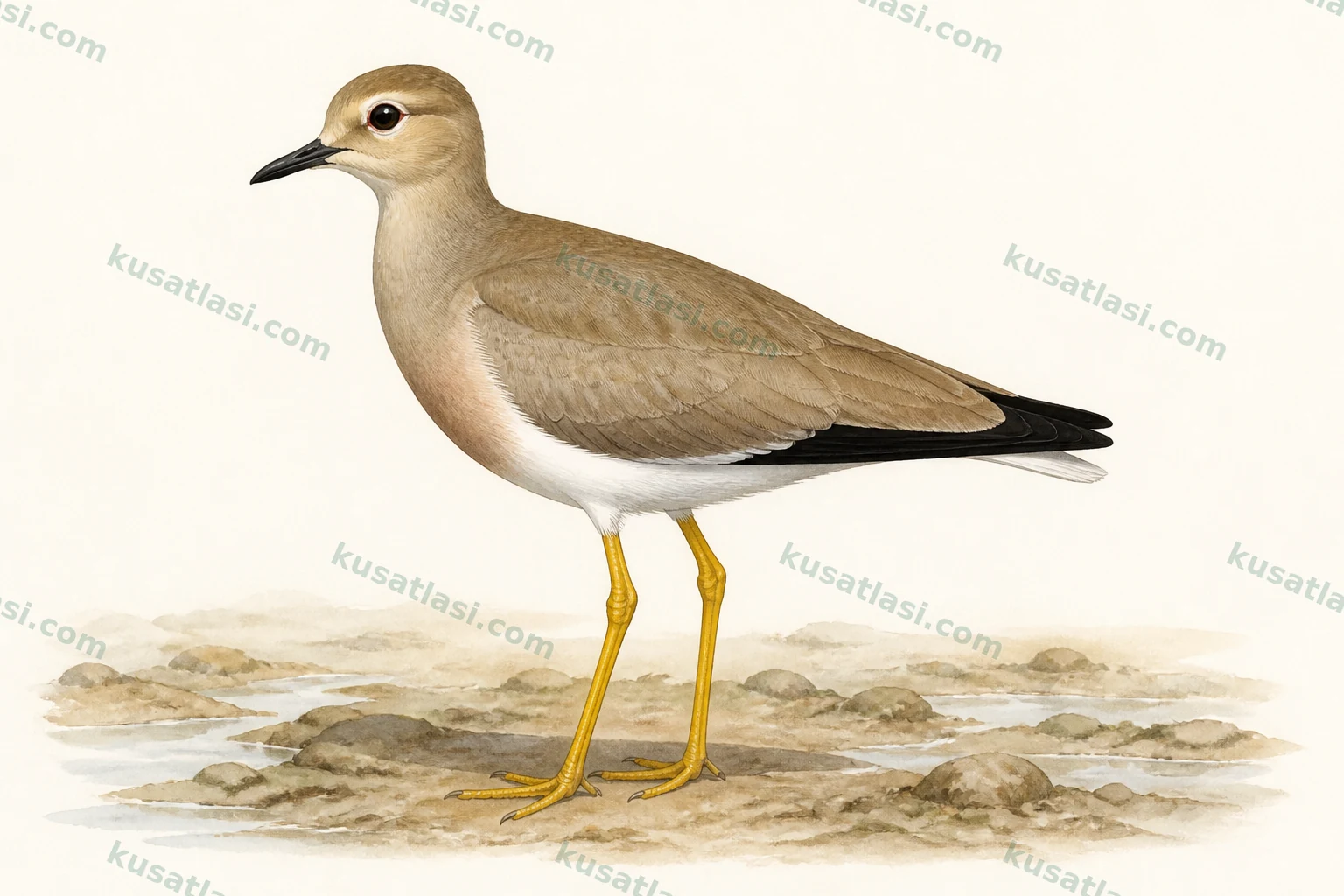
Plovers and Lapwings
White-tailed Lapwing
Vanellus leucurus
Ak Kuyruklu Kızkuşu
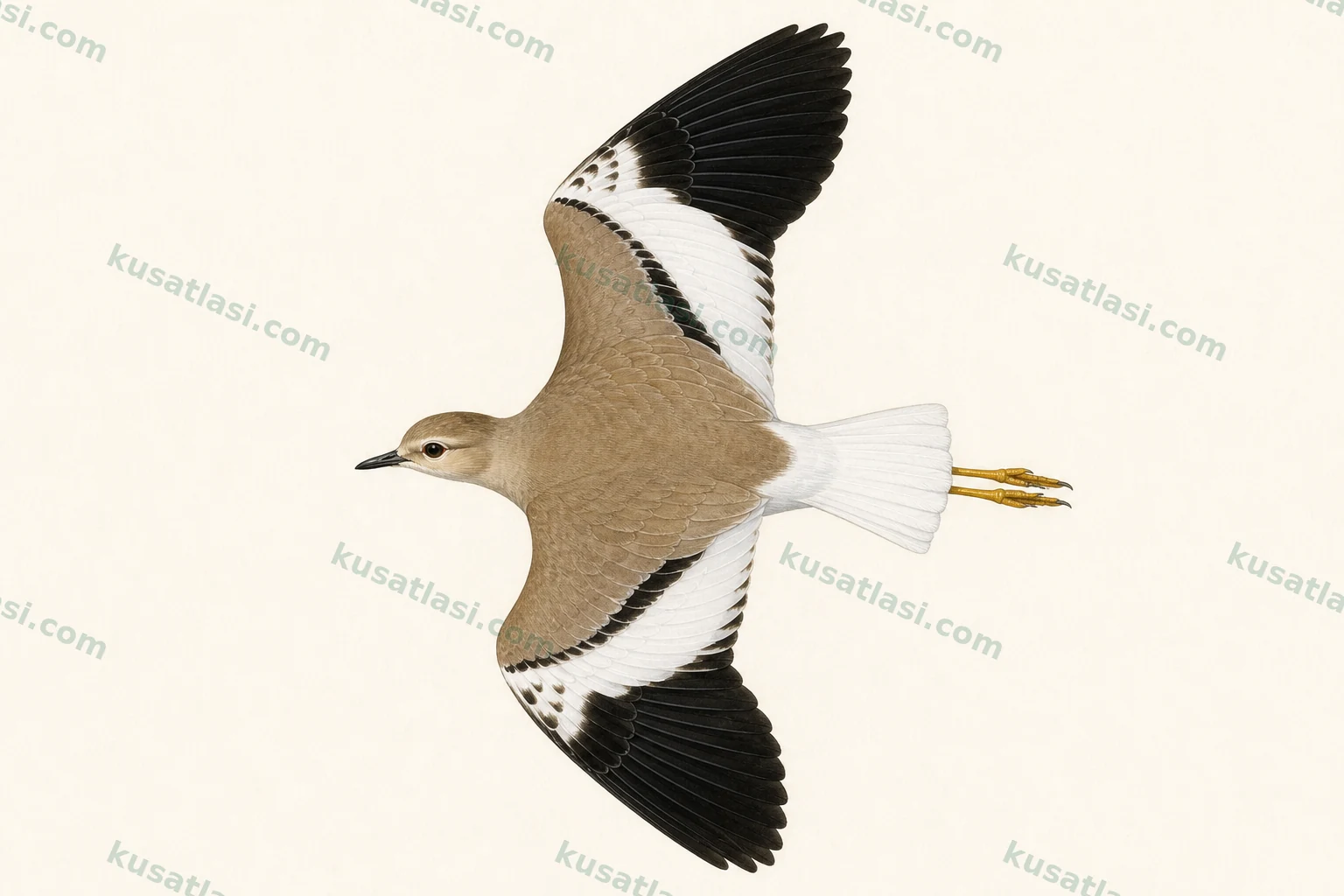
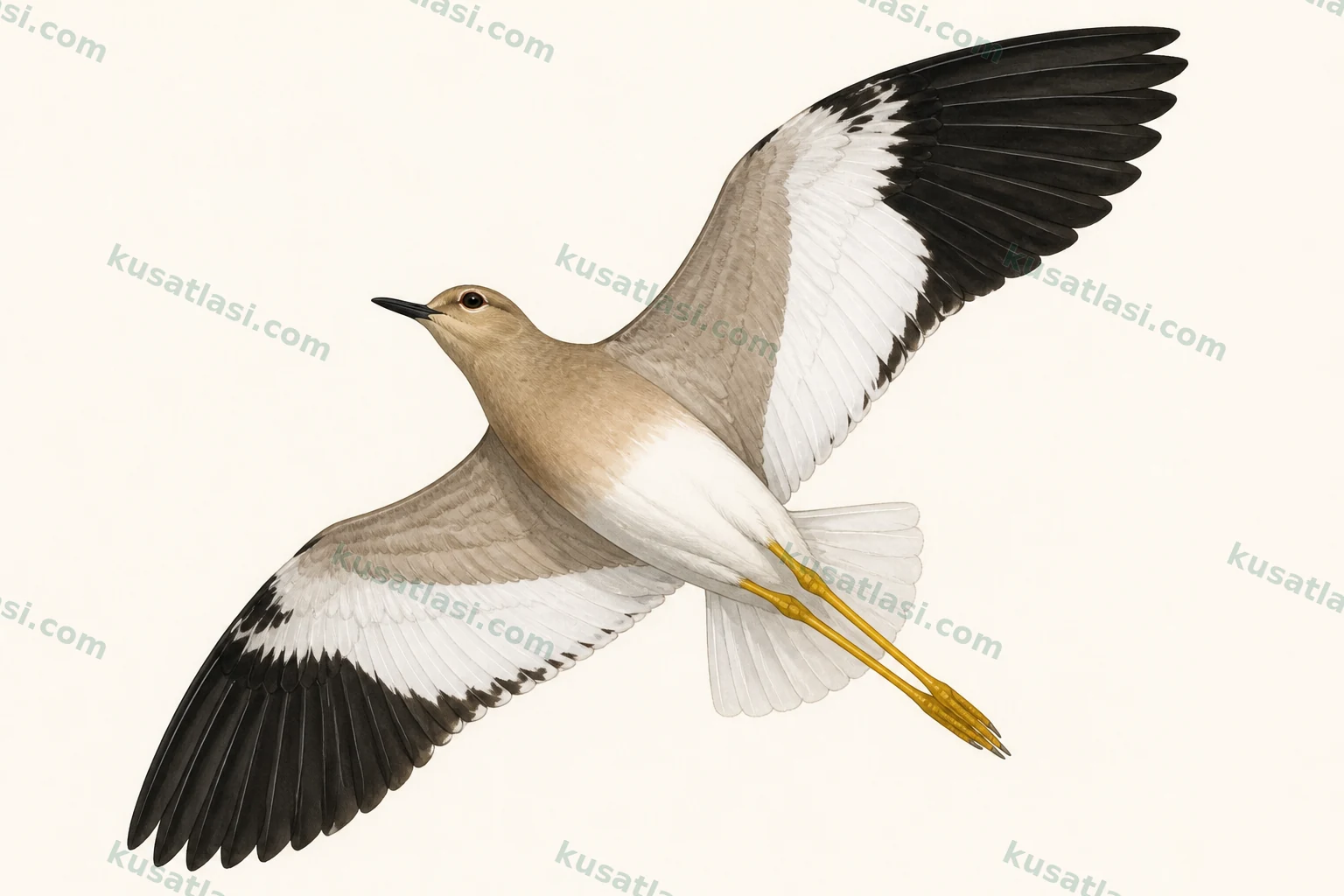
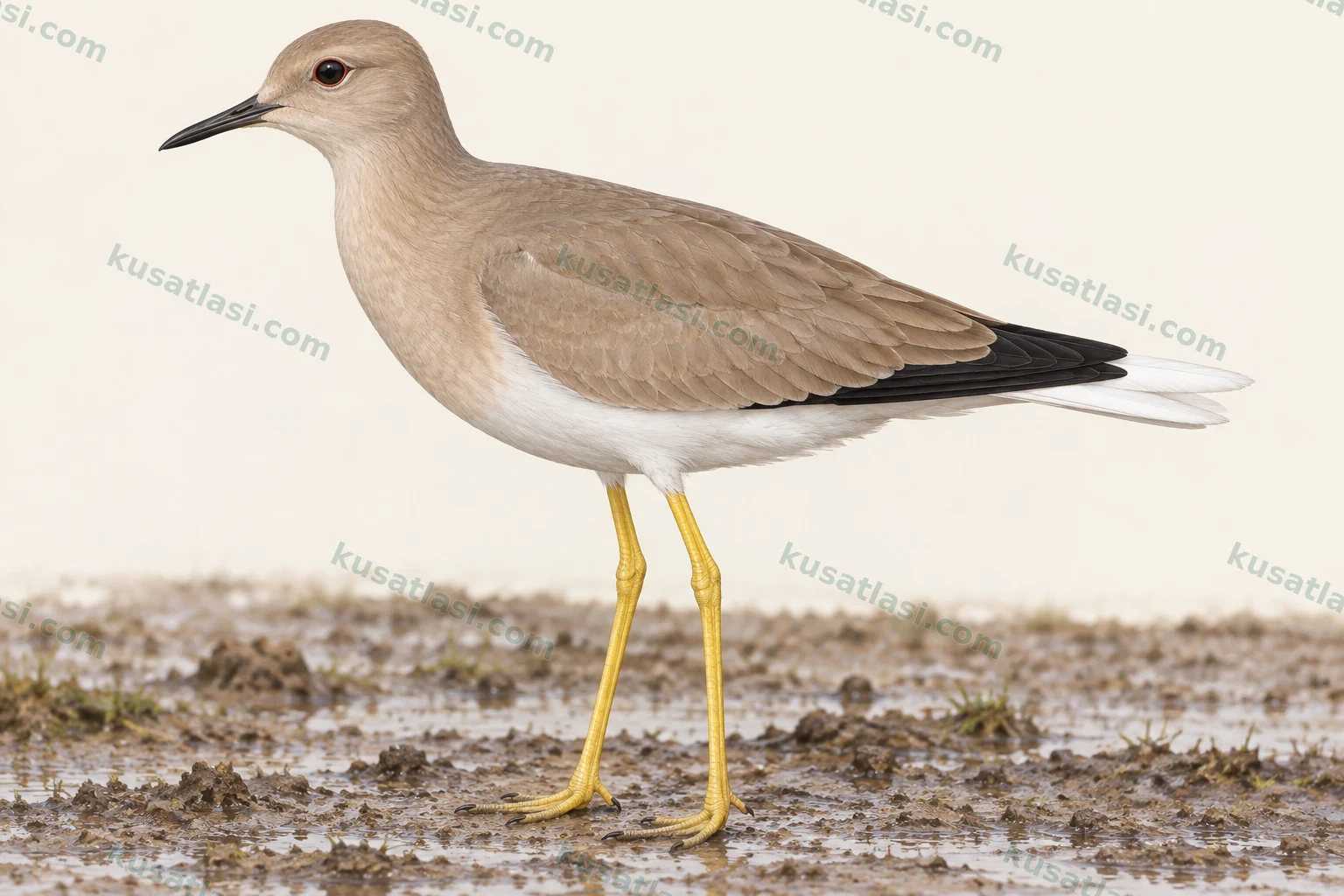
Combine long yellow legs, plain sandy head and all-white tail; do not confuse folded black wingtips with a tail band.
- Order
- Neognathae
- Conservation status
- LC Least Concern
First look in the field
Quick identification
- Long yellow legs
A long-legged lapwing that walks through shallow water.
- All-white tail
Check it in flight; folded dark wingtips may obscure it while standing.
- No long crest
It lacks the long crest and strong head pattern of Northern Lapwing.
Biometrics
Length
- Male
- 26–29 cm
- Female
- 26–29 cm
Wingspan
- Male
- 55–70 cm
- Female
- 55–70 cm
Weight
- Male
- 99–198 g
- Female
- 99–198 g
Detailed explanations of these measurements are available on our website, on the same species page.
World distribution
White-tailed Lapwing
Customize map layers
Observation Sites
Bird Atlas recordsLoading observations…
Monthly record intensity
12 monthsRecord intensity is affected by observation effort.
Rotate the globe and compare the supported layers. Colours show broad range areas, not exact sightings or nests.
- Jan
- Apr
- Jul
- Oct
- Dec
Generalised data and method
Basemap: Natural Earth (public domain).
Bibliography ↗Authentic bird sound and ethical use
Voice and listening
The existing atlas account does not provide a diagnostic call description. Do not identify this species from an unlinked call alone; compare the bird's visible structure and tail.
Spoken guide
Narration has not been recorded; no audio file has been created.
Observe without approaching the nest
Breeding
A shallow scrape close to water, with a little plant lining.
Usually three or four.
About 22–24 days, with both parents taking turns.
Do not track an alarming adult to its nest; leave the shoreline.
Never rely on one mark
Similar species
Northern Lapwing
Vanellus vanellusHas a long crest and different head pattern; do not confuse folded wingtips with the tail.
Scientific species guide
Detailed account
A Long-legged Wetland Lapwing
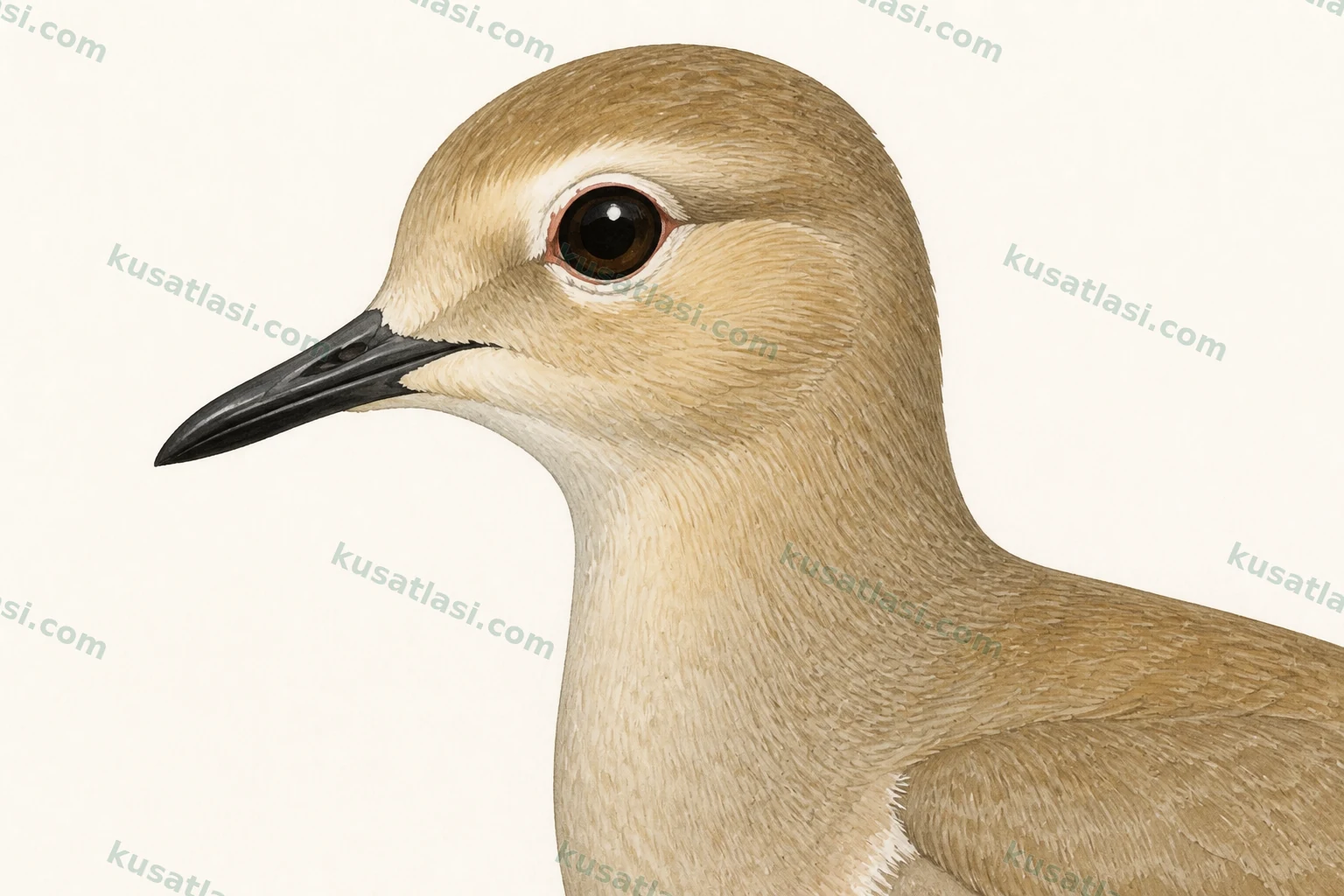
Combine a plain sandy-brown head and upperparts, grey-brown breast, white belly, dark bill and conspicuously long yellow legs. It lacks Northern Lapwing's long crest and Sociable Lapwing's strong breeding head pattern. Mud and shadow can obscure leg colour, so seek more than one natural view.
Tail or Folded Wing?
The tail is entirely white, but folded black wingtips can cover it while the bird stands. Do not mistake these for a black tail band. Natural flight reveals the white tail and brown, white and black upperwing pattern. Establish whether a photograph shows the back or underside before comparing feather colours.
Sex and Age
Adults of both sexes look very similar; a paler illustration is not a reliable female character. Juveniles can show dark crescent-shaped upperpart markings, producing a scaled appearance. The biometric panel repeats shared species values because separate sex-specific ranges were not verified.
Nest and Young
A shallow ground scrape near water may contain a little plant material. Usually 3–4 eggs are laid; compiled incubation is about 23 days and fledging around 30 days. Chicks walk and gather food soon after hatching but still need adult protection. A walking chick is not necessarily independent or abandoned.
Voice and Behaviour
This lapwing walks through shallow water, muddy edges and damp grassland to seek small invertebrates. It may also use low vegetation and open ground rather than standing in water continuously. Distinguish active feeding from a bird merely passing through. Calls and breeding-season vocalisations can resemble those of other lapwings, so a distant call without a simultaneously observed bird is not a secure species identification. If an adult alarms, approaches the observer or circles repeatedly, withdraw rather than searching for a ground nest. A cluster of birds at one site does not itself demonstrate nesting or a permanent colony.
Similar Species
Northern Lapwing has a long crest, different body colours and a stronger head pattern. Sociable Lapwing has a much more contrasting face. Compare the White-tailed Lapwing's long legs, rather plain head, brown-grey upperparts, wing pattern and entirely white tail together. On a standing bird, folded dark wingtips can falsely suggest a dark tail band. A spontaneous flight view can resolve this, but do not force the bird to fly. If the key tail character remains unseen, preserve that uncertainty in the field record.
Scarce and Local in Turkey
Historical Turkish reports describe small numbers from spring to autumn and past breeding in southern coastal regions and the central plateau. They do not establish that every old site remains occupied. Record date, count, habitat and diagnostic evidence rather than assuming regular annual presence.
A Dated Estimate
BirdLife's 2021 European supplement lists a Turkish expert estimate of 0–4 breeding pairs for 2013–2019. This is not a 2026 census or proof of four currently active pairs. A sighting, possible breeding and confirmed nesting are different evidence levels.
Regional Movements
The species is associated with Middle Eastern and Central Asian wetlands. Populations differ in migration and local residence; one fixed route or distance cannot represent every Turkish bird. Wetland-to-wetland movements also need not be long-distance migration.
Read Records Carefully
The calendar offers seasonal observation advice, not guaranteed nationwide presence. Repeated records may concern one individual, and heavily watched places generate more reports. A foreign country's seasonal chart must not be substituted for Turkey's evidence. Document unusual winter records particularly carefully.
Month-by-month field notes
1. January: Document winter records carefully; do not assume regular wintering.
2. February: Do not apply another country's seasonal calendar to Turkey.
3. March: Scan suitable shallow margins from a distance in spring.
4. April: A single adult is not proof of breeding.
5. May: Keep away from possible nests on wet ground.
6. June: A walking chick still depends on adults; keep your distance.
7. July: Record local water level and vegetation.
8. August: Check the scalloped upperparts of juveniles.
9. September: Look for the white tail in spontaneous flight.
10. October: Past autumn reports do not guarantee yearly occurrence.
11. November: For scarce records, retain date, count and identification views.
12. December: Do not recount the same individual as a new bird.
Water, Mud and Low Vegetation
Search shallow wet margins and vegetated openings rather than only dry bare fields. Long legs allow wading, but deep open water is not a feeding surface. Examine the narrow shoreline and small pools where a bird can walk.
Changing Wetlands
Marsh edges, wet grassland, lake margins and temporary flooded ground can offer suitable conditions. Receding water may briefly expose feeding mud; complete drying can remove that opportunity. Note actual conditions at the time of observation, not merely the site's name.
Avoid Ground Nests
Nesting occurs near water on the ground. Walking or driving along a margin can harm an unseen nest. If an adult alarms or repeatedly tries to lead an observer away, stop approaching and retreat. Do not part vegetation to obtain a nest photograph.
Protect the Whole Margin
Historical Turkish reports identify drainage of suitable sites as a concern. Water regime, low vegetation and quiet resting places work together. A lake retaining water does not mean it retains the same usable shoreline habitat throughout the year.
Small Invertebrates
Food includes insects, worms, small molluscs and crustaceans. Availability changes with water conditions; there is no verified fixed diet percentage for all Turkish birds. A small dark prey item in a photograph cannot necessarily be identified to species.
Walk, Pause and Take
Short movements can alternate with pauses and bill strikes. Watch this sequence alongside the plain head and long yellow legs. Other waders also stop and pick food, so behaviour alone does not identify the bird.
Mud and Shallow Water
Soft mud and wading areas offer different feeding opportunities. The bird can reach into water with its bill and sometimes head; this does not make it a swimming duck-like feeder. Record surface picking and deeper reaching as separate observed actions.
Leave Feeding Undisturbed
Do not flush the bird to expose its tail or bait it for a cleaner photograph. Patient watching may provide a natural flight view. Increase distance around small pools where an approaching observer could force a bird to leave its entire available feeding patch.
A Concealed Name Feature
The white tail can be hidden by black folded wingtips. Deciding which feathers are actually visible is therefore essential. A natural flight view can resolve the ambiguity without deliberately flushing the bird.
Mobile Does Not Mean Independent
Newly hatched chicks can move and collect food yet remain dependent on adult protection. A motionless chick may be hiding rather than abandoned. Retreating is safer than handling it and can allow adults to return.
A Small Measured Sample
A 2024 paper examined four White-tailed Lapwing nests from an Iraqi wetland in the 2023 breeding season, each with four eggs. This is useful direct evidence, not a census of Turkey or proof that every clutch everywhere is identical.
Global and Local Status Differ
Global Least Concern does not imply abundance in Turkey or immunity to wetland loss. Local scarcity and dated breeding estimates deserve separate attention. Documenting observations helps, but publishing sensitive nest coordinates can increase disturbance rather than improve knowledge.
Species text and plates come from existing atlas records. Measurements were checked against reliable species sources.
Open bibliography