
Approved field-guide plates
White-backed Woodpecker identification views
Swipe left or right through all five plates.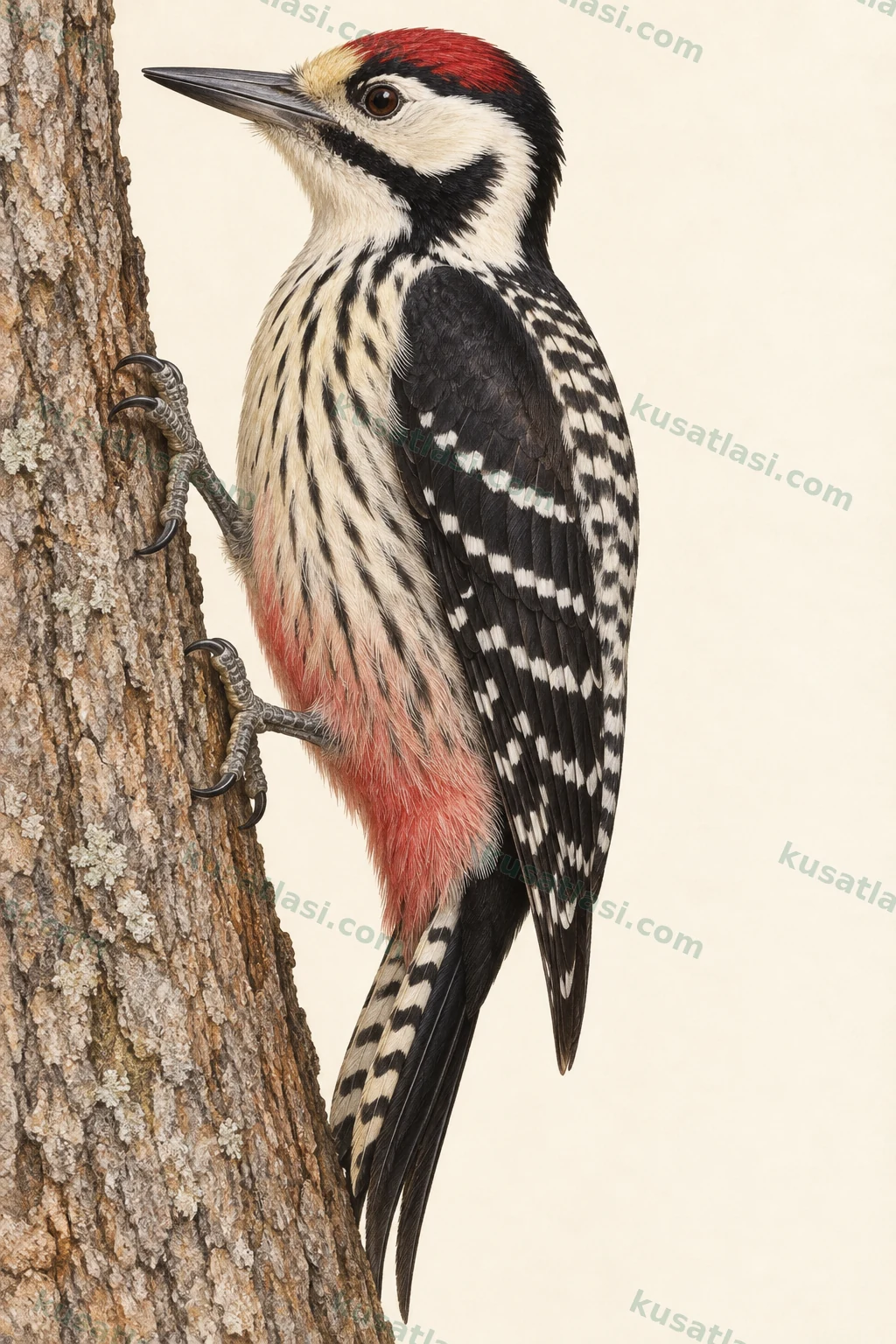
Woodpeckers
White-backed Woodpecker
Dendrocopos leucotos
Ak Sırtlı Ağaçkakan
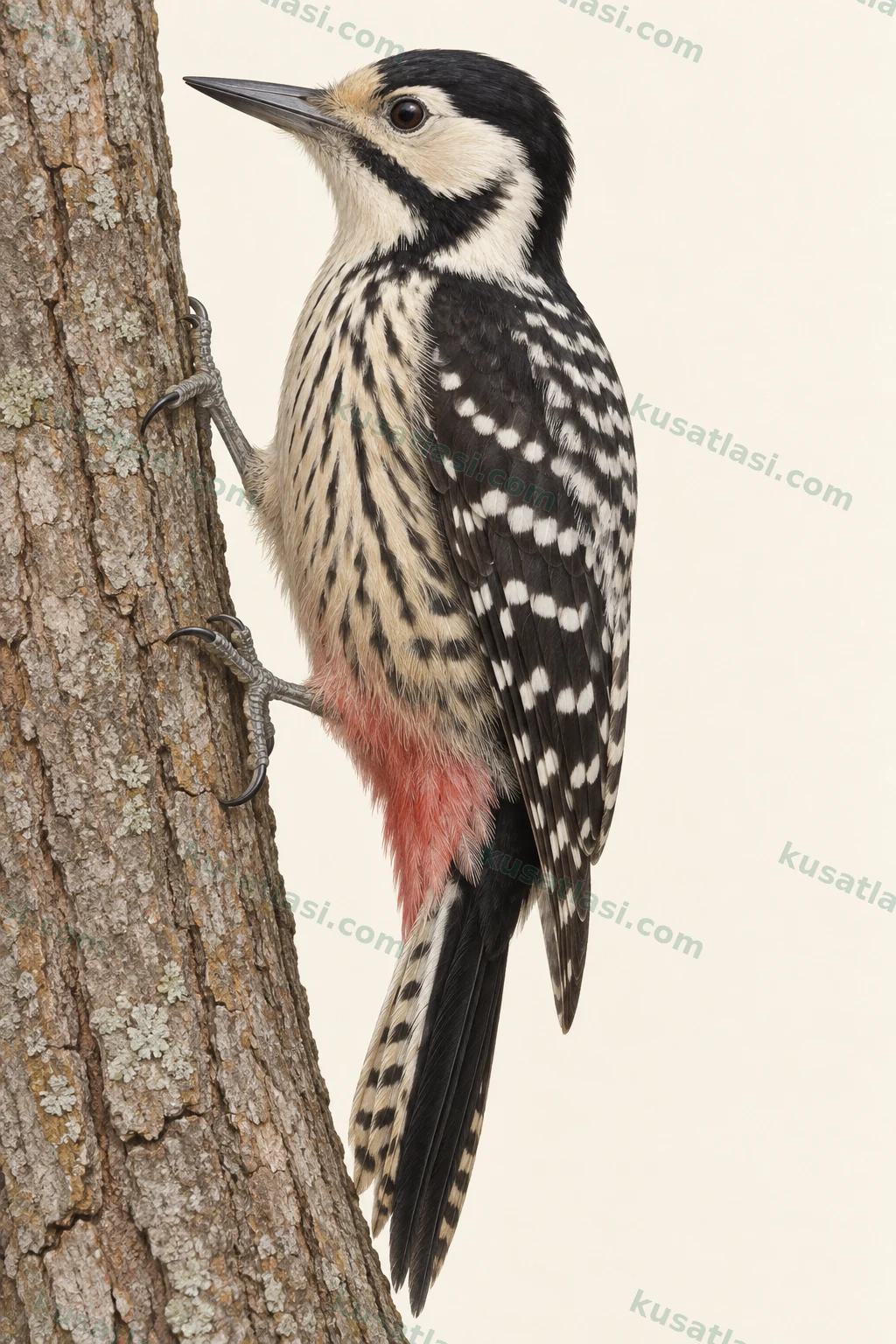
Long bill, streaked flanks and no large white shoulder patch; Turkish lilfordi can have a dark-barred back.
- Order
- Neognathae
- Conservation status
- LC Least Concern
First look in the field
Quick identification
- Back varies by form
The lilfordi form in Turkey has dark barring on lower back and rump.
- Flank streaks
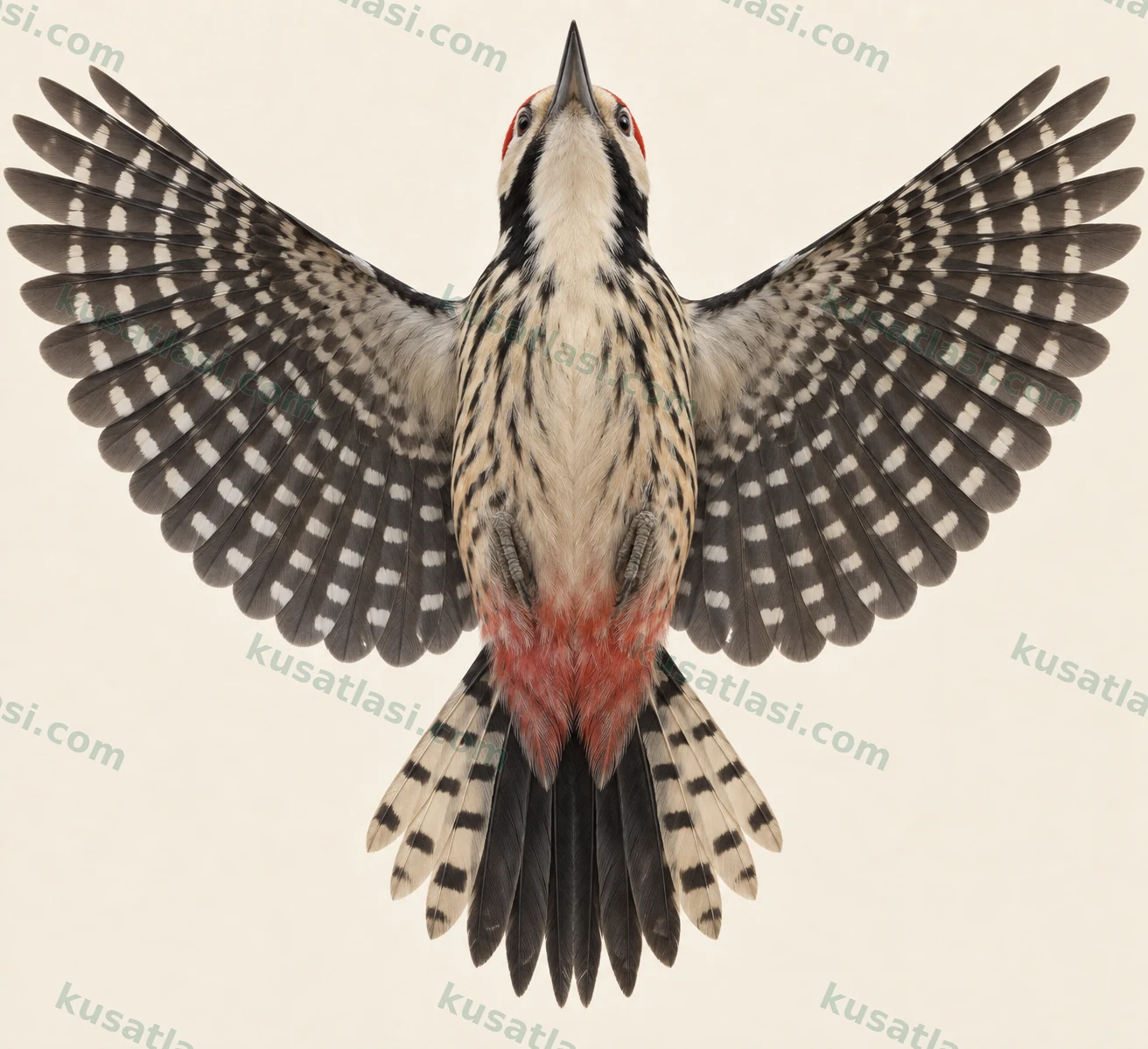
Check dark flank streaks together with the pinkish lower underparts.
- Crown and age
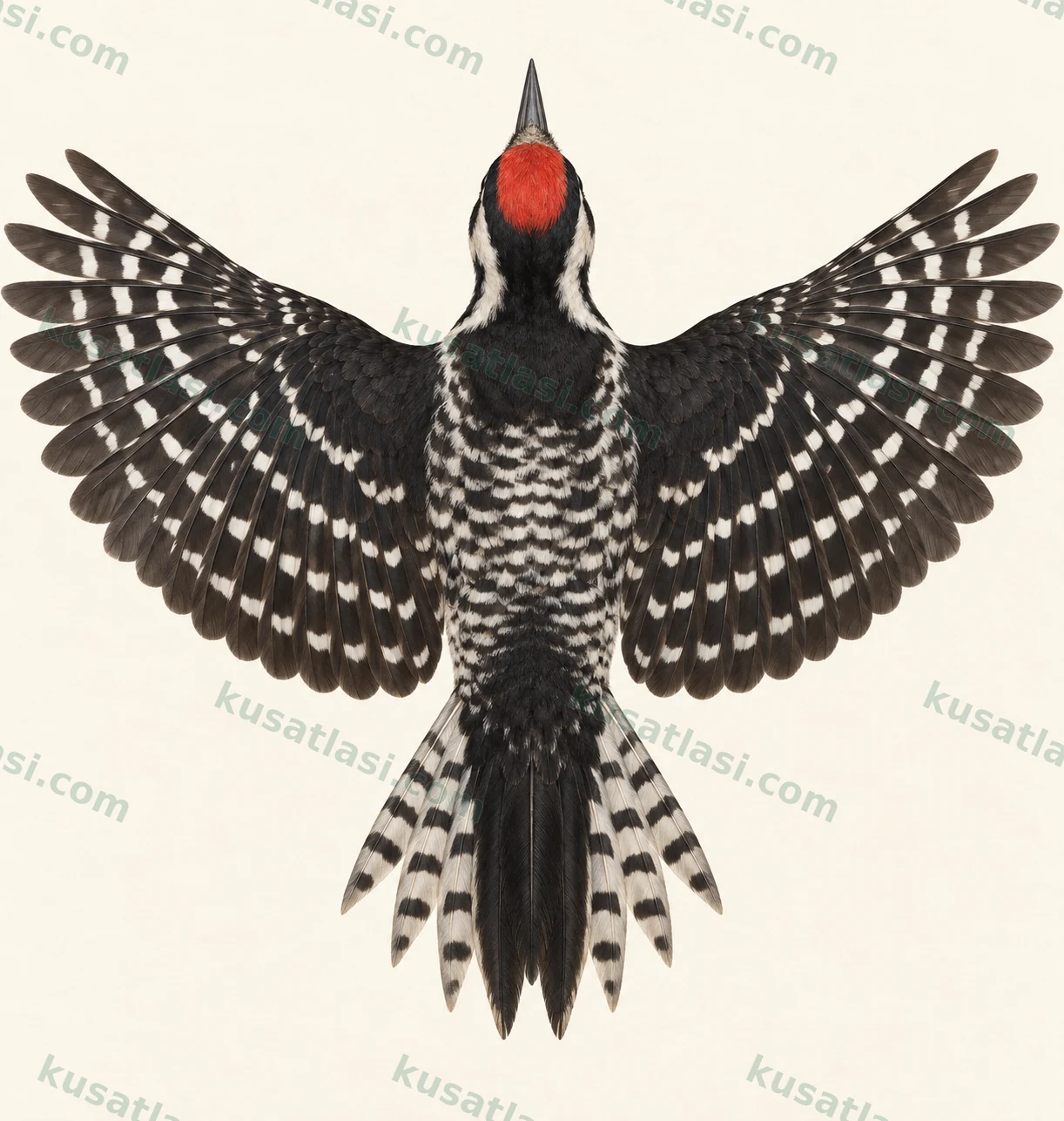
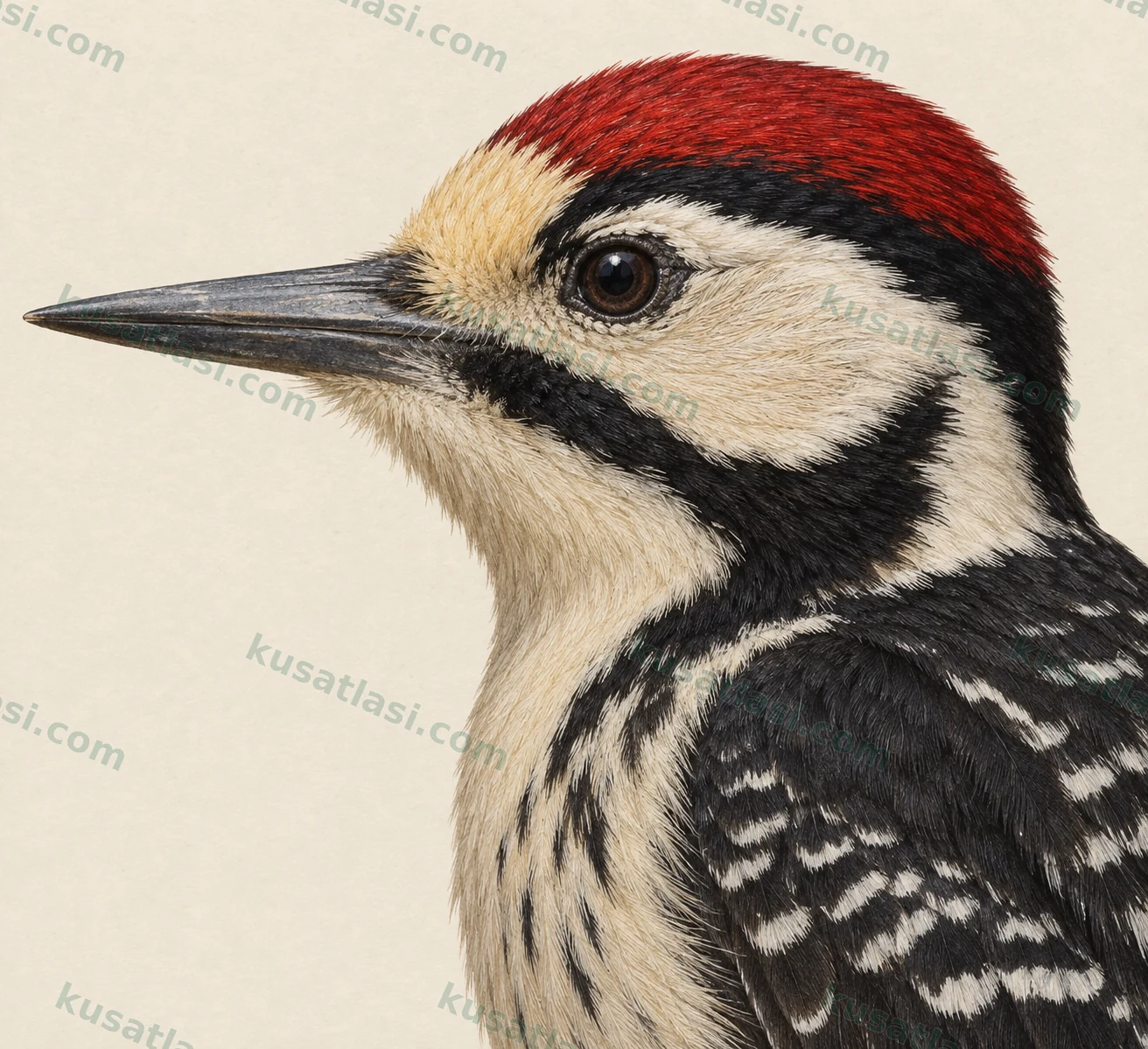
Adult males have a red crown, but juveniles may also show red.
Biometrics
Length
- Male
- 24–26 cm
- Female
- 24–26 cm
Wingspan
- Male
- 38–40 cm
- Female
- 38–40 cm
Weight
- Male
- 99–112 g
- Female
- 99–112 g
Detailed explanations of these measurements are available on our website, on the same species page.
World distribution
White-backed Woodpecker
Customize map layers
Observation Sites
Bird Atlas recordsLoading observations…
Monthly record intensity
12 monthsRecord intensity is affected by observation effort.
Rotate the globe and compare the supported layers. Colours show broad range areas, not exact sightings or nests.
- Jan
- Apr
- Jul
- Oct
- Dec
Generalised data and method
Basemap: Natural Earth (public domain).
Bibliography ↗Authentic bird sound and ethical use
Voice and listening
Short, slightly muffled calls and rapid drumming on wood may be heard. Drumming is made with the bill against wood, not with the voice, and changes with the wood's resonance.
Spoken guide
Narration has not been recorded; no audio file has been created.
Observe without approaching the nest
Breeding
Both sexes excavate a cavity in a decaying trunk or substantial branch.
Sources report three to six; figures from different studies should not be forced into one fixed clutch.
About 12–16 days, with both parents participating.
Do not approach possible nest holes or disturb dead wood.
Never rely on one mark
Similar species
Great Spotted Woodpecker
Dendrocopos majorAssess the longer bill, streaked flanks and lack of a broad white shoulder patch together.
Middle Spotted Woodpecker
Dendrocoptes mediusA red crown alone is insufficient; compare face, bill proportions and underpart streaking.
Scientific species guide
Detailed account
Structure Before the Name
White-backed Woodpecker is a long-billed black-and-white forest bird with dark flank streaks and pinkish lower underparts. Combine those characters with the absence of large white shoulder patches. Clinging to a trunk identifies a familiar woodpecker behaviour, not this species alone.
The Turkish Form
The lilfordi form occurring in Turkey has a dark-barred lower back and rump rather than the clean white patch shown by northern nominate birds. A broad unmarked white back is therefore not a required field mark for every Turkish individual. Check the locality and form represented in any photograph used for comparison.
Sex and Age
Adult males have a red crown. Adult females have a black crown and nape with no red on the head. Young birds of both sexes can show some crown red, so age must be considered before assigning sex. Different framing or perches in illustrations are not biological differences.
Breeding
Both sexes excavate a cavity in decaying wood. MME gives 4–6 eggs; ADW reports 3–5. Incubation lasts about 12–16 days with both parents involved. Young remain in the cavity around 25–28 days and family association can continue after fledging. These are biological ranges, not a fixed timetable for every Turkish nest.
Calls, Drumming and Behaviour
Short, slightly muffled calls and rapid bill strikes on a tree can be heard. Drumming differs from a vocal call: the bill strikes wood, and the material's hardness and resonance alter the sound. A written syllable cannot capture that variation. Locate the tree producing a natural sound before attributing it to the first woodpecker seen. The bird probes fallen trunks, dead branches and rotting wood as well as standing trees. Dead wood in mature broadleaf or mixed forest supports prey and potential cavities, but not every dead tree marks this species. Watch a bird carrying food or drumming near a possible nest from a distance; do not lure it with playback.
Similar Species
Great Spotted Woodpecker is also black and white. Seek the White-backed Woodpecker's longer bill, streaked flanks and lack of a single broad white shoulder patch together; rows of pale wing spots should not be mistaken for that patch. A hidden shoulder in one photograph is not evidence that the patch is absent. Middle Spotted Woodpecker may also show red on the head, so crown colour alone is unsafe, especially because young White-backed Woodpeckers can have red crowns. Compare bill proportions, complete facial pattern and streaked underparts. Northern photographs of the white-backed leucotos form show a different subspecies appearance from the dark-barred lilfordi form in Turkey, not a different species.
A Resident Breeder
White-backed Woodpecker breeds in Turkey and can remain in suitable forest throughout the year. Its distribution is patchy rather than uniform across the country. Mature trees and deadwood matter more than the simple presence of woodland on a map.
Regional Context
OSME associates lilfordi with scattered Turkish mountain forests and the northern Turkey–Caucasus region. This is a broad distribution framework, not a promise that every forest or province holds the species. This page retains Dendrocopos leucotos as used by the Turkish species list; subspecies names explain variation rather than silently changing the taxon.
Historical Numbers Need Dates
BirdLife's 2021 European assessment lists an expert estimate of 500–1000 Turkish breeding pairs for 2002–2012. That is not a 2026 census. Turkish trends in that assessment have insufficient evidence. Sparse map points alone do not establish a population size or a rate of decline.
No Universal Migration Route
A resident woodland species should not be assigned a routine spring arrival and autumn departure from Turkey. Juvenile dispersal or local movement may occur without implying a shared long-distance route. Repeated visits under comparable conditions are more informative than interpreting one silent winter visit as proof of migration.
Month-by-month field notes
1. January: Check low logs as well as treetops.
2. February: Listen to natural drumming without playback.
3. March: Observe a cavity-excavating bird from a distance.
4. April: Local weather and altitude can shift breeding timing.
5. May: Do not wait at the nest entrance for food-carrying parents.
6. June: Fledging does not mean immediate independence.
7. July: A young bird's red crown is not proof of a male.
8. August: Juvenile dispersal is not regular long-distance migration.
9. September: A dark-barred back can match the Turkish lilfordi form.
10. October: Stripped bark alone is not proof of species identity.
11. November: Survey dead-wood patches from safe routes.
12. December: One quiet visit does not prove the bird has left the site.
Forest Structure Matters
Mature deciduous or mixed woodland with standing dead trunks, decaying branches and fallen logs provides the necessary combination of resources. Beech and other broad-leaved trees can form suitable habitat, but a tree name alone does not establish suitability. Different stages of decay supply different surfaces and prey opportunities.
Valleys and Quiet Interiors
Stream valleys and less disturbed forest interiors are useful places to search. The bird is not necessarily beside open water; trunks and logs are its feeding surfaces. Pause on established paths and listen instead of relying only on a rapid walk through dense woodland.
Search Low as Well as High
Stumps and fallen timber may be used as well as upper branches. Scan near the ground without moving or stripping wood. Exposed bark and chips can suggest feeding activity, but cannot identify this species without further evidence.
Deadwood and Safety
Dead trees can provide food and cavities while posing a falling hazard. Keep to safe routes; do not strike trunks, climb to nests or remove bark for photographs. Conserving one nest tree cannot compensate for the removal of surrounding feeding habitat. Deadwood retention and visitor safety require site-specific management.
Invertebrates in Wood
Insects and larvae living beneath bark and within decaying timber form the principal food. A stump is more than a perch: it can contain prey. Availability changes with wood condition and season, and a few observations cannot establish dietary percentages for Turkey.
Foraging Is Not Always Drumming
Birds probe cracks, peel bark and hammer into wood. Irregular feeding blows should be distinguished from rapid signalling rolls. Long work at one spot may reflect accessible prey. Do not lure a bird to a more visible trunk with food or playback.
Bill Size and Access
Average bill differences between sexes may influence access to prey, but should not be used as an infallible distant sexing method. Observed feeding behaviour is needed before claiming that two birds exploit different resources. The key ecological connection is the availability of insect-rich decaying wood.
Provisioning and Other Foods
Both parents carry food to young. Repeated visits to one cavity may reveal an active nest; do not stand at its entrance to watch deliveries. Some plant foods, including fruit, may be taken occasionally. That does not make the species primarily a seed eater. Preserve natural feeding surfaces rather than baiting birds.
A Name Is Not a Diagnostic Key
Turkish lilfordi birds can have a much darker, more barred back than northern White-backed Woodpeckers. The common name does not require an unmarked white panel in every bird. Folded wings and viewing angle also affect how much of the back is visible.
Age Comes Before Sex
The adult red-crowned male versus black-crowned female distinction does not transfer unchanged to young birds. A juvenile female can have a few red crown feathers. Assess age and the position of colour on the head rather than identifying sex from one red patch.
Cavities Can Outlast Their Makers
An excavated hole may subsequently be used by other animals. Not every old cavity is occupied, and counting holes is not equivalent to counting breeding pairs. Active nests, feeding excavations and unused old holes require different evidence obtained without disturbance.
Records and Birds Are Different Counts
Frequent visits to a known location may repeatedly record the same bird. Observation effort must be considered when interpreting map concentrations. Systematic surveys and opportunistic photographs answer different questions. Global Least Concern status also does not guarantee that every local woodland population is secure or that habitat loss is harmless.
Species text and plates come from existing atlas records. Measurements were checked against reliable species sources.
Open bibliography