
Existing atlas plates
White-rumped Sandpiper identification views
Swipe left or right through all five plates.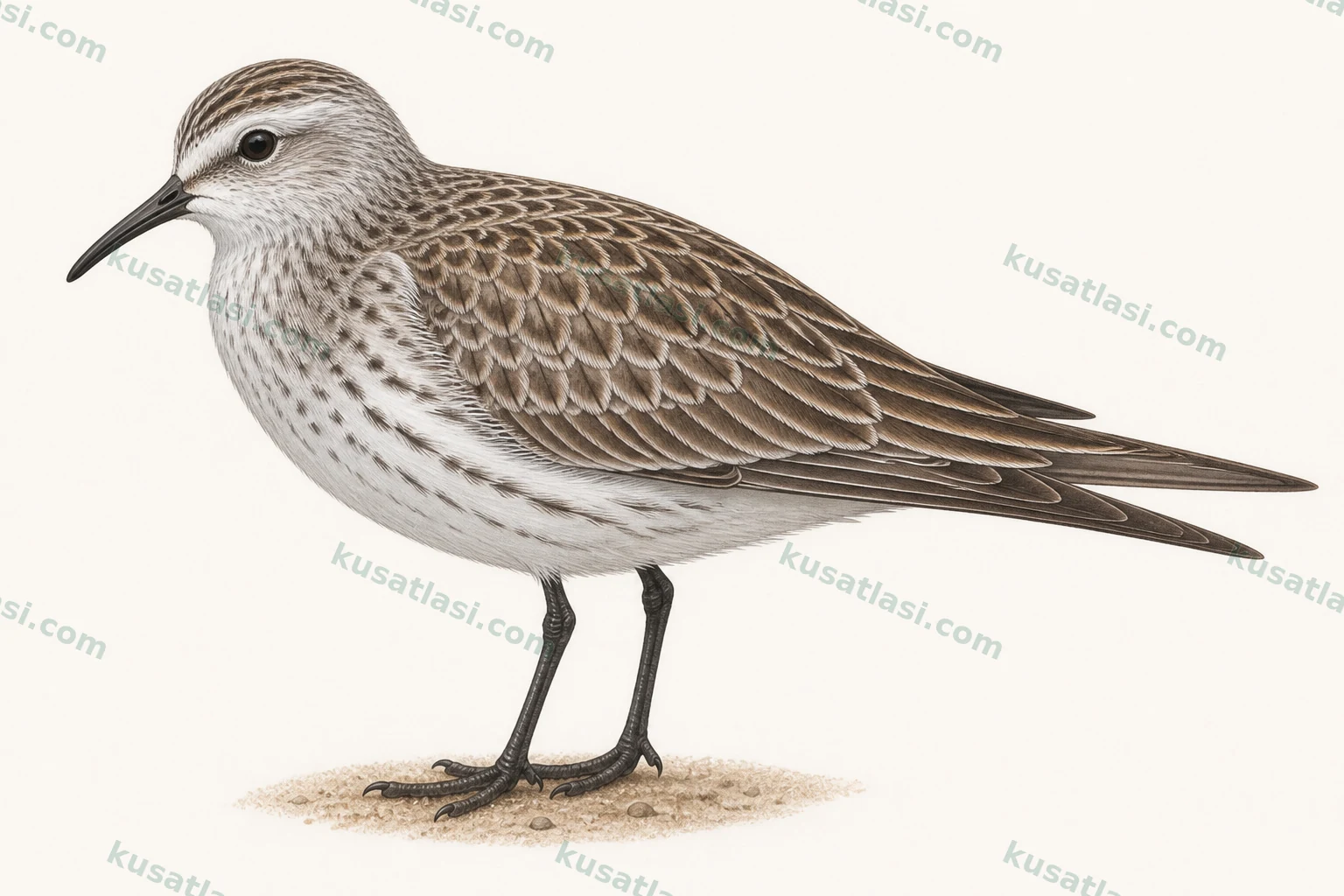
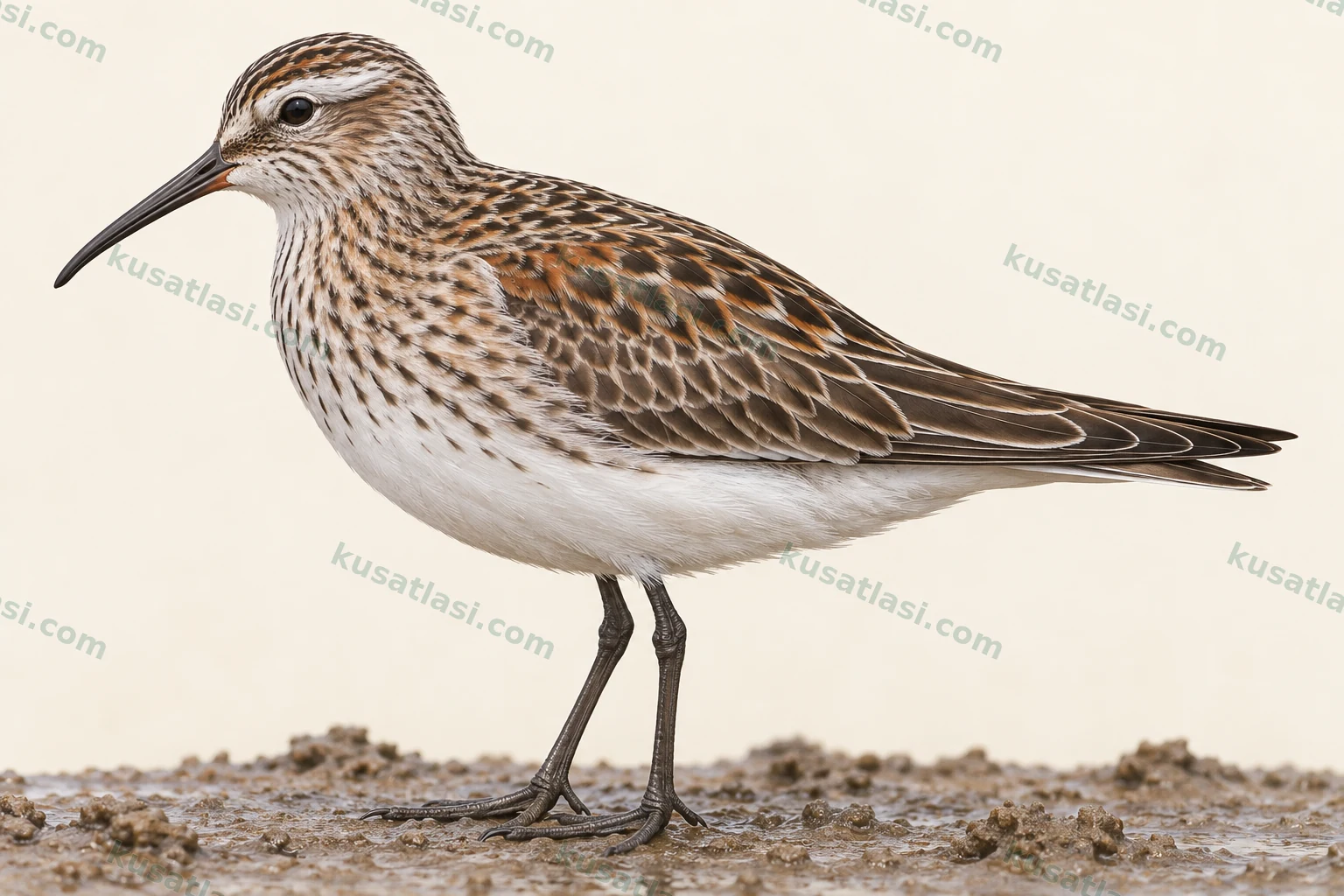
Sandpipers and Allies
White-rumped Sandpiper
Calidris fuscicollis
Ak Sokumlu Kumkuşu
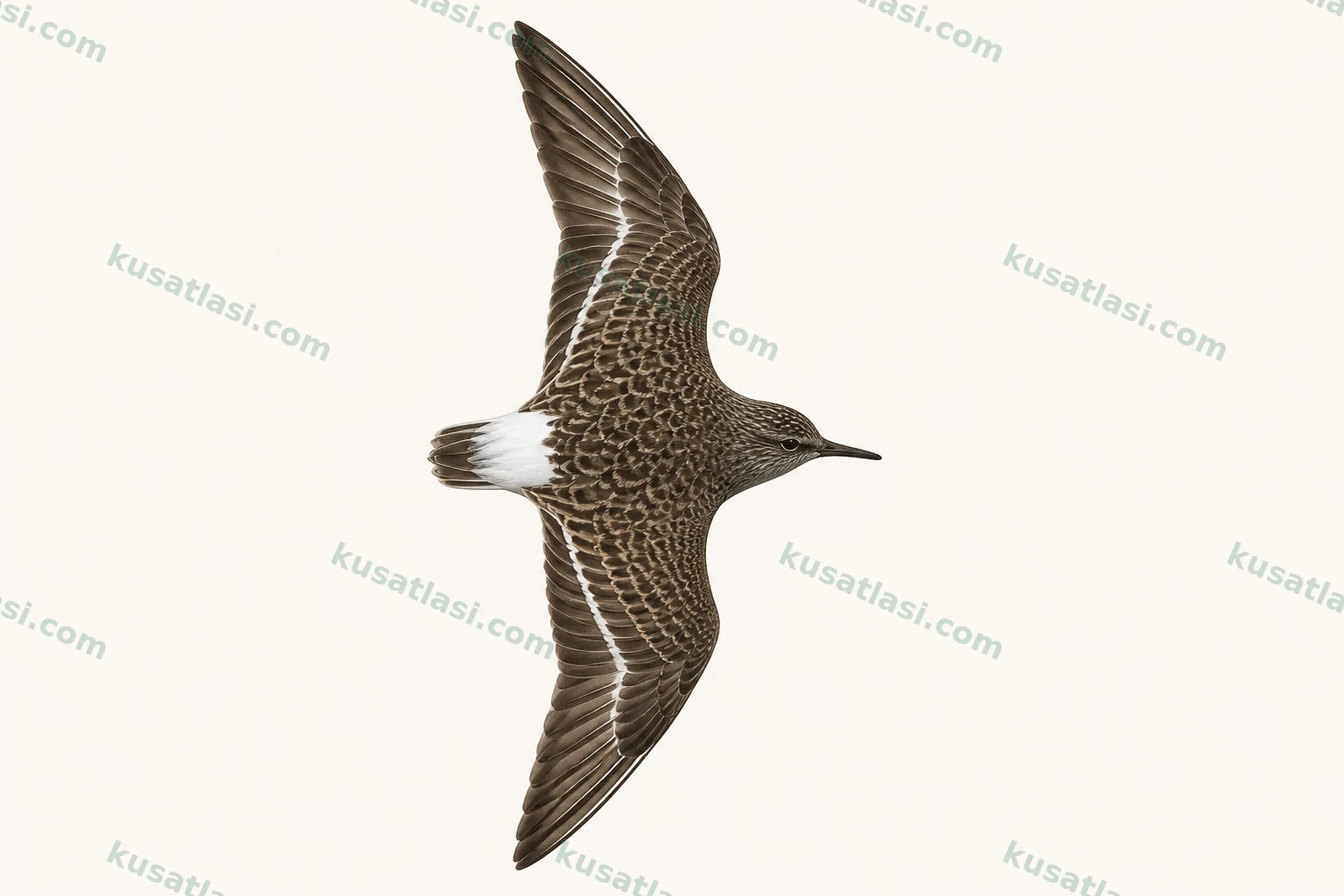
Combine black legs, wingtips beyond the tail, breast/flank streaking and the transverse white upper-tail band.
- Order
- Charadriiformes
- Conservation status
- VU Vulnerable
First look in the field
Quick identification
- A Long-winged Rare Visitor
White-rumped Sandpiper is a small, slender shorebird with black legs.
- Sex, Age and Season
Adult males and females look very similar.
- Locate the White Band
The white band belongs to the upper tail coverts, above the tail base.
Biometrics
Length
- Male
- 15–18 cm
- Female
- 15–18 cm
Wingspan
- Male
- 40–44 cm
- Female
- 40–44 cm
Weight
- Male
- 40–60 g
- Female
- 40–60 g
Detailed explanations of these measurements are available on our website, on the same species page.
World distribution
White-rumped Sandpiper
Customize map layers
Observation Sites
Bird Atlas recordsLoading observations…
Monthly record intensity
12 monthsRecord intensity is affected by observation effort.
Rotate the globe and compare the supported layers. Colours show broad range areas, not exact sightings or nests.
- Jan
- Apr
- Jul
- Oct
- Dec
Generalised data and method
Basemap: Natural Earth (public domain).
Bibliography ↗Authentic bird sound and ethical use
Voice and listening
See the detailed species account below.
Spoken guide
Narration has not been recorded; no audio file has been created.
Observe without approaching the nest
Breeding
Not a regular Turkish breeder, it nests in North American tundra in a ground hollow lined with vegetation. Usually 4, rarely 3 eggs are incubated by the female for about 22 days. Young soon walk and feed themselves, remaining under female care until able to fly at about 16–17 days.
Scientific species guide
Detailed account
A Long-winged Rare Visitor
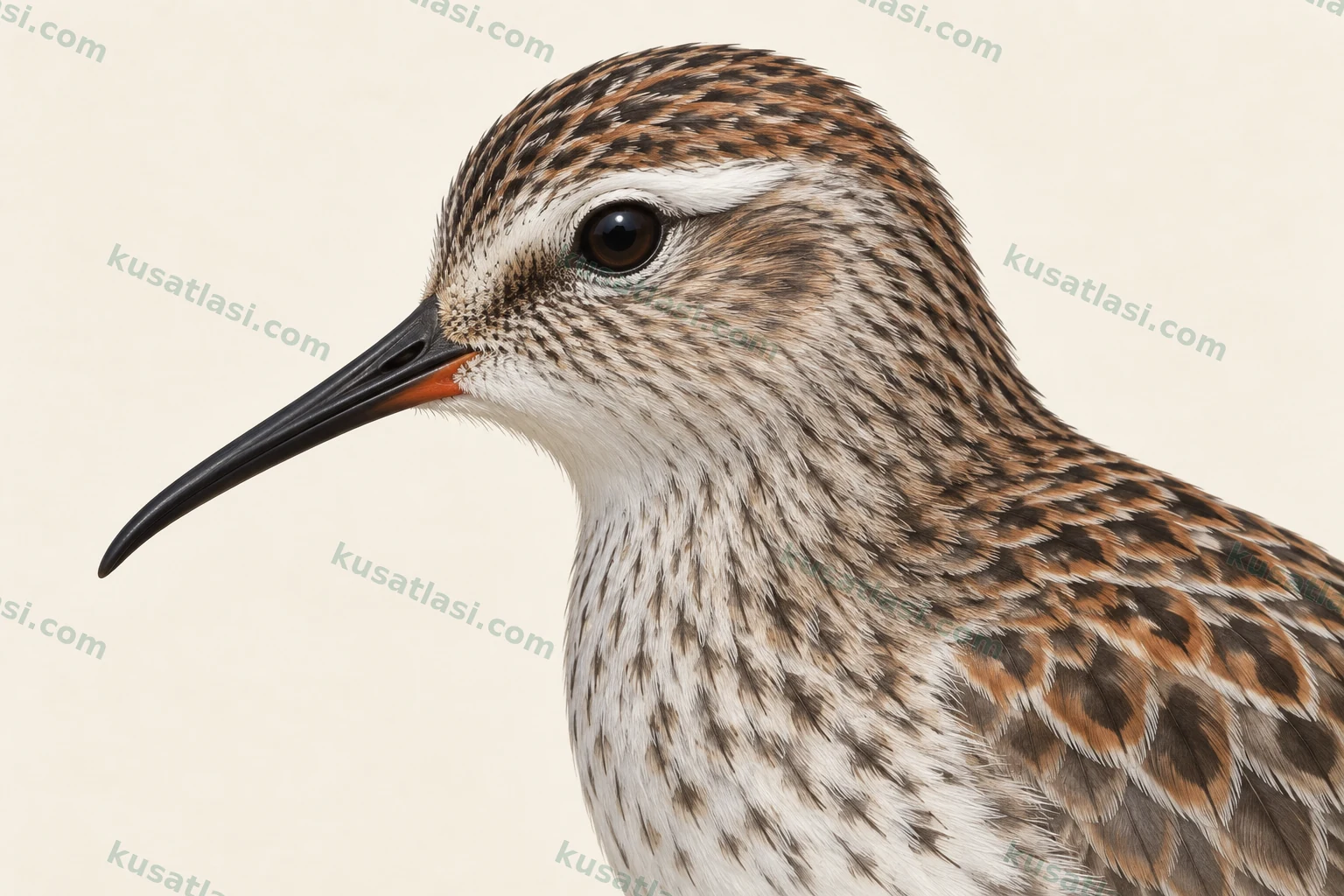
White-rumped Sandpiper is a small, slender shorebird with black legs. At rest, the long wingtips project beyond the tail. Its fine bill droops slightly near the tip; a reddish area at the lower mandible's base can be hard to see. Brown upperparts alone are insufficient for identification.
Sex, Age and Season
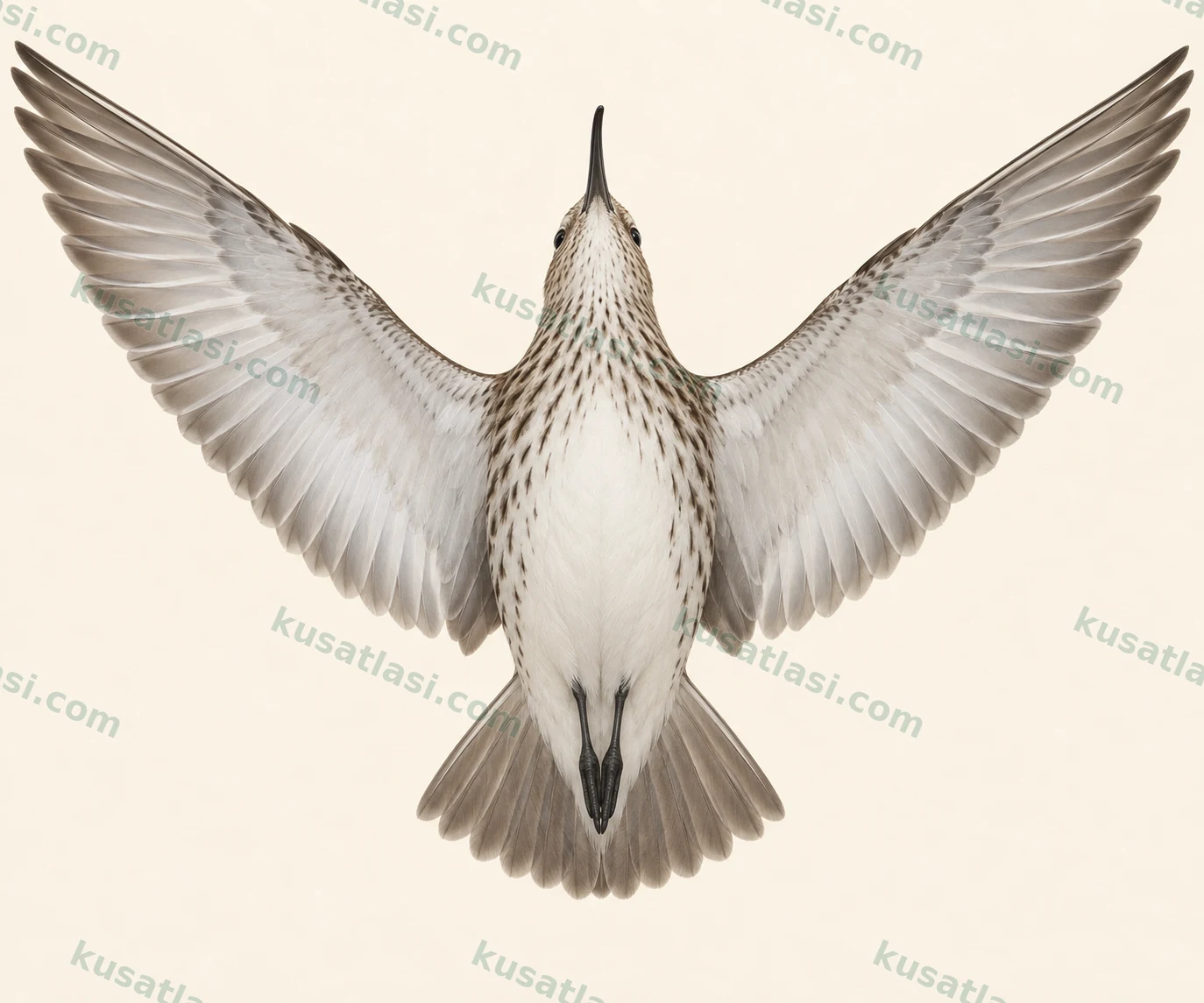
Adult males and females look very similar. Breeding birds have streaking on the head, breast and flanks; juveniles show neatly edged upperpart feathers, sometimes with warm rusty tones. Nonbreeding plumage is greyer and plainer. These differences should not be labelled male versus female without evidence.
Locate the White Band
The white band belongs to the upper tail coverts, above the tail base. It does not make the entire back or tail white. Observe this dorsal feature with bill shape, flank markings and wing projection, preferably in several natural views.
Measurements
These are Cornell's shared ranges for both sexes, not separate Turkish male and female measurements.
Nesting Biology
Not a regular Turkish breeder, it nests in North American tundra in a ground hollow lined with vegetation. Usually 4, rarely 3 eggs are incubated by the female for about 22 days. Young soon walk and feed themselves, remaining under female care until able to fly at about 16–17 days.
Rare in Turkey
The Turkish Bird Records Committee lists White-rumped Sandpiper as a rare species. It should not be presented as a regular Turkish breeder or abundant passage migrant. A few records cannot establish a nationwide arrival date, wintering area or yearly total. The calendar deliberately avoids suggesting a regular Turkish migration curve.
The Main Cycle Is American
Breeding takes place in northern North American tundra, followed by movement to South America for the nonbreeding period. Coastal and inland wetlands provide staging opportunities. This continental pattern does not prove the route or origin of any particular bird recorded in Turkey. A sightings map is not a tracking map.
Interpret Dates Carefully
North American spring passage dates and South American seasonal occurrence cannot simply be copied into a Turkish calendar. Without an adequate verified series, a labelled breeding month or numerical migration peak would overstate the evidence. Date, location, duration and visible identification characters are more useful for a rare observation.
Document Without Disturbing
Record the resting wing-to-tail relationship, side markings and, if the bird flies naturally, the upper tail-coverts. Keep original photographs and field notes. A distant white flash within a mixed flock is not sufficient, and a social-media identification is not a substitute for independent assessment of a rare record.
Mud and Shallow Edges
Outside breeding, this sandpiper uses open mud, shallow-water margins and wet grassland. Lakes, pools, lagoons and estuaries may offer feeding opportunities. It is not confined to saltwater coasts. Suitable habitat in Turkey is a reason to search carefully, not proof that this rare visitor is present.
Water Level Matters
Low vegetation and accessible feeding surfaces differ from dense reedbeds. Freshly exposed soft mud differs from dried hard ground. Scan the thin waterline, small mud islands and short-grass edges, not only the centre of the wetland. Small birds in mixed flocks are easily overlooked there.
Tundra Is the Breeding Setting
North American nesting habitat includes low mossy vegetation near pools and streams, with some drier raised patches also used. This ecological description must not be turned into a Turkish breeding claim. A feeding adult at a Turkish wetland does not establish that a nest exists nearby.
Keep the Feeding Area Quiet
Use a fixed viewing point and optics instead of walking birds ahead of you. Persistent alertness and interrupted feeding are reasons to retreat. Never flush the bird merely to reveal the white band. Resting and feeding patches both matter, especially when disturbance leaves few quiet alternatives.
Mainly Small Invertebrates
Food includes insects and larvae, small worms, crustaceans and other invertebrates. Available prey differs among tundra, freshwater margins and coastal mud. Describing the diet as only mosquitoes or only marine animals would be misleading. Some plant material can be taken, without making this primarily a seed-eating bird.
Probing and Picking
The bird probes mud and takes visible prey from the surface, often moving a few steps between attempts. A bill movement does not necessarily represent a capture. When documenting feeding, separate observed swallowing from searching rather than counting every head dip as a successful meal.
Refuelling on Migration
Staging wetlands provide food as well as rest. Loss of productive mud or repeated disturbance can restrict access to feeding opportunities. Conservation therefore involves a network of usable sites, not just the one location holding a rare individual. Baiting also changes the natural behaviour being observed.
Young Feed Themselves
After leaving the nest, chicks collect their own small prey while the female accompanies, protects and broods them. Self-feeding does not mean immediate independence, particularly before flight is possible. This tundra life-history information should not be mistaken for evidence of young accompanying an isolated Turkish adult record.
A Name Needs an Anatomical Explanation
The white area is on the feathers covering the upper tail base. The patterned back remains darker, while this band becomes visible in flight. Reflected light from an underwing is not the same character. Stating the viewing direction helps explain exactly what an identification illustration is intended to show.
Long Wings Are Not a Long Tail
Identify which rear projections are folded wingtips and which are tail feathers. Baird's Sandpiper also has long wings, so projection alone cannot separate the two. Compare the upper tail-coverts, side markings and bill rather than relying on a single elegant outline.
Similar Sexes, Unequal Parental Roles
Similar adult plumage does not imply equal parental duties. A male may mate with more than one female; females incubate and care for the young. Neither a coloured drawing nor a difference in pose can establish an adult's sex reliably.
Conservation Categories Change
The 2024 IUCN assessment moved this species from Least Concern to Vulnerable. Some older identification resources still show the previous category. Check the assessment date rather than copying an outdated label. Rarity within Turkey and worldwide extinction risk are separate questions: a few local sightings cannot measure the global population.
Text and plates come from existing atlas records; references are in the central bibliography.
Open bibliography