
Existing atlas plates
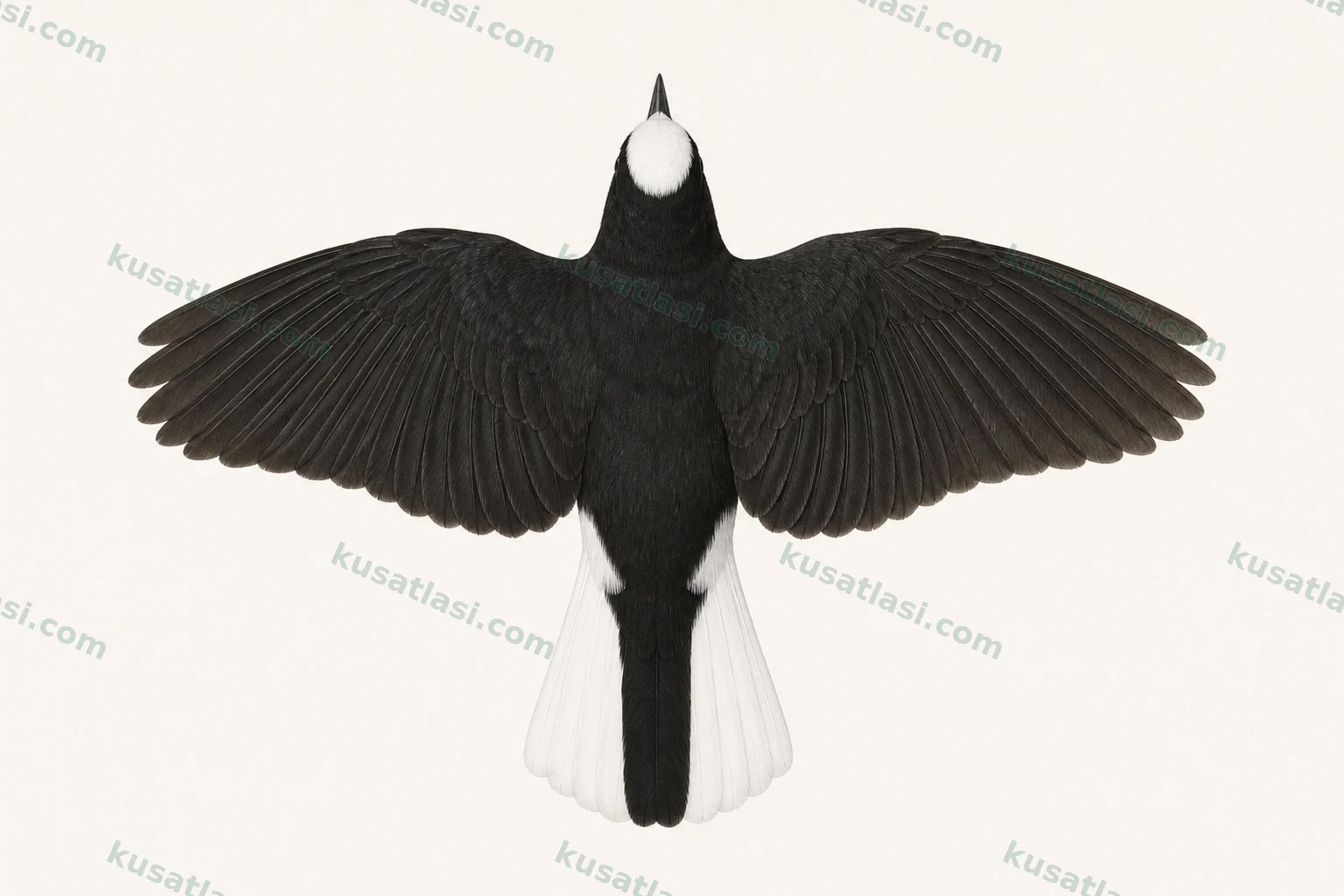
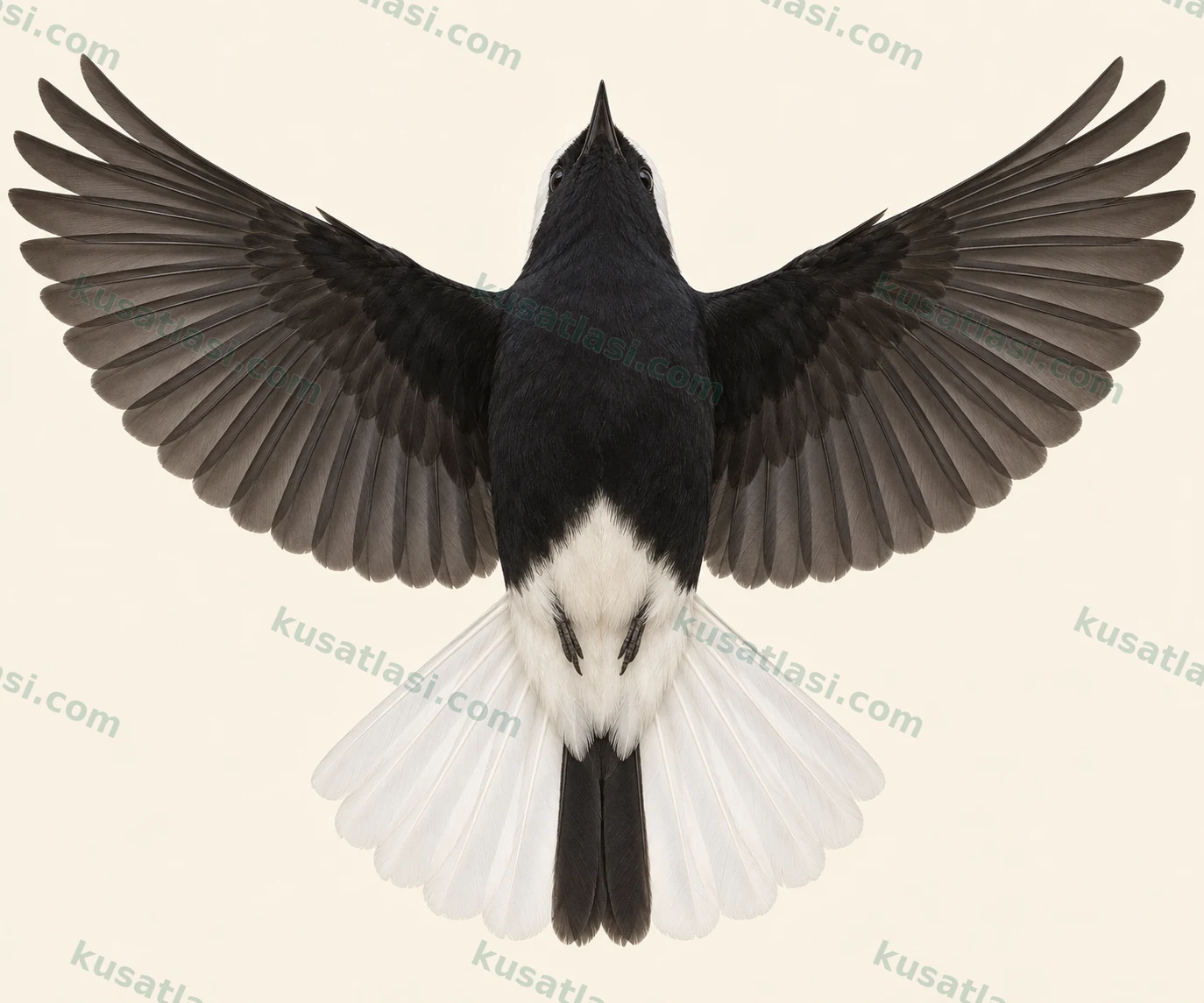
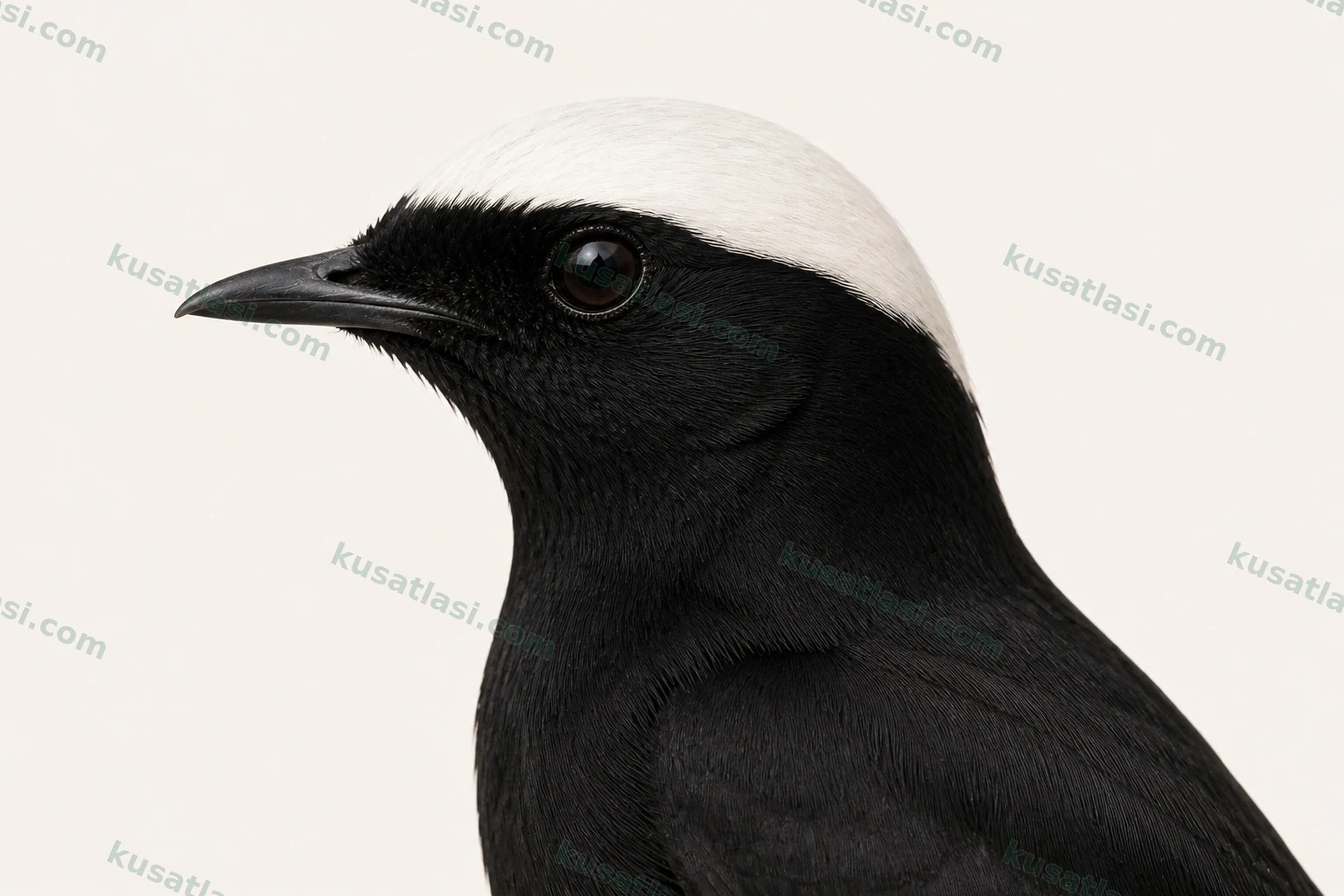
White-crowned Wheatear identification views
Swipe left or right through all five plates.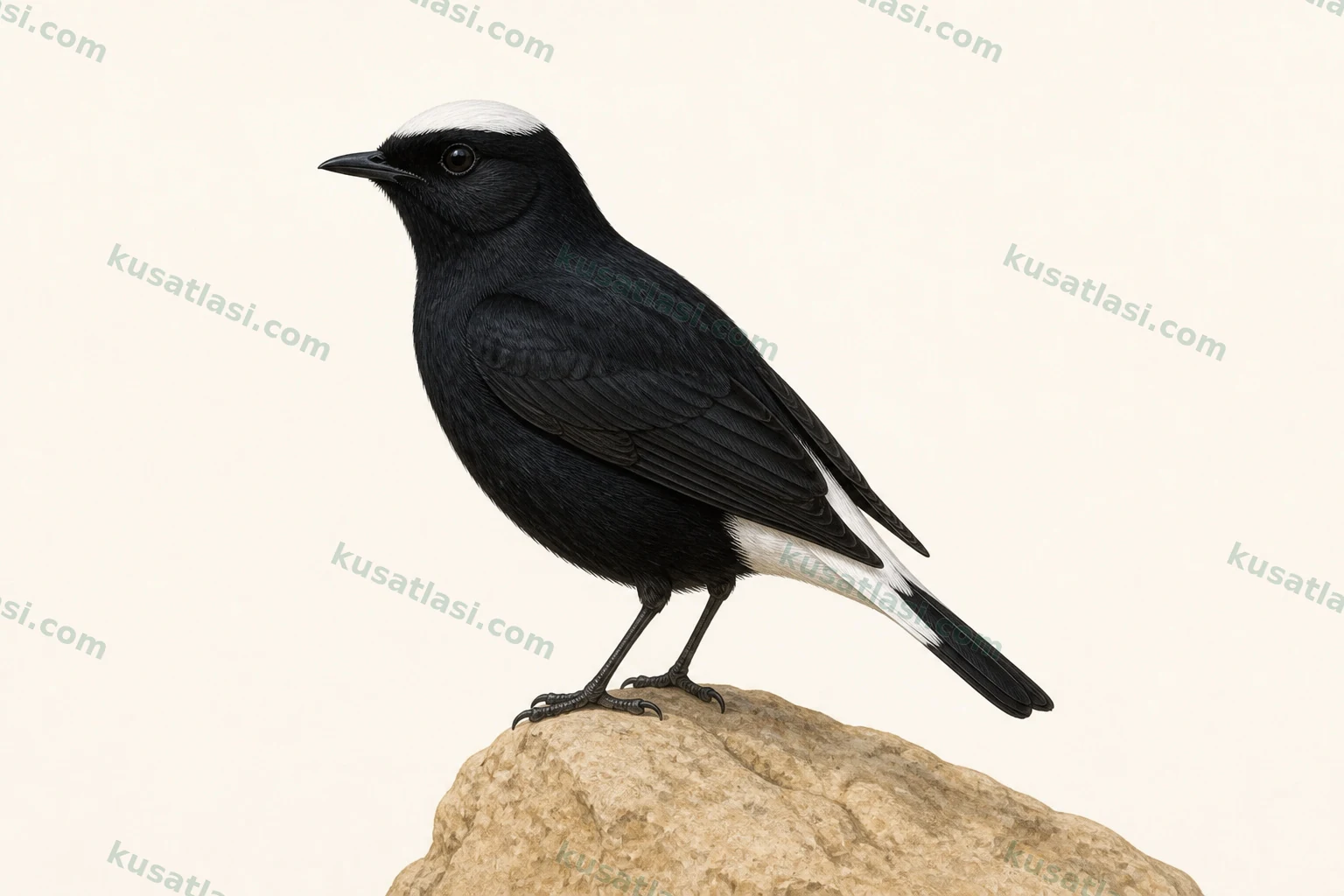
Old World Flycatchers
White-crowned Wheatear
Oenanthe leucopyga
Ak Tepeli Kuyrukkakan
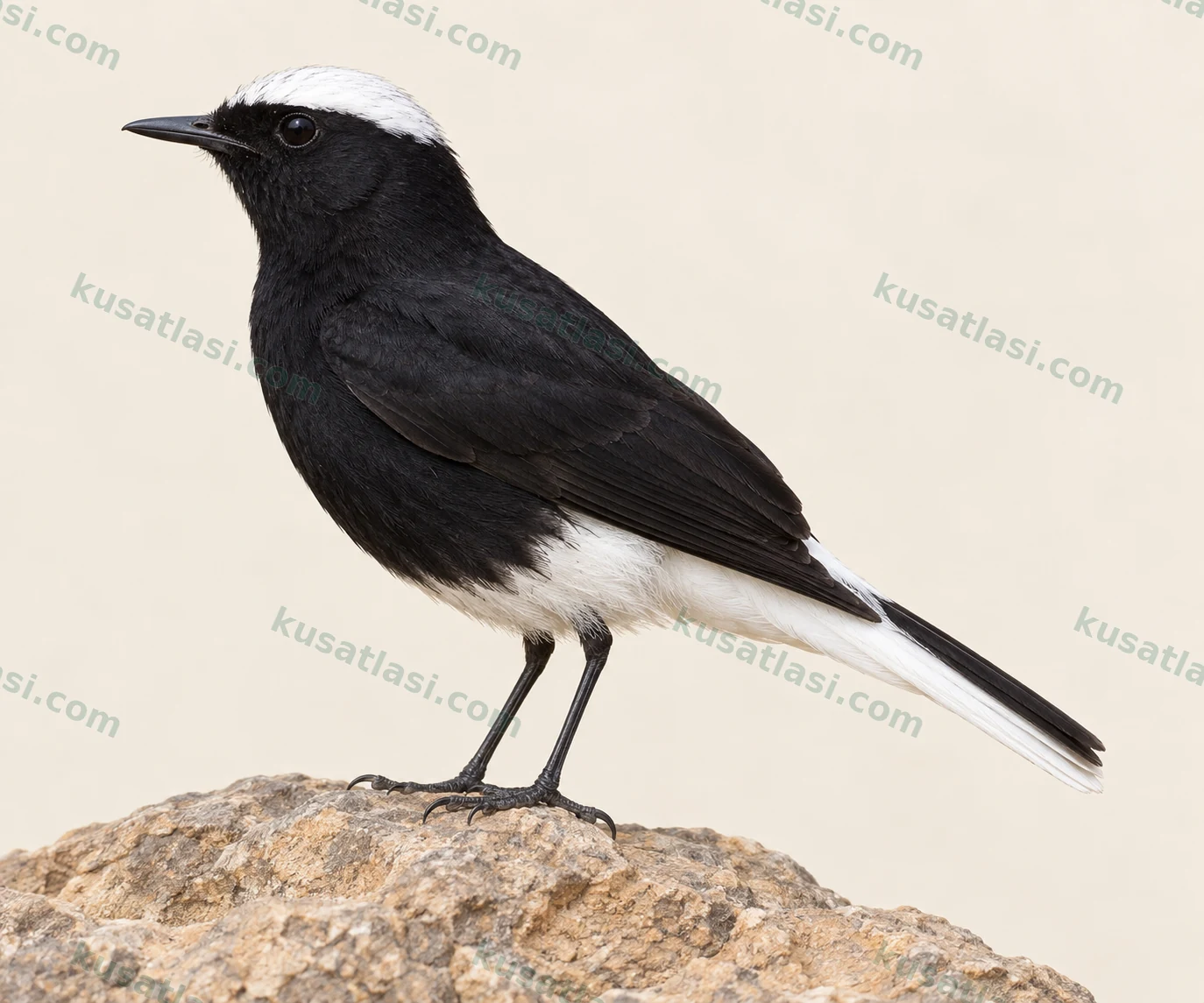
Black body, white lower belly and mostly white tail without a complete dark terminal band; crown is not white at every age.
- Order
- Passeriformes
- Conservation status
- LC Least Concern
First look in the field
Quick identification
- A Black-and-white Desert Wheatear
White-crowned Wheatear is a relatively large, powerful wheatear.
- Sex and Age
Adult females resemble males, rather than fitting a generic pale brown female pattern.
- Tail Pattern
Outer tail feathers are largely white; central feathers have broad dark ends.
Biometrics
Length
- Male
- About 17 cm
- Female
- About 17 cm
Wingspan
- Male
- 26–32 cm
- Female
- 26–32 cm
Weight
- Male
- 23–29 g
- Female
- 23–29 g
Detailed explanations of these measurements are available on our website, on the same species page.
World distribution
White-crowned Wheatear
Customize map layers
Observation Sites
Bird Atlas recordsLoading observations…
Monthly record intensity
12 monthsRecord intensity is affected by observation effort.
Rotate the globe and compare the supported layers. Colours show broad range areas, not exact sightings or nests.
- Jan
- Apr
- Jul
- Oct
- Dec
Generalised data and method
Basemap: Natural Earth (public domain).
Bibliography ↗Authentic bird sound and ethical use
Voice and listening
See the detailed species account below.
Spoken guide
Narration has not been recorded; no audio file has been created.
Observe without approaching the nest
Breeding
Not a regular Turkish breeder, it builds a lined grass cup in a rock or wall cavity within its normal range. Usually 3–5 eggs are incubated by the female for about 14–15 days. The Saudi account gives roughly 14–16 days in the nest and care by both parents.
Scientific species guide
Detailed account
A Black-and-white Desert Wheatear
White-crowned Wheatear is a relatively large, powerful wheatear. The black face, throat, breast and much of the body contrast with the white lower belly, undertail and largely white tail. Many adults have a white crown, but identify the bird using the lower-body pattern and tail as well as the head.
Sex and Age
Adult females resemble males, rather than fitting a generic pale brown female pattern. Crown whiteness develops with age, and black-crowned birds can breed. Its timing varies, so a black crown alone does not prove female sex or a particular age. Young plumage is generally duller than glossy adult black.
Tail Pattern
Outer tail feathers are largely white; central feathers have broad dark ends. There is no continuous black band across the whole tail tip. Small dark marks on young birds' outer feather tips are not equivalent to a complete terminal band. Dorsal and ventral views show different body surfaces, not reversed feather colours.
Measurements
Length and mass follow Saudi Nature; span follows Oiseaux.net. These are not separate Turkish male and female measurements.
Nesting
Not a regular Turkish breeder, it builds a lined grass cup in a rock or wall cavity within its normal range. Usually 3–5 eggs are incubated by the female for about 14–15 days. The Saudi account gives roughly 14–16 days in the nest and care by both parents.
A Rare Visitor to Turkey
White-crowned Wheatear is not a regular Turkish breeder or predictable annual passage species. The Turkish Bird Records Committee's 2000–2024 compilation includes Phaselis on 2 March 2005 and Milleyha on 11 March 2024. These dated examples are not an all-time total or a promise of a bird at those sites every March.
The Main Range
Rocky deserts of North Africa and the Middle East form its main setting. Sinai dry valleys and suitable desert settlements illustrate this lifestyle. Unbroken sand and rocky ground offering cavities and feeding surfaces are not interchangeable habitats. Country shading on a broad map does not mean uniform occurrence.
Residency Is Not the Same as Vagrancy
The species is largely resident within its normal range, with some local movements. An exceptional Turkish appearance does not make it a regular long-distance migrant. A route from the Sahara or a fixed mileage for every bird would require tracking evidence, not merely scattered records.
Keep Identification Evidence
Document head, extent of black on the underbody and the naturally opened tail in the same individual. Do not reject a black-crowned bird solely for lacking white, or accept a white-crowned one without checking the rest. Original images and dated locality notes help independent review; sparse records cannot support exact monthly abundance or absence.
Rocky Desert and Dry Valleys
Sparse vegetation, rocky slopes, outcrops and dry valley walls offer lookouts and feeding surfaces. Searching only sand dunes misses the association with rock. Accessible ground between stones and suitable cavities can matter as much as the size of the rocks themselves.
Human Structures Can Be Used
Within its normal range, stone walls, old buildings and desert villages may be occupied. Research in Sinai includes year-round territories around local gardens. Familiarity with people does not mean every individual tolerates close approach; keep far enough away for normal behaviour to continue.
Lookouts, Shade and Feeding Ground
Watch movements between elevated perches and open ground, not just the most conspicuous resting bird. Repeated trips can belong to the same individual. Heat shimmer over bright desert surfaces may also distort apparent colour boundaries, so use several views before deciding.
Leave Cavities Intact
Females may arrange many small stones at nest entrances. Do not remove or reorganise them, shine into cracks, or follow food-carrying adults to their nest. A temporary Turkish stop at a coastal or built-up site is not evidence that the place is a regular breeding habitat. Separate the species' main ecology from an individual vagrant's stopover.
Mostly Small Animal Prey
Insects and other invertebrates dominate the diet. Regional accounts include ants, flies, beetles and spiders. Their relative importance can vary with season and availability. A few Turkish vagrant observations cannot establish species-wide dietary percentages; a prey list is not a measured proportion.
From Lookout to Capture
The bird may scan from a rock and make a short flight to prey on the ground. Hopping pursuit and aerial insect capture are also possible. Do not interpret every take-off as migration or alarm. Returning to a perch and visibly carrying or swallowing prey provides useful behavioural context.
Flexible Rather Than Unlimited
Small reptiles and some seeds or berries are also reported under local conditions. Such records do not make it chiefly a reptile hunter or fruit eater. Nor does being a desert bird mean independence from food and water conditions. Drought and prey availability can change the resources it uses.
Parents and Young
Both adults can participate in care. Following a provisioning bird can interrupt access to the nest, so observe from a distance. Baiting alters the feeding pattern being recorded. Food delivered to young is a different sample from food eaten by adults, and one photograph cannot represent the complete family diet.
Crown Colour Is Not a Simple Switch
Nottingham researchers studying marked Sinai birds report delayed development of crown whiteness and breeding by black-crowned birds. Do not equate a black crown with female sex or a definite juvenile. The complete plumage and, where available, an individual's known history provide better context.
A Female-built Stone Pavement
Females place numerous small flat stones in front of and beneath the cup nest in a crevice. Some studied sites contain thousands, potentially accumulated over seasons. Predator protection and temperature regulation are proposed explanations, not a single established function presented as fact.
Other Birds Within the Song
The male's whistled and trilled repertoire may contain imitations. Recognising one familiar sound does not prove that the imitated species is present. Follow the sound to its actual source and retain natural recordings. Playback merely to provoke a performance can needlessly occupy territorial birds.
Local Rarity Versus Global Status
A resident desert bird within its principal range can still be a rare Turkish visitor. Global status is listed as Least Concern, a different measure from Turkish rarity. This does not remove the need to conserve cavities, open feeding surfaces and prey resources together. A usable territory involves more than an attractive lookout rock.
Text and plates come from existing atlas records; references are in the central bibliography.
Open bibliography